The Tech Edvocate

Top Menu

  • Advertisement
  • Apps
  • Home Page
  • Home Page Five (No Sidebar)
  • Home Page Four
  • Home Page Three
  • Home Page Two
  • Home Tech2
  • Icons [No Sidebar]
  • Left Sidbear Page
  • Lynch Educational Consulting
  • My Account
  • My Speaking Page
  • Newsletter Sign Up Confirmation
  • Newsletter Unsubscription
  • Our Brands
  • Page Example
  • Privacy Policy
  • Protected Content
  • Register
  • Request a Product Review
  • Shop
  • Shortcodes Examples
  • Signup
  • Start Here
    • Governance
    • Careers
    • Contact Us
  • Terms and Conditions
  • The Edvocate
  • The Tech Edvocate Product Guide
  • Topics
  • Write For Us
  • Advertise

Main Menu

  • Start Here
    • Our Brands
    • Governance
      • Lynch Educational Consulting, LLC.
      • Dr. Lynch’s Personal Website
      • Careers
    • Write For Us
    • The Tech Edvocate Product Guide
    • Contact Us
    • Books
    • Edupedia
    • Post a Job
    • The Edvocate Podcast
    • Terms and Conditions
    • Privacy Policy
  • Topics
    • Assistive Technology
    • Child Development Tech
    • Early Childhood & K-12 EdTech
    • EdTech Futures
    • EdTech News
    • EdTech Policy & Reform
    • EdTech Startups & Businesses
    • Higher Education EdTech
    • Online Learning & eLearning
    • Parent & Family Tech
    • Personalized Learning
    • Product Reviews
  • Advertise
  • Tech Edvocate Awards
  • The Edvocate
  • Pedagogue
  • School Ratings

logo

The Tech Edvocate

  • Start Here
    • Our Brands
    • Governance
      • Lynch Educational Consulting, LLC.
      • Dr. Lynch’s Personal Website
        • My Speaking Page
      • Careers
    • Write For Us
    • The Tech Edvocate Product Guide
    • Contact Us
    • Books
    • Edupedia
    • Post a Job
    • The Edvocate Podcast
    • Terms and Conditions
    • Privacy Policy
  • Topics
    • Assistive Technology
    • Child Development Tech
    • Early Childhood & K-12 EdTech
    • EdTech Futures
    • EdTech News
    • EdTech Policy & Reform
    • EdTech Startups & Businesses
    • Higher Education EdTech
    • Online Learning & eLearning
    • Parent & Family Tech
    • Personalized Learning
    • Product Reviews
  • Advertise
  • Tech Edvocate Awards
  • The Edvocate
  • Pedagogue
  • School Ratings
  • Autonomous Ransomware AI Agents Are Here — And They’re Targeting Your Power Grid

  • Unprecedented: This One Thing Is Crushing Major AI Investments

  • Rotirile gratuite fără depunere: activarea rundelor și creditarea câștigurilor

  • The Astonishing Reason Millions Are Ditching Old Finance Education for This New Method

  • Why Your Bank Account Needs These 7 Gamified Money Apps Right Now

  • Why Millions Are Finally Beating Debt Thanks to Gamification in Personal Finance Apps

  • 5.7 Million Students Exposed: Why This Breach Demands Immediate Legal Action

  • The Brutal Truth About EdTech Breaches: 8 Defenses Schools Need NOW

  • Millions of Student Records Exposed: The Scandalous ETS Data Breach

  • Amazon’s Secret Weapon: Why Its Workforce Strategy Crushes eBay’s Layoff Cycle

Digital & Mobile Technology
Home›Digital & Mobile Technology›What Is a Leased Line in Networking?

What Is a Leased Line in Networking?
By Matthew Lynch
June 9, 2023
0
Spread the love

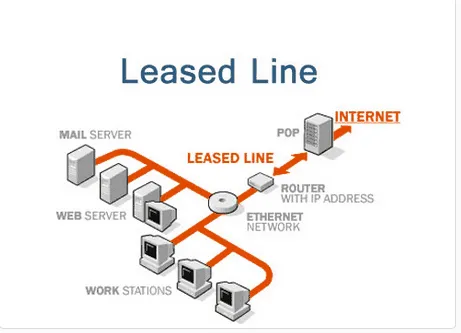
A leased line is a dedicated point-to-point communication link that connects two locations. It is a private, high-speed data connection that is leased by an organization from a telecommunications provider. Leased lines are also called private circuits or dedicated lines, and they are used to connect two locations that require fast, reliable, and secure communication.

A leased line is always active and dedicated to the specific user who leases it. This means that the bandwidth of the leased line is always available to the user, and it is not shared with any other users. Leased lines offer higher reliability, security, and privacy compared to other types of internet connections, such as broadband or DSL.

Leased lines are used by organizations that require high-speed and secure communication between their offices or data centers. For example, a business with multiple locations may use leased lines to connect its offices and provide fast and reliable communication between them. Similarly, a data center may use leased lines to connect to the internet or other data centers, and to provide high-speed and secure connectivity to its customers.

Leased lines can be provided in different speeds, ranging from a few megabits per second (Mbps) to several gigabits per second (Gbps), depending on the specific requirements of the user. The cost of a leased line depends on several factors, such as the speed of the line, the distance between the two locations, and the type of service agreement between the user and the telecommunications provider.

There are different types of leased lines available, such as point-to-point leased lines, multipoint leased lines, and virtual private leased lines (VPLL). Point-to-point leased lines are the most common type, and they provide a dedicated connection between two locations. Multipoint leased lines allow multiple locations to be connected to a single point, such as a data center. VPLLs are a type of leased line that provides secure communication over the public internet by creating a virtual private network (VPN) between the user’s locations.

In summary, a leased line is a private, dedicated, and high-speed data connection that connects two locations. It offers higher reliability, security, and privacy compared to other types of internet connections, and it is used by organizations that require fast and secure communication between their offices or data centers. Leased lines can be provided in different speeds and types, depending on the specific requirements of the user.


Previous Article

Enabling and Disabling Full-Screen Mode in Microsoft ...

Next Article

How to Play the Wiki Game on ...

Matthew Lynch

Related articles More from author

  • Digital & Mobile Technology

    What is a Smartphone?

    April 23, 2023
    By Matthew Lynch
  • Digital & Mobile Technology

    How to Fix It When a Keyboard Won’t Type

    May 30, 2023
    By Matthew Lynch
  • Digital & Mobile Technology

    IPv4 vs. IPv6: What’s the Difference?

    June 15, 2023
    By Matthew Lynch
  • Digital & Mobile Technology

    How to Find Information on Someone Online

    June 8, 2023
    By Matthew Lynch
  • Digital & Mobile Technology

    What Is a PHP File?

    November 1, 2024
    By Matthew Lynch
  • Digital & Mobile Technology

    How to Answer (or Reject) Phone Calls on AirPods

    June 9, 2023
    By Matthew Lynch

Search

Login & Registration

  • Log in
  • Entries feed
  • Comments feed
  • WordPress.org

Newsletter

Signup for The Tech Edvocate Newsletter and have the latest in EdTech news and opinion delivered to your email address!

About Us

Since technology is not going anywhere and does more good than harm, adapting is the best course of action. That is where The Tech Edvocate comes in. We plan to cover the PreK-12 and Higher Education EdTech sectors and provide our readers with the latest news and opinion on the subject. From time to time, I will invite other voices to weigh in on important issues in EdTech. We hope to provide a well-rounded, multi-faceted look at the past, present, the future of EdTech in the US and internationally.

We started this journey back in June 2016, and we plan to continue it for many more years to come. I hope that you will join us in this discussion of the past, present and future of EdTech and lend your own insight to the issues that are discussed.

Newsletter

Signup for The Tech Edvocate Newsletter and have the latest in EdTech news and opinion delivered to your email address!

Contact Us

The Tech Edvocate
910 Goddin Street
Richmond, VA 23231
(601) 630-5238
[email protected]

Copyright © 2026 Matthew Lynch. All rights reserved.