The Tech Edvocate

Top Menu

  • Advertisement
  • Apps
  • Home Page
  • Home Page Five (No Sidebar)
  • Home Page Four
  • Home Page Three
  • Home Page Two
  • Home Tech2
  • Icons [No Sidebar]
  • Left Sidbear Page
  • Lynch Educational Consulting
  • My Account
  • My Speaking Page
  • Newsletter Sign Up Confirmation
  • Newsletter Unsubscription
  • Our Brands
  • Page Example
  • Privacy Policy
  • Protected Content
  • Register
  • Request a Product Review
  • Shop
  • Shortcodes Examples
  • Signup
  • Start Here
    • Governance
    • Careers
    • Contact Us
  • Terms and Conditions
  • The Edvocate
  • The Tech Edvocate Product Guide
  • Topics
  • Write For Us
  • Advertise

Main Menu

  • Start Here
    • Our Brands
    • Governance
      • Lynch Educational Consulting, LLC.
      • Dr. Lynch’s Personal Website
      • Careers
    • Write For Us
    • The Tech Edvocate Product Guide
    • Contact Us
    • Books
    • Edupedia
    • Post a Job
    • The Edvocate Podcast
    • Terms and Conditions
    • Privacy Policy
  • Topics
    • Assistive Technology
    • Child Development Tech
    • Early Childhood & K-12 EdTech
    • EdTech Futures
    • EdTech News
    • EdTech Policy & Reform
    • EdTech Startups & Businesses
    • Higher Education EdTech
    • Online Learning & eLearning
    • Parent & Family Tech
    • Personalized Learning
    • Product Reviews
  • Advertise
  • Tech Edvocate Awards
  • The Edvocate
  • Pedagogue
  • School Ratings

logo

The Tech Edvocate

  • Start Here
    • Our Brands
    • Governance
      • Lynch Educational Consulting, LLC.
      • Dr. Lynch’s Personal Website
        • My Speaking Page
      • Careers
    • Write For Us
    • The Tech Edvocate Product Guide
    • Contact Us
    • Books
    • Edupedia
    • Post a Job
    • The Edvocate Podcast
    • Terms and Conditions
    • Privacy Policy
  • Topics
    • Assistive Technology
    • Child Development Tech
    • Early Childhood & K-12 EdTech
    • EdTech Futures
    • EdTech News
    • EdTech Policy & Reform
    • EdTech Startups & Businesses
    • Higher Education EdTech
    • Online Learning & eLearning
    • Parent & Family Tech
    • Personalized Learning
    • Product Reviews
  • Advertise
  • Tech Edvocate Awards
  • The Edvocate
  • Pedagogue
  • School Ratings
  • The Brutal Truth: Why 75% of Fintech Startups Collapse in 5 Years

  • This AI Company’s Staggering 14 Million Record Data Leak Is Just The Beginning

  • New York Rep Introduces Bill That Could Keep Games Playable for Longer – PCMag

  • Mind-Blowing: These AI Investment Funds Are Crushing the Market — Here’s How

  • The AI Detector Deception: Why Universities Are Pulling the Plug

  • Stunning: New Student Loan Repayment Rules Could Hike Payments for Millions

  • Shocking: California’s Billion-Dollar Clean Transit Initiative Drove Nowhere

  • Why EV Charging Reliability Soared Despite Cratering Sales

  • A new lithium-ion battery breakthrough could lead to cells that deliver more power for longer — they might be useful for everything from EVs to gaming laptops to robots to drones | TechRadar

  • One Breakthrough: How AI is Reshaping Medicine Faster Than Anyone Imagined

Digital & Mobile Technology
Home›Digital & Mobile Technology›What Are the Differences Between a URL & an Email Address?

What Are the Differences Between a URL & an Email Address?

By Matthew Lynch
March 20, 2023
0
Spread the love

In the world of digital communication, two important things we come across are URLs and email addresses. Both are used to identify and link to content online, but they serve different purposes. While URLs or Uniform Resource Locators are used to navigate to a specific web page, email addresses are used for sending and receiving messages via email. In this article, we will explore the key differences between URLs and email addresses.

Definition and Usage:

A URL is a unique address that identifies a web page, file, or other resources on the internet. The URL contains information about the protocol that is used to access the resource, the specific domain or IP address where the resource is located, and the path to the resource.

On the other hand, an email address is a unique identifier for an email account that enables users to send and receive emails through an email server. An email address consists of the username, the @ symbol, and the domain name of the email service provider.

Structure

URLs and email addresses have different structures. URLs are constructed using a combination of protocols, domain names or IP addresses, and directories or file paths. For instance, a typical URL format is “http://www.example.com/home/index.html” where “http” is the protocol, “www.example.com” is the domain name, and “/home/index.html” is the file path to the web page.

On the other hand, email addresses are composed of a username followed by the “@” symbol and the domain name of the email service provider. For instance, an email address format is “[email protected]”, where “username” is the unique identifier and “example.com” is the domain name of the email service provider.

Purpose:

The main purpose of a URL is to navigate to a specific web page or resource on the internet. URLs allow users to access websites and web pages, download files, and view various types of multimedia content. Meanwhile, the primary purpose of an email address is to identify an email account and send and receive messages through email.

Accessibility:

URLs and email addresses have different accessibility methods. URLs can be accessed through a web browser or a search engine. Every website has a unique URL that can be accessed by entering the website’s domain name or IP address in the browser’s address bar or via a search engine.

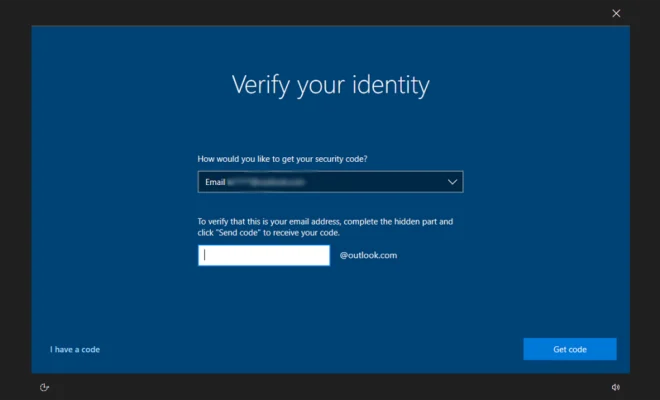
Email addresses, on the other hand, can be accessed through email clients such as Gmail, Yahoo Mail, Outlook, etc. Users can access their email accounts by entering their username and password. After logging in, they can send and receive emails from their contacts via their email address.

Conclusion:

In conclusion, URLs are used for navigating web pages and resources on the internet, while email addresses are used for sending and receiving emails. Though both URLs and email addresses have similarities in their structure and format, they serve different purposes and have different accessibility methods. Understanding the differences between URLs and email addresses will enable individuals to use them more effectively for their intended purposes


Previous Article

What Does OEM Mean for Computers?

Next Article

Top Ways to Fix YouTube Not Connecting ...

Matthew Lynch

Related articles More from author

  • Digital & Mobile Technology

    How to Copy Formulas and Data With Excel’s Fill Handle

    June 4, 2023
    By Matthew Lynch
  • Digital & Mobile Technology

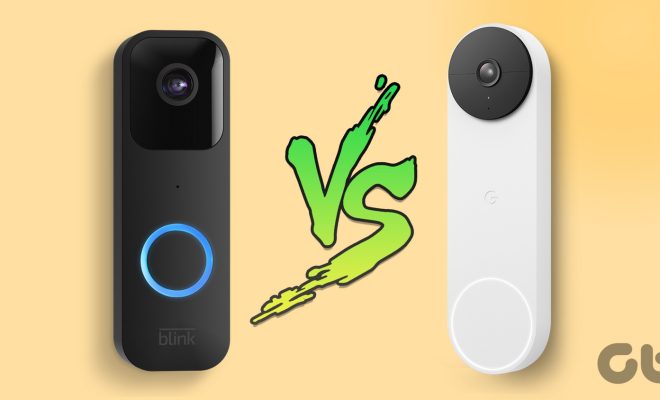
    Blink Video Doorbell vs Google Nest Doorbell (Battery): Which Doorbell Is Better

    April 11, 2023
    By Matthew Lynch
  • Digital & Mobile Technology

    How to Reset Your Microsoft Account Password

    July 6, 2023
    By Matthew Lynch
  • Digital & Mobile Technology

    Ways to fix your PC before you call an expert

    March 20, 2023
    By Matthew Lynch
  • Digital & Mobile Technology

    Why Is Android Auto Not Working? Troubleshooting Fixes

    August 3, 2023
    By Matthew Lynch
  • Digital & Mobile Technology

    What You Must Know About Rooting Your Amazon Kindle Fire

    July 15, 2023
    By Matthew Lynch

Search

Login & Registration

  • Log in
  • Entries feed
  • Comments feed
  • WordPress.org

Newsletter

Signup for The Tech Edvocate Newsletter and have the latest in EdTech news and opinion delivered to your email address!

About Us

Since technology is not going anywhere and does more good than harm, adapting is the best course of action. That is where The Tech Edvocate comes in. We plan to cover the PreK-12 and Higher Education EdTech sectors and provide our readers with the latest news and opinion on the subject. From time to time, I will invite other voices to weigh in on important issues in EdTech. We hope to provide a well-rounded, multi-faceted look at the past, present, the future of EdTech in the US and internationally.

We started this journey back in June 2016, and we plan to continue it for many more years to come. I hope that you will join us in this discussion of the past, present and future of EdTech and lend your own insight to the issues that are discussed.

Newsletter

Signup for The Tech Edvocate Newsletter and have the latest in EdTech news and opinion delivered to your email address!

Contact Us

The Tech Edvocate
910 Goddin Street
Richmond, VA 23231
(601) 630-5238
[email protected]

Copyright © 2026 Matthew Lynch. All rights reserved.