Unveiling the Truth: German Court Delivers Crushing Blow in AI Music Copyright Case
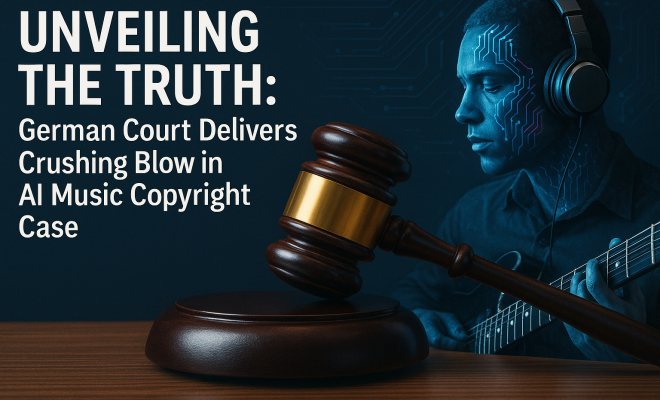
The digital age has consistently challenged our understanding of ownership, creativity, and fair compensation, and nowhere is this more apparent than in the explosive intersection of artificial intelligence and the arts. On August 3, 2026, a German court handed down a ruling that sent shockwaves through both the tech and creative industries, finding the U.S.-based AI music company, Suno, guilty of copyright infringement. This wasn’t just another legal squabble; it was a landmark decision that could redefine the battle lines in the ongoing war over intellectual property in the generative AI era. And if you’re an artist, a developer, or just someone who cares about the future of creativity, you need to pay very close attention to this.
The lawsuit, spearheaded by GEMA, the formidable German collecting society, argued that Suno had brazenly incorporated protected musical compositions into its AI models without so much as a nod to licensing or compensation. Imagine a chef using a secret family recipe without permission, then mass-producing it and selling it for profit. That’s essentially the culinary equivalent of what GEMA accused Suno of doing. The court’s verdict wasn’t just a slap on the wrist; it mandated that Suno open its books, disclose its revenue, and prepare to pay damages – a figure that remains unquantified but is sure to be substantial. This isn’t just an AI music copyright case; it’s a stark reminder that the law, however slowly, is catching up to technology.
The GEMA Goliath Takes on the Suno David: A Deep Dive into the Lawsuit
To truly grasp the magnitude of this decision, we need to understand the players involved. On one side, we have GEMA, the Gesellschaft für musikalische Aufführungs- und mechanische Vervielfältigungsrechte. Say that five times fast! More simply, it’s one of the world’s most powerful collecting societies, representing the rights of millions of composers, lyricists, and music publishers in Germany. They are the guardians of musical creativity, ensuring that artists are compensated when their work is publicly performed, broadcast, or reproduced. GEMA isn’t known for backing down, and they have the legal firepower and financial muscle to take on even the biggest tech companies.
On the other side stands Suno, a U.S.-based AI music company that has captivated many with its ability to generate surprisingly coherent and often catchy musical pieces from simple text prompts. Their technology, like many generative AI tools, learned by processing vast datasets. The core of GEMA’s argument, and ultimately the court’s finding, was that these datasets contained copyrighted music. Suno, GEMA alleged, had ingested a veritable buffet of protected compositions without obtaining the necessary licenses or compensating the original creators. This is the crux of many an AI music copyright case: when does ‘learning’ cross the line into ‘infringement’?
The legal battle wasn’t just about a few songs; it was about the fundamental principle of intellectual property in the AI age. Can an AI company simply hoover up existing creative works, use them to train its models, and then generate new content that competes with or even displaces human artists, all without acknowledging or paying the original creators? GEMA, and now the German court, emphatically said no. This ruling is a significant victory for artists worldwide, signaling that their creations are not merely raw material for unchecked AI development.
The Court’s Verdict: What Does it Really Mean for Suno?
The German court’s decision on August 3, 2026, was unequivocal. Suno was found guilty of copyright infringement. This isn’t a preliminary finding or a recommendation; it’s a definitive judgment. The immediate implications for Suno are substantial. First and foremost, the company is now legally obligated to disclose its revenue. This isn’t just a matter of transparency; it’s the critical first step in calculating the damages it will have to pay. Imagine having to reveal your entire financial playbook to your opponent, knowing that every dollar earned might contribute to your legal penalty. That’s Suno’s reality right now.
The damages themselves are yet to be quantified, but given GEMA’s reach and the potential scale of Suno’s operations and alleged infringement, they could be astronomical. This isn’t just about compensating a handful of artists; it’s about making good on potentially millions of instances of unlicensed use. The court’s ruling sets a clear precedent: if your AI model trains on copyrighted material without permission, you will be held accountable, and that accountability will hit you where it hurts – your bottom line. This AI music copyright case is a financial wake-up call for every generative AI company out there.
Beyond the immediate financial penalties, the ruling also casts a long shadow over Suno’s business model. If their core technology relies on ingesting copyrighted material without licenses, they will need to fundamentally re-evaluate how they train their AI. This could mean acquiring expensive licenses, developing new models trained exclusively on public domain or licensed material, or facing ongoing legal challenges. It’s a pivotal moment that forces the company to confront the ethical and legal foundations of its very existence. The viral spread of this news across creative and tech communities only amplifies the pressure.
The Broader Implications for Generative AI and Copyright
This German ruling against Suno isn’t an isolated incident; it’s a crucial inflection point in the global conversation around generative AI and intellectual property. For years, AI developers have operated under a somewhat ambiguous legal framework, often arguing that training AI models constitutes ‘fair use’ or that the output is transformative enough to escape copyright claims. This decision directly challenges that notion, particularly when it comes to musical works.
The ruling signals a hardening stance by legal systems, particularly in Europe, against what some perceive as unchecked appropriation of creative works by AI companies. It tells developers: you cannot simply scrape the internet for content, feed it into your algorithms, and then profit from the derived output without acknowledging or compensating the original creators. This could lead to a significant shift in how AI models are trained, pushing companies towards ethically sourced, licensed, or public domain datasets, which are far more expensive and harder to acquire than simply scraping the web. (See: Impact of creativity in technology.)
Moreover, this decision will undoubtedly embolden other collecting societies and artist rights organizations around the world. GEMA’s victory provides a powerful precedent and a blueprint for similar legal challenges. We can expect to see a surge in lawsuits targeting AI companies that have built their models on unlicensed copyrighted material across various creative domains, from music and literature to visual arts. This AI music copyright case is just the beginning; the legal floodgates might just be opening.
Fair Use vs. Fair Pay: The Evolving Debate
Central to this entire discussion is the concept of ‘fair use.’ In U.S. copyright law, fair use allows limited use of copyrighted material without permission for purposes such as criticism, comment, news reporting, teaching, scholarship, or research. Many AI companies have historically tried to argue that training their models falls under this umbrella, akin to a student learning from existing works.
However, the German court’s ruling suggests a different interpretation, at least within its jurisdiction. It emphasizes ‘fair pay’ over a broad interpretation of ‘fair use’ when commercial exploitation is involved. The argument here is that while an individual might learn from copyrighted works, a commercial entity building a product that directly competes with or substitutes for human-created content, based on that learning, owes compensation. This distinction is critical.
The debate isn’t just legal; it’s deeply philosophical. What constitutes ‘learning’ versus ‘copying’? When does inspiration become infringement? For many artists, the idea of their life’s work being ingested by an algorithm to generate new content that they then have to compete with, without any compensation, feels inherently unfair. This AI music copyright case highlights a fundamental tension: the desire for technological innovation versus the imperative to protect creative livelihoods and intellectual property rights. Finding a balance is proving to be incredibly challenging, but the courts are starting to weigh in.
Artist Rights in the Age of AI: A New Frontier
For artists, this ruling is a beacon of hope in what has often felt like an uneven playing field. The rapid advancement of generative AI has created significant anxiety within creative communities. Musicians, writers, and visual artists have voiced concerns that AI could devalue their work, displace them from their professions, and exploit their creations without remuneration.
GEMA’s successful lawsuit provides a powerful legal tool for artists to protect their intellectual property. It reinforces the idea that their work has inherent value and that simply because something is digitally available, it doesn’t mean it’s free for AI companies to exploit. This could lead to new avenues for artists to license their work specifically for AI training, ensuring they are compensated for their contribution to this new technological paradigm.
Moreover, the ruling could spur greater transparency from AI developers. Artists and rights holders may demand to know what datasets are being used to train AI models, providing them with the information necessary to identify and challenge infringement. This AI music copyright case isn’t just about stopping infringement; it’s about empowering artists to control their creative destiny in an increasingly AI-driven world. It’s about ensuring that the human element, the spark of original creation, remains valued and protected.
The Future of Content Licensing and AI-Generated Media
This landmark decision will undoubtedly reshape the landscape of content licensing. Historically, licensing agreements focused on specific uses: broadcast, print, digital reproduction, and so on. Now, a new category is emerging: licensing for AI training and generation. This presents both challenges and opportunities for content creators and AI developers alike.
For content creators, it opens up a potentially lucrative new revenue stream. Imagine a world where every time your song, book, or image is used to train an AI, you receive a micro-royalty. Collecting societies like GEMA will likely play a crucial role in negotiating and enforcing these new types of licenses, ensuring that artists receive fair compensation. This could lead to the development of specialized platforms and services dedicated to licensing content specifically for AI use, creating a more structured and equitable ecosystem.
For AI companies, it means increased operational costs and a need for greater legal diligence. The days of simply scraping content without consequence appear to be numbered. They will need to invest heavily in acquiring legitimate licenses, which could involve direct negotiations with rights holders or working through collecting societies. This might slow down the rapid pace of AI development in some areas, but it will also foster a more sustainable and ethically sound industry. The goal isn’t to stop AI, but to ensure it develops responsibly, and this AI music copyright case is a big step in that direction.
Business Consulting and Navigating AI Ethics and Compliance
The complexity of this ruling and the broader legal landscape surrounding AI means that businesses, particularly those developing or utilizing generative AI, will need expert guidance. This isn’t just a legal issue; it’s a strategic one. Companies need to understand the ethical implications of their AI models, the compliance requirements in various jurisdictions, and the potential for reputational damage if they are perceived as exploiting creators. (See: Recent developments in AI copyright.)
Business consulting services specializing in AI ethics and compliance are becoming indispensable. These consultants can help companies audit their existing AI models, assess their risk exposure, and develop strategies for responsible AI development. This includes advising on data sourcing, licensing agreements, and establishing internal policies that align with evolving legal and ethical standards. It’s about building AI that is not only innovative but also trustworthy and legally sound.
Moreover, the ruling highlights the need for companies to engage proactively with creative communities and rights holders. Rather than waiting for lawsuits, businesses can explore collaborative models, establish transparent compensation frameworks, and even partner with artists to develop new AI tools. This shift from an adversarial approach to a collaborative one could foster greater trust and accelerate the ethical adoption of AI across industries. This AI music copyright case underscores that ignoring these issues is no longer an option.
The Global Ripple Effect: Beyond Germany’s Borders
While this ruling originated in a German court, its implications are far from confined to Germany. In our interconnected digital world, legal precedents, especially those involving global tech companies, tend to create a ripple effect. Many legal systems around the world are grappling with similar questions about AI and copyright, and GEMA’s victory will undoubtedly be studied closely by judges, lawyers, and legislators globally.
The European Union, in particular, has been at the forefront of regulating technology, from data privacy (GDPR) to digital markets. This German decision aligns with a broader European trend towards stronger protections for creators and greater accountability for tech companies. It’s highly probable that similar legal challenges will emerge in other EU member states, potentially leading to a more harmonized approach to AI copyright across the bloc.
Even in countries with different legal traditions, like the United States, this ruling will serve as a powerful data point. While U.S. fair use doctrine is distinct, the fundamental questions about appropriation and compensation remain the same. The German court’s unequivocal stance provides a robust argument for rights holders seeking similar protections in their own jurisdictions. This AI music copyright case is a global conversation starter, signaling a new era of accountability for AI.
The Path Forward: Collaboration, Innovation, and Respect
So, where do we go from here? The Suno ruling isn’t the end of AI music, nor is it the end of generative AI. Instead, it’s a critical moment that demands a shift in approach. The path forward must be built on collaboration, responsible innovation, and a fundamental respect for intellectual property rights.
For AI developers, this means moving beyond a ‘move fast and break things’ mentality when it comes to creative content. It means investing in ethical data sourcing, transparent licensing, and developing AI models that augment human creativity rather than simply appropriating it. It’s an opportunity to build trust with the creative community, demonstrating that AI can be a powerful tool for good, rather than a threat.
For artists and rights holders, it means continuing to advocate for their rights, engaging with policymakers, and exploring new models for licensing and compensation in the AI era. It’s about recognizing the transformative potential of AI while ensuring that creators are fairly rewarded for their contributions. This AI music copyright case is a testament to the power of collective action, demonstrating that artists do have a voice and that their rights can be successfully defended in court.
Ultimately, the goal should be to foster an ecosystem where AI innovation thrives alongside a vibrant, well-compensated creative sector. This requires open dialogue, thoughtful regulation, and a shared commitment to building a future where technology serves humanity, not the other way around. The German court’s decision against Suno is a loud and clear message that the rules of engagement for AI in the creative industries are being written, and those rules will prioritize fairness and respect for the creators who fuel our cultural landscape.
Expert Perspectives: Legal Scholars Weigh In
Legal scholars and intellectual property experts across the globe have been closely watching the GEMA vs. Suno case, and their initial reactions are illuminating. Many view this ruling as a significant affirmation of existing copyright principles in the digital age, rather than an invention of new ones for AI. Professor Anya Sharma, a leading IP law specialist at the University of Cambridge, noted, “The court essentially said that AI isn’t a magic shield against copyright law. If you use copyrighted material to build a commercial product, the onus is on you to ensure that use is licensed or falls within very specific exceptions.”
Others, like Dr. Kai Richter from the Max Planck Institute for Innovation and Competition, point out the specific nuances of German and European copyright law. “Germany’s robust ‘ancillary copyright’ for press publishers and strong protections for authors are deeply embedded in its legal framework,” Richter explained. “This context makes the GEMA victory less surprising to those familiar with the European approach, which often prioritizes creators’ rights more explicitly than, say, the U.S. fair use doctrine.” This distinction is crucial for AI companies operating internationally, as what’s permissible in one jurisdiction might be a clear infringement in another.
The consensus seems to be that while AI technology is new, the underlying legal principles of intellectual property remain largely applicable. The challenge, experts agree, is in adapting these principles to the unique ways AI consumes and generates content. This AI music copyright case is a vital step in that adaptation process, providing a concrete example of how courts are starting to draw lines in the sand.
The Technical Side: Auditing AI Training Data
For AI companies, the Suno ruling presents a significant technical hurdle: how do you audit your AI models’ training data for copyrighted material? It’s not as simple as scanning a hard drive. Large language models (LLMs) and generative AI models are trained on colossal datasets, often comprising petabytes of information scraped from the internet. Identifying every piece of copyrighted music, text, or image within such a vast and often amorphous dataset is an immense, perhaps even impossible, task with current tools.
Some researchers are exploring “data provenance” techniques, attempting to track the origin of every piece of data fed into an AI model. Others are working on “copyright detection” algorithms that could, in theory, identify copyrighted works within a dataset or even within the AI’s output. However, these technologies are still in their infancy. The practical reality is that many existing AI models were trained without this level of scrutiny. This means companies might face a choice: either retrain their models on strictly licensed data, which is incredibly expensive and time-consuming, or face ongoing legal risks. This AI music copyright case highlights a technical problem that has no easy fix for established AI models. (deep dive on the ruling)
Comparisons to Other Copyright Battles: Music Industry Precedents
The music industry has a long history of battling technological shifts, and many see parallels between the current AI music copyright case and past skirmishes. Think back to the Napster era in the early 2000s. File-sharing platforms allowed users to freely download copyrighted music, fundamentally challenging the music industry’s business model. The industry fought back aggressively, leading to numerous lawsuits and the eventual shutdown of services like Napster. That struggle paved the way for legitimate digital music services like iTunes and Spotify.
More recently, the rise of sampling in hip-hop and electronic music led to extensive legal debates about fair use, transformation, and direct infringement. Artists and producers now routinely clear samples and pay licensing fees, a practice that became standard after years of litigation. The GEMA vs. Suno case follows this pattern: a new technology emerges, it challenges existing copyright frameworks, and the music industry responds to protect its creators. This AI music copyright case is just the latest chapter in a continuous story of adapting copyright law to technological innovation, aiming to ensure that creators are compensated for their work.
Trending Now
Frequently Asked Questions
What was the ruling of the German court in the AI music copyright case?
On August 3, 2026, a German court ruled against the U.S.-based AI music company Suno, finding it guilty of copyright infringement for using protected musical compositions in its AI models without proper licensing or compensation.
Who is GEMA and what role did it play in the lawsuit against Suno?
GEMA, the Gesellschaft für musikalische Aufführungs- und mechanische Vervielfältigungsrechte, is a powerful German collecting society representing the rights of millions of composers and music publishers. It spearheaded the lawsuit against Suno for unauthorized use of copyrighted music in AI models.
What are the implications of the German court's decision for the music industry?
The ruling is a landmark decision that could redefine intellectual property rights in the generative AI era, emphasizing the need for AI companies to secure proper licensing and compensation for using copyrighted material.
How does the Suno case compare to traditional copyright infringement cases?
The Suno case is significant as it highlights the unique challenges posed by AI technology in the creative sector, comparing it to traditional copyright infringement cases by illustrating the unauthorized use of protected works for profit.
What could be the financial consequences for Suno following the court's verdict?
The court mandated Suno to disclose its revenue and prepare to pay damages, which are expected to be substantial, marking a significant financial consequence for the company following the copyright infringement ruling.
Have you experienced this yourself? We'd love to hear your story in the comments.