James Blake’s Radical Call: Is AI Obliterating Music’s Soul?
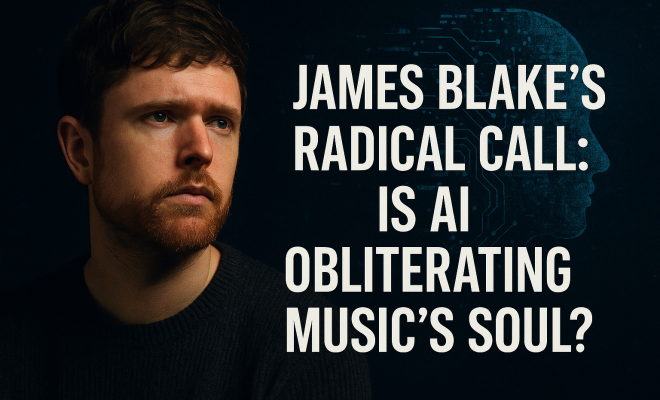
It’s August 3, 2026, and the music world, already a swirling vortex of digital shifts and technological disruption, just got a jolt from one of its most respected voices. James Blake, the acclaimed British artist whose work often feels like a masterclass in emotional vulnerability and sonic innovation, dropped what can only be described as a social media bombshell. His Instagram post that day wasn’t just a casual observation; it was a defiant roar, an assertion that immediately went viral and ignited a fiery debate across the internet.
Blake’s claim? That “in 2026 there’s not a single part of the system that isn’t faked” thanks to the insidious creep of artificial intelligence. He wasn’t talking about deepfakes of his own voice, or AI-generated melodies – not directly, anyway. His crosshairs were firmly fixed on the bedrock of modern music success: streaming numbers. Specifically, bot farms, those shadowy digital operations designed to artificially inflate streams and followers, making an artist appear far more popular than they genuinely are. This statement, coming from an artist of Blake’s caliber and integrity, felt like a much-needed splash of cold water, forcing everyone to confront a truth many suspected but few dared to articulate so directly. The conversation around James Blake AI music was no longer theoretical; it was urgent.
What does it mean when the very metrics we use to measure success become meaningless? What happens when an artist’s reach and influence can be bought rather than earned? Blake’s post wasn’t just a lament; it was a rallying cry, arguing that traditional metrics like streams and follower counts have been so thoroughly corrupted by AI and automation that they’ve lost all their inherent value. This isn’t just a problem for indie artists struggling to break through; it’s a systemic rot that threatens the integrity of the entire industry. And if the numbers are fake, what’s left?
Blake’s answer proposes a radical, yet deeply intuitive, pivot: from what he calls an “attention economy” to a “participation economy.” It’s a shift from chasing fleeting eyeballs and listen counts to cultivating genuine, meaningful engagement. It means valuing the fan who buys your merch, attends your shows, comments thoughtfully on your posts, or even creates fan art, over the bot-fueled stream count that could be generated by a server farm in a distant land. This emotionally charged topic, touching on authenticity, fair compensation, and the very soul of music marketing, resonated profoundly with artists, labels, and fans alike. It’s a conversation that’s been bubbling under the surface, but James Blake’s AI music commentary brought it to a boiling point.
The Digital Mirage: How AI Bots Corrupted the Numbers
To truly grasp the weight of James Blake’s statement, we need to understand the mechanics of the problem he’s highlighting. For years, streaming platforms like Spotify, Apple Music, and YouTube have become the primary distribution channels for music. Artists, labels, and industry executives have come to rely on the data these platforms provide: how many streams a song gets, how many unique listeners, how many playlist adds, how many followers an artist accumulates. These numbers aren’t just vanity metrics; they directly influence everything from record deals and tour bookings to brand partnerships and placement in editorial playlists. They dictate who gets paid and how much, shaping careers and fortunes.
But what if these foundational numbers are fundamentally flawed? Blake’s assertion points to the pervasive use of bot farms – networks of automated accounts designed to mimic human behavior. These bots can be programmed to stream a song repeatedly, follow an artist, or even generate comments and likes. Their purpose is simple: to create an illusion of popularity and engagement. For a struggling artist, the temptation to use such services, often marketed as “growth hacks,” can be immense. For unscrupulous labels or managers, it’s a way to artificially boost an artist’s profile, making them seem like the next big thing, even if the real-world interest isn’t there.
The impact is insidious. When bot-generated streams are mixed in with genuine human listens, the entire dataset becomes polluted. This makes it nearly impossible for legitimate artists to gauge their true audience, for A&R reps to identify genuine talent, or for advertisers to effectively target music fans. More importantly, it skews the revenue distribution. Streaming royalties, while notoriously low, are still distributed based on overall stream counts. If a significant portion of those streams comes from bots, it means money is being siphoned away from real artists and into the pockets of those who game the system, or worse, into the coffers of the bot farm operators themselves. This is the heart of the crisis that James Blake AI music has brought to the forefront.
From Attention to Participation: A Paradigm Shift
So, if the attention economy – built on the shaky foundation of potentially fake metrics – is crumbling, what’s the alternative? Blake’s concept of a “participation economy” isn’t just a catchy phrase; it’s a profound re-evaluation of what truly matters in an artist’s relationship with their audience. It shifts the focus from passive consumption to active engagement, from fleeting glances to genuine connection.
Think about it: a single fan who buys your vinyl, attends your concert, signs up for your Patreon, or consistently shares your music with their friends, represents a far deeper level of commitment than a thousand bot-generated streams. This kind of fan isn’t just a number; they’re a community member, an evangelist, a true supporter. They’re investing their time, their money, and their emotional energy into an artist’s work. In a participation economy, these deep connections are the real currency.
This isn’t an entirely new idea, of course. For centuries, artists have thrived on the direct support of their patrons and dedicated followers. The digital age, with its promise of massive global reach, perhaps made us forget the power of these smaller, more intimate connections. But as the digital landscape becomes increasingly noisy and polluted with inauthentic activity, the value of genuine participation shines through even brighter. It forces artists to think beyond viral moments and instead focus on building sustainable, loyal communities. This is where the true resilience of artists, even in the face of pervasive James Blake AI music issues, will be forged.
Artists on the Front Lines: Authenticity as the New Gold Standard
For artists, Blake’s statement isn’t just a theoretical musing; it’s a stark reality check. Many have felt the pressure to chase numbers, to conform to algorithms, and to play a game they suspected was rigged. Now, with a respected peer openly calling out the charade, there’s a collective sigh of relief, coupled with a renewed urgency to adapt. (See: Artificial intelligence in music.)
The immediate implication for artists is clear: authenticity isn’t just a nice-to-have; it’s a survival mechanism. If streams and followers can be faked, then the only thing that truly holds weight is genuine connection. This means artists need to double down on direct engagement with their fans. Think about personalized interactions, exclusive content for patrons, intimate live streams, and even old-fashioned meet-and-greets. It’s about creating experiences and fostering relationships that can’t be replicated or faked by an algorithm.
It also means a shift in marketing strategies. Instead of pouring resources into campaigns aimed at boosting superficial metrics, artists might focus on building email lists, cultivating Discord servers, or creating unique fan experiences. The goal isn’t just to be heard by as many people as possible, but to be deeply heard and understood by those who truly care. This focus on building an authentic brand and community becomes paramount, offering a path forward even as the James Blake AI music debate continues to rage.
Labels and Industry: Navigating the New Metrics Landscape
For record labels, publishers, and other industry players, James Blake’s viral post presents a significant challenge and a potential opportunity. For years, their business models have been heavily reliant on the very metrics Blake now dismisses as “faked.” A song with millions of streams is a clear signal for investment, for radio play, for sync licensing. If those signals are compromised, how do labels identify talent, make sound financial decisions, and justify their investments?
The immediate task for the industry is to develop new, more robust methods of measuring success and identifying genuine potential. This might involve a greater emphasis on qualitative data – fan comments, social media sentiment, direct fan engagement metrics – rather than solely quantitative stream counts. It could also lead to a renewed focus on live performance attendance, merchandise sales, and direct-to-fan platform subscriptions, which are much harder to fake.
Furthermore, labels will need to invest in advanced analytics tools that can detect bot activity and filter out fraudulent data. They might also need to become more proactive in educating their artists about the dangers of bot farms and the importance of organic growth. Ultimately, the industry must adapt or risk becoming irrelevant in a landscape where the traditional markers of success are no longer reliable. The conversation sparked by James Blake AI music isn’t just for artists; it’s a wake-up call for the entire ecosystem.
Monetization in the Participation Economy: New Avenues for Artists
The shift from an attention economy to a participation economy, while challenging, also opens up exciting new monetization opportunities for artists. If genuine engagement is the new currency, then services that help artists cultivate and leverage that engagement will become invaluable. Here are a few areas ripe for innovation:
- Authentic Fan Community Building Services: Platforms and agencies specializing in helping artists create and manage vibrant, engaged fan communities. This could involve bespoke social media strategies, Discord server management, exclusive content creation, and tools for direct fan interaction.
- Transparent Music Analytics Platforms: The market will demand tools that can cut through the noise of bot activity, providing artists and labels with truly clean, actionable data on genuine fan engagement, geographic reach, and demographic insights. These platforms would prioritize verifiable interactions over raw stream counts.
- Online Education and Artist Branding Courses: With the rules of the game changing, artists will need guidance. Courses on building a strong personal brand, mastering direct-to-fan marketing, understanding intellectual property in the AI era, and navigating evolving revenue streams will be in high demand.
- Financial Advisory Services for Musicians: As revenue streams diversify beyond traditional royalties, musicians will need expert advice on managing income from Patreon, NFTs, merchandise, touring, and other direct-to-fan channels. Financial advisors specializing in the unique challenges of the music industry will become even more crucial.
- NFTs and Web3 Integration: While still nascent, the underlying technology of Web3 and NFTs (non-fungible tokens) offers a powerful framework for direct artist-to-fan ownership and verifiable digital assets. This could allow for exclusive content, digital collectibles, and even fractional ownership of songs, creating new revenue streams directly tied to fan participation and loyalty.
These opportunities underscore a future where artists are less reliant on gatekeepers and more empowered to build sustainable careers directly with their most ardent supporters, even in the confusing landscape of James Blake AI music.
The Fan’s Perspective: Seeking Authenticity and Connection
Let’s not forget the most crucial element in this equation: the fans. At the end of the day, people listen to music for connection, for emotion, for an authentic experience. The rise of AI bots and fake metrics ultimately harms the fan experience by creating a distorted view of the music landscape. It makes it harder for genuine artists to be discovered and for fans to trust the signals of popularity.
Fans are increasingly savvy. They can often smell inauthenticity a mile away. When an artist suddenly explodes in popularity with generic-sounding music and a flood of anodyne comments, it raises eyebrows. Blake’s statement validates what many fans have intuitively felt: that something is off with the numbers. This validation empowers fans to be more discerning, to seek out artists who prioritize genuine interaction, and to support those who are transparent about their journey.
In a participation economy, fans aren’t just consumers; they’re active participants in an artist’s career. They want to feel like they’re part of something real, something meaningful. This is a powerful driving force, and artists who understand and embrace this will be the ones who truly thrive. The dialogue around James Blake AI music highlights this yearning for truth in a world increasingly saturated with digital artifice.
The Broader Implications of AI in Creative Industries
While James Blake’s statement specifically targets the music industry, the issues he raises have far wider implications across all creative fields grappling with AI. From visual arts and literature to journalism and film, the question of authenticity, intellectual property, and fair compensation in the age of generative AI is a burning one. If AI can create convincing art, write compelling text, or even generate entire video sequences, what becomes of human creativity?
Blake’s concern about “faked” metrics isn’t just about streaming numbers; it’s a microcosm of a larger anxiety about the blurring lines between human and machine. If AI can simulate human engagement, what other aspects of our digital lives might be compromised? This opens up critical discussions about digital ethics, the regulation of AI, and the fundamental value we place on human artistry. The music industry, being at the forefront of digital consumption, often serves as a canary in the coal mine for these broader societal shifts. The very real anxieties about James Blake AI music are just one facet of this larger technological revolution. (See: Youth Risk Behavior Surveillance.)
A Call to Action: Reclaiming Music’s Value
James Blake’s August 3rd Instagram post wasn’t just a lament; it was a potent call to action. It forces everyone involved in the music ecosystem – artists, labels, platforms, and fans – to reassess their values and priorities. It’s an opportunity to reclaim the true value of music, which lies not in algorithms or bot farms, but in human connection, emotion, and shared experience.
This isn’t to say that AI is inherently evil or that technology should be rejected. AI has incredible potential to assist artists, enhance creativity, and create new forms of expression. The challenge, as Blake points out, lies in managing its disruptive potential and ensuring it serves human creativity rather than undermining it. It’s about setting boundaries, demanding transparency, and prioritizing genuine engagement over superficial metrics.
The path forward will require collective effort. Platforms need to invest more in bot detection and prevention. Labels need to revise their talent scouting and marketing strategies. Artists need to focus on building authentic communities. And fans need to be more mindful of where they direct their attention and support. Only by working together can the industry truly pivot to a participation economy, one where genuine artistry and real connection are celebrated and rewarded, not drowned out by a sea of faked numbers. The ongoing discussion around James Blake AI music is an essential step in this vital re-evaluation.
The Regulatory Landscape: Who’s Responsible for the Bots?
While artists and labels scramble to adapt, a critical question remains: who is ultimately responsible for policing the digital landscape and curbing bot activity? Currently, it’s a complex web of responsibility, often with insufficient enforcement. Streaming platforms themselves have a vested interest in combating fraud, as fake streams can dilute their ad revenue and diminish user trust. However, the sheer scale of bot operations makes it an uphill battle, and their detection algorithms are constantly playing catch-up.
Governments and regulatory bodies are also slowly catching on to the issue. The digital economy, especially in creative industries, has largely outpaced legislative efforts. We’re seeing early discussions about regulating AI’s use in content creation and distribution, but specific laws targeting stream manipulation are still in their infancy. The challenge lies in defining what constitutes “fraudulent activity” in a rapidly evolving digital space, and then creating enforceable international laws to combat operations that often span multiple countries.
There’s also the question of accountability for those who purchase bot services. Should artists or labels found to be engaging in such practices face penalties? Some industry figures advocate for stricter sanctions, including removal from playlists, withholding of royalties, or even legal action. The consensus is building that a multi-pronged approach – involving platform responsibility, governmental regulation, and industry self-policing – will be necessary to truly clean up the “faked” system Blake describes. Without clear guidelines and consequences, the problem will likely continue to fester, undermining the very foundation of fair competition and artist compensation.
Expert Perspectives: Economists Weigh In on the “Participation Economy”
James Blake’s concept of a “participation economy” has garnered attention beyond the music industry, sparking interest among economists and social scientists. Many see it as a natural evolution of the creator economy, which has itself been a response to the limitations of traditional media models. Economic theorists like Don Tapscott, who coined the term “wiki economy,” or Jeremy Rifkin, who discussed the “access economy,” have long highlighted shifts from ownership and mass production to shared resources and collaborative value creation. Blake’s model aligns with this, emphasizing intrinsic value over speculative metrics.
Economists studying digital markets point out that the attention economy, while powerful for advertising, often leads to a race to the bottom in terms of content quality and ethical practices. When clicks and views are the sole metrics, sensationalism and manipulation can take precedence over substance. A participation economy, in contrast, incentivizes deeper, more sustained engagement, which economists argue leads to more resilient and equitable ecosystems. It’s a move from a transactional relationship to a relational one, where loyalty and community generate long-term value that’s harder to disrupt by external forces or bad actors.
However, some economists also caution that transitioning to a participation economy isn’t without its challenges. It requires artists to invest more heavily in community management and direct marketing, skills not all creators possess. It also necessitates platforms that are built around facilitating these deeper connections, rather than simply maximizing ad impressions. The shift, while promising, will demand significant structural changes and a collective recalibration of how we measure success and value in the digital age. This ongoing dialogue, ignited by artists like James Blake, is crucial for shaping the future economic models of creative work.
FAQ: Understanding James Blake AI Music & The Future of Authenticity
Q1: What exactly did James Blake say about AI music?
James Blake’s viral Instagram post on August 3, 2026, claimed that “in 2026 there’s not a single part of the system that isn’t faked” due to the influence of AI. He specifically targeted bot farms that artificially inflate streaming numbers and follower counts on platforms, arguing that these fake metrics have corrupted the music industry’s measurement of success and value. (See: AI's impact on music streaming.)
Q2: Is James Blake against AI in music entirely?
Not necessarily. Blake’s primary concern is the misuse of AI, particularly in creating fraudulent engagement (like fake streams) that distorts the market and harms genuine artists. He hasn’t explicitly condemned AI as a creative tool, but rather its role in undermining authenticity and fair compensation within the industry’s existing economic structures.
Q3: What is the “attention economy” that Blake refers to?
The “attention economy” is a term used to describe an economic system where human attention is treated as a scarce commodity. In the music industry, it means success is primarily measured by metrics like stream counts, views, and followers – essentially, how much “attention” an artist can garner. Blake argues this system is now broken because these metrics can be artificially inflated by AI bots.
Q4: What is the “participation economy” and how is it different?
The “participation economy” is Blake’s proposed alternative. Instead of valuing fleeting attention, it focuses on genuine, active engagement from fans. This includes actions like buying merchandise, attending live shows, joining fan communities, or directly supporting artists through platforms like Patreon. It emphasizes deeper, more meaningful connections over superficial metrics, creating a more resilient and authentic relationship between artists and their audience.
Q5: How do AI bot farms actually fake streaming numbers?
AI bot farms use networks of automated accounts designed to mimic human listening behavior. These bots can be programmed to play a song repeatedly, follow an artist, or even generate comments and likes on social media. They operate across various streaming platforms to create an illusion of popularity, making an artist appear more successful than they truly are, often diverting royalties in the process.
Q6: What can artists do to navigate this “faked” system?
Artists are encouraged to prioritize authenticity and direct fan engagement. This means focusing on building strong, loyal communities through personalized interactions, exclusive content, email lists, and direct-to-fan platforms. The goal is to cultivate relationships that bots can’t replicate, ensuring their career is built on genuine support rather than manipulated metrics.
Q7: What responsibility do streaming platforms have in this issue?
Streaming platforms have a significant responsibility to detect and combat bot activity. This involves investing in advanced fraud detection algorithms, implementing stricter verification processes for accounts, and being transparent about their efforts to clean up the data. Their continued credibility and the fairness of their royalty distribution depend on effectively addressing this problem.
Q8: How does this impact fans?
For fans, the prevalence of fake metrics makes it harder to discover genuine talent and trust the signals of popularity. It can lead to a less authentic listening experience as money and attention might be diverted to artists whose popularity is manufactured. Blake’s statement empowers fans to be more discerning and to actively seek out and support artists who prioritize real connection.
Ultimately, Blake’s viral statement serves as a powerful reminder that while technology can change the how of music, it should never diminish the why. The heart of music has always been, and will always be, human connection. It’s about time the system reflected that truth.
Trending Now
Frequently Asked Questions
What did James Blake say about AI in music?
James Blake raised concerns about artificial intelligence's impact on music, claiming that by 2026, 'there's not a single part of the system that isn't faked.' He specifically criticized the use of bot farms that artificially inflate streaming numbers and follower counts, arguing that such practices undermine the authenticity of success in the music industry.
How is AI affecting the music industry?
AI is affecting the music industry by enabling practices like the use of bot farms, which artificially inflate streaming statistics and followers for artists. This leads to a distorted perception of popularity and success, raising questions about the integrity of metrics traditionally used to measure an artist's reach and influence.
What are bot farms in the music industry?
Bot farms are operations that use automated accounts to artificially inflate streaming numbers and social media followers for artists. This manipulation creates a misleading representation of an artist's popularity, which James Blake argues undermines the authenticity of music consumption and success.
Why are streaming numbers considered meaningless by some artists?
Some artists, like James Blake, believe streaming numbers are meaningless due to the prevalence of AI and bot farms that distort these metrics. When success can be bought rather than earned, it raises concerns about the true value of an artist's influence and the authenticity of their fan engagement.
What is the impact of AI on indie artists?
AI's impact on indie artists is particularly concerning, as inflated streaming numbers can overshadow genuine talent and hard work. James Blake argues that the corruption of traditional metrics by AI threatens the integrity of the entire music industry, making it harder for indie musicians to gain recognition based on merit.
Have you experienced this yourself? We'd love to hear your story in the comments.