This Game-Changing Battery Could Solve Our AI Energy Crisis
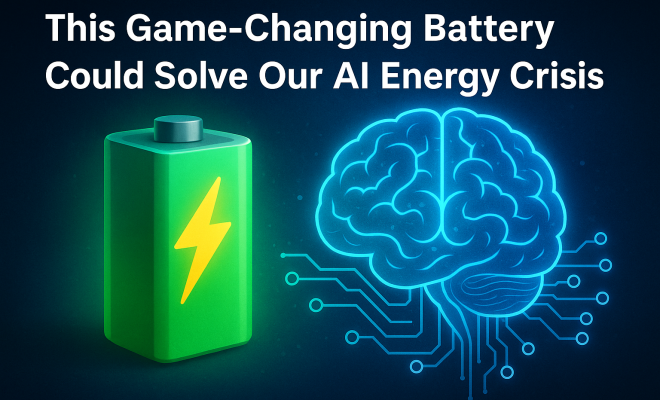
The global demand for electricity is exploding. We’re not just talking about more electric vehicles or greener homes; we’re talking about the insatiable appetite of artificial intelligence, the surging needs of advanced manufacturing, and the relentless march of the broader energy transition. It’s a massive challenge, one that traditional energy grids and even current renewable solutions struggle to meet consistently. The holy grail? Affordable, reliable, long-duration energy storage that can truly deliver renewable baseload power. And it seems a European startup, Ore Energy, might just be on the verge of cracking that code with a technology that feels almost too simple to be true: iron-air batteries.
Recently, Ore Energy made headlines by securing a hefty $43 million in Series A funding from major investors like Plural and HV. This isn’t just another tech startup looking for a modest boost; it’s a significant investment in a technology poised to tackle one of the most critical bottlenecks in achieving widespread renewable energy adoption. Their focus? Developing batteries capable of storing renewable electricity for up to 100 hours, a duration that far outstrips the capabilities of most current battery technologies, especially at a competitive price point. Let’s dig into why this could be a genuine game-changer.
1. The AI Era’s Insatiable Hunger for Power: Why Baseload is Critical
Think about the computational demands of large language models, the data centers powering cloud services, and the increasingly automated factories churning out everything from microchips to electric cars. Each of these sectors is experiencing exponential growth, and with that growth comes an equally exponential demand for electricity. AI, in particular, is a massive energy hog. Training a single large AI model can consume as much energy as hundreds of homes in a year. As AI becomes more sophisticated and integrated into every facet of our lives, its energy footprint will only grow.
This isn’t a future problem; it’s a present one. Data centers are already scouting locations not just for connectivity, but for access to massive, reliable power supplies. The intermittency of renewables like solar and wind – brilliant when the sun shines or the wind blows, but silent otherwise – poses a significant challenge. To truly power the AI era and other energy-intensive industries with renewables, we need a way to store that energy efficiently and release it consistently, providing what’s known as renewable baseload power. That means power available 24/7, regardless of weather conditions or time of day. This is precisely the gap Ore Energy aims to fill.
2. Iron-Air Batteries: A Return to Abundance: The Core Technology
What makes Ore Energy’s approach so compelling is its reliance on incredibly abundant, low-cost materials: iron, water, and air. Unlike lithium-ion batteries, which depend on increasingly expensive and geopolitically sensitive rare earth minerals, iron-air technology leverages materials that are readily available almost anywhere on Earth. This dramatically reduces material costs and supply chain risks, paving the way for truly affordable long-duration storage.
The principle behind iron-air batteries isn’t entirely new; it’s a form of redox flow battery. However, Ore Energy’s innovation lies in making this technology practical and scalable for grid-level applications. Imagine batteries that are not just cheaper per unit of energy, but also safer, using non-flammable components. This combination of affordability, safety, and material availability is what sets them apart and positions them as a strong contender for delivering cost-effective renewable baseload power.
3. 10x Cost Advantage Over Lithium-Ion: The Economic Breakthrough
Here’s where the numbers get truly interesting. Ore Energy claims its iron-air batteries offer a staggering 10 times lower cost per unit of energy capacity compared to traditional lithium-ion batteries when it comes to long-duration storage (think 10-100 hours). Let that sink in for a moment. This isn’t a marginal improvement; it’s a paradigm shift in the economics of energy storage.
Lithium-ion batteries have been fantastic for electric vehicles and shorter-duration grid applications, but their cost scales up significantly for extended storage periods. The sheer volume of lithium required makes long-duration lithium-ion storage prohibitively expensive for widespread grid deployment. Iron-air, by contrast, leverages its cheap, abundant materials to maintain a low cost basis even for massive, multi-day storage needs. This economic advantage is absolutely critical for making renewable energy not just viable, but truly competitive with fossil fuels on a continuous, baseload level.
4. 100 Hours of Storage: A Game-Changer for Grid Stability
The ability to store electricity for up to 100 hours is a monumental leap forward. Most grid-scale battery systems today are designed for 2-4 hours of storage, maybe 6-8 hours in advanced cases. That’s fine for smoothing out short-term fluctuations, but it doesn’t address multi-day cloudy periods or extended wind droughts. Imagine a large industrial facility or a city block powered entirely by renewables. What happens if the sun doesn’t shine for three days straight, or the wind dies down for a week?
With 100 hours of storage, we’re talking about the capacity to bridge significant gaps in renewable generation, providing genuine energy security and enabling renewable baseload power. This level of duration means less reliance on backup gas-fired plants, fewer curtailments of renewable energy when generation exceeds demand, and a much more resilient, self-sufficient grid. It moves us from ‘supplementing’ the grid with renewables to ‘powering’ the grid primarily with renewables. (See: importance of renewable energy storage.)
5. Fully European Supply Chain: Geopolitical Independence and Resilience
One of the often-overlooked but incredibly important aspects of Ore Energy’s technology is its potential for a fully European supply chain. In an increasingly volatile world, relying on materials and manufacturing processes concentrated in a few geopolitical hotspots carries significant risks. The scramble for lithium, cobalt, and nickel has highlighted these vulnerabilities, leading to price spikes and supply disruptions.
By using iron, water, and air – materials abundant across Europe – Ore Energy can establish a robust, localized supply chain. This not only creates jobs and fosters economic growth within the region but also insulates the energy transition from external shocks. It’s a strategic advantage that enhances energy security and accelerates the move away from fossil fuels without trading one form of dependency for another. This self-reliance is crucial for any nation or bloc aiming for true energy independence and the reliable delivery of renewable baseload power.
6. Beyond Ore Energy: The Sodium-Ion Surprise: Another Storage Innovation
While Ore Energy focuses on iron-air, it’s worth noting that the broader field of long-duration energy storage is buzzing with innovation. A fascinating, somewhat surprising breakthrough recently came from the University of Surrey, revealing new potential for sodium-ion battery materials. Researchers discovered that simply leaving naturally occurring water inside these materials could nearly double their power output.
This isn’t just a minor tweak; it points to fundamental properties of these materials that we’re only beginning to understand. Sodium-ion batteries are another promising alternative to lithium-ion, using even more abundant elements (sodium, found in salt, is virtually limitless). The Surrey discovery suggests that with further research, sodium-ion technology could become even more powerful and efficient, potentially even enabling seawater desalination as a byproduct. While different from iron-air, it underscores the rapid advancements happening in battery chemistry, all aimed at finding sustainable, cost-effective ways to store energy for a clean future.
7. Monetization Opportunities and Market Impact: Investing in the Future of Power
The implications of technologies like Ore Energy’s extend far beyond just cleaner energy. They open up vast monetization opportunities across several sectors. For starters, think about the **Solar/Energy** sector. Affordable, long-duration storage will supercharge the demand for home battery systems, allowing homeowners to truly go off-grid or maximize their solar investment. For utility companies, these batteries represent crucial grid solutions, enabling massive renewable energy integration and reducing the need for costly grid upgrades.
Then there’s the **Investing** sector. Cleantech and sustainable investing are already hot, but a breakthrough in renewable baseload power creates an entirely new category of highly attractive opportunities. Investors will be looking for companies that can scale these technologies, deploy them globally, and integrate them into existing energy infrastructure. Finally, the **Business/B2B SaaS** sector stands to benefit immensely. Data centers, manufacturing plants, and other energy-intensive businesses will need sophisticated energy management systems to optimize their use of these new battery solutions, ensuring consistent power supply and maximizing cost savings. This isn’t just about selling batteries; it’s about building an entire ecosystem around them.
8. The Mechanics of Iron-Air Batteries: How Do They Work?
Understanding the “how” behind iron-air batteries really clarifies their potential. At their heart, these are rechargeable metal-air batteries. The key components are an iron electrode and an air electrode, separated by an electrolyte. When the battery is discharging (providing power), the iron electrode rusts – essentially oxidizing in the presence of water and oxygen from the air. This chemical reaction releases electrons, creating an electric current.
To recharge the battery, the process is reversed. An electric current is applied, which reduces the rust back into iron. This cycle of rusting and de-rusting allows the battery to store and release energy. What makes this particular chemistry so compelling for long-duration storage is the abundance and low cost of iron, the stability of the reaction, and the fact that air, a critical reactant, is virtually free and limitless. Unlike lithium-ion batteries that store energy within the electrode material itself, iron-air batteries effectively “breathe” air to perform their electrochemistry. This design minimizes the amount of heavy, expensive materials needed for energy storage capacity, contributing significantly to their touted cost advantage.
9. Comparing Long-Duration Storage Technologies: Beyond Batteries
While iron-air batteries are incredibly promising, it’s important to remember they’re part of a broader family of long-duration energy storage (LDES) solutions vying to deliver renewable baseload power. Each technology has its strengths and weaknesses, and the market will likely see a mix of solutions deployed depending on specific needs and geographies.
- Pumped Hydro Storage (PHS): This is the most mature LDES technology, accounting for over 95% of global storage capacity. It uses excess electricity to pump water uphill to a reservoir, then releases it through turbines to generate power when needed. PHS offers very long durations and high capacities but is geographically constrained by suitable topography and faces significant environmental hurdles for new projects.
- Compressed Air Energy Storage (CAES): Similar to PHS, CAES uses surplus electricity to compress air and store it in underground caverns or tanks. When power is needed, the compressed air is released to drive turbines. CAES also offers long duration but has efficiency losses and requires specific geological formations.
- Thermal Energy Storage: These systems store energy as heat, often using molten salts or other materials. Concentrated solar power (CSP) plants commonly integrate thermal storage to extend generation into the evening. While effective for heat-intensive applications, converting heat back to electricity introduces some efficiency losses.
- Flow Batteries (e.g., Vanadium Redox Flow): These batteries store energy in liquid electrolyte tanks, with power generated as the liquids flow through a reactor. They can be scaled by simply increasing the size of the tanks, offering excellent cycle life and safety. Vanadium is effective but can be costly and supply-constrained, making innovations like iron-air flow batteries particularly exciting.
- Gravity-Based Storage: Companies are developing systems that lift heavy blocks or weights using excess electricity, then lower them to generate power. These are conceptually simple, have long lifetimes, and use abundant materials, but are still largely in early commercialization stages.
Ore Energy’s iron-air technology stands out by combining the advantages of battery chemistry (modular, scalable, potentially faster response times) with the low-cost, abundant materials typically associated with more mechanical or thermal LDES solutions. This hybrid approach could be key to widespread adoption.
10. Expert Perspectives: What Industry Leaders Are Saying
The energy storage sector is abuzz with activity, and experts are keenly watching developments in long-duration solutions. Many acknowledge that while lithium-ion has dominated for short durations, a different chemistry is needed for true baseload renewable integration. (See: advancements in battery technology.)
“The current energy transition roadmap often overlooks the ‘missing middle’ of storage – that 10 to 100-hour window,” says Dr. Jane Carter, a leading energy policy analyst. “Without cost-effective solutions for these multi-day gaps, we’ll remain tethered to fossil fuel peaker plants. Technologies like iron-air batteries represent a critical pathway to genuine energy independence and grid resilience.”
From an investment standpoint, venture capitalists are increasingly looking beyond incremental improvements in existing battery tech. “We’re seeing a maturation in the LDES space, moving from lab curiosities to deployable solutions,” notes Michael Chen, a cleantech investor. “The emphasis on abundant materials and localized supply chains, as Ore Energy is pursuing, de-risks these investments significantly and aligns with broader geopolitical priorities.”
Utility companies are also vocal about their needs. “Our biggest challenge isn’t generating renewable energy anymore; it’s managing its intermittency at scale,” explains Sarah Davies, VP of Grid Operations at a major European utility. “We need storage that can reliably carry us through multiple days of low wind or solar output, without costing an arm and a leg. The 100-hour promise is transformative for our grid planning.” These perspectives underscore the genuine market demand and strategic importance of technologies like Ore Energy’s.
11. The Environmental Footprint: Sustainability Beyond Abundance
While the abundance of iron, water, and air is a massive environmental advantage, it’s also important to consider the full lifecycle impact of iron-air batteries. Unlike lithium-ion, which faces challenges with mining practices, water usage, and end-of-life recycling for critical minerals, iron-air batteries offer a cleaner profile.
- Mining Impact: Iron ore mining, while still an industrial process, is less environmentally intensive than lithium or cobalt mining, with established and generally more regulated practices. The sheer ubiquity of iron also means less pressure on specific, sensitive ecosystems.
- Recycling and End-of-Life: Iron is one of the most recycled materials globally. At the end of their operational life, iron-air batteries should be relatively straightforward to recycle, with the iron components easily recoverable and reusable. This circularity is a huge win for sustainability.
- Safety: The non-flammable nature of iron-air chemistry significantly reduces risks of thermal runaway and fires, which are occasional concerns with some lithium-ion chemistries. This enhances safety during manufacturing, deployment, and disposal.
- Water Usage: While water is a component, the exact volumes and recycling capabilities within the system are key. Efficient closed-loop systems would minimize external water demands.
By prioritizing materials that are not only abundant but also widely recyclable and inherently safer, Ore Energy is positioning its technology as a truly sustainable solution for renewable baseload power, addressing environmental concerns throughout the product lifecycle.
Frequently Asked Questions (FAQ) about Renewable Baseload Power and Iron-Air Batteries
Q1: What exactly is “renewable baseload power”?
Renewable baseload power refers to the ability of renewable energy sources, combined with energy storage, to provide a consistent, minimum level of electricity supply 24/7, regardless of weather conditions or time of day. Traditionally, baseload power has been supplied by always-on sources like nuclear or fossil fuel power plants. Achieving it with renewables is critical for a fully decarbonized grid.
Q2: Why can’t existing lithium-ion batteries provide baseload power?
Lithium-ion batteries are excellent for short-duration storage (typically 2-8 hours) and for applications like electric vehicles where energy density is paramount. However, for true baseload power that might require days of storage, their cost scales up significantly due to the expense and volume of lithium and other rare earth materials needed. They become prohibitively expensive for storing energy for 10-100 hours or more.
Q3: How do iron-air batteries differ from traditional redox flow batteries?
While iron-air batteries can be considered a type of redox flow battery in their operational principle (chemical reactions in flowing electrolytes), their key distinction is the active material: iron. Traditional flow batteries often use more expensive and less abundant materials like vanadium. Iron-air batteries leverage iron and oxygen from the air, dramatically reducing material costs and increasing material availability, making them unique in their cost-effectiveness for long durations.
Q4: What are the main advantages of iron-air batteries over other long-duration storage technologies?
Iron-air batteries offer several compelling advantages:
- Cost-effectiveness: Utilizing incredibly abundant and cheap materials (iron, water, air) leads to significantly lower costs per kWh for long-duration storage compared to lithium-ion.
- Long Duration: Capable of 10-100+ hours of storage, bridging multi-day intermittency gaps from solar and wind.
- Safety: Non-flammable components reduce safety risks.
- Abundant Materials: Reduces geopolitical supply chain risks and environmental impact associated with rare earth minerals.
- Scalability: Modular design allows for easy scaling for grid-level applications.
Q5: What are the challenges facing iron-air battery technology?
Like any nascent technology, iron-air batteries face challenges. These include:
- Energy Density: Iron-air batteries typically have lower energy density than lithium-ion, meaning they require more space for the same amount of energy. This is less of an issue for grid-scale applications where space is often less constrained than in EVs.
- Cycle Life and Efficiency: While promising, optimizing the long-term cycle life and round-trip efficiency (how much energy is lost during charge/discharge) for commercial deployment is an ongoing engineering challenge.
- Commercial Scale-Up: Moving from successful prototypes and pilot projects to mass manufacturing and widespread deployment requires significant capital, infrastructure, and standardized processes.
- Temperature Sensitivity: The performance of some battery chemistries can be affected by extreme temperatures, which needs to be managed for diverse global deployments.
(See: challenges in renewable energy adoption.)
Q6: How will long-duration storage impact the electricity grid?
Long-duration storage will revolutionize the electricity grid by:
- Enabling 100% Renewables: It’s the missing piece to reliably integrate massive amounts of intermittent solar and wind.
- Reducing Curtailment: Prevents the waste of renewable energy when generation exceeds demand.
- Improving Grid Stability: Provides essential ancillary services like frequency regulation and voltage support.
- Enhancing Energy Security: Reduces reliance on imported fossil fuels and localized supply chains.
- Deferring Infrastructure Upgrades: Can alleviate congestion and reduce the need for expensive new transmission lines in some areas.
- Lowering Electricity Costs: By optimizing renewable use and reducing reliance on expensive peaker plants.
Q7: What is Ore Energy’s current stage of development?
Ore Energy recently secured significant Series A funding, indicating they are moving beyond early-stage R&D into product development and initial commercialization efforts. This funding will likely be used to build larger prototypes, conduct extensive testing, and prepare for pilot projects and manufacturing scale-up. They are still in the pre-commercial deployment phase but show strong investor confidence.
Q8: Besides iron-air, what other innovative long-duration storage technologies are emerging?
The LDES landscape is very dynamic. Beyond pumped hydro and CAES, we’re seeing advancements in:
- Gravity-based storage: Lifting heavy blocks to store energy.
- Liquid air energy storage (LAES): Compressing air into a liquid form, then expanding it to drive turbines.
- Thermal energy storage: Using materials like molten salt or rocks to store heat, then converting it back to electricity.
- Other flow battery chemistries: Exploring zinc-bromine, organic redox, and various other chemistries.
- Hydrogen: Producing green hydrogen with excess renewables and using it in fuel cells or turbines later.
Each technology has its niche, and iron-air is a strong contender for grid-scale, multi-day electrical storage.
Q9: How long before iron-air batteries are widely deployed globally?
The timeline for widespread global deployment depends on several factors: the speed of Ore Energy’s technical maturation and manufacturing scale-up, regulatory frameworks, infrastructure development, and competitive landscape. Typically, for a novel grid-scale technology, moving from Series A funding to significant commercial deployment can take 5-10 years. Pilot projects could emerge within the next 2-3 years, with broader market penetration following as costs decline and proven reliability increases.
Q10: Can iron-air batteries be used for home energy storage?
While technically possible, iron-air batteries, due to their potentially lower energy density and larger footprint, might be more suited for utility-scale, industrial, or community-level energy storage rather than individual home battery systems where compact size is often a priority. However, as the technology matures and form factors evolve, home applications might become more viable, especially for households looking for multi-day backup or off-grid capabilities. This builds on renewable energy advancements.
The Road Ahead for Renewable Baseload Power
Ore Energy’s successful funding round is a strong signal that investors recognize the critical need for long-duration energy storage and the disruptive potential of iron-air battery technology. While the $43 million is substantial, scaling a technology like this to meet global demand will require even greater investment and meticulous execution. The journey from lab to widespread deployment is never simple, fraught with engineering challenges, regulatory hurdles, and intense competition.
However, the fundamentals are incredibly compelling: cheap, abundant materials, a 10x cost advantage for long-duration storage, and the ability to provide reliable power for days on end. If Ore Energy can deliver on its promise, it won’t just be a win for the company; it will be a monumental leap forward for the entire renewable energy transition, finally providing the consistent, affordable renewable baseload power that the AI era and a sustainable future desperately need. It’s an exciting time to watch this space, as breakthroughs like this reshape our understanding of what’s possible in energy storage.
Trending Now
Frequently Asked Questions
What is Ore Energy's new battery technology?
Ore Energy is developing iron-air batteries, which are designed to provide affordable, reliable, long-duration energy storage capable of storing renewable electricity for up to 100 hours. This technology aims to address the growing energy demands, particularly from sectors like artificial intelligence and advanced manufacturing.
How does the energy demand from AI impact electricity consumption?
The energy demand from AI is significant; training a single large AI model can consume as much electricity as hundreds of homes in a year. As AI technologies become more sophisticated, their energy footprint is expected to grow, making efficient energy storage solutions essential.
Why is long-duration energy storage important?
Long-duration energy storage is crucial because it enables the consistent delivery of renewable baseload power. This capability helps address the intermittent nature of renewable energy sources, ensuring a reliable supply of electricity to meet increasing demands, especially from energy-intensive sectors.
What are the benefits of iron-air batteries?
Iron-air batteries offer several benefits, including the potential for low-cost production, long storage durations of up to 100 hours, and the ability to efficiently store renewable energy. These advantages make them a promising solution for the energy challenges posed by the growing demand from sectors like AI.
How much funding did Ore Energy secure for its battery technology?
Ore Energy secured $43 million in Series A funding from notable investors, including Plural and HV. This substantial investment reflects confidence in their innovative technology aimed at solving critical energy storage challenges tied to the renewable energy transition.
What's your take on this? Share your thoughts in the comments below — we read every one.