Your Home Could Be Uninsurable: The Urgent Climate Threat to Property Values
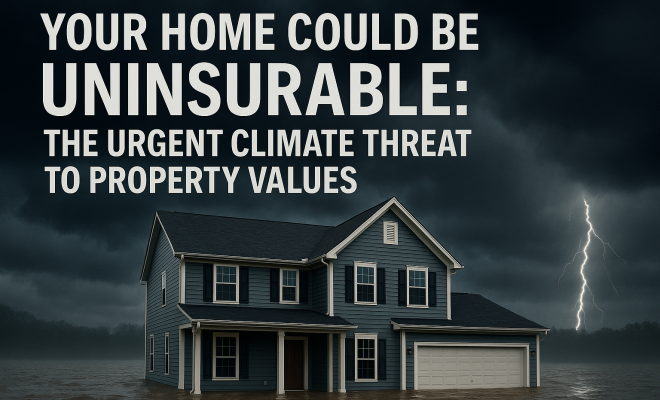
It’s a question that keeps homeowners, potential buyers, and even mortgage lenders up at night: Will climate change make homes uninsurable? This isn’t some far-off futuristic scenario; it’s happening right now, in places you know, and it’s hitting our wallets with alarming speed. We’re talking about regions in the UK and across the United States where extreme weather events—those floods, those heatwaves, those droughts, and those raging wildfires—are no longer anomalies but increasingly common occurrences. And they’re making property insurance either completely unavailable or so ridiculously expensive that it becomes a non-starter.
This isn’t just about a slightly higher premium; it’s a rapidly escalating crisis that’s directly impacting the housing market itself. Think about it: mortgage lenders, almost without exception, require buildings insurance. No insurance, no mortgage. No mortgage, and suddenly, buying or selling a home becomes significantly harder, if not impossible. This isn’t just a headache for new buyers; it could very well trap current homeowners, leaving them with properties they can’t afford to protect or sell. The ripple effects are profound, touching everything from personal finance to property wealth, and it’s sparking some serious debate about how governments and insurers are responding to these growing, undeniable risks. The conversation around climate change home insurance is no longer abstract; it’s brutally concrete.
The Rising Tide: When Climate Risk Hits Your Wallet
Let’s be blunt: the financial world is waking up to climate change, and it’s doing so with a jolt. For years, we’ve talked about global warming in terms of scientific models and future generations. But now, it’s about the here and now, specifically how it affects the very tangible asset most of us own: our homes. The increase in extreme weather events isn’t just a statistical blip; it’s a fundamental shift that’s reshaping the risk landscape for insurers. See also housing market challenges.
Consider the data coming out of various meteorological agencies. We’re seeing more frequent and intense rainfall, leading to unprecedented flooding in areas that historically never worried about it. Coastal communities face relentless sea-level rise and more powerful storm surges. Inland, prolonged droughts create tinderboxes, fueling catastrophic wildfires that obliterate entire neighborhoods. These aren’t isolated incidents; they’re part of a pattern, and insurers are the first line of defense, or perhaps, the first to retreat, when these patterns become too costly to bear. When a significant portion of their policyholders in a particular region are filing claims year after year, the economics simply don’t work. This is where the concept of ‘uninsurable’ begins to take root – not as a punitive measure, but as a cold, hard actuarial reality.
The Mortgage Mandate: Why Insurance is Non-Negotiable
Here’s the rub: if you have a mortgage, you absolutely, unequivocally need buildings insurance. It’s not optional. Lenders require it as a condition of the loan to protect their investment. Imagine you buy a home with a $300,000 mortgage, and a wildfire or flood destroys it. Without insurance, the lender loses their collateral, and you’re left with a debt for a property that no longer exists. This is why the availability and affordability of climate change home insurance is such a critical bottleneck in the real estate market.
When insurance becomes impossible to obtain, or premiums skyrocket to thousands, even tens of thousands, of dollars annually, the entire transaction grinds to a halt. A buyer might be pre-approved for a mortgage, find their dream home, only to discover that the insurance quotes are so astronomical they can’t afford the monthly payments. Or worse, no insurer will even offer a policy. This isn’t just a hypothetical problem; it’s a lived reality for many. And it means that homes in high-risk areas, regardless of their intrinsic value or charm, suddenly become unsellable. This isn’t just about protecting your investment; it’s about the very fluidity of the housing market itself.
Regulatory Response: The FCA’s Guidance in the UK
It’s not just homeowners and insurers feeling the heat; regulators are stepping in, too. In the UK, the Financial Conduct Authority (FCA) recently published new guidance that’s a pretty clear signal of how seriously they view this issue. This guidance spells out exactly how physical climate risks are expected to impact property insurance and, crucially, the mortgage markets.
What does this mean in practice? It means regulated firms – banks, building societies, insurers – can no longer bury their heads in the sand. They’re expected to assess, monitor, and manage climate-related financial risks. This isn’t just about ticking a box; it’s about embedding climate risk into their fundamental business strategies. For insurers, this might mean more sophisticated risk modeling, potentially leading to more granular pricing – meaning your neighbor might pay a different premium than you, even for a similar house, based on hyper-local flood or fire risk. For mortgage lenders, it means considering the long-term insurability of a property when making lending decisions. Will a home retain its value and remain insurable over the 25-30 year term of a mortgage? These are tough questions, and the FCA is pushing firms to confront them head-on, effectively making climate change home insurance a core part of financial stability.
The Social Media Storm: Public Outcry and Policy Debates
You don’t have to look far to see the public’s anxiety boiling over. Social media platforms are awash with homeowners sharing their stories of skyrocketing premiums, policy non-renewals, and the sheer frustration of navigating this new landscape. It’s a deeply personal issue because it threatens people’s biggest asset and their financial security. When someone shares that their flood insurance premium jumped from £500 to £5,000 in a year, or that they can’t sell their family home because no insurer will touch it, it resonates powerfully. (See: impact of climate change on insurance.)
This widespread engagement isn’t just venting; it’s fueling intense controversy over how governments and insurers are responding. Should governments step in as ‘insurers of last resort’ for properties that are commercially uninsurable? What about stricter building codes for new constructions in high-risk zones? Should there be government-backed schemes to help homeowners retrofit their properties to be more climate-resilient? These are complex policy questions with no easy answers, but the public demand for solutions is undeniable. The conversation around climate change home insurance has moved from quiet boardrooms to the public square, and it’s loud.
The Unseen Costs: Beyond the Premium
While the focus is often on the direct cost of climate change home insurance premiums, the true economic impact stretches far wider. Think about property values. If a home becomes difficult or impossible to insure, its market value will inevitably plummet. Who wants to buy a house they can’t protect? This creates a cohort of ‘trapped’ homeowners who can’t sell without taking a massive financial hit, essentially losing a significant portion of their accumulated wealth.
Then there are the ripple effects on local economies. If property values decline, so does the tax base for local municipalities, impacting schools, infrastructure, and public services. Construction and real estate industries suffer. Banks holding mortgages on these devalued, high-risk properties face increased exposure. It’s a domino effect that can destabilize entire communities. And let’s not forget the emotional toll: the stress, anxiety, and uncertainty that come with knowing your home, your sanctuary, is increasingly vulnerable and potentially uninsurable. The financial implications of climate change home insurance extend far beyond the monthly bill.
Climate-Resilient Homes: A Path Forward?
So, what can be done? One significant part of the solution lies in making our homes more resilient to climate impacts. This isn’t just about building stronger; it’s about building smarter. For flood-prone areas, this might mean elevating homes, installing flood barriers, using water-resistant materials, or even creating permeable landscapes that absorb excess water. In wildfire zones, it involves fire-resistant roofing, clearing defensible space around properties, and using non-combustible building materials.
The challenge, of course, is the cost of these retrofits. They can be substantial, often beyond the means of the average homeowner. This is where government incentives, grants, or low-interest loan programs could play a crucial role. If we can make homes more resilient, they become less risky for insurers, which in turn helps keep climate change home insurance more accessible and affordable. It’s a proactive approach that tackles the root cause of the insurance crisis, rather than just reacting to its symptoms. Investing in resilience today could save billions in disaster recovery and insurance payouts tomorrow.
Navigating the Insurance Maze: Tips for Homeowners
For homeowners staring down the barrel of rising premiums or non-renewals, navigating the insurance market can feel like a daunting task. Here are a few practical steps you can take:
- Shop Around Aggressively: Don’t just accept your renewal quote. Get quotes from multiple insurers, including smaller, regional carriers who might have a different risk appetite or a more localized understanding of your area.
- Understand Your Risk Profile: Know precisely what risks your home faces. Is it flood? Wildfire? High winds? Understanding this can help you identify specific mitigation measures. Websites from government agencies (like FEMA in the US or the Environment Agency in the UK) often have flood maps and risk assessments.
- Document Improvements: If you’ve made any climate-resilient upgrades (e.g., new roof, elevated HVAC, improved drainage), make sure your insurer knows. These improvements can often lead to discounts or make your property more attractive to an insurer.
- Consider a Higher Deductible: While not ideal, a higher deductible can sometimes lower your premium, making coverage more affordable. Just be sure you can comfortably cover that deductible if you need to file a claim.
- Explore Government Programs: In some high-risk areas, state-backed or government-subsidized insurance programs exist as a ‘last resort.’ These are often more expensive but provide essential coverage when private markets withdraw. Examples include California’s FAIR Plan for wildfire or the National Flood Insurance Program (NFIP) in the US.
- Advocate for Community-Wide Solutions: Individual actions are good, but community-level resilience projects (like seawalls, improved drainage systems, or forest management) can significantly reduce risk for everyone in an area, potentially making it more attractive to insurers. Get involved in local planning.
The key here is proactivity. Don’t wait until your renewal notice arrives to start thinking about your climate change home insurance options.
The Shifting Landscape of Real Estate and Lending
This isn’t just an insurance problem; it’s a fundamental challenge to the real estate market and the entire mortgage industry. Lenders, as we’ve established, need insured collateral. As insurers pull back from certain areas, or price their policies out of reach, it creates ‘redlined’ zones for mortgages. Lenders will simply refuse to lend in areas where homes can’t be insured, regardless of how desirable the location once was.
This could lead to a two-tiered housing market: properties in low-risk, insurable areas that continue to appreciate, and properties in high-risk, uninsurable areas that see their values stagnate or even collapse. This isn’t just unfair; it’s a recipe for significant wealth inequality, disproportionately affecting those who have invested their life savings in vulnerable regions. The long-term implications for financial stability and economic justice are profound. The future of climate change home insurance is inextricably linked to the future of property ownership. (See: CDC's climate and health program.)
Looking Ahead: Is Government Intervention Inevitable?
Given the scale of the problem and its potential to destabilize economies, it’s increasingly likely that governments will need to play a more significant role. The private insurance market is designed to manage risk, not absorb systemic, large-scale, unquantifiable risk. When entire regions become uninsurable, it moves beyond the scope of traditional insurance models.
We might see the expansion of government-backed insurance programs, similar to the National Flood Insurance Program in the US, but perhaps covering a wider array of climate risks. There could be massive public investments in climate adaptation and resilience infrastructure, like sea walls, upgraded storm drains, and extensive wildfire prevention programs. Furthermore, governments might need to offer significant subsidies or tax incentives to homeowners for climate-proofing their properties. The alternative—a widespread collapse of property values and a financial crisis triggered by uninsurable homes—is a scenario no government wants to contemplate. The challenge, of course, will be funding these initiatives and ensuring they are equitable and effective in addressing the complex realities of climate change home insurance.
The Global Picture: Beyond the UK and US
While we’ve focused heavily on the UK and US, it’s important to remember that this isn’t an isolated problem. Communities worldwide are grappling with similar, if not more severe, challenges. In Australia, bushfires and floods have ravaged vast areas, leading to similar insurance withdrawals and premium hikes. Coastal nations in the Pacific and Caribbean face existential threats from rising sea levels and intensifying tropical storms, often making their homes and infrastructure virtually uninsurable without significant international aid or government intervention. Related reading: impact of mortgage rates.
Even in places historically less affected, new climate patterns are emerging. Central Europe is experiencing more intense heatwaves and droughts, impacting agricultural properties and increasing wildfire risks in traditionally temperate zones. The global south, often with fewer financial resources, faces the brunt of these changes with even less capacity to adapt. This global perspective underscores that climate change home insurance isn’t just a national policy issue; it’s a worldwide crisis demanding international cooperation and innovative solutions. The lessons learned in one region, whether successful or cautionary, can inform strategies in others, highlighting the interconnectedness of our global financial and environmental systems.
The Role of Data and Technology in Risk Assessment
Insurers aren’t just relying on historical data anymore; they’re leveraging cutting-edge technology to predict future risks with unprecedented precision. We’re talking about satellite imagery, drone surveillance, AI-powered predictive analytics, and hyper-local weather modeling. This advanced data allows insurers to identify specific properties, or even parts of properties, that are at higher risk. For example, a home situated just a few feet lower than its neighbor might have a significantly different flood risk profile, and insurers are now able to factor that into their pricing.
While this granular approach can lead to more accurate pricing, it also means that properties with even slightly elevated risks can face disproportionately higher premiums or outright denial. This technological leap, while beneficial for insurers in managing their portfolios, can feel incredibly unfair to homeowners who suddenly find themselves in a newly defined “high-risk zone” based on data they can’t access or verify themselves. The transparency of these models and how they impact individual homeowners remains a contentious point in the climate change home insurance debate. It’s a double-edged sword: better data for risk assessment, but potentially harsher outcomes for those deemed too risky.
The Psychological Impact on Homeowners
Beyond the financial stress, there’s a profound psychological toll on homeowners living in climate-vulnerable areas. Imagine the constant anxiety of checking weather forecasts, the fear during a heavy downpour, or the dread every wildfire season. This isn’t just about protecting an asset; it’s about protecting one’s sanctuary, one’s sense of security. The threat of losing your home, or being unable to rebuild, can lead to chronic stress, mental health issues, and a pervasive sense of powerlessness.
This emotional burden extends to the decision-making process. Should you sell and move, even if it means taking a financial hit and leaving a community you love? Can you even sell if your home is uninsurable? These questions create a cycle of uncertainty that chips away at well-being. The conversation around climate change home insurance often focuses on economic metrics, but we must also acknowledge the human cost, the erosion of peace of mind for millions of people whose homes are increasingly on the front lines of a changing climate. (See: climate change and home insurance costs.)
Frequently Asked Questions About Climate Change Home Insurance
Q1: What exactly does “uninsurable” mean in this context?
When we say a home might become “uninsurable,” it means private insurance companies are no longer willing to offer a policy for that property. This isn’t because the homeowner did something wrong, but because the perceived risk of damage from climate-related events (like floods, wildfires, or severe storms) is too high for the insurer to profitably cover. They either refuse to issue new policies, decline to renew existing ones, or set premiums so astronomically high that they are unaffordable for the average homeowner.
Q2: My current home insurance covers natural disasters. Does that mean I’m safe?
Not necessarily. Standard home insurance policies often exclude certain perils, most notably flood damage, which typically requires a separate policy. Wildfire coverage can also be limited or come with very high deductibles in high-risk zones. Even if your policy currently covers certain natural disasters, insurers can change their terms, raise premiums significantly, or decide not to renew your policy if your area’s risk profile increases due to climate change. It’s crucial to review your policy details carefully and understand its specific exclusions and limitations.
Q3: What’s the difference between private insurance and government-backed programs?
Private insurance companies operate on a for-profit model, assessing risk and setting premiums to ensure they can pay claims and still make money. If a risk becomes too high, they withdraw. Government-backed programs, like the National Flood Insurance Program (NFIP) in the US or similar schemes in other countries, are often designed as “insurers of last resort.” They step in to provide coverage when the private market won’t, often at rates that don’t fully reflect the true risk, sometimes with subsidies. While they offer essential protection, they can be more expensive than private options in some areas and may have their own limitations or financial challenges.
Q4: How can I find out my home’s specific climate risk?
Several resources can help. In the US, FEMA’s flood maps are a primary source for flood risk. The First Street Foundation’s Risk Factor website provides a broader climate risk assessment, including flood, fire, and wind. In the UK, the Environment Agency offers flood mapping. Local government planning departments often have information on regional hazards. Some private companies also offer detailed property risk reports. Knowing your specific risks is the first step towards mitigation and finding appropriate climate change home insurance.
Q5: If I make my home more climate-resilient, will my insurance premiums go down?
Potentially, yes. Many insurers offer discounts or more favorable terms for homes that have implemented specific mitigation measures. For example, installing a fire-resistant roof, elevating mechanical systems, or improving drainage around your property can reduce risk and make your home more attractive to insurers. It’s vital to document any improvements and discuss them with your insurance provider. While a single retrofit might not drastically lower your premium, a combination of measures can make a difference, and it certainly makes your property safer.
The question of whether climate change will make homes uninsurable isn’t a hypothetical one anymore. It’s a pressing reality for countless homeowners and a looming threat for many more. The confluence of extreme weather, the withdrawal of private insurers, and the mortgage industry’s reliance on insurance is creating a perfect storm that could reshape our communities and our personal finances in fundamental ways. We’re not just talking about rising premiums; we’re talking about the very bedrock of property ownership. It’s a wake-up call, demanding urgent action from individuals, communities, and governments alike to adapt, mitigate, and find sustainable solutions for the future of our homes.
Trending Now
Frequently Asked Questions
Will climate change make homes uninsurable?
Yes, climate change is already making some homes uninsurable due to the increasing frequency of extreme weather events like floods and wildfires. Insurers are either withdrawing coverage or significantly raising premiums, making it difficult for homeowners to secure necessary insurance.
How does extreme weather affect property values?
Extreme weather events can lead to decreased property values as homes become harder to insure. This creates challenges for buyers and sellers, as a lack of insurance can hinder mortgage approvals and make properties less desirable in the market.
What happens if my home is uninsurable?
If your home becomes uninsurable, it can significantly impact your ability to sell or refinance. Without insurance, mortgage lenders may not approve loans, leaving homeowners with properties they cannot afford to protect or sell.
What can homeowners do about rising insurance costs due to climate change?
Homeowners can take proactive steps like retrofitting their homes for better resilience against extreme weather, shopping around for insurance providers, or exploring government programs aimed at climate risk mitigation to help manage rising insurance costs.
How are governments responding to climate change and property insurance issues?
Governments are beginning to recognize the urgent need to address climate change impacts on property insurance. This includes discussions about regulatory reforms, funding for disaster preparedness, and initiatives aimed at promoting sustainable housing practices.
Have you experienced this yourself? We'd love to hear your story in the comments.