Decoding Solar Flares: The Mystery of Persistent Active Regions in 2026
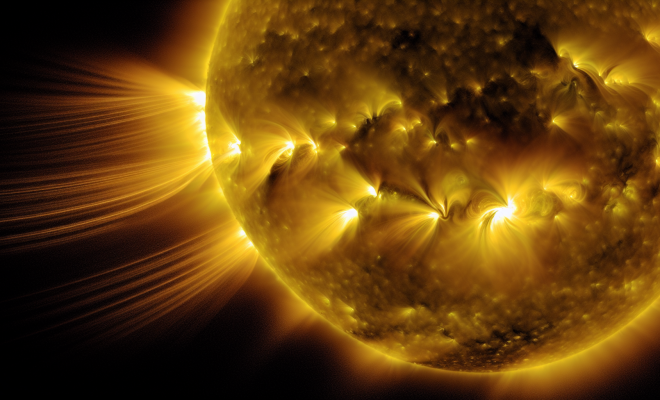
The Sun, our solar system’s central star, is a dynamic entity with a complex behavior that has fascinated astronomers for centuries. Among its many phenomena, solar flares stand out as one of the most powerful and explosive events in the universe. Recent observations have revealed that certain regions of the Sun, known as solar active regions, exhibit remarkable longevity and are prolific producers of these massive flares. However, the underlying mechanisms that govern this activity remain largely unexplained, presenting a significant challenge to our understanding of solar physics and space weather forecasting.
Understanding Solar Active Regions
Solar active regions are areas on the Sun’s surface that are characterized by intense magnetic activity. They are often associated with sunspots, which are cooler, darker patches resulting from magnetic field fluctuations. These regions can last from days to weeks, or even longer, and their persistent nature suggests that they play a critical role in the Sun’s overall behavior.
The Mystery of Extended Activity
On March 20, 2026, solar astronomers observed a series of significant solar flares emanating from one such long-lived active region. These flares, which are bursts of radiation caused by the release of magnetic energy, can disrupt satellite communications, navigation systems, and even power grids on Earth. The fact that these active regions can sustain such intense flare activity over extended periods raises crucial questions about what drives this phenomenon.
Solar Flares: A Deeper Dive
Solar flares are classified based on their X-ray brightness, with categories ranging from A-class (smallest) to X-class (largest). The flares produced by these long-lived active regions often fall into the high end of this classification, with some reaching X-class levels. The energy released during these events can be equivalent to millions of hydrogen bombs exploding simultaneously.
Challenges for Solar Physics Models
Despite advances in solar physics, the exact process that leads to the formation of these prolonged active regions and their prolific flare production is not well understood. Current models of solar activity typically struggle to explain the longevity of these regions. Researchers have proposed various theories, including the idea that magnetic flux tubes—structures that carry magnetic fields from the Sun’s interior to its surface—may become trapped or reconfigured in ways that allow for sustained activity.
Implications for Space Weather Forecasting
The increasing frequency of intense solar flares poses significant risks to technological infrastructure on Earth. Enhanced solar activity can lead to geomagnetic storms, which in turn can disrupt satellites and communication networks. Accurate forecasting of these events is crucial for mitigating their impact. However, the unpredictability surrounding the behavior of long-lived active regions complicates this task.
The Need for Enhanced Observation Techniques
To better understand these phenomena, solar physicists are advocating for improved observational techniques and technologies. For instance, missions like the Solar Dynamics Observatory (SDO) and the Parker Solar Probe are designed to provide unprecedented insights into solar activity. By gathering continuous data on solar flares and active regions, these missions aim to unravel the complexities of the Sun’s magnetic field and the mechanisms driving flare production.
Future Directions in Solar Research
As researchers continue to study solar active regions, there are several key areas of focus. These include:
- Magnetic Field Dynamics: Understanding the behavior of magnetic fields in active regions is essential for predicting flare activity.
- Longitudinal Studies: Conducting long-term observations of specific active regions can provide insights into their lifecycle and flare production.
- Modeling Developments: Advancements in computational models can help simulate the complex interactions within the Sun’s atmosphere.
- Collaboration Across Disciplines: Interdisciplinary approaches combining astrophysics, engineering, and computational science are vital for tackling these challenges.
Conclusion
The enduring mystery of the Sun’s long-lived active regions and their role as flare factories continues to intrigue scientists and pose challenges for solar physics. As technology and observational capabilities improve, we may finally begin to unlock the secrets of these powerful solar phenomena. Understanding these mechanisms is not just an academic pursuit; it holds significant implications for our ability to forecast space weather and protect our technological infrastructure from the potentially devastating effects of solar flares.