Unbelievable: Black Hole Winds Are 100x Stronger Than Anyone Realized
“`html
Imagine a cosmic force so immense, so utterly dominant, that it can shape galaxies and influence the very fabric of the universe across hundreds of thousands of light-years. For decades, scientists have grappled with the profound power of supermassive black holes, these gravitational behemoths lurking at the centers of most galaxies. We’ve known they’re potent, but recent groundbreaking observations have completely rewritten the rulebook, revealing that the winds emanating from these cosmic monsters are roughly 100 times more powerful than anyone previously dared to imagine. This isn’t just a tweak to our models; it’s a dramatic, mind-bending shift that fundamentally alters our understanding of how black holes interact with their surroundings and, indeed, how the universe itself has evolved.
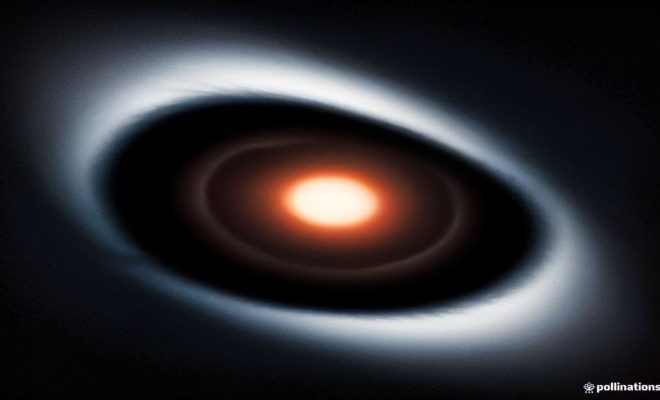
This astonishing discovery wasn’t pulled from thin air. It came courtesy of the XRISM satellite, a cutting-edge instrument designed to peer into the universe’s most energetic phenomena. The data XRISM collected painted a picture of turbulent energy spreading far beyond the immediate vicinity of a black hole’s host galaxy, reaching out to an incredible distance of approximately 300,000 light-years. To put that in perspective, our own Milky Way galaxy is roughly 100,000 light-years across. So, these supermassive black hole winds aren’t just influencing their home turf; they’re broadcasting their power across vast swathes of intergalactic space. The scale of this energy is almost incomprehensible, equivalent to the combined force of several billion supernova explosions. It’s a revelation that has sent ripples through the astrophysics community, forcing us to reconsider some deeply held assumptions about cosmic dynamics.
The Unveiling of XRISM’s Game-Changing Observations
The XRISM satellite, or X-ray Imaging and Spectroscopy Mission, is a joint project between JAXA (Japan Aerospace Exploration Agency) and NASA, designed to observe the universe in X-ray wavelengths. Why X-rays? Because some of the most energetic processes in the cosmos, like those involving black holes and galaxy clusters, emit powerfully in this part of the electromagnetic spectrum. Before XRISM, our ability to precisely measure the properties of these high-energy phenomena, especially the velocity and composition of galactic winds, was somewhat limited. Previous X-ray observatories provided crucial insights, but XRISM brings a new level of spectral resolution to the table, allowing astronomers to discern finer details in the X-ray light.
It’s this enhanced resolution that proved critical for the recent discovery regarding supermassive black hole winds. Imagine trying to identify individual notes in a complex chord played by an entire orchestra. Older instruments might have given you the general sound, but XRISM can pick out each instrument, each note, with incredible clarity. This allowed researchers to precisely measure the Doppler shifts in the X-ray spectra emitted by the gas caught in these outflows. A Doppler shift, for those unfamiliar, is like the change in pitch of an ambulance siren as it approaches and then recedes. For light, it means a shift towards blue if an object is moving towards us, and towards red if it’s moving away. By meticulously analyzing these shifts, scientists could accurately calculate the speeds and, crucially, the energy carried by these powerful winds.
Satoshi Yamada and the Power of Collaboration
Behind every major scientific breakthrough, there’s a team of dedicated individuals, and this discovery is no exception. Assistant Professor Satoshi Yamada of Tohoku University’s Frontier Institute for Interdisciplinary Sciences (FRIS) was a key figure in this groundbreaking research. His expertise, likely in the intricate analysis of X-ray spectral data and the theoretical modeling of black hole outflows, was instrumental in translating raw observations into profound cosmic understanding. It’s a testament to the collaborative nature of modern astrophysics, where scientists from institutions across the globe pool their knowledge and resources to tackle the universe’s biggest mysteries.
Yamada’s role highlights the specialized skills required to make sense of such complex data. Observing the faint X-ray signatures of these distant phenomena, then disentangling them from background noise and other cosmic sources, is no small feat. It requires not only advanced technical proficiency but also a deep theoretical understanding of black hole physics, gas dynamics, and galactic evolution. The fact that a team, led by individuals like Yamada, could synthesize these observations and present such a dramatic re-evaluation of black hole power speaks volumes about the rigor and sophistication of contemporary astrophysical research. Their work wasn’t just about spotting a bright light; it was about meticulously dissecting its signature to reveal an underlying power far grander than previously conceived.
The Staggering Energy Output: Billions of Supernovae
When we talk about the energy involved in these supermassive black hole winds, we’re not talking about small numbers. The research indicates that the immense energy output is comparable to several billion supernova explosions. Let’s pause for a moment to truly grasp that. A single supernova, the explosive death of a massive star, can outshine an entire galaxy for a brief period. It’s one of the most violent and energetic events in the universe, responsible for forging heavy elements and scattering them across space. Now, imagine billions of those events, not occurring sequentially over eons, but effectively condensed into the continuous outflow of a black hole.
This comparison isn’t just for dramatic effect; it provides a tangible scale for the previously underestimated power of supermassive black hole winds. It means these winds are not merely gentle breezes or localized disturbances. They are cosmic gales of unimaginable ferocity, capable of sweeping aside vast quantities of gas and dust. This energy isn’t just dissipated aimlessly; it’s channeled into shaping the environment around the black hole, creating cavities in the interstellar medium, and potentially influencing star formation over enormous distances. The sheer magnitude of this energy budget means we can no longer view these black hole outflows as secondary players; they are primary sculptors of galactic evolution.
Extending Influence: 300,000 Light-Years of Cosmic Reach
Perhaps one of the most astonishing aspects of this discovery is the sheer spatial extent of these supermassive black hole winds. The observations showed that this turbulent energy spreads across approximately 300,000 light-years, significantly extending beyond the black hole’s immediate host galaxy. This detail is crucial because it implies a much broader, more pervasive influence on the intergalactic medium than previously thought. For context, the visible disk of our Milky Way galaxy is about 100,000 light-years across, and its halo extends even further, but 300,000 light-years is truly intergalactic territory. (See: Supermassive black holes overview.)
Think about what this means. It’s not just the gas within a galaxy being affected; it’s the gas and plasma in the vast spaces between galaxies, the cosmic web itself. These powerful supermassive black hole winds act like cosmic snowplows, pushing material outward, heating it, and enriching it with elements forged in supernovae (which are also often triggered by the black hole’s activity). This widespread influence has profound implications for how galaxy clusters form and evolve, how gas cycles through the universe, and even how new galaxies might eventually form in these cleared-out regions. It paints a picture of black holes as not just local devourers of matter, but as architects of cosmic structure on truly gargantuan scales.
Rethinking Black Hole Feedback Mechanisms
The concept of ‘black hole feedback’ has been a cornerstone of modern astrophysics for years. It describes how the energy and matter ejected from an active supermassive black hole (an Active Galactic Nucleus, or AGN) can influence its host galaxy. This feedback can be positive, triggering star formation, or negative, suppressing it by heating or expelling gas. Before this discovery, our models of negative feedback, particularly from supermassive black hole winds, might have been significantly underestimated.
If these winds are 100 times more powerful, then their ability to clear gas clouds, heat the interstellar medium, and prevent new stars from forming is dramatically enhanced. This could explain why some massive galaxies appear to have stopped forming stars prematurely, or why galaxy clusters have such hot, diffuse gas that doesn’t easily cool and collapse to form new stars. The revised power budget for supermassive black hole winds means they are far more efficient at injecting energy into their surroundings, effectively acting as cosmic thermostats, regulating the star formation rates within their host galaxies and beyond. This forces us to revisit galactic evolution simulations and models, adjusting the parameters for black hole influence to reflect this newfound, immense power.
The Role of Supermassive Black Hole Winds in Galaxy Evolution
Galaxy evolution is a complex dance between gravity, gas dynamics, and star formation. For decades, astronomers have observed a strong correlation between the mass of a supermassive black hole and the properties of its host galaxy’s bulge (the central, spheroidal component). This correlation suggests a co-evolution, where the black hole and its galaxy grow and influence each other. Supermassive black hole winds are a primary candidate for mediating this co-evolution.
Imagine a galaxy in its early stages, rich with gas and actively forming stars. As the central supermassive black hole accretes matter, it also launches these powerful winds. If these winds are as potent as the XRISM data suggests, they can quickly heat and expel the cold gas reservoirs necessary for star formation. This effectively ‘quenches’ the galaxy, stopping star birth and leaving behind a ‘red and dead’ elliptical galaxy, devoid of active star formation. This mechanism helps explain the observed dichotomy between actively star-forming spiral galaxies and quiescent elliptical galaxies. The enhanced power of these winds provides a much more robust explanation for how such rapid quenching can occur, even in very massive galaxies that should, by all accounts, still have plenty of gas to form stars. It’s a key piece of the puzzle in understanding the full life cycle of galaxies.
Impact on Cosmic Structure and the Intergalactic Medium
Beyond individual galaxies, the influence of these supermassive black hole winds extends to the larger cosmic web. The intergalactic medium (IGM), the sparse gas that fills the space between galaxies, is not empty. It contains the raw material for future galaxy formation and is a crucial reservoir of baryonic matter (normal matter, as opposed to dark matter). When supermassive black hole winds spread across hundreds of thousands of light-years, they directly interact with this IGM.
This interaction can heat the IGM to extreme temperatures, making it difficult for gas to cool and collapse into new galaxies. It also disperses heavy elements, enriching the IGM with metals forged in stars and supernovae. This ‘chemical enrichment’ is vital for understanding the observed metallicities of distant galaxies and the overall cosmic chemical evolution. Furthermore, the immense energy injected into the IGM can create vast bubbles and cavities, carving out regions where gas is scarce. This sculpting of the IGM can leave lasting imprints on the distribution of matter in the universe, influencing the large-scale structure we observe today, from galaxy filaments to colossal voids. The black holes aren’t just shaping their immediate neighborhoods; they’re playing a significant role in the architecture of the entire cosmos.
Future Research and Unanswered Questions
This groundbreaking discovery, while incredibly significant, also opens up a Pandora’s Box of new questions and avenues for future research. If supermassive black hole winds are 100 times more powerful, what are the precise mechanisms driving such extreme outflows? Are there different types of AGNs that produce stronger winds than others? How do these powerful winds interact with different types of interstellar and intergalactic gas? We’ve seen evidence of their reach, but understanding the detailed physics of these interactions – how energy is transferred, how gas is heated and expelled – will be the next frontier.
Astronomers will undoubtedly be turning other powerful telescopes, both ground-based and space-based, to study these phenomena in even greater detail. Multi-wavelength observations, combining X-ray data from XRISM with radio, optical, and infrared observations, will be crucial for building a comprehensive picture. We’ll need more sophisticated simulations that incorporate these revised energy budgets to accurately model galaxy and cosmic evolution. The hunt for more examples of these ultra-powerful supermassive black hole winds, and understanding their prevalence across cosmic time, will be paramount. This discovery isn’t an end point; it’s a launchpad for a new era of black hole and galaxy evolution research.
Expert Perspectives and Comparative Studies
To truly appreciate the scope of this discovery, it helps to consider how it aligns with, and sometimes challenges, existing theories. Leading astrophysicists like Dr. Martin Rees, a pioneer in black hole research, have long theorized about the profound impact of AGNs on their host galaxies. While the general concept of feedback has been around, the sheer magnitude of power revealed by XRISM pushes the envelope on what’s physically possible for these outflows. It suggests that the most extreme feedback scenarios, once considered theoretical edge cases, might be more commonplace or potent than we ever thought.
Comparisons with other feedback mechanisms are also insightful. For instance, stellar winds from massive stars and supernova explosions also inject energy and heavy elements into the interstellar medium. However, their impact is generally localized within a galaxy. Supermassive black hole winds, with their 300,000 light-year reach, operate on a fundamentally different scale, influencing entire galaxy clusters and the vast intergalactic medium. This distinction is critical because it means black holes aren’t just one type of energy source among many; they are arguably the dominant long-range sculptors of cosmic structure, especially in the most massive systems. This observation also prompts us to look back at archival data from other X-ray observatories like Chandra and XMM-Newton with new eyes, searching for faint signatures of these ultra-powerful winds that might have been overlooked or underestimated. (See: NASA XRISM satellite mission.)
The Physics of Extreme Outflows: Accretion Disks and Relativistic Jets
Understanding the source of these incredibly powerful supermassive black hole winds means peering into the extreme physics of the accretion disk itself. As matter spirals into a black hole, it forms a superheated, rapidly rotating disk. Friction within this disk heats the gas to millions of degrees, causing it to emit intense X-rays and other forms of radiation. It’s from this inner region of the accretion disk, sometimes just light-hours or light-days from the event horizon, that these winds are launched.
The exact mechanism is still a hot topic of research, but strong magnetic fields are thought to play a crucial role. As gas orbits the black hole, these magnetic fields get twisted and amplified, creating a “magnetic tower” that can collimate and accelerate particles away from the black hole’s poles, forming relativistic jets. However, the winds observed by XRISM are distinct from these narrow, highly collimated jets. They appear to be broader, less relativistic outflows of gas that are driven by the intense radiation pressure from the accretion disk and possibly by magnetohydrodynamic forces. The discovery of their extreme power implies that these radiation-driven or magnetically-driven winds are far more efficient at converting the gravitational energy of accreting matter into kinetic energy of outflows than previously assumed, challenging and refining our models of accretion disk physics.
Looking Ahead: Next-Generation Observatories and AI
The XRISM mission, unfortunately, faced a setback with the loss of its primary instrument, Resolve, shortly after launch. However, even with limited data, it delivered this monumental discovery. This highlights the incredible potential of future missions with even greater capabilities. Missions like Athena (Advanced Telescope for High-ENergy Astrophysics), a proposed European X-ray observatory, would offer even higher spectral resolution and sensitivity, allowing astronomers to probe these supermassive black hole winds in unprecedented detail across a wider range of cosmic environments and redshifts (looking further back in time).
Furthermore, the increasing sophistication of artificial intelligence and machine learning will play a vital role. Analyzing the vast and complex datasets produced by these observatories requires immense computational power and pattern recognition capabilities that AI is uniquely suited for. AI algorithms can help identify subtle Doppler shifts, disentangle overlapping spectral lines, and even suggest new theoretical models based on observed patterns. This synergy between advanced observational instruments, cutting-edge theoretical physics, and powerful computational tools promises to unlock even deeper secrets about supermassive black hole winds and their pervasive influence on the cosmos.
The Enduring Mystery and Our Place in the Cosmos
The universe, it seems, always holds more surprises than we can possibly imagine. Just when we think we’ve started to get a handle on the dominant forces at play, a discovery like this comes along and reminds us of the sheer scale and complexity of cosmic phenomena. The realization that supermassive black hole winds are so incredibly powerful and far-reaching doesn’t just refine our scientific models; it expands our sense of wonder and awe. It pushes the boundaries of our understanding, forcing us to confront a universe far more dynamic and interconnected than previously conceived.
These colossal engines of energy, quietly (or not so quietly) shaping the destinies of galaxies across billions of years, are a profound reminder of the forces that govern our existence. From the smallest subatomic particles to the largest superclusters of galaxies, everything is intertwined. This latest revelation is a testament to human ingenuity and our insatiable drive to explore, to question, and to understand the universe we inhabit. What else, you have to wonder, is out there, waiting for us to discover it?
Frequently Asked Questions About Supermassive Black Hole Winds
What exactly are supermassive black hole winds?
Supermassive black hole winds are outflows of gas and plasma ejected at high speeds from the vicinity of an active supermassive black hole, specifically from its accretion disk. This material isn’t falling into the black hole but is instead pushed away by intense radiation pressure and magnetic forces. They’re distinct from relativistic jets, which are narrower and typically faster, though both are forms of black hole feedback.
How were these supermassive black hole winds observed?
The recent groundbreaking observations were made using the XRISM (X-ray Imaging and Spectroscopy Mission) satellite. XRISM’s high spectral resolution allowed astronomers to precisely measure the Doppler shifts in the X-ray light emitted by the gas in these winds. These shifts, similar to how an ambulance siren’s pitch changes, reveal how fast the gas is moving towards or away from us, allowing scientists to calculate the wind’s velocity and energy.
What does it mean that they are “100 times more powerful”?
This means the kinetic energy carried by these supermassive black hole winds is significantly higher than previously estimated by astrophysical models. This immense energy is comparable to billions of supernova explosions and allows the winds to exert a much stronger influence on their surroundings, affecting gas over vast distances and impacting galaxy evolution more profoundly. (See: Research on black hole winds.)
How far do these winds extend?
The XRISM observations showed these turbulent supermassive black hole winds spreading out to approximately 300,000 light-years from their host galaxy. To put that in perspective, our Milky Way galaxy is about 100,000 light-years across, so these winds reach well into the intergalactic medium, influencing gas far beyond the immediate galactic environment.
How do supermassive black hole winds affect star formation?
These powerful winds can have a ‘negative feedback’ effect on star formation. They sweep away or heat the cold gas reservoirs within a galaxy that are necessary for new stars to form. By expelling this gas, or preventing it from cooling and collapsing, the winds can effectively ‘quench’ star formation, leading to galaxies that stop producing new stars and become quiescent.
What is “black hole feedback”?
Black hole feedback describes the processes by which the energy and matter ejected from an active supermassive black hole influence its host galaxy and the surrounding intergalactic medium. This feedback can either suppress (negative feedback) or, in some cases, even trigger (positive feedback) star formation and alter the evolution of galaxies and cosmic structures.
Do all supermassive black holes produce these powerful winds?
Not all supermassive black holes are actively accreting matter and thus not all produce strong winds. Those that are actively feeding, known as Active Galactic Nuclei (AGNs), are the primary sources of these outflows. The strength and characteristics of the winds can vary depending on the black hole’s mass, accretion rate, and other factors, which is an ongoing area of research.
What are the implications for galaxy clusters?
The extended reach and immense power of supermassive black hole winds have significant implications for galaxy clusters. They can heat the diffuse gas in the intergalactic medium within clusters, preventing it from cooling down and collapsing to form new galaxies. This helps explain why many massive galaxies in clusters are “red and dead,” meaning they’ve stopped forming stars.
What’s next for research on supermassive black hole winds?
Future research will focus on identifying the precise mechanisms driving these extreme outflows, understanding their prevalence across cosmic time, and studying their detailed interactions with different types of gas. Next-generation X-ray observatories, multi-wavelength observations, and advanced simulations incorporating these new power budgets will be crucial for building a comprehensive understanding.
“`
Trending Now
Frequently Asked Questions
How strong are black hole winds compared to previous estimates?
Recent observations reveal that black hole winds are approximately 100 times stronger than previously thought. This dramatic increase fundamentally alters our understanding of how supermassive black holes interact with their surroundings and shape galaxies.
What is the XRISM satellite and its purpose?
The XRISM satellite, or X-ray Imaging and Spectroscopy Mission, is a collaborative project between JAXA and NASA. It is designed to observe the universe in X-ray wavelengths, enabling scientists to study energetic phenomena, including the powerful winds from black holes.
How far do black hole winds extend into space?
The winds from supermassive black holes can reach distances of approximately 300,000 light-years, significantly beyond their host galaxies. This scale is roughly three times the diameter of our Milky Way galaxy, highlighting their immense influence in intergalactic space.
What impact do black hole winds have on galaxies?
Black hole winds are powerful enough to shape galaxies and influence cosmic dynamics across vast distances. Their energy is equivalent to that of several billion supernova explosions, which can alter the evolution of galaxies and the universe itself.
What did the recent findings about black hole winds change in astrophysics?
The findings from the XRISM satellite have prompted a reevaluation of long-held assumptions in astrophysics regarding black holes and their interactions with the universe. This revelation has significant implications for our understanding of cosmic dynamics and galaxy formation.
Have you experienced this yourself? We'd love to hear your story in the comments.