Unbelievable: Venus Devoured Its Own Moon, Scientists Reveal Why
“`html
For generations, when we’ve looked up at the night sky, we’ve seen our familiar companion, the Moon, orbiting Earth. It’s such a fundamental part of our planetary system that it’s almost taken for granted. But cast your gaze a little closer to the sun, to our planetary neighbor Venus, and you’ll find a striking absence. Despite being remarkably similar to Earth in size and mass – often called Earth’s “twin” – Venus stands alone, a moonless enigma. This stark difference has long puzzled astronomers, inspiring countless theories about its formation and evolution. Why does Venus lack a moon when so many other planets in our solar system, including our own, proudly display one or more?
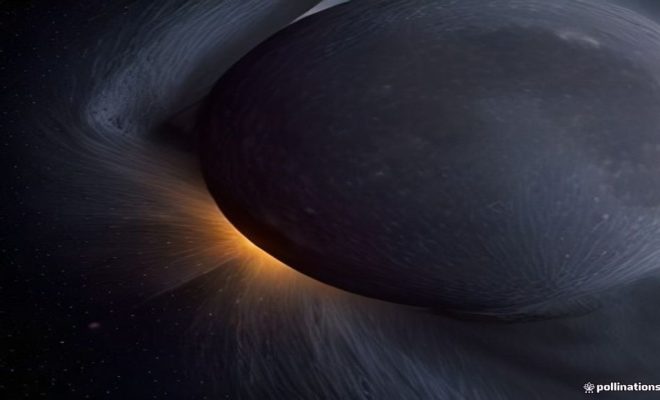
Recent groundbreaking research from the University of California, Riverside, offers a compelling and, frankly, somewhat dramatic answer: Venus didn’t just fail to form a moon, or lose one in some distant, cataclysmic event. Instead, the planet likely ate its own moon. Yes, you read that right. According to astrophysicist Stephen Kane and his team, Venus’s unique gravitational dynamics, coupled with its notoriously slow rotation, created a scenario where any moon it possessed couldn’t maintain a stable orbit. Instead, it was gradually, inexorably pulled inward, eventually crashing back into the planet from which it originated. This isn’t just a fascinating tidbit about our celestial neighbor; it’s a finding that fundamentally challenges our long-held assumptions about moon formation and retention, hinting at a much more complex and violent early solar system than we previously imagined, especially concerning a potential Venus moon collision.
The Enduring Mystery of Venus’s Missing Moon
For decades, the moonless state of Venus has been one of the most persistent astrophysical puzzles. Most rocky planets, or at least those of a substantial size, seem to have moons. Mars has two small ones, Phobos and Deimos, albeit likely captured asteroids. Earth, of course, has its magnificent Luna, a body so large in comparison to its parent planet that their gravitational dance profoundly affects everything from tides to axial tilt. Even the gas giants boast retinues of dozens of moons, many of them substantial worlds in their own right. So, what makes Venus, Earth’s near-identical twin in terms of bulk properties, so different?
Previous theories often leaned towards catastrophic explanations. One popular idea suggested that Venus might have once had a moon, formed through a giant impact much like Earth’s Moon, but that a subsequent, even larger collision somehow ejected it from orbit or shattered it into debris that eventually dispersed. Another hypothesis proposed that Venus simply never experienced the right conditions or the right kind of impact to form a moon in the first place. These ideas, while plausible, always felt a little incomplete, lacking a robust mechanism to explain the absence definitively. They relied on specific, low-probability events rather than a general planetary dynamic. The new research, however, shifts the focus from external, random events to intrinsic planetary properties, painting a picture where a Venus moon collision was an almost inevitable outcome of the planet’s own characteristics.
Stephen Kane’s Revolutionary Hypothesis: Inward Spiral
Enter Stephen Kane, an astrophysicist at UC Riverside, whose work, published in The Astrophysical Journal, provides a truly fresh perspective. Kane and his collaborators didn’t just propose another theory; they developed a sophisticated model that simulates the gravitational interactions within a Venusian system. What they found was counterintuitive and, frankly, a bit unsettling. Instead of a moon slowly drifting away or being violently ejected, their models showed that Venus’s unique combination of mass, proximity to the sun, and critically, its exceptionally slow rotation, would create a scenario where any moon would eventually spiral inward.
Think about it like this: tidal forces are a powerful sculptor of planetary systems. On Earth, our Moon’s gravity pulls on our oceans, creating tides. But Earth’s rotation also pulls on the tidal bulges, subtly accelerating the Moon and causing it to slowly drift further away from us, about 3.8 centimeters per year. This is a common phenomenon in many planetary-moon systems. However, Venus is different. Its rotation is not only incredibly slow – a Venusian day is longer than its year – but it also rotates retrograde, meaning it spins in the opposite direction to most other planets in our solar system. This bizarre rotation, combined with the sun’s significant tidal forces on Venus, fundamentally alters the dynamic. The sun’s gravitational tug on Venus, and Venus’s own immense gravitational pull on its moon, would work in concert to drain the moon’s orbital energy, forcing it closer and closer until a dramatic Venus moon collision became unavoidable.
The Slow Spin of Venus: A Crucial Factor
The slow, retrograde rotation of Venus is absolutely central to this new understanding. A Venusian day lasts about 243 Earth days, which is longer than its orbital period around the sun (225 Earth days). Imagine a planet where the sun rises in the west and sets in the east, and where a single ‘day’ feels like an eternity. This extreme slowness, coupled with its retrograde motion, sets Venus apart from virtually every other major body in our solar system. For context, Earth spins relatively quickly, completing a rotation in just 24 hours.
Why Venus rotates this way is another long-standing mystery. Some theories suggest a massive impact early in its history could have flipped it upside down or slowed it down significantly. Others propose complex atmospheric interactions and tidal forces from the sun could have gradually despun it over billions of years. Regardless of its origin, this peculiar rotation has profound consequences. In the context of moon dynamics, it means that the tidal bulges created on Venus by a hypothetical moon wouldn’t ‘lead’ the moon in its orbit, as they do on Earth, which would typically cause the moon to accelerate and move outwards. Instead, the incredibly slow rotation, potentially coupled with retrograde motion, could cause the tidal bulges to ‘lag,’ actively drawing the moon inward. This subtle, relentless tug would overcome any outward forces, sealing the moon’s fate and guaranteeing a future Venus moon collision. (See: Wikipedia article on Venus.)
Tidal Forces: The Unseen Architects of Planetary Systems
To truly grasp what happened, we need to understand the immense power of tidal forces. These aren’t just about ocean tides; they’re gravitational gradients that stretch and deform celestial bodies. Every object with mass exerts a gravitational pull, and this pull is stronger on the side of an object closer to the source of gravity and weaker on the far side. This differential pull creates a ‘stretching’ effect, known as a tidal force. On Earth, the Moon’s gravity creates bulges in our oceans on both the side facing the Moon and the side opposite it. As Earth rotates through these bulges, the friction generated dissipates energy, and this energy transfer has a reciprocal effect on the Moon.
For most moons, the parent planet rotates faster than the moon orbits. This means the tidal bulge on the planet ‘leads’ the moon, pulling it forward gravitationally. This forward tug transfers angular momentum from the planet’s rotation to the moon’s orbit, causing the moon to slowly accelerate and spiral outward, as our Moon is doing. However, if the planet rotates slower than the moon orbits, or in a retrograde direction, the tidal bulge can ‘lag’ behind the moon. This lagging bulge pulls backward on the moon, decelerating it and causing it to spiral inward. This is the mechanism Kane’s research identifies as the likely culprit for the unfortunate Venus moon collision, a slow, drawn-out demise rather than a sudden catastrophe.
The Shocking Concept of a Planet ‘Eating’ Its Moon
The idea that a planet could ‘eat’ its own moon is, admittedly, a rather dramatic and evocative image. It conjures up visions of a cosmic predator consuming its offspring. But in astrophysical terms, it’s a perfectly logical, albeit extreme, outcome of gravitational dynamics. This isn’t a sudden, violent gulp, but a slow, inexorable embrace. Over millions or even billions of years, the moon’s orbit would have gradually decayed, getting lower and lower, until it reached the planet’s Roche limit – the point at which the planet’s tidal forces are stronger than the moon’s own self-gravity. At this point, the moon would either break apart into a ring of debris that would then rain down on the planet, or, more likely given Venus’s dense atmosphere and the moon’s likely solid composition, simply plunge directly into the planet’s surface.
Such an event, a Venus moon collision, would have been truly cataclysmic. Imagine an object perhaps hundreds or even thousands of kilometers in diameter slamming into Venus. The energy released would be immense, capable of profoundly altering the planet’s surface, its atmosphere, and potentially even its internal dynamics. This could have contributed to some of Venus’s other peculiar features, such as its exceptionally young surface (relative to other inner planets, suggesting extensive resurfacing events) or its incredibly dense, hot atmosphere. While the study focuses on the mechanism of inward spiraling, the ultimate impact event would have been an astronomical spectacle unlike anything we’ve witnessed in our solar system’s recent history.
Implications for Exoplanet Research and Planetary Evolution
This research goes far beyond just explaining Venus’s moonless state; it has profound implications for our understanding of planetary systems throughout the universe. As we discover more and more exoplanets, we’re constantly trying to piece together their evolutionary histories and assess their potential for habitability. Moons play a crucial role in planetary stability, influencing everything from axial tilt (which stabilizes seasons) to tidal heating (which can drive geological activity).
Kane’s findings suggest that even if a planet is perfectly capable of forming a moon – perhaps through a giant impact – it might not be able to keep it. The internal dynamics of the planet, particularly its rotation rate and direction, are just as critical as the initial conditions of moon formation. This means that when we look for potentially habitable exoplanets, we shouldn’t just consider their size, mass, and orbital distance from their star. We also need to factor in their rotation. A slow-spinning or retrograde-spinning planet, even if it has liquid water and a suitable atmosphere, might be an unstable host for a long-lived moon, fundamentally altering its long-term geological and climatic evolution. The potential for a Venus moon collision in other star systems is a factor we now have to consider.
Could Earth Lose Its Moon? A Reassuring Comparison
Given the dramatic fate of Venus’s hypothetical moon, it’s natural to wonder: could the same thing happen to Earth? Is our beloved Moon doomed to a fiery Venus moon collision with our home planet? Thankfully, the answer is a resounding no. Earth’s dynamics are fundamentally different from Venus’s, ensuring our Moon’s long-term stability (at least for billions of years).
As mentioned earlier, Earth rotates much faster than its Moon orbits. This means our tidal bulges lead the Moon, constantly pulling it forward and transferring angular momentum. This is why our Moon is slowly drifting away from us. While this outward migration will eventually lead to a very distant Moon, it will never cause it to spiral inward and collide with Earth. The critical difference lies in the rotational speed and direction. Earth’s rapid, prograde rotation acts as a protective mechanism, safeguarding our Moon from the kind of inward spiraling fate that befell Venus’s satellite. So, you can rest easy; our Moon is here to stay, at least for the foreseeable future.
The Broader Picture: Re-evaluating Planetary Formation Models
This research isn’t just about Venus; it’s about forcing a re-evaluation of our entire framework for understanding planetary system formation and evolution. For too long, the ‘giant impact hypothesis’ has been the dominant paradigm for moon formation, particularly for large moons like our own. While that hypothesis remains robust, Kane’s work adds a critical layer of complexity: formation is only half the battle. Retention is the other, equally important, half.
It suggests that the early solar system might have been even more dynamic and chaotic than we thought, with planets forming and losing moons in a cosmic dance of creation and destruction. Perhaps other planets in our solar system, or indeed exoplanets, also once possessed moons that were eventually reabsorbed or ejected due to similar tidal dynamics. This opens up entirely new avenues of research, pushing scientists to develop more sophisticated models that integrate not just impact scenarios but also the long-term, subtle effects of tidal evolution and planetary rotation. The potential for a Venus moon collision, or a similar event elsewhere, adds a fascinating, albeit destructive, chapter to the story of planetary evolution. (See: NASA's overview of Venus.)
Future Research and the Enduring Allure of Venus
The Venus moon collision hypothesis is a brilliant step forward, but like all good science, it also raises new questions and opens doors for further exploration. Future research will undoubtedly delve deeper into the precise conditions that would lead to such an inward spiral. What was the size of this hypothetical moon? What was its composition? Could there have been multiple moons, all suffering the same fate? Can we find any geological evidence on Venus’s surface – perhaps subtle compositional anomalies or impact scars – that might hint at such a dramatic event?
Venus itself remains a planet of immense fascination and mystery. Its scorching hot surface, crushing atmosphere, and peculiar rotation continue to challenge our understanding of planetary habitability and evolution. Missions like NASA’s upcoming VERITAS and DAVINCI+ missions, and ESA’s EnVision, are poised to provide unprecedented insights into this enigmatic world. As we gather more data on Venus’s internal structure, atmospheric dynamics, and geological history, we’ll be better equipped to test and refine theories like Kane’s, bringing us closer to a complete understanding of why Earth’s twin is so strikingly different, and what truly led to the great Venus moon collision.
The Role of the Sun’s Gravity: A Silent Partner in Destruction
While we’ve focused heavily on Venus’s own peculiar rotation and its tidal forces, we shouldn’t underestimate the sun’s role in this cosmic drama. Venus orbits much closer to the sun than Earth does, meaning it experiences significantly stronger solar tidal forces. This powerful gravitational tug from our star acts on Venus itself, creating bulges within the planet. These solar tides, in conjunction with Venus’s own internal dynamics, could have created an even more complex tidal environment for any orbiting moon.
Imagine the sun pulling on Venus, slightly deforming its shape. This deformation, in turn, influences Venus’s gravitational field in subtle ways. For a moon orbiting Venus, it wouldn’t just be experiencing Venus’s gravity; it would be experiencing Venus’s gravity as it’s being stretched and pulled by the sun. This intricate three-body interaction (sun-Venus-moon) could have further destabilized the moon’s orbit, accelerating its inward spiral. The sun, therefore, acts as a silent, powerful partner in the destruction of Venus’s moon, its immense gravity intensifying the very tidal mechanisms that sealed the moon’s fate and ensured a Venus moon collision.
Could Venus Have Had Multiple Moons?
The hypothesis primarily discusses “a” moon, implying a single satellite. However, is it possible Venus once hosted multiple moons, much like Mars or the gas giants? If the tidal dynamics outlined by Kane’s research are so potent, it’s plausible that any moon, regardless of its origin or initial orbit (within a certain stable range), would eventually succumb to the same fate. A giant impact might produce one large moon, but it could also kick up a debris disk that coalesces into several smaller ones. Or, perhaps, Venus captured a few asteroids that briefly became moons.
If Venus did have multiple moons, the inward spiraling process might have been even more dramatic. Smaller moons would have decayed faster, potentially colliding with each other or with the larger moon before plunging into Venus. Such a scenario would lead to a series of Venus moon collisions, perhaps spaced out over millions of years, each one contributing to the planet’s early geological turmoil and atmospheric evolution. This adds another layer to the story, suggesting Venus might have been a bustling celestial body with multiple companions before its unique planetary characteristics devoured them all.
Searching for Evidence: Geologic Signatures of a Cataclysm
If a moon indeed crashed into Venus, wouldn’t there be some evidence left behind? This is a compelling question that future missions could potentially address. A major impact event, especially from an object hundreds of kilometers across, would leave an enormous impact basin. However, Venus’s surface is relatively young, estimated to be around 300 to 600 million years old, due to widespread volcanic resurfacing. This means any ancient impact craters would have long since been obliterated by lava flows and tectonic activity. (See: Scientific articles on Venus.)
However, scientists might look for more subtle clues. The composition of Venus’s crust could hold secrets. If a moon of a different composition (say, rich in certain metals or silicates) impacted, it might have left behind geochemical anomalies that could be detected by future landers or orbiters. Furthermore, the immense energy of such a collision could have fundamentally influenced Venus’s internal heat engine, affecting its volcanic activity and atmospheric outgassing over billions of years. While direct evidence of a specific Venus moon collision might be hard to pinpoint due to Venus’s active geology, the long-term consequences could still be observable, providing tantalizing hints of its dramatic past.
FAQ: Unpacking the Venus Moon Collision Hypothesis
Q1: Did Venus definitely have a moon?
A1: The research by Stephen Kane and his team doesn’t definitively prove Venus had a moon, but it proposes a highly plausible mechanism for why it doesn’t have one now if it ever did. Their models show that even if Venus formed a moon, its unique properties would have caused it to spiral inward. So, while we don’t have direct observational proof of a past moon, this theory explains its absence very effectively.
Q2: How large would this hypothetical moon have been?
A2: The research doesn’t specify a size, but for the tidal forces to be significant enough to cause an inward spiral, it would likely need to be a substantial body, perhaps comparable to Mars’s larger moon, Phobos, or even Earth’s Moon, for the effects to be observable within a reasonable geological timescale. A very small, asteroid-like moon might have been ejected or simply too insignificant to leave a lasting impact on the planet’s dynamics.
Q3: What exactly is retrograde rotation, and why is it so unusual for Venus?
A3: Retrograde rotation means a planet spins in the opposite direction to most other planets in our solar system, and opposite to its orbital direction around the sun. Imagine looking down on the solar system from above; most planets spin counter-clockwise, but Venus spins clockwise. This is unusual because most planets are thought to have formed from a rotating disk of gas and dust that imprinted a prograde (forward) spin. Venus’s retrograde rotation is a major anomaly, likely caused by a massive early impact or complex tidal interactions over billions of years.
Q4: Could Venus acquire a new moon in the future?
A4: It’s highly unlikely. The same tidal dynamics that would have caused a previous moon to spiral inward would still be in effect. Even if Venus were to capture an asteroid, its orbit would be highly unstable, and it would likely either crash into Venus or be ejected from the system relatively quickly. Venus’s environment is simply not conducive to retaining a stable moon.
Q5: How does this research help us understand other planets outside our solar system?
A5: This research is incredibly important for exoplanet studies. It tells us that simply finding a planet in the habitable zone isn’t enough to determine its potential for life. Its rotation rate and direction, and the tidal forces from its star, are critical factors in whether it can sustain a moon. Moons are thought to stabilize a planet’s axial tilt, which can lead to more stable seasons, a key factor for habitability. If a planet can’t keep a moon, its climate might be far more chaotic.
“`
Trending Now
Frequently Asked Questions
Why doesn't Venus have a moon?
Venus lacks a moon due to its unique gravitational dynamics and slow rotation, which prevent any moon from maintaining a stable orbit. Instead of forming or retaining a moon, it likely consumed any that once existed, pulling it inward until it crashed back into the planet.
What happened to Venus's moon?
Recent research suggests that Venus may have devoured its own moon. The planet's gravitational forces, combined with its slow rotation, caused any moon to spiral inward and eventually collide with Venus, leading to its current moonless state.
How does Venus's lack of a moon compare to other planets?
Unlike many other rocky planets in our solar system, such as Earth and Mars, which possess moons, Venus stands out as moonless. This difference raises questions about its formation and evolution, challenging previous assumptions about moon retention in planetary systems.
What theories exist about why Venus is moonless?
Theories regarding Venus's moonless state have evolved over time. Recent findings indicate that Venus likely consumed its own moon due to its gravitational dynamics, suggesting a more complex and violent history in the early solar system than previously thought.
What implications does Venus's missing moon have for astronomy?
The absence of a moon around Venus challenges long-held beliefs about moon formation and retention. This finding suggests a more intricate and tumultuous early solar system, prompting astronomers to reconsider the dynamics of planetary development and moon interactions.
What's your take on this? Share your thoughts in the comments below — we read every one.