This Radical Floating Wind Turbine Design Slashes Costs by Half
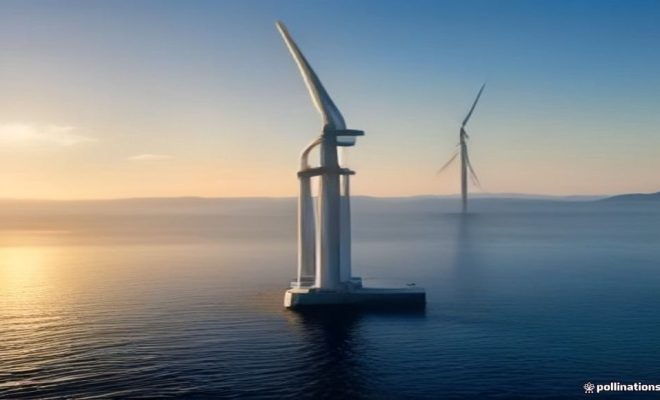
When we talk about the future of renewable energy, offshore wind power consistently comes up as a colossal, untapped resource. But it’s not without its challenges. One of the biggest hurdles, especially in deeper waters where traditional fixed-bottom turbines aren’t feasible, is developing floating platforms that can not only support massive turbines but also survive the brutal forces of the ocean, including extreme weather. Think typhoons, hurricanes, and relentless waves. For years, engineers have been working on solutions, and now, it seems we’re on the cusp of a significant breakthrough.
The quest for the best floating wind turbines for extreme weather has led to some truly innovative designs. We’re not just talking about incremental improvements; some of these new platforms promise to fundamentally change the economics and feasibility of offshore wind. The goal is clear: build robust, stable platforms that can handle anything the sea throws at them, while simultaneously driving down the cost of energy. It’s a tall order, but the latest advancements suggest we’re getting there.
Recently, Gazelle Wind Power made an announcement that has certainly turned heads in the industry. On September 21, 2026, they unveiled a new floating platform design specifically engineered to support colossal 18 MW+ turbines, even in the teeth of typhoon conditions. What’s more, this isn’t just a theoretical concept. Developed in collaboration with a major Asian utility, global performance simulations are pointing to some truly astonishing figures: a potential 44% reduction in capital expenditure (CAPEX) and a remarkable 52% lower levelized cost of energy (LCOE) compared to conventional semi-submersible designs. Those numbers aren’t just good; they’re game-changing. Let’s dig into what makes this technology so promising and compare it to other leading contenders in the race for the best floating wind turbines for extreme weather.
1. Gazelle Wind Power’s Hybrid Floating Platform: A New Paradigm for Extreme Conditions
Gazelle Wind Power’s innovative design is quickly becoming a benchmark in the offshore wind sector, particularly for its resilience against extreme weather. What sets it apart is its unique hybrid approach, which combines elements of both spar buoy and semi-submersible platforms, but with a crucial twist: a central counterweight and three Articulated Mooring Frames (AMFs). This isn’t just a fancy engineering term; it’s the core of how this platform achieves its remarkable stability without relying on complex, active systems.
The beauty of the AMF system lies in its passive control of platform motion. Unlike many existing designs that require active ballast systems – essentially, pumps moving water around to maintain stability – Gazelle’s platform uses a central counterweight that acts like a keel, pulling the platform down and providing a restoring force. The three AMFs, connected to mooring lines, then articulate to further dampen motion, effectively allowing the platform to ‘ride’ the waves and winds rather than rigidly resisting them. This passive stability is a huge deal, simplifying operations, reducing potential points of failure, and, critically, slashing maintenance costs. It’s a smart, elegant solution to a very complex problem.
The figures speak for themselves: a projected 44% lower CAPEX and 52% lower LCOE against industry benchmarks. These aren’t minor tweaks; they represent a fundamental shift in the economic viability of offshore wind, especially in regions prone to severe weather. Imagine deploying 18 MW+ turbines – machines that can power tens of thousands of homes each – in typhoon-prone waters with confidence, knowing that the cost of that power is significantly reduced. This makes offshore wind competitive with, and in some cases even cheaper than, traditional fossil fuels, accelerating the global transition to clean energy. It’s a powerful argument for why Gazelle’s design is making waves as one of the best floating wind turbines for extreme weather.
2. Semi-Submersible Platforms: The Industry Workhorse
Semi-submersible platforms are perhaps the most common type of floating foundation currently deployed or under development for offshore wind. They get their name from their partially submerged structure, typically consisting of multiple columns connected by pontoons, which provide buoyancy. These platforms are usually moored to the seabed with multiple lines, providing stability through a combination of buoyancy and mooring tension. They’ve been a popular choice because they offer good stability in a wide range of water depths and sea conditions, and their construction methods are relatively well-understood from the oil and gas industry.
Companies like Principle Power with their WindFloat® technology have successfully deployed semi-submersibles. The WindFloat Atlantic project, for instance, operates off the coast of Portugal, demonstrating the viability of this design in real-world conditions. These platforms can be assembled in port and towed out to sea, which can simplify installation compared to some other concepts. However, they do have their downsides. The large footprint and complex structural steel requirements can make them expensive to build, contributing to higher CAPEX. Furthermore, while stable, their motion characteristics can still be a challenge in truly extreme weather, sometimes requiring more robust mooring systems or even active ballast to counteract severe wave and wind loads. (See: offshore wind power advancements.)
The cost factor is where Gazelle’s announcement really shines in comparison. While semi-submersibles have proven their capability, their inherent structural complexity and the need for significant steel fabrication often lead to higher overall project costs. They might be a reliable workhorse, but they’re also a heavy one. The pursuit of the best floating wind turbines for extreme weather is inherently a pursuit of both resilience and affordability, and this is where newer, more optimized designs are starting to pull ahead.
3. Spar Buoy Platforms: Deep Water Stalwarts
Spar buoy platforms are another established design, particularly suited for very deep waters. A spar buoy consists of a large, cylindrical, slender hull that floats mostly submerged, anchored to the seabed with multiple mooring lines. Its stability comes primarily from its deep draft and the ballast at the bottom, which creates a low center of gravity. Think of it like a fishing bobber: most of its mass is deep underwater, making it very stable and resistant to overturning. For more context, see green energy certifications.
The Hywind Scotland project, developed by Equinor, is a prime example of successful spar buoy deployment. It was the world’s first multi-turbine floating wind farm and has been operating reliably since 2017. Spar buoys are known for their excellent motion characteristics, particularly their resistance to pitching and rolling, which is a huge advantage for turbine longevity and energy capture. Their deep draft means they are less affected by surface waves, making them potentially very good candidates for the best floating wind turbines for extreme weather.
However, spar buoys aren’t without their limitations. Their significant draft means they require very deep water for installation and deployment, which can limit suitable sites. Furthermore, their large size and deep draft can make port assembly and towing more challenging and expensive than with semi-submersibles. While they offer superb stability, the sheer scale of the structure and the specialized installation procedures can drive up costs. The industry continues to balance the need for robust stability with practical considerations of manufacturing, logistics, and overall project economics.
4. Tension-Leg Platforms (TLPs): The Minimalist Approach
Tension-Leg Platforms (TLPs) represent a distinct approach to floating foundations, drawing inspiration from offshore oil and gas. Unlike spar buoys or semi-submersibles that rely on catenary mooring lines (lines that sag in a curve), TLPs use vertical tendons or tethers under tension, directly connecting the buoyant platform to anchors on the seabed. This pre-tensioning effectively eliminates vertical motion (heave) and provides exceptional stability against pitch and roll. Imagine holding a beach ball underwater with ropes; it wants to float up, but the ropes hold it firmly in place.
The primary advantage of TLPs is their remarkable stability and reduced motion, which can lead to higher energy capture from the turbine and less stress on its components. This makes them very attractive for applications where minimal motion is critical, potentially positioning them as strong contenders for the best floating wind turbines for extreme weather. Their compact footprint also means they typically require less seabed area compared to other floating designs.
The main challenges with TLPs revolve around their complex and costly installation. Deploying and pre-tensioning the tendons requires specialized vessels and precision engineering. The mooring system itself must be incredibly robust to withstand the constant tension and dynamic loads from waves and wind. Furthermore, the integrity of the tendons and their seabed anchors is paramount, making inspection and maintenance critical and potentially expensive. While offering superior stability, the upfront investment and technical complexity often push up the overall cost, making them a niche solution rather than a universal one.
5. Barge-Type Platforms: Simplicity in Design
Barge-type platforms, sometimes referred to as ‘flat-plate’ platforms, are essentially large, flat, box-like structures designed to float on the surface of the water, moored to the seabed. Their primary appeal lies in their relative simplicity of construction and ease of assembly in port. Unlike the complex shapes of semi-submersibles or the deep drafts of spars, barges are conceptually straightforward, resembling a very large boat hull.
The advantage here is often cost-effectiveness in manufacturing. Their flat bottom makes them easy to fabricate in existing shipyards, potentially reducing CAPEX compared to more intricate designs. They also offer a large deck area, which can be beneficial for maintenance access. However, their main drawback is stability. A flat-bottomed barge on the open ocean is inherently more susceptible to wave-induced motion, particularly roll and pitch, compared to designs with deeper drafts or multiple columns. This increased motion can put significant stress on the wind turbine, potentially reducing its lifespan and energy capture efficiency. (See: floating wind turbine technology.)
To counteract this instability, barge platforms often require extensive and robust mooring systems or additional damping mechanisms, which can add complexity and cost back into the equation. While they might seem like a simple solution, ensuring they can reliably host a massive wind turbine in extreme weather conditions without excessive motion is a significant engineering challenge. For now, they tend to be considered for shallower waters or less aggressive sea states, making them less competitive for the title of best floating wind turbines for extreme weather in truly challenging environments.
6. The Crucial Role of Mooring Systems: Holding it All Together
No matter how clever the floating platform design, it’s nothing without a robust mooring system to keep it in place. The mooring system is the critical link between the floating structure and the seabed, and its design is paramount for the long-term stability and survival of the entire wind turbine system, especially when facing extreme weather. We’re talking about resisting immense forces from wind, waves, and currents, often for decades. For more context, see green skills gap in 2026.
Traditional mooring systems typically consist of multiple lines (chains, wires, or synthetic ropes) anchored to the seabed and extending to the platform in a catenary (sagging) configuration. These provide restoring forces as the platform moves, bringing it back towards its central position. For extreme conditions, these lines must be incredibly strong, durable, and resistant to fatigue. Designing them to handle typhoon-level forces means accounting for peak loads, dynamic responses, and material degradation over time in a harsh marine environment. The number of lines, their configuration, and the type of anchors (drag embedment, suction, gravity) all play a vital role in the system’s overall performance and resilience.
Gazelle’s design, with its Articulated Mooring Frames (AMFs), represents an evolution in mooring technology. Instead of just passive lines, the AMFs actively contribute to motion control by articulating with the platform’s movement, distributing forces more effectively and inherently reducing stress on individual mooring points. This intelligent integration of the platform and mooring system is a key differentiator, helping to explain how they can achieve such impressive stability and cost reductions. It’s not just about strong ropes; it’s about a smart, integrated system that works in harmony with the ocean’s forces.
7. Turbine Size and Extreme Weather Compatibility: The 18 MW+ Challenge
The trend in offshore wind is towards ever-larger turbines. Why? Bigger turbines have longer blades, sweep a larger area, and can capture significantly more energy, leading to better economies of scale and lower LCOE. We’re now seeing turbines rated at 15 MW, 18 MW, and even proposals for 20 MW and beyond. But integrating these colossal machines onto a floating platform, especially one that needs to withstand extreme weather, presents a significant engineering challenge.
Imagine the forces at play: a turbine tower that might be over 150 meters tall, supporting blades that can be over 100 meters long, acting as a giant lever in high winds. The dynamic loads on the floating platform – the pitching, rolling, and heaving motions – are magnified by the sheer size and mass of the turbine. This is why stability is so critical. A platform that moves too much will cause excessive stress on the turbine’s components, leading to premature wear, increased maintenance, and ultimately, reduced energy production. Therefore, any design aiming to be among the best floating wind turbines for extreme weather must demonstrate exceptional stability under these magnified loads.
Gazelle’s explicit mention of supporting 18 MW+ turbines in typhoon conditions is a strong indicator of its robustness. This isn’t a small feat; it means their passive motion control system, with its central counterweight and AMFs, is designed to keep these massive structures relatively still even when the ocean is raging. The ability to deploy such powerful turbines in challenging environments is crucial for expanding renewable energy into new markets, especially in Asia, where both wind resources and typhoon activity are prevalent. This capability directly impacts the economic viability and scalability of offshore wind globally.
8. Cost-Effectiveness and LCOE: The Economic Imperative
Ultimately, the most ingenious engineering means little if it’s not economically viable. The levelized cost of energy (LCOE) is the golden metric in renewable energy: it’s the total cost of building and operating a power plant over its lifetime, divided by the total energy output. A lower LCOE means cheaper electricity for consumers and a more competitive energy source. This is where Gazelle Wind Power’s projected 52% lower LCOE compared to benchmark semi-submersibles is truly revolutionary. (See: innovations in energy systems.)
How do they achieve such a dramatic reduction? It’s a combination of factors. The 44% lower capital expenditure (CAPEX) plays a huge role. This comes from simplified manufacturing, potentially using less specialized steel, and a more streamlined assembly process. The passive motion control system, by eliminating the need for active ballast, reduces the complexity and cost of onboard systems, as well as ongoing operational expenses (OPEX) related to power consumption and maintenance of those systems. Less complexity often means fewer things to break, less need for expensive repairs, and easier routine servicing.
Furthermore, increased stability and reduced motion translate directly into better energy capture and extended turbine lifespan, both of which positively impact LCOE. If a turbine is constantly stressed by platform motion, it will generate less power and require more frequent maintenance or replacement, driving up costs. A stable platform allows the turbine to operate more efficiently for longer. This economic advantage is what will truly accelerate the adoption of floating offshore wind, making it a competitive, reliable, and sustainable energy source even in the most challenging environments. It’s the ultimate measure of the best floating wind turbines for extreme weather – not just surviving, but thriving economically.
Looking Ahead: The Future of Offshore Wind
The innovations we’re seeing in floating wind turbine technology, particularly from companies like Gazelle Wind Power, aren’t just about building bigger and stronger structures. They’re about fundamentally changing the equation for renewable energy. By tackling the challenges of extreme weather head-on and simultaneously driving down costs, these advancements are opening up vast new swathes of ocean for clean power generation. Think about the potential in regions with deep waters and high wind resources, but also a history of severe storms. This is where these new designs will shine.
The collaboration between Gazelle and a major Asian utility is particularly telling. Asia, with its burgeoning energy demand and significant typhoon activity, is a prime market for robust, cost-effective floating offshore wind. The economic incentives are clear: reduce reliance on fossil fuels, enhance energy independence, and mitigate climate change. As these technologies mature and deployment scales up, we can expect to see even further cost reductions through lessons learned and supply chain optimization.
The race for the best floating wind turbines for extreme weather is far from over, but the leading contenders are showing us a very exciting glimpse into the future. It’s a future where clean, abundant energy isn’t just a dream, but a practical, affordable reality, even in the harshest corners of our planet.
Trending Now
- our breakdown of rayneo io smart glasses: a comprehensive review
- Glo Skin Beauty: The Aesthetician-Backed Brand…
- this guide on the shocking truth: esg training programs are quietly reshaping your career path
- our breakdown of the green skills gap in 2026: how to address this growing problem
Frequently Asked Questions
What are floating wind turbines and how do they work?
Floating wind turbines are offshore wind energy platforms that are not anchored to the seabed. Instead, they float on the water's surface, allowing them to be deployed in deeper waters where traditional fixed-bottom turbines are impractical. They use buoyancy to remain stable and are designed to withstand harsh ocean conditions.
How does Gazelle Wind Power's new design improve offshore wind energy?
Gazelle Wind Power's new floating platform design supports massive 18 MW+ turbines and can operate in extreme weather, such as typhoons. This innovative design is projected to reduce capital expenditure by 44% and lower the levelized cost of energy by 52%, making offshore wind energy more economically viable.
What are the advantages of floating wind turbines over traditional designs?
Floating wind turbines offer significant advantages, including access to deeper and windier locations, which can increase energy production. They are also more adaptable to harsh marine environments, potentially leading to lower installation and maintenance costs, as well as reduced energy costs over time.
What challenges do floating wind turbines face?
Floating wind turbines must contend with extreme weather conditions, including high winds and rough seas. Additionally, they require advanced engineering to ensure stability and durability, as well as efficient anchoring systems to withstand ocean forces while maximizing energy output.
How does the levelized cost of energy (LCOE) for floating wind turbines compare to traditional turbines?
The levelized cost of energy (LCOE) for floating wind turbines is projected to be significantly lower than that of traditional fixed-bottom turbines. Gazelle Wind Power's new design anticipates a 52% reduction in LCOE compared to conventional semi-submersible designs, making offshore wind energy more competitive.
Agree or disagree? Drop a comment and tell us what you think.