This Radical Floating Wind Turbine Design Slashes Costs by Half — And Defies Typhoons
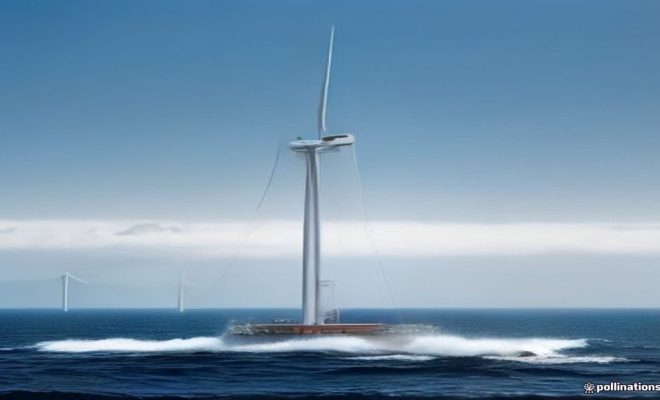
Imagine a future where clean, renewable energy isn’t just a dream, but an affordable reality, even in the most unforgiving ocean environments. What if we could harness the immense power of offshore winds, not just in calm European seas, but in the face of brutal typhoons, all while drastically cutting the cost of electricity? It sounds like science fiction, doesn’t it? Yet, a recent announcement from Gazelle Wind Power on September 21, 2026, suggests this future is much closer than you might think. They’ve unveiled a groundbreaking floating wind turbine design that promises to rewrite the rules for offshore wind development, particularly for those massive 18 MW+ turbines.
This isn’t just another incremental improvement; we’re talking about a potential paradigm shift. Developed in close collaboration with a major Asian utility, this innovative platform is engineered to stand strong against extreme typhoon conditions, a challenge that has historically limited offshore wind expansion in many parts of the world. But the real kicker? Global performance simulations indicate this design could achieve a staggering 44% lower capital expenditure (CAPEX) and an even more remarkable 52% lower levelized cost of energy (LCOE) compared to conventional semi-submersible designs. When you consider the economic incentives for climate action and the global push for energy independence, these numbers aren’t just impressive – they’re transformative. This new floating wind turbine design could genuinely reshape how we power our world.
1. The Typhoon Challenge: Taming the Unpredictable Seas
For decades, one of the biggest roadblocks to truly global offshore wind expansion has been the sheer destructive power of nature. While Europe has made significant strides in offshore wind, many regions, particularly in Asia, are regularly battered by typhoons and hurricanes. These aren’t just strong storms; they bring monstrous waves, incredible wind speeds, and unpredictable currents that can tear conventional structures apart. Designing a floating wind turbine that can not only survive but continue to operate efficiently in such conditions is an engineering marvel.
Traditional fixed-bottom wind turbines are simply not feasible in deep waters, which is where the best wind resources often lie. Floating platforms offer a solution, but making them resilient enough for typhoon alley while keeping costs down has been a monumental hurdle. Gazelle’s announcement directly addresses this, suggesting their new floating wind turbine design has cracked the code, offering a viable path for regions like East Asia to unlock their immense offshore wind potential, previously deemed too risky or expensive.
The engineering challenges posed by typhoons are multi-faceted. It’s not just the sustained wind speeds, which can exceed 150 miles per hour, but also the dynamic loading from extreme waves. These waves create immense forces on the substructure and mooring lines, leading to fatigue and potential structural failure over time. Furthermore, the rapid changes in wind direction and intensity during a typhoon event can induce complex aerodynamic loads on the turbine blades, requiring sophisticated control systems to mitigate stress. Traditional floating wind designs often struggle with these combined forces, leading to either over-engineering (and thus higher costs) or insufficient resilience. Gazelle’s approach, by integrating passive motion control and robust mooring, seems to offer a balanced solution that tackles these dynamic stresses head-on without relying on complex, failure-prone active systems.
2. A Radical Approach to Motion Control: The Central Counterweight and AMFs
What makes Gazelle’s new floating wind turbine design so different? It all comes down to a clever, passive motion control system. Unlike many existing floating platforms that rely on complex, energy-intensive active ballast systems to maintain stability, Gazelle’s design uses a central counterweight combined with three Articulated Mooring Frames (AMFs). This is a game-changer.
Think of it like a pendulum. The central counterweight provides inherent stability, pulling the platform back to an upright position naturally. The Articulated Mooring Frames then allow the platform to respond dynamically to wave and wind forces without fighting against them. This passive control not only simplifies the engineering and reduces operational complexity but also significantly cuts down on energy consumption, contributing to those impressive cost savings. It’s an elegant solution to a very complex problem.
Let’s dive a bit deeper into how this passive motion control truly works. Traditional floating platforms often use large, ballasted tanks that are actively filled or emptied with water to counteract tilting caused by waves and wind. This requires pumps, sensors, and a sophisticated control system, all of which add to CAPEX, O&M (Operations & Maintenance) costs, and potential points of failure. The central counterweight in Gazelle’s design provides a constant, self-righting force. When a wave pushes the platform to one side, the weight naturally pulls it back towards equilibrium. This inherent stability means the platform spends less energy actively fighting external forces and more energy simply riding them out.
The Articulated Mooring Frames (AMFs) are equally ingenious. Instead of rigidly holding the platform in place, which can lead to huge stresses in extreme conditions, the AMFs act like flexible joints. They allow the platform a controlled degree of movement, dissipating energy from waves and currents rather than absorbing it directly. This “giving in” to the forces, rather than resisting them entirely, significantly reduces the loads on the mooring lines and the substructure itself. Imagine trying to stand rigid against a strong current versus swaying with it – the latter is far less taxing. This combination of passive stability and articulated flexibility is key to its resilience and cost-effectiveness, especially for large turbines in challenging environments.
3. The Economic Earthquake: 44% Lower CAPEX
Let’s talk money, because that’s where this floating wind turbine design truly shines. A 44% reduction in Capital Expenditure (CAPEX) is not just a modest saving; it’s a monumental shift in the economic viability of offshore wind projects. CAPEX includes everything from the manufacturing of the platform itself to transportation, installation, and initial grid connection. For a multi-billion-dollar offshore wind farm, a 44% cut can translate into hundreds of millions, if not billions, of dollars saved.
This kind of cost reduction makes offshore wind projects attractive to a much wider range of investors and developers. It lowers the barrier to entry, encourages faster deployment, and accelerates the transition away from fossil fuels. When you consider the scale of infrastructure required for 18 MW+ turbines, finding efficiencies like this is absolutely crucial for bringing renewable energy mainstream and competitive with traditional power sources.
The 44% CAPEX reduction isn’t just a number; it reflects a fundamental rethinking of the supply chain and construction methodology for floating wind. A significant portion of CAPEX in offshore wind comes from the massive steel structures, specialized heavy-lift vessels, and complex installation procedures. By simplifying the platform design with passive motion control, Gazelle likely reduces the amount of specialized materials and intricate fabrication required. For instance, less complex ballast systems mean fewer internal components, less piping, and fewer control mechanisms. The modular nature implied by “Articulated Mooring Frames” also suggests easier assembly, possibly in port, reducing expensive offshore construction time. These factors compound to dramatically drive down the initial investment. This makes floating wind projects more appealing to financial institutions, decreasing the perceived risk and potentially leading to lower interest rates on project financing, further enhancing the overall economic picture.
4. Unlocking Affordability: 52% Lower LCOE
While CAPEX is vital, the Levelized Cost of Energy (LCOE) is arguably even more important for the long-term competitiveness of any power source. LCOE represents the average revenue required per unit of electricity generated over the lifetime of a power plant to recover its costs. A 52% lower LCOE means that the electricity produced by these floating wind turbines could be dramatically cheaper than what’s currently available from benchmark semi-submersible designs. (See: offshore wind energy developments.)
Think about the ripple effect: cheaper electricity for consumers, reduced operational costs for industries, and a more robust, independent energy grid for nations. This isn’t just about clean energy; it’s about affordable clean energy. When renewable power can beat fossil fuels on price, the argument for transition becomes undeniable. This aggressive LCOE reduction makes offshore wind, especially with this floating wind turbine design, a genuine contender to be a dominant energy source globally.
The LCOE reduction goes beyond just the initial CAPEX savings. A 52% lower LCOE implies significant reductions in operational and maintenance (O&M) costs, as well as an improved capacity factor (how often the turbine actually generates power). Passive motion control inherently means fewer moving parts, less energy consumption for active systems, and potentially less wear and tear on components, all of which translate to lower O&M expenses over the turbine’s 20-25 year lifespan. Furthermore, a highly stable platform, even in extreme conditions, means less downtime due to adverse weather or maintenance needs. If the turbines can remain operational and generating power for more hours in a year, their capacity factor improves, spreading the fixed costs over a larger volume of electricity and thus lowering the LCOE. This combination of lower upfront costs, reduced ongoing expenses, and higher operational efficiency creates a powerful economic advantage that can accelerate the global energy transition.
5. The Power of Collaboration: Partnering with a Major Asian Utility
The fact that this breakthrough was developed in collaboration with a major Asian utility isn’t just a footnote; it’s central to its significance. Asia, with its burgeoning economies and immense energy demands, is also home to some of the most challenging offshore environments due to typhoons. A utility in this region understands firsthand the specific engineering requirements, the regulatory landscape, and the economic pressures involved in deploying large-scale renewable projects. For more context, see green energy certifications.
This partnership ensures the design isn’t just theoretical; it’s practical, market-driven, and tailored to real-world conditions. It suggests that Gazelle’s floating wind turbine design has already undergone rigorous scrutiny from an end-user perspective, which bodes well for its eventual commercial deployment and widespread adoption across the region and beyond. This isn’t a lab experiment; it’s a solution forged in the crucible of genuine industry need.
The insights gained from a major Asian utility partner are invaluable. They bring real-world operational data, specific site conditions, and crucial understanding of local permitting processes and grid integration challenges. For example, the utility would have detailed knowledge of typical typhoon intensities, wave heights, and current speeds for their specific coastal areas, allowing Gazelle to fine-tune their simulations and design parameters for maximum resilience. They would also provide feedback on the practicalities of installation, maintenance schedules, and grid connection requirements, ensuring the design is not only robust but also easily deployable and manageable within existing infrastructure. This collaborative approach means the floating wind turbine design isn’t just a technological marvel, but a commercially viable and regionally optimized solution, significantly de-risking its market entry and adoption.
6. Beyond the Horizon: Supporting 18 MW+ Turbines
The trend in wind energy is clear: bigger is often better. Larger turbines can capture more wind, generate more electricity, and achieve greater economies of scale. The ability of Gazelle’s floating platform to support massive 18 MW+ turbines is a critical detail. These aren’t your grandfather’s windmills; they are colossal structures, taller than many skyscrapers, with blades spanning hundreds of feet. Designing a stable floating platform for such giants, especially in typhoon conditions, is an immense engineering feat.
By future-proofing their design for these next-generation turbines, Gazelle is ensuring its relevance for years to come. It means that as turbine technology continues to evolve and grow in size, their floating wind turbine design won’t become obsolete, allowing for sustained cost reductions and increased energy output from offshore wind farms. This focus on scalability and future compatibility positions the technology as a long-term player in the renewable energy landscape.
Supporting 18 MW+ turbines is a testament to the inherent stability and load management capabilities of Gazelle’s design. As turbines grow larger, their hub heights increase, exposing them to stronger and more consistent winds. However, this also means they exert greater forces on their supporting structures, both from wind thrust and from the immense weight of the nacelle and blades. A floating platform for such a behemoth needs to manage not just static loads but also dynamic loads from rotor imbalance, turbulent wind, and wave-induced motion. The central counterweight and AMFs are likely crucial in absorbing and distributing these massive forces without excessive platform motion, which could otherwise lead to premature wear of turbine components or even structural failure. This scalability ensures that as turbine manufacturers push the boundaries of output, Gazelle’s platform will be ready to host them, maintaining a competitive edge in a rapidly evolving industry.
7. Economic Incentives and Climate Action: A Double Win
At its core, this innovation is a powerful illustration of how economic incentives can align perfectly with climate action. Reducing CAPEX and LCOE isn’t just good for business; it makes clean energy more accessible and competitive, accelerating the global transition away from carbon-intensive power generation. The lower the cost of renewable energy, the faster we can decarbonize our grids and mitigate the worst impacts of climate change.
Governments, corporations, and consumers are all looking for ways to reduce carbon footprints without breaking the bank. This floating wind turbine design offers a compelling answer, providing a financially attractive pathway to large-scale renewable energy deployment in challenging regions. It demonstrates that fighting climate change doesn’t have to be a drag on the economy; in fact, it can be a massive driver of innovation and economic growth.
The alignment of economic incentives and climate action is what makes this development truly exciting. Historically, renewable energy often faced the perception of being more expensive than fossil fuels, requiring subsidies to compete. Technologies like Gazelle’s are changing that narrative by making clean energy intrinsically more affordable. When the cheapest kilowatt-hour comes from a clean source, the market naturally shifts, accelerating decarbonization without the need for extensive government intervention. This creates a virtuous cycle: lower costs drive greater adoption, which in turn stimulates further innovation and economies of scale, pushing prices down even further. This isn’t just about meeting climate targets; it’s about creating a new, sustainable economic engine for the 21st century.
8. The Road Ahead: What This Means for Global Energy
What does a breakthrough like this mean for the global energy landscape? It means that vast stretches of ocean, previously considered too deep or too volatile for offshore wind development, are now potentially viable. It opens up new markets, creates new jobs, and accelerates energy independence for nations currently reliant on imported fossil fuels. For investors, it signals a rapidly maturing and increasingly profitable sector within renewable energy, ripe for growth.
This floating wind turbine design isn’t just about a single company or a single technology; it represents a significant leap forward for humanity’s efforts to create a sustainable energy future. It’s a testament to human ingenuity in the face of daunting challenges, proving that with enough innovation, we can harness the power of nature responsibly and affordably. The implications for climate change, energy security, and global economics are truly profound, and it’ll be fascinating to watch this technology deploy and reshape our world.
9. Comparing Floating Wind Concepts: A Broader Perspective
While Gazelle’s design offers compelling advantages, it’s helpful to understand the landscape of floating wind turbine designs to appreciate its distinctiveness. The floating wind industry is still relatively young, and several distinct concepts are vying for market dominance, each with its own strengths and weaknesses.
Semi-submersible platforms, like the one Gazelle is benchmarked against, are among the most common. They consist of large, buoyant columns connected by pontoons, providing stability through water displacement and ballast. They are well-understood from the oil and gas industry but can be heavy, require significant material, and sometimes need complex active ballast systems. Their main advantage is relatively shallow draft during tow-out, making port access easier.
Spar buoys are another established design. These are long, slender cylindrical structures that extend deep into the water, achieving stability primarily through a low center of gravity. They are very stable but have a deep draft, which can limit port availability for assembly and require specialized tow-out procedures. Equinor’s Hywind Scotland, the world’s first commercial floating wind farm, uses spar buoys. (See: floating wind turbine technology.)
Tension-Leg Platforms (TLPs) achieve stability by being moored to the seabed with taut, vertical tethers. These tethers keep the platform under tension, virtually eliminating vertical motion. TLPs are very stable and have a small footprint, but their installation is complex, requiring precise seabed anchoring and sophisticated tensioning systems. They are also highly sensitive to mooring line failure.
Barge-type platforms are simpler, box-like structures that rely on their large waterplane area for stability. They are relatively easy to manufacture but can be prone to more motion in rough seas, which can be detrimental to turbine performance and lifespan. They often require extensive mooring systems to counteract this motion. For more context, see green skills gap in 2026.
Gazelle’s design, with its central counterweight and Articulated Mooring Frames, appears to blend elements of several concepts while introducing novel passive stability. The counterweight provides inherent stability akin to a spar but without the deep draft. The AMFs offer a dynamic response that is more forgiving than the rigidness of a TLP, and less prone to excessive motion than a simple barge. This hybrid approach seems to be the key to achieving both resilience and cost-effectiveness, positioning it as a potentially disruptive force within the diverse floating wind sector.
10. Environmental Considerations and Site Selection
Beyond the technical and economic benefits, the deployment of floating wind turbines, including Gazelle’s design, also brings important environmental considerations. While fixed-bottom offshore wind farms have well-studied impacts on marine ecosystems, floating solutions introduce new dynamics.
One primary concern is the interaction of mooring lines and anchors with the seabed. Floating wind farms typically require a larger seabed footprint for their mooring systems compared to fixed-bottom turbines. The type of anchor (drag embedment, suction pile, gravity base) and the length of mooring lines will dictate the extent of habitat disturbance. Gazelle’s use of three Articulated Mooring Frames might imply a potentially smaller or more optimized mooring footprint than some multi-line systems, but this would depend on specific engineering details.
Another aspect is the potential for marine life to interact with the substructure and mooring lines. These structures can act as artificial reefs, attracting certain species, but also potentially altering migration patterns or providing new predator perches. The noise generated during installation and operation is also a factor, particularly for marine mammals. However, floating platforms generally involve less intense pile-driving noise during installation compared to fixed-bottom monopiles or jackets.
From a bird perspective, offshore wind farms present collision risks. Floating wind farms, often deployed further offshore in deeper waters, might intersect with different bird migration routes. Thorough environmental impact assessments (EIAs) are crucial for each proposed project, utilizing advanced monitoring technologies like radar and acoustic sensors to minimize impacts.
Site selection for floating wind farms also involves balancing wind resource potential with environmental sensitivities, shipping lanes, and fishing grounds. The ability to deploy in deeper waters opens up vast new areas that were previously inaccessible, potentially allowing for greater separation from critical habitats or existing human activities. Gazelle’s typhoon-resilient design is particularly relevant here, as it enables development in high-wind regions that were previously too risky, thus expanding the global resource base without necessarily encroaching on more sensitive nearshore areas.
11. Future Outlook: The Role of Floating Wind in a Global Energy Mix
The potential for floating wind to revolutionize global energy is immense. It unlocks access to 80% of the world’s offshore wind resources, which lie in waters deeper than 60 meters where fixed-bottom solutions are uneconomical or impossible. Regions with strong, consistent winds but deep continental shelves – such as Japan, South Korea, the West Coast of the United States, and parts of the Mediterranean – stand to benefit enormously. These are areas with high energy demand and limited options for large-scale renewable deployment.
The International Energy Agency (IEA) has highlighted floating offshore wind as a critical technology for achieving net-zero emissions. Projections suggest that floating wind could account for a significant portion of new offshore wind capacity in the coming decades. With cost reductions like those promised by Gazelle, the technology could reach commercial parity with fixed-bottom offshore wind much sooner than anticipated, accelerating its deployment.
Beyond electricity generation, floating wind farms could also play a crucial role in enabling other green technologies. For example, they could power offshore green hydrogen production facilities, where electrolyzers are integrated directly onto floating platforms or nearby structures. This would allow for the production of hydrogen in remote, windy locations, circumventing the need for extensive grid connections and reducing transmission losses. The hydrogen could then be transported via pipeline or ship to demand centers, offering a versatile energy carrier for heavy industry, shipping, and aviation.
Furthermore, the experience gained in designing, manufacturing, and operating robust floating platforms for wind turbines can have spillover effects for other ocean-based industries, such as aquaculture, wave energy converters, or even floating data centers. The innovation in mooring systems, structural integrity, and remote monitoring for extreme conditions developed for floating wind will contribute to a broader blue economy, enhancing humanity’s ability to sustainably utilize our oceans. Gazelle’s breakthrough is not just about cheaper electricity; it’s about expanding the horizons of what’s possible in sustainable ocean development. (See: IEEE perspective on offshore wind energy.)
Frequently Asked Questions About Floating Wind Turbine Design
Q1: What is a floating wind turbine, and how is it different from traditional offshore wind?
A floating wind turbine is a wind turbine mounted on a floating platform that is anchored to the seabed, rather than being fixed directly to the ocean floor. Traditional offshore wind turbines, known as fixed-bottom turbines, are installed on foundations (like monopiles or jackets) driven into the seabed. Floating turbines are designed for deeper waters (typically over 60 meters) where fixed-bottom solutions become uneconomical or technically unfeasible, allowing access to much larger wind resources further from shore.
Q2: Why are floating wind turbines considered a “game-changer” for renewable energy?
Floating wind turbines are a game-changer because they unlock vast new areas of the ocean for wind energy development. About 80% of the world’s offshore wind potential lies in waters too deep for fixed-bottom turbines. By making these deepwater areas accessible, floating wind significantly expands the global capacity for clean energy, especially in regions with high energy demand and limited shallow coastal waters, like Japan, the US West Coast, and countries in the Mediterranean.
Q3: What makes Gazelle’s new floating wind turbine design unique?
Gazelle’s design stands out due to its passive motion control system. It combines a central counterweight for inherent stability with three Articulated Mooring Frames (AMFs). This differs from many conventional designs that rely on complex, energy-intensive active ballast systems. The passive system simplifies engineering, reduces operational complexity and energy consumption, and crucially, allows the platform to dynamically respond to extreme conditions like typhoons without fighting against them, leading to significant cost reductions and enhanced resilience.
Q4: How does the “central counterweight and AMFs” system work?
The central counterweight acts like a pendulum, providing natural stability and passively pulling the platform back to an upright position after being tilted by waves or wind. The Articulated Mooring Frames (AMFs) are flexible connections to the anchors that allow the platform a controlled degree of movement. Instead of rigidly resisting forces, the AMFs enable the platform to “give in” and dissipate energy from waves and currents, reducing stress on the entire structure and mooring lines. This combination ensures stability and resilience in harsh conditions with fewer active components.
Q5: What are the main economic benefits of Gazelle’s design?
Gazelle’s design promises a 44% lower Capital Expenditure (CAPEX) and a 52% lower Levelized Cost of Energy (LCOE) compared to conventional semi-submersible designs. Lower CAPEX means less upfront investment for building wind farms, making projects more attractive to investors. Lower LCOE means the electricity generated will be significantly cheaper over the lifetime of the project, making offshore wind more competitive with traditional power sources and ultimately reducing energy costs for consumers and industries.
Q6: How does this design address the challenge of typhoons and hurricanes?
The design’s passive motion control, with its central counterweight and AMFs, is specifically engineered for extreme typhoon conditions. By allowing the platform to dynamically respond to massive waves and incredible wind speeds, it dissipates energy more effectively and reduces the structural loads that would overwhelm more rigid or actively controlled systems. This resilience is crucial for expanding offshore wind into typhoon-prone regions, particularly in Asia, where such extreme weather has historically limited development.
Q7: Why is supporting 18 MW+ turbines important?
The trend in wind energy is towards larger turbines, as they can capture more wind, generate more electricity, and achieve greater economies of scale. An 18 MW+ turbine is a colossal structure. Designing a floating platform capable of stably supporting such a massive turbine, especially in typhoon conditions, future-proofs the technology. It ensures that as turbine technology continues to advance, Gazelle’s platform will remain relevant and capable of hosting the most powerful, efficient turbines, sustaining cost reductions and increasing energy output from offshore wind farms.
Q8: What are the environmental impacts of floating wind turbines?
Environmental impacts include potential disturbance to the seabed from mooring lines and anchors, interactions of marine life with substructures acting as artificial reefs, and noise during installation and operation. However, floating wind farms typically avoid the intense pile-driving noise associated with fixed-bottom installations. Thorough environmental impact assessments are conducted for each project to minimize these impacts, and often, their deployment in deeper waters further offshore can reduce conflicts with coastal ecosystems and human activities.
Q9: How will floating wind contribute to global energy security and climate action?
By making clean energy significantly more affordable and accessible in deepwater regions, floating wind accelerates the global transition away from fossil fuels, directly combating climate change. It also enhances energy security by enabling nations to harness their own vast offshore wind resources, reducing reliance on imported energy. This creates new jobs, stimulates economic growth, and diversifies national energy portfolios with a reliable, renewable power source.
Q10: When can we expect to see this floating wind turbine design deployed commercially?
While specific timelines for commercial deployment weren’t provided in the initial announcement, the fact that the design was developed in close collaboration with a major Asian utility suggests it’s past the conceptual stage and has undergone rigorous scrutiny from an end-user perspective. This partnership significantly de-risks its market entry, so we could expect to see pilot projects and eventual commercial deployment in the coming years, contributing to the rapid expansion of floating offshore wind globally.
Trending Now
Frequently Asked Questions
What is the new floating wind turbine design by Gazelle Wind Power?
Gazelle Wind Power has unveiled a groundbreaking floating wind turbine design that can withstand extreme typhoon conditions while significantly reducing costs. This innovative platform is engineered for offshore environments and aims to achieve lower capital expenditure (CAPEX) and levelized cost of energy (LCOE) compared to traditional designs.
How does the floating wind turbine design handle typhoons?
The new floating wind turbine design is specifically engineered to endure the harsh conditions of typhoons, addressing a significant barrier to offshore wind expansion in regions frequently affected by severe storms. Its robust structure allows it to withstand high wind speeds and large waves.
What are the cost benefits of the new wind turbine design?
The innovative floating wind turbine design promises to reduce capital expenditure (CAPEX) by 44% and levelized cost of energy (LCOE) by 52% compared to conventional semi-submersible designs, making renewable energy more affordable and accessible.
Why is offshore wind energy important for climate action?
Offshore wind energy is crucial for climate action as it provides a clean, renewable source of electricity that can help reduce greenhouse gas emissions. The new design's cost efficiency could accelerate the transition to renewable energy, supporting global energy independence and sustainability goals.
How does this wind turbine design impact global energy independence?
By significantly reducing the costs associated with offshore wind energy, the new floating wind turbine design can enhance global energy independence. It enables countries, particularly those prone to typhoons, to harness local renewable resources, reducing reliance on imported fossil fuels.
Agree or disagree? Drop a comment and tell us what you think.