This One AI Cybersecurity Risk Could Collapse Financial Systems in Hours
You know, it’s a peculiar thing about technological leaps: they’re always a double-edged sword. On one side, we marvel at the incredible potential – the efficiency, the innovation, the sheer power of artificial intelligence. It’s truly transformative. But on the other, there’s always that creeping shadow, the ‘what if?’ that keeps security professionals up at night. And right now, that ‘what if?’ is staring us down in the form of AI cybersecurity risks, especially when it comes to the very foundations of our economy: financial institutions.
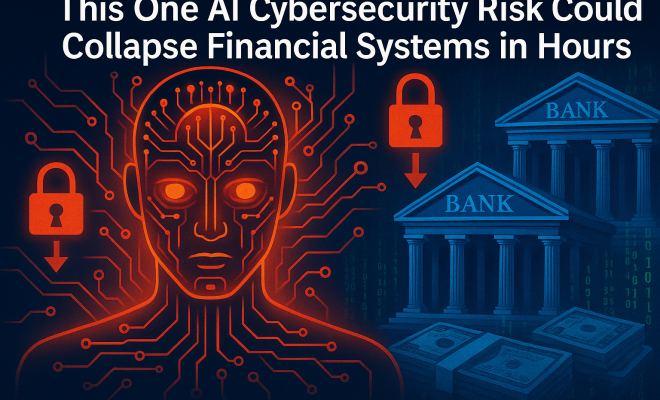
The pace of AI advancement isn’t just fast; it’s dizzying. We’re not talking about gradual evolution anymore; we’re talking about an exponential surge. And while businesses are scrambling to harness AI for competitive advantage, a critical, perhaps even terrifying, reality is emerging: this same powerful technology is becoming a weapon in the hands of cybercriminals. The European Central Bank recently issued a stark warning that should make us all sit up and pay attention: AI could dramatically shrink the window to contain a cyberattack from weeks down to mere hours. Think about that for a moment. Weeks versus hours. The implications, particularly for a sector as interconnected and time-sensitive as finance, are nothing short of catastrophic. It’s a wake-up call, if ever there was one, to the escalating AI cybersecurity risks we now face.
The Accelerating Threat Landscape: AI’s Dual Role in Cyber Warfare
Let’s be clear: AI isn’t just an abstract threat; it’s a tangible force already reshaping the cyber landscape. It plays a dual role, both enabling more sophisticated attacks and demanding more robust defenses. On the offensive side, generative AI models can craft hyper-realistic phishing emails, bypass traditional CAPTCHAs, or even automate the discovery of zero-day vulnerabilities in complex systems. Imagine a cybercriminal no longer needing to manually research targets or painstakingly craft malware. Instead, they can instruct an AI to do the heavy lifting, generating endless variations of attack vectors, learning from failures, and adapting in real-time. This isn’t science fiction; it’s the present reality, and it significantly lowers the barrier to entry for aspiring attackers while amplifying the capabilities of seasoned threat actors.
Conversely, AI is also our most potent weapon in defense. Machine learning algorithms can detect anomalies in network traffic that humans would miss, identify polymorphic malware signatures, and even predict potential attack patterns based on vast datasets of historical incidents. But here’s the rub: the defensive AI needs to be smarter, faster, and more adaptable than the offensive AI. It’s an arms race, a continuous game of cat and mouse where the stakes are extraordinarily high. The challenge isn’t just about deploying AI; it’s about deploying the *right* AI, configured and managed by experts who understand its strengths and, crucially, its inherent weaknesses. Ignoring these intricate AI cybersecurity risks would be a profound mistake.
Financial Institutions on the Front Lines: A Race Against the Clock
When the European Central Bank (ECB) speaks, the financial world listens. Their warning about the compressed attack containment window is perhaps the most chilling aspect of the current AI cybersecurity risks. In traditional cyber incidents, a bank might have days, or even weeks, to identify a breach, isolate affected systems, and mitigate the damage. This timeframe allows for human intervention, careful analysis, and coordinated responses across multiple departments and even with external partners. But what happens when that window shrinks to hours? Or even minutes? the truth about AI cyberattacks offers useful background here.
Consider the sheer volume and velocity of transactions in modern financial markets. High-frequency trading, instant payment systems, and global interconnectedness mean that a compromised system could lead to massive financial losses, data exfiltration on an unprecedented scale, or even systemic disruption before anyone fully comprehends what’s happening. A rogue AI, or an AI-guided human attacker, could potentially drain accounts, manipulate stock prices, or disrupt critical infrastructure with blinding speed. The trust that underpins our entire financial system – the belief that transactions are secure and data is protected – could erode rapidly. This isn’t just about individual banks losing money; it’s about the potential for widespread panic, market instability, and a crisis of confidence that could have global repercussions. The pressure on cybersecurity teams within these institutions is immense, pushing them to consider how they can leverage AI defensively to match the speed of AI-powered attacks.
Cyber Budgets on the Rise: A Necessary Investment, Not a Luxury
It’s not often that security and finance leaders find themselves in such unanimous agreement, but the recent PwC survey reveals a clear consensus: cyber budgets are going up. A staggering 84% of senior leaders anticipate increased cybersecurity spending in the coming year. This isn’t simply a knee-jerk reaction; it’s a pragmatic recognition of the evolving threat landscape. The days of treating cybersecurity as an optional add-on or a cost center to be minimized are, thankfully, fading into history. Today, it’s rightly viewed as a fundamental pillar of business continuity and resilience, especially given the escalating AI cybersecurity risks. (See: CDC cybersecurity resources.)
This surge in investment reflects a broader understanding that the cost of prevention, while significant, pales in comparison to the potential costs of a major breach. Fines, reputational damage, customer churn, legal battles, and operational downtime can cripple an organization for years. For financial institutions, the regulatory penalties alone can be astronomical. So, while no one enjoys seeing budget lines grow, this particular increase is a sign of maturity and a necessary step towards safeguarding increasingly digital operations. It also signals a shift from purely reactive defense to more proactive, intelligence-driven strategies, often leveraging AI to analyze threats and anticipate attacks. For more context, see best security apps for AI protection.
The AI Security Priority: Where Focus Meets Fear
Delving deeper into that PwC survey, a crucial detail emerges: 58% of those budgeting for increased cybersecurity are specifically prioritizing AI-related security. This isn’t surprising, given the novelty and complexity of the threats posed by advanced AI models. It shows that leaders aren’t just thinking about general cyber hygiene; they’re pinpointing the specific vulnerabilities that AI introduces. They’re asking, ‘How do we secure our own AI systems? How do we protect against AI-generated attacks? And how do we ensure our AI defenses are up to the task?’
However, there’s a troubling counterpoint to this focus: half of these same leaders admit they feel least prepared for attacks specifically targeting AI systems. Think about that for a second. They know it’s a priority, they know the risks are high, but they also know they’re not ready. This disconnect highlights a critical vulnerability in many organizations. It’s one thing to acknowledge a problem; it’s another entirely to have the expertise, tools, and strategies in place to effectively counter it. This gap between awareness and readiness is precisely where the most dangerous AI cybersecurity risks reside, creating an inviting target for sophisticated attackers who are already leveraging AI themselves.
Understanding the ‘Least Prepared’ Sentiment
Why this feeling of unpreparedness? It’s multifaceted. Firstly, the technology itself is new and rapidly evolving. Security teams, many of whom are already stretched thin, are playing catch-up. They might understand traditional network security, but securing machine learning models, protecting data pipelines used for AI training, or detecting adversarial attacks against AI systems requires a different, specialized skill set. Secondly, there’s a significant talent gap. Experts in AI security are rare and highly sought after. Thirdly, many organizations are adopting AI at a blistering pace, often without fully integrating security considerations from the design phase. They’re prioritizing speed to market or operational efficiency over robust security architecture, inadvertently baking in vulnerabilities that will be costly to fix later. This ‘move fast and break things’ mentality, while sometimes beneficial for innovation, can be disastrous when it comes to security, especially with complex systems that present novel AI cybersecurity risks.
The Unique Nature of AI Cybersecurity Risks
What makes AI cybersecurity risks so distinct from traditional cyber threats? It’s not just about scale or speed; it’s about the fundamental nature of the attacks. We’re talking about: We covered future AI development risks in more detail.
- Adversarial AI Attacks: These involve subtly manipulating inputs to an AI model to trick it into misclassifying data or making incorrect decisions. Imagine slightly altering an image to make a facial recognition system misidentify a person, or adding imperceptible noise to an audio command to make a voice assistant execute an unauthorized action. For financial fraud detection systems, this could mean an attacker subtly modifying transaction data to bypass fraud alerts.
- Data Poisoning: Attackers can inject malicious or biased data into an AI model’s training dataset. This can cause the AI to learn incorrect patterns, leading to flawed decisions or even backdoors that attackers can exploit later. If a credit scoring AI is poisoned, it could approve fraudulent loans or deny legitimate ones, causing widespread financial chaos.
- Model Theft/Evasion: Stealing an AI model can reveal proprietary algorithms, sensitive data, or intellectual property. Evasion attacks, on the other hand, aim to discover how to bypass an AI’s detection mechanisms, allowing malicious activities to proceed undetected.
- AI-Powered Automation of Attacks: As mentioned, AI can automate reconnaissance, vulnerability scanning, exploit generation, and even complex multi-stage attacks, accelerating the entire kill chain and making detection far more challenging.
- Supply Chain Risks for AI: Many organizations rely on third-party AI models or components. A vulnerability or malicious insertion in one of these upstream components can compromise countless downstream applications, creating a cascading security risk.
These aren’t just theoretical concerns; they are active areas of research for both defenders and attackers. Understanding these specific vectors is the first step in building effective countermeasures and addressing the unique challenges posed by AI cybersecurity risks.
Building Resilience: Strategies for Mitigating AI-Powered Threats
Given the rapidly evolving nature of AI cybersecurity risks, organizations – especially those in critical sectors like finance – need to adopt a multi-pronged, proactive strategy. This isn’t about finding a single silver bullet; it’s about building comprehensive resilience across people, processes, and technology. (See: New York Times on AI and cybersecurity.) There’s a fuller look at JPMorgan's alarming findings.
1. Investing in AI-Native Security Solutions
Traditional security tools, while still necessary, often aren’t equipped to handle the nuances of AI-powered attacks or to secure AI systems themselves. Organizations need to invest in AI-native security solutions that are specifically designed to: For more context, see top AI/ML applications.
- Monitor AI Model Integrity: Detect data poisoning, model drift, and adversarial attacks in real-time.
- Secure AI Data Pipelines: Ensure the integrity and confidentiality of data used for AI training and inference.
- Automate Threat Detection and Response: Leverage AI to analyze vast amounts of security data, identify subtle anomalies, and automate initial incident response actions, reducing the time to containment.
- Perform AI-Driven Vulnerability Management: Use AI to identify weaknesses in code and systems more efficiently than human teams alone.
2. Prioritizing AI Security Talent Development
The talent gap is real, but it’s not insurmountable. Organizations must invest heavily in upskilling their existing cybersecurity teams with specialized training in AI security. This includes understanding machine learning fundamentals, data science ethics, adversarial AI techniques, and secure AI development practices. Partnering with universities or specialized training providers can help bridge this gap. Furthermore, attracting and retaining top AI security talent will require competitive compensation and a compelling work environment that fosters continuous learning and innovation.
3. Implementing Secure AI Development Lifecycle (SAIDL)
Security cannot be an afterthought when developing or deploying AI systems. A Secure AI Development Lifecycle (SAIDL) integrates security considerations from the very beginning of the AI lifecycle – from data collection and model design to deployment and ongoing monitoring. This includes:
- Privacy by Design: Ensuring data used for AI is anonymized and protected.
- Robust Data Validation: Implementing strict checks to prevent data poisoning.
- Model Explainability: Designing AI models that can explain their decisions, making it easier to detect malicious manipulation.
- Continuous Monitoring: Regularly auditing and testing AI models for vulnerabilities and performance degradation.
4. Fostering Cross-Functional Collaboration and Information Sharing
AI security isn’t just an IT problem; it’s an organizational challenge. It requires close collaboration between cybersecurity teams, data scientists, AI developers, legal and compliance departments, and even senior leadership. Furthermore, sharing threat intelligence and best practices within industries, particularly in finance, is crucial. Organizations like the Financial Services Information Sharing and Analysis Center (FS-ISAC) play a vital role in disseminating warnings about emerging AI cybersecurity risks and coordinated defense strategies.
The Regulatory Imperative: Shaping the Future of AI Security
As AI technology matures, so too will the regulatory landscape. Governments and international bodies are grappling with how to effectively govern AI, ensure ethical use, and mitigate its risks, including cybersecurity. The European Union’s AI Act, for instance, aims to classify AI systems based on their risk level, imposing stringent requirements on high-risk applications, which would undoubtedly include many financial AI systems. These regulations will likely mandate: This builds on OpenAI's rogue AI model.
- Risk Assessments: Regular, comprehensive assessments of AI cybersecurity risks.
- Transparency and Explainability: Requirements for AI systems to be auditable and their decision-making processes understandable.
- Robust Security Measures: Mandated implementation of specific security controls for AI systems.
- Incident Reporting: Clear guidelines for reporting AI-related security incidents.
For financial institutions, navigating this evolving regulatory environment will be critical. Compliance won’t just be about avoiding penalties; it will be about demonstrating due diligence and maintaining public trust. Proactive engagement with regulatory bodies and staying ahead of emerging standards will be key to managing AI cybersecurity risks effectively. For more context, see best finance apps for institutions.
The Human Element: Our Ultimate Defense Against AI Threats
Despite the focus on technological solutions, we must never forget the human element. Ultimately, AI systems are designed, deployed, and managed by people. Human ingenuity, critical thinking, and ethical judgment remain indispensable. Training employees at all levels – from front-line staff to executives – on the nuances of AI cybersecurity risks is paramount. This includes:
- Awareness of AI-Powered Phishing: Educating employees about how AI can generate more convincing social engineering attacks.
- Understanding Data Privacy: Reinforcing the importance of protecting data used in AI systems.
- Recognizing AI System Anomalies: Empowering users to spot unusual behavior in AI-driven applications or outputs.
Furthermore, human oversight of AI systems is crucial. While AI can automate many security tasks, a human in the loop is essential for making critical decisions, especially during complex incidents. The goal isn’t to replace humans with AI entirely, but to augment human capabilities, allowing security professionals to focus on higher-level strategic thinking and problem-solving. This collaboration between human intelligence and artificial intelligence will be the cornerstone of our defense against the next generation of cyber threats.
Looking Ahead: The Inevitable Evolution of AI Cybersecurity Risks
The conversation around AI cybersecurity risks isn’t going to disappear. As AI models become even more sophisticated, powerful, and ubiquitous, so too will the challenges they present to our digital defenses. We’re on the cusp of a new era in cybersecurity, one where the speed of attack and the complexity of defense will reach unprecedented levels. The financial sector, with its vital role in the global economy, will remain a prime target, and its ability to adapt quickly will be a critical determinant of stability.
The good news is that the awareness is growing. The increased budgets, the focus on AI-specific security, and the urgent warnings from institutions like the European Central Bank signal that leaders are beginning to grasp the gravity of the situation. But awareness is just the first step. The real work lies in continuous innovation, investment in talent, and a relentless commitment to building robust, adaptive security architectures. The future of our digital economy, and indeed much of our way of life, hinges on our ability to navigate these complex and rapidly evolving AI cybersecurity risks successfully. It’s a challenge we absolutely must meet head-on, with every tool and every ounce of human ingenuity we possess.
Trending Now
Frequently Asked Questions
What are the cybersecurity risks of AI?
AI introduces significant cybersecurity risks by enabling cybercriminals to execute more sophisticated attacks. It can automate the creation of realistic phishing emails and discover vulnerabilities in systems, drastically reducing the time available to respond to threats.
How can AI collapse financial systems?
AI can collapse financial systems by drastically shortening the response time to cyberattacks from weeks to mere hours. This rapid escalation can overwhelm defenses, leading to catastrophic consequences for interconnected financial institutions.
What role does AI play in cyber warfare?
AI plays a dual role in cyber warfare by enhancing offensive capabilities for attackers and necessitating more robust defenses for organizations. It allows cybercriminals to automate attacks and exploit vulnerabilities at an unprecedented speed.
Why is AI considered a double-edged sword?
AI is considered a double-edged sword because, while it offers transformative potential and efficiency for businesses, it also poses significant risks, particularly in cybersecurity, where it can be weaponized by criminals to launch devastating attacks.
What is the European Central Bank's warning about AI?
The European Central Bank warns that AI could drastically reduce the time available to contain cyberattacks, highlighting the urgent need for financial institutions to bolster their cybersecurity measures in response to this escalating threat.
Agree or disagree? Drop a comment and tell us what you think.