This Is How NASA’s Lunar Rovers Are About to Transform Our Moon Future
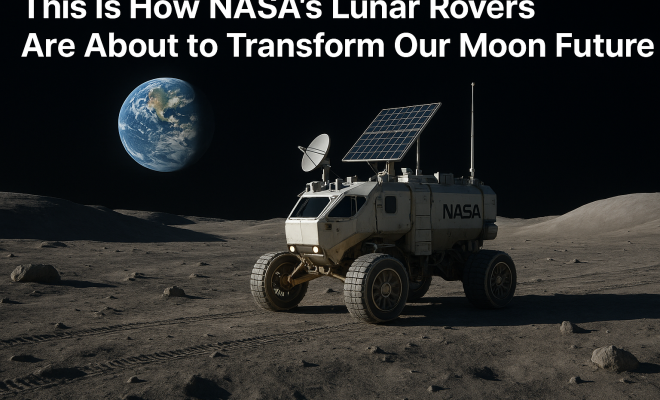
For decades, the Moon has been a silent sentinel in our night sky, a dusty, cratered canvas of past aspirations. But that’s all changing, and fast. We’re on the cusp of a dramatic new era in lunar exploration, one spearheaded by a new generation of robotic explorers. NASA’s recent progress update, issued on October 20, 2026, pulled back the curtain on these incredible machines: robotic explorers and crew-carrying lunar terrain vehicles being developed by companies like Astrolab and Lunar Outpost. These aren’t just incremental improvements; they represent a fundamental shift in how NASA lunar rovers will change moon exploration, paving the way for sustained human presence and even a lunar economy.
Think about it: before our Artemis astronauts even set foot near the Moon’s South Pole, these intrepid rovers will be there, diligently mapping the terrain, searching for vital resources, and demonstrating technologies that are nothing short of revolutionary. This isn’t science fiction anymore; it’s a meticulously planned, multi-faceted approach to making the Moon a stepping stone for humanity’s grander ambitions. The public’s long-standing fascination with our nearest celestial neighbor is about to be rekindled in a major way, because these aren’t just machines; they’re the vanguard of our future among the stars.
The Dawn of a New Lunar Frontier: Why Rovers are Key
To truly understand the magnitude of what’s happening, we need to look beyond the immediate headlines. The Moon, for all its romantic appeal, is also an incredibly harsh environment. Radiation, extreme temperature swings, and a fine, abrasive dust known as regolith make it a formidable challenge for human explorers. This is precisely where advanced lunar rovers become indispensable. They are our robotic scouts, capable of enduring conditions that would be perilous for astronauts, allowing us to gather critical data and prepare the ground (literally) for future human missions.
NASA’s strategy with the Artemis program isn’t just about planting flags; it’s about establishing a sustainable, long-term human presence. And you can’t have sustainability without knowing your environment intimately. These rovers will provide that intimate knowledge, acting as the eyes, ears, and hands of mission control back on Earth, and eventually, for astronauts on the lunar surface. They’ll be doing the heavy lifting, the dangerous reconnaissance, and the meticulous scientific work that lays the foundation for everything else.
Scouting the South Pole: A Strategic Imperative
The Moon’s South Pole isn’t just another patch of lunar real estate; it’s arguably the most strategically important location on the entire Moon. Why? Because it’s believed to harbor significant reserves of water ice in its permanently shadowed craters. Water, as any space enthusiast knows, is the most precious commodity off-world. It can be used for drinking, for growing food, and crucially, it can be broken down into hydrogen and oxygen – rocket fuel. This is why the initial focus for these new lunar rovers is so heavily centered on this region.
Before any human boots touch down, these robotic explorers from Astrolab and Lunar Outpost will be methodically surveying and mapping the terrain. They’ll be searching for those elusive pockets of water ice, characterizing the lunar soil, and identifying potential hazards and resources. This isn’t just about scientific curiosity; it’s about survival. Knowing where the water is, how much there is, and how accessible it is, will dictate the viability of any long-term lunar base. It’s the ultimate reconnaissance mission, and how NASA lunar rovers will change moon exploration hinges significantly on their success in this vital area.
Beyond Driving: The Multifaceted Roles of Next-Gen Rovers
When you picture a lunar rover, you might still think of the Apollo-era Lunar Roving Vehicle (LRV) – essentially a dune buggy for astronauts. While those were groundbreaking for their time, today’s and tomorrow’s rovers are vastly more sophisticated, capable of a much wider array of tasks. They’re not just about transportation; they’re mobile laboratories, resource prospectors, construction assistants, and even communication nodes.
- Terrain Mapping: These rovers will create incredibly detailed 3D maps of the lunar surface, far beyond anything we’ve had before. This data is crucial for planning astronaut traverses, identifying safe landing zones, and understanding geological formations.
- Water Ice Detection: Equipped with advanced spectrometers and drills, they’ll actively search for and analyze water ice, providing critical data on its quantity, purity, and distribution. This isn’t just a surface scan; it’s about subsurface exploration.
- Technology Demonstrations: Before committing astronauts to new, untested technologies, these rovers will be used to prove their efficacy in the harsh lunar environment. This could range from new power systems to advanced communication relays or even early forms of lunar construction techniques.
- Science Missions: Beyond resource prospecting, they’ll conduct general scientific investigations, collecting samples, deploying seismometers, and studying the lunar exosphere, enriching our understanding of the Moon’s origins and evolution.
- Astronaut Transport: Some of these vehicles, like those being developed as Lunar Terrain Vehicles (LTVs), are specifically designed to carry astronauts and their equipment, extending their operational range and allowing them to explore much larger areas than they could on foot.
It’s this versatility that truly underscores how NASA lunar rovers will change moon exploration. They are not one-trick ponies; they are multi-tool platforms designed for the diverse and demanding needs of a sustained lunar presence.
The Companies Powering the Rover Revolution: Astrolab and Lunar Outpost
It’s not just NASA at the helm of this ambitious endeavor. The agency has wisely tapped into the burgeoning commercial space sector, fostering innovation and competition. Companies like Astrolab and Lunar Outpost are at the forefront of designing and building these next-generation lunar vehicles. This commercial partnership model is a significant departure from the monolithic government-led programs of the past and represents a more agile, cost-effective approach to space exploration.
Astrolab, for instance, is developing a lunar rover concept that emphasizes modularity and versatility. Their design aims to be capable of carrying a wide range of scientific instruments and payloads, and even act as a mobile habitat or construction platform. Lunar Outpost, on the other hand, has already demonstrated significant capabilities with their smaller, more agile rovers, focusing on rapid deployment and resource prospecting. Their collaboration with NASA isn’t just about fulfilling contracts; it’s about pushing the boundaries of what’s possible, driving innovation, and ultimately, building a robust lunar infrastructure. (See: NASA Artemis program overview.)
The Water Ice Imperative: Fueling Future Lunar Industries
Let’s talk more about water ice, because its implications are truly profound. Imagine a future where we don’t have to launch every drop of water or every liter of rocket fuel from Earth. That’s the dream, and lunar water ice makes it a tangible possibility. Once processed, water ice can yield not only potable water for astronauts but also hydrogen and oxygen. These are the fundamental components of rocket propellant. This means that future missions, whether to Mars or beyond, could refuel at a lunar waystation, dramatically reducing the cost and complexity of deep space travel.
This isn’t just about space exploration; it’s about economics. The ability to produce resources on the Moon opens up the prospect of a lunar economy. Think about lunar mining operations, manufacturing facilities, or even space tourism fueled by locally sourced propellant. The search for water ice isn’t just a scientific quest; it’s an industrial imperative that will fundamentally reshape our relationship with space. The success of these rovers in locating and characterizing this resource will be a pivotal moment in understanding how NASA lunar rovers will change moon exploration and the broader space industry. For more context, see the unseen EV battery recycling boom.
Beyond Exploration: Towards Human Settlement and Sustainability
The ultimate goal of the Artemis program, and indeed, much of the rationale behind these advanced rovers, is the establishment of a sustainable human presence on the Moon. We’re not just talking about quick flag-and-footprint missions anymore. We’re talking about habitats, laboratories, long-term scientific research, and eventually, perhaps, even a small community.
For this to happen, several critical pieces must fall into place. Rovers will play a crucial role in:
- Site Selection: Identifying optimal locations for habitats, considering factors like sunlight for power, proximity to water ice, and stable terrain.
- Infrastructure Development: Potentially assisting in the construction of landing pads, roads, or even basic shelters using in-situ resources.
- Life Support: Providing data that helps optimize life support systems, especially regarding water recycling and oxygen production from local resources.
- Emergency Preparedness: Serving as communication relays or even rescue vehicles in unforeseen circumstances, extending the safety net for astronauts.
These machines are laying the groundwork for a future where humanity isn’t just visiting the Moon but living and working there. It’s an ambitious vision, but one that feels increasingly within reach thanks to these robotic pioneers.
The Economic Ripple Effect: Investment and Lunar Real Estate
The implications of this new era of lunar exploration extend far beyond scientific papers and mission patches. There’s a tangible economic ripple effect already taking shape. The pursuit of lunar resources, particularly water ice, is sparking significant interest in space resource extraction companies. Imagine the investment opportunities in firms that can develop the technology to efficiently mine and process lunar regolith, or those that specialize in B2B services for lunar infrastructure development.
Furthermore, as the prospect of sustained human presence grows, so does the conversation around speculative lunar real estate. While the legal and ethical frameworks for owning property on the Moon are still nebulous, the very idea signals a shift in perception. The Moon is transforming from a distant object of wonder into a potential economic frontier. Audiences interested in ‘space investment’ or ‘lunar resource technology’ are already paying close attention, understanding that the initial steps taken by these rovers are foundational to potentially massive future industries. This commercialization aspect is a powerful driver for how NASA lunar rovers will change moon exploration, moving it from purely government-funded science to a hybrid model with significant private sector involvement.
Challenges and the Path Forward
Of course, this ambitious vision isn’t without its challenges. Operating rovers on the Moon is incredibly difficult. Communication delays, extreme temperatures, abrasive dust that can foul mechanisms, and the harsh radiation environment all pose significant hurdles. NASA and its commercial partners are constantly working on new materials, advanced robotics, and autonomous systems to overcome these obstacles.
Power is another major consideration. Sustained operations require robust power sources, often relying on radioisotope thermoelectric generators (RTGs) or advanced solar arrays coupled with efficient battery storage. The ability for these rovers to cover significant distances daily, as highlighted in the NASA update, speaks to the advancements being made in power management and locomotion systems. The journey to a truly sustainable lunar presence is long, but each successful rover mission, each discovery of water ice, and each technological demonstration brings us closer to that reality.
How Advanced AI and Robotics are Supercharging Rover Capabilities
The next generation of lunar rovers isn’t just about tougher materials and better sensors; it’s about intelligence. Artificial intelligence (AI) and advanced robotics are profoundly changing what these machines can do autonomously. Think about a rover that can navigate complex, boulder-strewn terrain without constant human input, or one that can identify a scientifically interesting rock, analyze it, and even decide whether to collect a sample, all on its own. That’s the future we’re building.
These AI-powered capabilities are critical because of the communication delays between Earth and the Moon. Even at the speed of light, a round trip for a signal takes several seconds, making real-time, joystick-style control impractical for many tasks. Instead, rovers are becoming increasingly self-sufficient. They’ll use machine learning algorithms to process vast amounts of sensor data, enabling them to: (See: Scientific advancements in lunar exploration.)
- Autonomous Navigation: Mapping unknown areas, detecting hazards like steep inclines or deep craters, and plotting optimal, energy-efficient paths.
- Automated Science: Identifying geological features, analyzing mineral compositions with onboard instruments, and even performing rudimentary scientific experiments without direct human command.
- Self-Correction and Fault Detection: Recognizing when a component is malfunctioning or when they’re stuck, and attempting to resolve the issue autonomously or alerting human operators with detailed diagnostics.
- Cooperative Robotics: Imagine a swarm of smaller rovers working together, sharing data and coordinating their movements to achieve a larger objective, like mapping an entire crater interior or setting up a large antenna array.
This level of autonomy dramatically increases the efficiency and scientific return of each mission. It means a single rover can accomplish far more in its operational lifetime, pushing the boundaries of how NASA lunar rovers will change moon exploration from a reactive, human-guided process to a proactive, intelligent robotic endeavor.
The Long-Term Vision: A Gateway to Deep Space
While the immediate focus for these rovers is on lunar exploration and resource utilization, it’s essential to remember that the Moon is just the first step in a much grander strategy. NASA’s Artemis program explicitly positions the Moon as a “proving ground” for future human missions to Mars and beyond. The lessons learned, the technologies developed, and the infrastructure established on the Moon will be directly applicable to sending humans to the Red Planet. For more context, see breakthroughs in cancer treatment.
Consider the synergies: a lunar base powered by locally sourced energy and fueled by lunar water ice could serve as an ideal staging point for Mars missions. Rockets could be assembled, refueled, and launched from the Moon, taking advantage of its lower gravity compared to Earth, which significantly reduces the energy required for deep space travel. The rovers, by meticulously surveying potential landing sites, identifying construction materials, and validating in-situ resource utilization (ISRU) techniques, are directly contributing to this long-term vision. They are helping us answer fundamental questions: Can we live off the land on another celestial body? Can we build sustainable outposts beyond Earth? The answers, largely facilitated by these robotic pioneers, will determine humanity’s future trajectory as a multi-planetary species. This perspective truly highlights how NASA lunar rovers will change moon exploration not just for the Moon itself, but for our entire solar system.
An Expert Perspective: Insights from Planetary Scientists
To really grasp the impact of these rovers, it helps to hear from the experts. Dr. Anya Sharma, a leading planetary geologist specializing in lunar regolith, recently emphasized the scientific windfall:
“For decades, our understanding of lunar geology has been limited by the small number of Apollo landing sites and orbital data. These new rovers, with their enhanced mobility and sophisticated instrument suites, are like sending dozens of field geologists to the Moon. They’ll give us unprecedented access to diverse terrains, allowing us to sample and analyze materials that could reveal the true history of the Moon’s formation and evolution. The ability to drill deeper, to analyze volatile concentrations in permanently shadowed regions – that’s a game-changer for understanding both the Moon’s past and its potential as a resource hub.”
Similarly, Dr. Ben Carter, an aerospace engineer focused on lunar robotics, points to the operational advantages:
“The sheer endurance and autonomy of these next-gen rovers are what excite me most. We’re moving beyond mere exploration to sustained presence. Imagine a rover that can operate for years, performing routine maintenance on a lunar outpost, monitoring environmental conditions, or even deploying scientific sensor networks across vast distances. They’re becoming reliable, persistent partners for human explorers, extending our reach and capabilities exponentially. This is the foundation for making human life on the Moon not just possible, but practical.”
These insights underscore that the advancements in rover technology aren’t just incremental; they’re transformative, opening up entirely new avenues for both scientific discovery and operational efficiency.
Frequently Asked Questions About NASA’s Lunar Rovers
What makes these new lunar rovers different from previous ones, like the Apollo LRV?
The new rovers are vastly more sophisticated. While the Apollo LRV was primarily a human-driven transport vehicle for short excursions, today’s rovers are highly autonomous, equipped with advanced AI for navigation and scientific analysis. They carry a wider array of cutting-edge instruments for resource prospecting (like water ice), detailed terrain mapping, and technology demonstrations. Many are designed for long-duration missions, operating for months or even years, whereas the LRV missions were very brief.
What exactly is “water ice” on the Moon, and why is it so important?
Water ice on the Moon refers to frozen water molecules believed to be trapped in permanently shadowed craters, particularly at the lunar poles. It’s incredibly important because it’s a versatile resource. It can be melted for drinking water for astronauts, used for growing food, and, crucially, split into hydrogen and oxygen. These are the primary components of rocket fuel, which means lunar water ice could enable future missions to refuel on the Moon, making deep space travel more affordable and efficient. (See: New York Times on lunar rovers.)
Which companies are involved in building these next-gen lunar rovers?
NASA has partnered with several commercial companies through programs like the Commercial Lunar Payload Services (CLPS) initiative and Lunar Terrain Vehicle (LTV) contracts. Key players mentioned in the article include Astrolab and Lunar Outpost, both developing advanced robotic and crew-carrying lunar vehicles. This commercial partnership model fosters innovation and leverages private sector expertise.
How will rovers assist in establishing a long-term human presence on the Moon?
Rovers are foundational to long-term human presence. They will scout and characterize potential habitat sites, identifying safe, resource-rich locations. They can assist in infrastructure development by potentially transporting materials or preparing landing pads. They’ll also provide critical data for life support systems, like water availability, and can serve as communication relays or emergency support vehicles, extending the safety and operational range for astronauts.
What are the biggest challenges facing lunar rover operations?
Operating rovers on the Moon presents significant challenges:
- Extreme Temperatures: The Moon experiences drastic temperature swings between lunar day and night.
- Abrasive Dust (Regolith): Fine, electrostatic lunar dust can clog mechanisms, abrade surfaces, and interfere with electronics.
- Radiation: The Moon lacks a protective atmosphere, exposing rovers (and humans) to harsh solar and cosmic radiation.
- Communication Delays: The time lag for signals between Earth and the Moon makes real-time control difficult, necessitating advanced autonomy.
- Power Management: Sustaining operations, especially during long lunar nights, requires robust and efficient power sources.
Will these rovers be used to explore other celestial bodies besides the Moon?
While the current focus for these specific NASA-contracted rovers is the Moon, the technologies developed for them – including advanced autonomy, resource prospecting instruments, and resilient designs – are directly applicable to future missions to Mars, asteroids, and other celestial bodies. The Moon serves as a critical testbed for these capabilities.
How does the commercialization of lunar exploration benefit the public?
Commercialization brings several benefits: it fosters competition and innovation, potentially leading to more cost-effective and agile missions. It opens up new economic opportunities and industries, creating jobs and driving technological advancements that can have Earth-based applications. Ultimately, it accelerates the pace of exploration and resource utilization, making humanity’s expansion into space a more sustainable and collaborative endeavor.
A New Chapter for Humanity in Space
The deployment of these next-generation lunar rovers marks a pivotal moment in human history. They are not merely sophisticated machines; they are the harbingers of a new era of space exploration, resource utilization, and ultimately, human expansion beyond Earth. The meticulous work of mapping the South Pole, detecting water ice, and demonstrating cutting-edge technologies will provide the essential foundation for our Artemis astronauts. It’s a testament to human ingenuity and our enduring drive to explore, to understand, and to build a future among the stars.
When you next gaze at the Moon, remember that it’s no longer just a distant light. It’s becoming a vibrant, active frontier, and the silent, tireless work of these lunar rovers is making that transformation possible, one dusty kilometer at a time. The future of lunar exploration isn’t just arriving; it’s being driven there, literally, by these incredible machines.
Trending Now
- this guide on this new novo nordisk obesity drug is showing 25% weight loss – but there’s a catch
- read the full story
- The Troubling Truth About Your Digital Games Ownership
- this guide on brandon stirrup’s ai stance: why this xbox strategist deletes account and what it means
Frequently Asked Questions
What are NASA's lunar rovers designed to do?
NASA's lunar rovers are designed to explore the Moon's surface, map terrain, search for vital resources, and demonstrate new technologies. These robotic explorers will pave the way for sustained human presence on the Moon and contribute to the development of a lunar economy.
How will lunar rovers change moon exploration?
Lunar rovers will fundamentally transform moon exploration by acting as robotic scouts that can withstand harsh conditions. They will gather critical data and prepare the lunar environment for future human missions, significantly enhancing our capabilities for exploration.
What challenges do lunar rovers face on the Moon?
Lunar rovers face several challenges on the Moon, including extreme temperature fluctuations, high levels of radiation, and abrasive lunar dust known as regolith. These factors make the Moon a harsh environment for exploration, necessitating advanced technology in rover design.
What companies are involved in developing lunar rovers for NASA?
Companies like Astrolab and Lunar Outpost are actively involved in developing lunar rovers for NASA. These companies are creating both robotic explorers and crew-carrying lunar terrain vehicles to advance lunar exploration efforts.
Why is the Moon significant for future human exploration?
The Moon is significant for future human exploration because it serves as a testing ground for technologies and resources that could support long-term human presence in space. It is seen as a stepping stone for broader ambitions in space exploration, including missions to Mars and beyond.
What did we miss? Let us know in the comments and join the conversation.