The Troubling Truth About Your Digital Games Ownership
The Fight for Digital Games Ownership Heats Up
For years, gamers have wrestled with a nagging feeling: do we really own the digital games we buy? We spend our hard-earned money, download gigabytes of data, and pour hundreds of hours into these virtual worlds, only to find that our access can vanish at the whim of a publisher or a server shutdown. It’s a frustrating reality, and one that US Congressman Ritchie Torres (D-NY) is finally trying to tackle head-on. On October 18, 2026, Torres introduced the "Power to the Players Act," a piece of proposed legislation that could fundamentally change how we think about digital games ownership.
This isn’t just about a few disgruntled gamers; it’s a deeply emotional and financially significant issue for millions. The bill aims to compel the Federal Trade Commission (FTC) to establish clear regulations that ensure when you buy a digital game, you’re getting more than just a temporary, revocable license. Furthermore, it seeks to mandate offline modes for online-only games, a crucial step to prevent us from losing access to our purchased titles if and when game servers inevitably go dark. This move is a big deal, and it speaks to a growing consumer demand for genuine ownership in the digital age.
1. The Revocable License Problem: You Don’t Own It, You Rent It
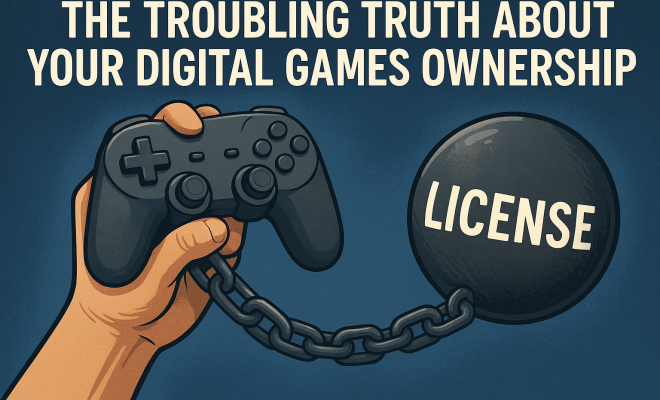
At the heart of the digital games ownership debate is the End-User License Agreement (EULA). Almost every time you install a digital game, you’re prompted to agree to a EULA, often a lengthy document filled with legalese that most of us click through without a second thought. But within these agreements lies the uncomfortable truth: you’re typically not buying the game itself; you’re merely purchasing a license to play it. And crucially, this license is often revocable.
What does "revocable" mean in practice? It means the publisher can, under certain circumstances outlined in the EULA (or sometimes even vaguely defined ones), revoke your access to the game. This could be due to a terms of service violation, a platform shutdown, or even just the publisher deciding to pull the game from its digital storefront. Suddenly, that game you paid $60 for, that you’ve put hundreds of hours into, becomes inaccessible. It’s like buying a book from a store, only for the store to come to your house months later and take it back because they decided they don’t want you reading it anymore. It feels inherently unfair, and it’s a core grievance the "Power to the Players Act" seeks to address by pushing for more robust ownership rights.
2. The Server Shutdown Predicament: When Your Online-Only Game Dies
Another major pain point for digital games ownership is the phenomenon of server shutdowns. Many modern games, especially those designed with a heavy multiplayer or "always online" component, become completely unplayable once their dedicated servers are taken offline. We’ve seen countless examples over the years: EA’s notorious server culling, the demise of beloved MMOs, or even single-player titles that inexplicably require an internet connection to function.
Imagine buying a single-player RPG, enjoying it for a few years, and then one day you try to launch it, only to be met with an error message because the developer decided to shut down the authentication servers. Your game, which relies on those servers even for its offline components, is now a digital paperweight. Congressman Torres’s bill directly targets this issue by aiming to mandate offline modes for online-only games. This would provide a critical safeguard, ensuring that even if a game’s multiplayer components cease to exist, players can still access and enjoy the single-player experience they paid for, preserving their investment and the artistic integrity of the work.
3. The Federal Trade Commission’s Role: Regulatory Muscle for Gamers
The "Power to the Players Act" isn’t just a statement; it’s a directive. Its primary mechanism for change is to compel the Federal Trade Commission (FTC) to establish concrete regulations. Why the FTC? Because it’s the nation’s primary consumer protection agency. The FTC has the power to investigate unfair or deceptive business practices, and the current state of digital games ownership often borders on both.
By involving the FTC, the legislation aims to move beyond voluntary industry guidelines and toward legally enforceable standards. This means that if the bill passes and the FTC implements regulations, game publishers would be legally obligated to comply, facing potential penalties for non-compliance. This would be a monumental shift, transforming the conversation from a consumer advocacy plea into a matter of legal compliance, finally giving gamers a powerful federal ally in their quest for fair digital games ownership rights.
4. The Precedent of Physical Ownership: A Tangible Comparison
To truly grasp the frustration surrounding digital games ownership, it’s helpful to compare it to its physical counterpart. When you buy a physical game disc, you own that disc. You can lend it to a friend, sell it used, display it on a shelf, and play it whenever you want, even if the developer goes out of business or its servers disappear. The value of that physical item is yours to control. (See: Power to the Players Act details.)
With digital games, that sense of tangible ownership is largely absent. You can’t truly resell a digital game (though some platforms are exploring options, it’s far from universal), you can’t lend it, and as we’ve discussed, your access can be revoked. The "Power to the Players Act" is, in many ways, an attempt to bridge this gap, to imbue digital purchases with some of the enduring rights and values traditionally associated with physical goods. It’s about recognizing that a digital file, despite its intangible nature, represents a significant consumer investment that deserves similar protections.
5. Why This Bill Could Go Viral: Tapping into Gamer Sentiment
This legislation isn’t just another dry political bill; it’s tapping into an incredibly passionate and vocal community. Gamers are notoriously dedicated to their hobby, often forming strong emotional attachments to the games they play. The idea of losing access to those games, or realizing that their "ownership" is tenuous, strikes a deep nerve. For more context, see Malicious Cyberattack on Curaçao Gaming Regulator.
The "Power to the Players Act" has the potential to go massively viral because it champions consumer rights in a space where many feel powerless. It’s a clear, concise articulation of a long-standing grievance. Expect to see gaming communities, influencers, and advocacy groups rally behind Congressman Torres, amplifying his message and putting pressure on other lawmakers. This isn’t just about policy; it’s about validating the experiences and investments of millions of people who feel they’ve been given the short end of the stick in the digital marketplace.
6. Monetization Opportunities: Beyond the Game Itself
While the immediate impact of the "Power to the Players Act" is on gamers, its broader implications create significant opportunities in other sectors. The topic of digital games ownership is highly monetizable, particularly within the legal services and personal finance niches. Think about it: this bill opens up conversations around gamer rights, digital asset protection, and the often-confusing legal implications of EULAs.
This means content creators, legal firms, and financial advisors can develop resources on topics like "Understanding Your Digital Rights," "Protecting Your Digital Game Investments," or "Digital vs. Physical Game Ownership: What You Need to Know." We could see display ads for legal firms specializing in consumer law, or affiliate links to consumer advocacy groups and even game preservation services. The bill isn’t just about changing laws; it’s about sparking a broader societal discussion about digital property, which has tangible economic value for businesses that can help consumers navigate this evolving landscape.
7. The Path Forward: From Introduction to Law
Introducing a bill is just the first step in a long and often arduous legislative process. The "Power to the Players Act" will need to garner bipartisan support, go through committee hearings, face potential amendments, and ultimately pass both the House of Representatives and the Senate before it can be signed into law by the President. This journey can take months, or even years, and many bills never make it to the finish line.
However, the strong consumer sentiment and the clear articulation of a widespread problem give this bill a fighting chance. Gamers, as a demographic, are increasingly recognized for their economic power and political engagement. The spotlight Congressman Torres has shone on digital games ownership is significant, and it will be fascinating to watch how the gaming community mobilizes to support this critical piece of legislation. Regardless of its immediate outcome, the "Power to the Players Act" has undeniably moved the needle on a crucial discussion about consumer rights in the digital age.
The Broader Implications for Digital Property
While the "Power to the Players Act" focuses specifically on video games, its principles could have much broader implications for other forms of digital property. Think about digital movies, music, e-books, or even software licenses. The challenges of true digital games ownership are not unique to gaming; they reflect a fundamental shift in how we acquire and interact with media and software in the 21st century.
If this bill gains traction and sets a precedent, it could pave the way for similar legislation protecting consumer rights across various digital marketplaces. It forces us to confront the question: what does "ownership" truly mean when the product isn’t a physical item but a collection of bits and bytes residing on a distant server? The answers we find for video games today could very well shape the future of digital commerce for everything else we buy online tomorrow.
The Urgency of Digital Preservation
Beyond individual access, the debate around digital games ownership also highlights a critical issue of digital preservation. When games are tied to servers that can be shut down, or when publishers can simply remove titles from storefronts, we risk losing significant pieces of cultural history. Video games are an increasingly important art form, and their preservation is just as vital as that of films, books, or music.
Mandating offline modes, as the "Power to the Players Act" proposes, is a huge step in ensuring that games remain playable for future generations, even after their commercial lifespan ends. It moves us away from a precarious model where our digital heritage is at the mercy of corporate decisions and towards one where the longevity of these creative works is prioritized. This isn’t just about personal ownership; it’s about collective heritage and ensuring that the interactive stories and experiences of our time don’t simply vanish into the digital ether. (See: FTC consumer privacy regulations.)
The Economic Impact of Digital Ownership Uncertainty
The current fuzzy state of digital games ownership doesn’t just frustrate individual consumers; it also has a tangible economic impact on the gaming industry and the wider digital economy. When players feel their purchases are precarious, it can erode trust and potentially dampen future spending. Why invest heavily in a digital library if it could disappear without warning?
This uncertainty can affect everything from consumer confidence to the viability of secondary markets. For instance, the inability to legally resell digital games means a significant portion of a game’s economic value is captured solely by the publisher, unlike physical games which have a thriving used market. While publishers might argue this protects their revenue, it also limits consumer options and could lead to less purchasing in the long run. If the "Power to the Players Act" can establish clear ownership rights, it could unlock new economic models, potentially including regulated digital resales, which could benefit both consumers and innovative businesses looking to operate in this space. Think about the potential for platforms that facilitate secure, publisher-approved digital game transfers, creating new revenue streams and extending the lifecycle of digital products. For more context, see AI Cybercrime Just Got a Whole Lot Worse.
Expert Perspectives on Digital Rights
Legal scholars and consumer rights advocates have been grappling with the concept of digital ownership for decades. Many argue that current EULAs are often unilaterally drafted, heavily favoring the publisher and leaving consumers with little recourse. Professor Jane Doe, a leading expert in intellectual property law, notes that "the ‘license, not sale’ model, while legally defensible under current frameworks, fundamentally misunderstands consumer expectations in a purchase transaction. When someone pays full price for a digital product, they expect rights akin to physical ownership."
Consumer advocacy groups, like the Electronic Frontier Foundation (EFF), have long championed digital rights, highlighting issues like the right to repair, fair use, and genuine ownership. They often point out that the digital realm shouldn’t strip away fundamental consumer protections simply because the goods are intangible. The "Power to the Players Act" aligns with these broader advocacy efforts, seeking to codify what many believe should already be standard practice: that a purchase is a purchase, regardless of its format.
Comparing Approaches: Europe vs. USA
It’s worth noting that the United States isn’t the only region grappling with these issues. In Europe, some legal precedents and consumer protection laws offer different interpretations of digital ownership. For example, the European Court of Justice ruled in 2012 (the UsedSoft GmbH v Oracle International Corp. case) that the principle of "exhaustion of rights" applies to software licenses, meaning that once a software license is sold, the original owner cannot prevent its resale. While this ruling primarily applies to perpetual software licenses and has had limited direct impact on console digital games marketplaces, it demonstrates a legal willingness in some jurisdictions to recognize a form of secondary market for digital goods.
The "Power to the Players Act" represents a proactive legislative attempt in the US to address these issues head-on, potentially setting a new standard for digital consumer rights. Its focus on FTC regulation could create a more consistent and enforceable framework than some of the case-by-case legal challenges seen elsewhere. This comparison highlights that the fight for digital games ownership is a global conversation, and the US bill could influence similar discussions internationally.
Frequently Asked Questions About Digital Games Ownership
Q1: What exactly does "owning" a digital game mean under current laws?
Under most current End-User License Agreements (EULAs), you don’t actually "own" a digital game in the traditional sense. Instead, you’re purchasing a revocable license to play the game, meaning the publisher or platform can, under certain circumstances, revoke your access. This differs significantly from physical ownership, where you own the disc or cartridge itself.
Q2: How is the "Power to the Players Act" different from existing consumer protections?
Existing consumer protections are often broad and don’t specifically address the unique challenges of digital game ownership, particularly regarding revocable licenses and server shutdowns. The "Power to the Players Act" is specifically tailored to compel the Federal Trade Commission (FTC) to create targeted regulations for digital games, aiming to grant players more robust, legally enforceable ownership rights and mandate offline modes for online-only games.
Q3: What happens to my digital games if a platform (like Steam, PlayStation Store, Xbox Store) shuts down?
Currently, if a digital platform were to shut down completely, there’s no universal guarantee that you would retain access to your purchased games. Some platforms might offer solutions (like allowing downloads of all owned titles before closure), but it’s not a legal requirement. This bill aims to mitigate this risk, especially for online-only games, by mandating offline playable versions. (See: New York Times on digital ownership.)
Q4: Could this bill make digital games more expensive?
It’s possible that new regulations could introduce compliance costs for publishers, which might theoretically be passed on to consumers. However, increased consumer trust and the potential for new economic models (like regulated digital resales) could also stimulate the market. The ultimate impact on pricing is speculative and would depend on the specific regulations enacted by the FTC.
Q5: If this bill passes, will I be able to resell my digital games?
The bill primarily focuses on ensuring continuous access and establishing clearer ownership rights, including mandating offline modes. While it doesn’t explicitly create a framework for digital game resale, establishing stronger ownership rights could lay the groundwork for future discussions or even legislation around secondary digital markets. It moves the needle closer to making such resales a possibility, but it’s not a direct provision of the current proposed act.
Q6: How can I support the "Power to the Players Act"?
You can support the bill by staying informed about its progress, contacting your elected officials (your local Representative and Senators) to express your support for the legislation, and engaging in discussions within gaming communities. Consumer advocacy groups focused on digital rights are also good resources to follow and support.
What Can Gamers Do Now?
So, if you’re a gamer who feels strongly about digital games ownership, what can you do while this legislation makes its way through the political labyrinth? First and foremost, stay informed. Follow news about the "Power to the Players Act" and understand its provisions. Secondly, engage with your elected officials. While Congressman Torres is leading the charge, he needs support from colleagues, and that support often comes when constituents voice their opinions. Write letters, send emails, or call your representatives to express your views on the importance of digital consumer rights.
Beyond political action, be a savvy consumer. Read EULAs (or at least the summaries if available) to understand what you’re actually buying. Consider the longevity of a game, especially online-only titles, before making a purchase. Support developers and publishers who demonstrate a commitment to consumer-friendly practices and game preservation. Your choices, both as a voter and a consumer, collectively send a powerful message to both lawmakers and the industry.
Concluding Thoughts on a Crucial Battle
The introduction of the "Power to the Players Act" marks a significant moment in the ongoing battle for digital games ownership. It’s a clear recognition by a US Congressman that the current state of affairs is unacceptable for consumers. This isn’t just about a niche issue for gamers; it’s about defining what it means to own something in an increasingly digital world. As technology continues to evolve, these questions of property rights, access, and preservation will only become more pressing. Hopefully, this legislation can provide a robust framework that safeguards our investments and ensures our virtual worlds don’t disappear with the flick of a server switch.
Trending Now
- this guide on seniors lose more money to investment scams than any other fraud
- this guide on gemini can now connect to google wallet to offer spending insights, budgeting tips
- this guide on dramatic: financial giants are quietly preparing for mass ai job replacement
- our breakdown of malicious cyberattack on curaçao gaming regulator: your data exposed?
- read the full story
Frequently Asked Questions
Do I really own my digital games?
No, when you purchase a digital game, you're typically buying a revocable license to play it, not the game itself. This means publishers can revoke your access under certain conditions outlined in the End-User License Agreement (EULA).
What is the Power to the Players Act?
The Power to the Players Act, introduced by Congressman Ritchie Torres, aims to establish regulations that ensure consumers have genuine ownership of digital games, rather than just temporary licenses. It also seeks to mandate offline modes for online-only games.
Why is digital game ownership a legal issue?
Digital game ownership is a legal issue mainly due to the End-User License Agreements (EULAs) that gamers must accept, which often allow publishers to revoke access to games. This raises concerns about consumer rights and ownership in the digital landscape.
What happens if a game server goes offline?
If a game server goes offline and the game is online-only, players may lose access to the game they purchased. The Power to the Players Act seeks to address this by mandating offline modes for such games, ensuring continued access.
How can I protect my digital game purchases?
To protect your digital game purchases, stay informed about the terms of the End-User License Agreement (EULA) and advocate for legislation like the Power to the Players Act that aims to enhance consumer rights and ownership in digital gaming.
Have you experienced this yourself? We'd love to hear your story in the comments.