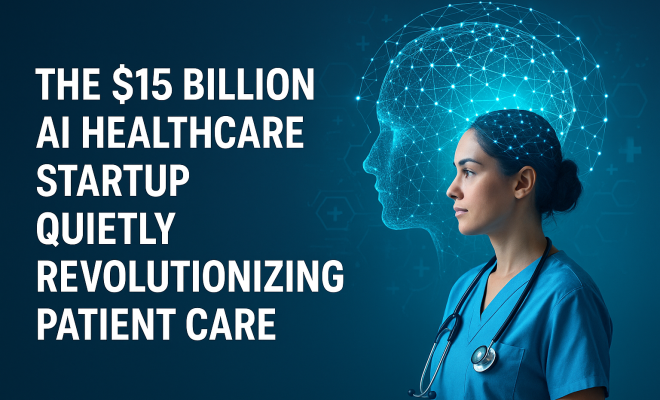
The $15 Billion AI Healthcare Startup Quietly Revolutionizing Patient Care
“`html
Imagine a world where doctors can access the sum total of medical knowledge in mere seconds, sifting through millions of peer-reviewed journals and clinical guidelines with unprecedented speed. This isn’t a futuristic fantasy; it’s the reality being shaped by OpenEvidence, a Miami-based AI healthcare startup that’s rapidly becoming indispensable to American physicians. Valued at an eye-watering $15 billion, this company is making waves, claiming to be the “first viral consumer internet app in healthcare.”
The numbers are certainly compelling. OpenEvidence reportedly processes over 42 million prompts from doctors every single month. That’s a staggering volume, suggesting a deep integration into the daily workflows of medical professionals. With nearly two-thirds of US doctors allegedly using its AI search engine, this platform is not just gaining traction; it’s fundamentally altering how medical information is accessed and utilized. For any AI healthcare startup looking to make a real impact, these figures represent a monumental achievement. But what exactly makes OpenEvidence so compelling, and what challenges does it face as it pushes the boundaries of AI in medicine?
1. OpenEvidence’s Core Offering: The AI Search Engine for Doctors
At its heart, OpenEvidence provides an AI-powered search engine specifically designed for the medical community. Unlike a general search engine, which might return a jumble of information, OpenEvidence focuses on peer-reviewed journals, clinical guidelines, and other highly credible medical sources. This specialized approach is crucial in healthcare, where accuracy and reliability are paramount. Doctors can query the system with complex patient scenarios, symptoms, or treatment questions, and the AI rapidly synthesizes relevant information, helping them make more informed decisions.
This capability addresses a long-standing pain point in medicine: information overload. The sheer volume of new research published daily makes it virtually impossible for any human to keep up. OpenEvidence aims to bridge this gap, offering a powerful tool that enhances a physician’s ability to stay current and access the most relevant, up-to-date medical knowledge. It’s about augmenting human intelligence, not replacing it, by providing rapid access to the collective wisdom of medical science.
This isn’t just about faster searching; it’s about intelligent synthesis. Think of it as having a hyper-efficient research assistant who can read and understand medical texts at an impossible speed. When a doctor enters a query like, “What are the latest treatment protocols for refractory hypertension in a patient with chronic kidney disease stage 3?”, OpenEvidence doesn’t just pull up articles containing those keywords. Instead, it understands the clinical context, prioritizes guidelines from authoritative bodies like the American Heart Association or the National Kidney Foundation, and synthesizes a concise, actionable summary, often citing its sources directly. This saves precious minutes in a busy clinic and helps ensure treatment decisions are based on the freshest evidence, a crucial differentiator for any successful AI healthcare startup.
2. The ‘Viral’ Phenomenon: Adoption Rates and Physician Engagement
Daniel Nadler, the founder of OpenEvidence, isn’t shy about his company’s impact, calling it the “first viral consumer internet app in healthcare.” While “viral” might seem like a term more suited to TikTok dances than medical software, the reported adoption rates suggest he might be onto something. With nearly two-thirds of US doctors reportedly using the platform, its spread has been remarkably swift.
What drives this rapid adoption? Part of it likely stems from the tangible benefits doctors experience. Time is a precious commodity in healthcare, and anything that can save minutes, especially when dealing with complex cases, is invaluable. The word-of-mouth among physicians, coupled with the clear utility of the tool, has created a powerful network effect. This kind of organic growth is a dream for any AI healthcare startup, demonstrating genuine need and user satisfaction.
The “viral” nature also speaks to a critical understanding of user experience in a professional context. Unlike many enterprise software solutions that require extensive training and IT integration, OpenEvidence appears to offer an intuitive interface that doctors can pick up quickly. Its immediate utility – getting relevant answers fast – creates a strong incentive for continued use. This ease of adoption, combined with the significant time savings, turns early adopters into enthusiastic advocates, fueling further organic growth. Imagine a doctor discovering a faster way to confirm a diagnosis or review a rare condition; they’re very likely to share that discovery with colleagues. This peer-to-peer recommendation is far more powerful in the medical community than any traditional marketing campaign, solidifying OpenEvidence’s place as a truly impactful AI healthcare startup.
3. Funding and Valuation: A Billion-Dollar Bet on AI in Medicine
OpenEvidence hasn’t just captured the attention of doctors; it’s also attracted nearly $1 billion in funding from major investors, propelling its valuation to an astounding $15 billion. These aren’t small bets; these are significant investments from venture capitalists and other financial powerhouses who clearly see immense potential in the company’s vision.
Such a substantial valuation for an AI healthcare startup signals a strong belief in the transformative power of AI within the medical sector. Investors are banking on OpenEvidence’s ability not only to continue its current trajectory but also to expand its offerings and solidify its position as a critical infrastructure component in modern healthcare. The influx of capital also provides the resources needed for continuous innovation, research, and expansion, which are all vital for maintaining a competitive edge in such a rapidly evolving field.
This level of investment also reflects a broader trend: the healthcare sector is ripe for technological disruption. Traditional methods of information retrieval, clinical decision support, and administrative tasks are often inefficient and slow. Investors recognize that AI solutions, particularly those demonstrating clear utility and high adoption rates like OpenEvidence, can unlock massive value. The $15 billion valuation isn’t just based on current performance; it’s a forward-looking assessment of the company’s potential to capture a significant share of a trillion-dollar industry. This includes projections for expanding into new markets, developing additional AI-powered tools, and potentially licensing its core technology to other healthcare entities. For an AI healthcare startup, this financial backing is both a validation and a powerful accelerator for future growth.
4. Integration into Healthcare Systems: Mount Sinai as an Early Adopter
For an AI healthcare startup to truly embed itself into the fabric of medicine, it needs to integrate seamlessly with existing healthcare systems. OpenEvidence has achieved this by being integrated into electronic health records (EHRs) by prominent institutions like Mount Sinai. This is a crucial step because EHRs are the central nervous system of modern hospitals and clinics. (See: National Institutes of Health.)
Integration means that doctors can access OpenEvidence’s powerful search capabilities directly from within the patient’s chart, streamlining workflows and reducing the need to switch between multiple applications. This kind of deep integration enhances efficiency, reduces cognitive load on physicians, and ensures that the AI’s insights are readily available at the point of care. It’s a testament to the platform’s utility and the willingness of major healthcare providers to embrace technological advancements.
The successful integration with EHRs like those at Mount Sinai highlights OpenEvidence’s commitment to solving real-world clinical challenges. Without such integration, even the most powerful AI tool would remain an external add-on, requiring doctors to break their workflow to use it. By embedding itself directly into the EHR, OpenEvidence becomes a natural extension of the doctor’s existing tools. Imagine a doctor reviewing a patient’s lab results and history; a quick click can now bring up relevant evidence-based guidelines pertinent to that specific patient’s condition, all without leaving the EHR interface. This seamless experience not only boosts adoption but also ensures that the AI’s support is contextual and timely, directly contributing to better patient care. This strategic move is a benchmark for any AI healthcare startup aiming for widespread institutional adoption.
5. The Ad-Funded Model: Justifying a $15 Billion Valuation
Despite its widespread adoption and significant funding, OpenEvidence’s ad-funded model has drawn scrutiny, particularly concerning its $15 billion valuation. In a sector where accuracy and patient safety are paramount, the idea of an ad-supported platform can raise eyebrows. Critics question how an ad-based revenue stream alone can justify such a lofty valuation, especially when compared to traditional software-as-a-service models common in enterprise healthcare. For more context, see AI job replacement in various sectors.
This concern isn’t trivial. The nature of advertising in a medical context needs careful consideration to ensure that commercial interests don’t subtly influence medical advice or information presented to physicians. Companies like OpenEvidence must navigate this delicate balance, demonstrating clear ethical guidelines and a commitment to unbiased information, even as they pursue profitability. It’s a hurdle any AI healthcare startup relying on similar models will face.
The skepticism around the ad-funded model is understandable given the sensitive nature of healthcare. However, it’s worth exploring the nuances. OpenEvidence isn’t running pop-up ads for unrelated products. Instead, its advertising likely focuses on pharmaceutical companies, medical device manufacturers, or continuing medical education (CME) providers. The key here is the ethical framework: are ads clearly distinguished from medical content? Is the advertising data anonymized and aggregated, ensuring patient privacy isn’t compromised? Transparency about how ads are served and the strict separation between editorial medical content and commercial messages will be critical for maintaining trust. If structured correctly, an ad-funded model can make the core service free or very low-cost for physicians, driving higher adoption. The $15 billion valuation might also anticipate a pivot to a hybrid model down the line, perhaps offering premium, ad-free tiers or specialized analytical services for institutions. For an AI healthcare startup, proving the ethical robustness and financial viability of an ad-supported model in medicine is a significant challenge, but one that could unlock massive scale.
6. Accuracy Concerns: Comparing to General AI Models
Another significant point of discussion revolves around the accuracy of OpenEvidence compared to more general AI models. While OpenEvidence specializes in medical literature, the rapid advancements in large language models (LLMs) mean that general AI tools are also becoming increasingly sophisticated at synthesizing information.
The critical difference, however, lies in the training data and the specific application. OpenEvidence is trained on a curated corpus of medical knowledge, designed to understand medical nuances and terminology. General AI models, while broad, might lack the specific depth and validation required for critical medical decisions. The debate highlights the ongoing challenge for any AI healthcare startup: how to ensure the highest levels of accuracy and reliability in a field where errors can have life-or-death consequences. Continuous validation, expert oversight, and transparent methodologies are essential to build and maintain trust.
The concern about accuracy isn’t just theoretical; it’s foundational to medicine. While a general LLM might pass medical board exams, its training data is often vast and unfiltered, including potentially outdated or even incorrect information from the public internet. OpenEvidence, by contrast, focuses on a meticulously curated, verified dataset of peer-reviewed articles, clinical trials, and established guidelines. This specialized training allows it to grasp subtle clinical distinctions and provide contextually appropriate answers, something a general AI might struggle with. Furthermore, medical AI systems often undergo rigorous internal validation processes, sometimes involving human expert review of outputs, to ensure clinical safety. For an AI healthcare startup, building and maintaining this trust through demonstrable accuracy and transparent validation processes is paramount, especially when compared to the ‘wild west’ of general-purpose AI.
7. Expanding Horizons: Ambient Documentation and Clinical Trials
OpenEvidence isn’t content to rest solely on its AI search engine. The company is actively expanding into other critical areas of healthcare, including ambient documentation and clinical trials. Ambient documentation, for instance, involves AI listening to doctor-patient conversations and automatically generating clinical notes, reducing the administrative burden on physicians.
Entering the realm of clinical trials is another strategic move. AI can significantly accelerate various stages of clinical trials, from identifying suitable patient cohorts to analyzing vast datasets for efficacy and safety signals. These expansions demonstrate OpenEvidence’s ambition to become a comprehensive AI platform across multiple facets of healthcare operations, further solidifying its position as a leading AI healthcare startup.
The move into ambient documentation is particularly exciting for doctors, who spend an average of 16 minutes per patient on EHR tasks. Imagine a physician focusing entirely on their patient during an appointment, while an AI assistant quietly transcribes and structures the conversation into a draft note, ready for a quick review and sign-off. This could dramatically reduce physician burnout and free up valuable time for direct patient care. In clinical trials, AI can scour millions of patient records to find individuals who meet specific inclusion/exclusion criteria, speeding up recruitment. It can also analyze complex genomic and proteomic data from trial participants to identify biomarkers, predict drug response, and uncover adverse event patterns much faster than human researchers. These expansions showcase OpenEvidence’s strategy to become an end-to-end AI solution provider, moving beyond just information retrieval to active operational support, a significant growth trajectory for any ambitious AI healthcare startup.
8. The Future Vision: Literature-Based Drug Discovery
Perhaps one of the most ambitious future goals for OpenEvidence is “literature-based drug discovery.” This concept involves leveraging AI to analyze existing medical literature, scientific papers, and research databases to identify potential new drug candidates, uncover novel therapeutic pathways, or repurpose existing drugs for new conditions. It’s a fascinating prospect that could dramatically accelerate the drug development process.
Imagine an AI sifting through decades of research, identifying subtle connections or overlooked data points that human researchers might miss. This could lead to breakthroughs in areas like oncology, rare diseases, or infectious diseases. This long-term vision positions OpenEvidence not just as an information retrieval tool, but as a potential catalyst for groundbreaking medical innovation, truly pushing the boundaries of what an AI healthcare startup can achieve.
Literature-based drug discovery is a cutting-edge application of AI that could revolutionize pharmaceutical research. Historically, drug discovery has been a long, expensive, and often serendipitous process. By using AI to analyze an exponentially larger body of scientific literature than any human could, OpenEvidence aims to uncover hidden relationships between diseases, genes, proteins, and existing compounds. For example, AI might identify that a drug approved for a specific inflammatory condition also shows promise in mitigating a pathway implicated in a neurological disorder, based on obscure papers published years apart. This approach could significantly reduce the time and cost associated with early-stage drug development, leading to faster identification of promising candidates and potentially even new targets for drug action. This ambitious foray into drug discovery signals OpenEvidence’s intent to become a foundational player in biomedical innovation, a visionary goal for an AI healthcare startup. (See: Centers for Disease Control and Prevention.)
9. Ethical Implications and the ‘AI Beats Humans’ Narrative
The rise of powerful AI tools in medicine inevitably brings forth profound ethical implications. The “AI beats humans” narrative, while exciting for some, also raises concerns about the role of human judgment, empathy, and intuition in patient care. When AI plays an increasingly central role in critical medical decisions, questions arise about accountability, bias in algorithms, and the potential for over-reliance on technology.
It’s crucial that companies like OpenEvidence, and the broader medical community, engage in thoughtful discussions about these ethical considerations. The goal should always be to use AI to enhance human capabilities and improve patient outcomes, not to diminish the invaluable role of human doctors. Striking this balance, ensuring transparency, and maintaining rigorous oversight will be key to the responsible integration of AI into healthcare. The journey of this AI healthcare startup is certainly one to watch closely.
Addressing the “AI beats humans” narrative is paramount for responsible AI development in healthcare. While AI can process data at speeds unimaginable to humans, it lacks crucial human attributes: empathy, ethical reasoning, the ability to understand non-verbal cues, and the nuanced context of a patient’s life beyond their medical record. An AI might identify the statistically optimal treatment, but a human doctor considers a patient’s personal values, financial situation, support system, and willingness to comply with treatment. Bias in AI algorithms, often reflecting biases in the training data, is another serious concern. If an AI is trained predominantly on data from one demographic, its recommendations might be less accurate or even harmful for others. OpenEvidence and similar AI healthcare startups must proactively implement strategies to mitigate bias, ensure algorithm transparency, and establish clear lines of accountability when AI is involved in patient care. Ultimately, AI should serve as an intelligent co-pilot, empowering doctors to deliver more informed and compassionate care, rather than replacing the irreplaceable human element. For more context, see AI blunders in professional fields.
10. The Regulatory Landscape for AI Healthcare Startups
The rapid advancement of AI in healthcare, while exciting, operates within a complex and often lagging regulatory environment. For an AI healthcare startup like OpenEvidence, navigating this landscape is a significant challenge and a critical determinant of long-term success. Regulatory bodies like the FDA in the United States, and similar organizations globally, are grappling with how to classify, evaluate, and approve AI-powered medical devices and software.
Unlike traditional medical devices, AI algorithms are often dynamic; they can learn and evolve over time. This poses unique questions: How do you certify an algorithm that continuously updates itself? What constitutes a “significant change” requiring re-approval? The FDA has begun issuing guidance on “Software as a Medical Device (SaMD)” and “Predetermined Change Control Plans” for AI/ML-based SaMD, but the path is still being paved. An AI healthcare startup must demonstrate not only the safety and effectiveness of its initial algorithms but also its plan for ongoing validation, risk management, and bias detection as the AI evolves. This requires robust quality management systems and a deep understanding of regulatory requirements, making compliance a core strategic pillar.
11. Data Security and Privacy: A Non-Negotiable Foundation
In healthcare, data is the lifeblood of AI, but it also represents the most sensitive and protected information. For an AI healthcare startup, establishing an impenetrable fortress of data security and adhering to stringent privacy regulations like HIPAA (Health Insurance Portability and Accountability Act) in the US, GDPR (General Data Protection Regulation) in Europe, and numerous other national and international laws, is non-negotiable. A single data breach could be catastrophic, not just financially but also for patient trust and the company’s reputation.
OpenEvidence, dealing with millions of medical queries, must employ state-of-the-art encryption, anonymization, and access control measures. This includes secure cloud infrastructure, regular security audits, and strict internal protocols for handling protected health information (PHI). Furthermore, the company must be transparent about its data practices, especially concerning how user queries are processed, stored, and used to improve the AI, ensuring that individual patient data is never compromised or used without appropriate consent. Building and maintaining this trust through exemplary data stewardship is fundamental to the long-term viability and ethical standing of any AI healthcare startup.
12. The Competitive Landscape: Who Else is in the AI Healthcare Race?
While OpenEvidence has achieved remarkable success and valuation, it operates within an increasingly crowded and competitive AI healthcare market. Numerous other players, from established tech giants to nimble startups, are vying for a slice of this transformative sector. Companies like Google Health, IBM Watson Health (though its future is evolving), Microsoft Healthcare, and countless specialized startups are developing AI solutions for diagnostics, drug discovery, personalized medicine, and operational efficiency.
For example, other AI tools focus on image recognition for radiology and pathology, identifying anomalies with high accuracy. Some specialize in predictive analytics for patient deterioration or disease outbreaks. Others are building conversational AI for patient engagement or virtual assistants for clinicians. OpenEvidence’s strength lies in its specialized AI search and information synthesis for physicians. To maintain its edge, it will need to continue innovating, expanding its unique value proposition, and demonstrating superior performance and user satisfaction compared to its rivals. This constant pressure to innovate is a defining characteristic of the AI healthcare startup ecosystem.
13. Impact on Medical Education and Training
The widespread adoption of tools like OpenEvidence will inevitably have a profound impact on medical education and the training of future physicians. If doctors can instantaneously access the latest medical knowledge, how does this change the emphasis in medical school curricula? The focus might shift from rote memorization of facts to critical thinking, evidence appraisal, and the skilled application of AI tools.
Medical students will need to learn how to effectively query AI systems, critically evaluate their outputs, understand the limitations of AI, and integrate AI-derived insights into holistic patient care. This means fostering a new kind of digital literacy and critical thinking skills specific to AI-augmented medicine. Medical schools and residency programs will need to adapt their teaching methodologies to prepare doctors for a future where AI is an indispensable part of their practice. For an AI healthcare startup, engaging with medical education institutions could be a strategic pathway for long-term user adoption and shaping the next generation of practitioners.
14. A Thorough FAQ on OpenEvidence and AI in Healthcare
Q1: What exactly is OpenEvidence?
OpenEvidence is an AI healthcare startup based in Miami that has developed an AI-powered search engine specifically for medical professionals. It sifts through vast amounts of peer-reviewed medical literature, clinical guidelines, and other authoritative sources to provide doctors with rapid, synthesized answers to complex clinical questions. For more context, see AI cybercrime and its implications. (See: The New York Times.)
Q2: How is OpenEvidence different from a regular search engine like Google?
Unlike general search engines that pull from the entire internet, OpenEvidence is trained on a curated corpus of verified medical knowledge. This specialization ensures higher accuracy, clinical relevance, and reliability, crucial for medical decision-making. It understands medical nuances and provides synthesized insights rather than just links.
Q3: What does it mean that OpenEvidence is a “viral consumer internet app in healthcare”?
This statement refers to its incredibly rapid adoption rate among US doctors, with nearly two-thirds reportedly using the platform. The “viral” aspect suggests strong word-of-mouth growth driven by the immediate, tangible benefits doctors experience, making it spread organically like a popular consumer app.
Q4: How does OpenEvidence make money with an ad-funded model?
While the exact details are proprietary, an ad-funded model in healthcare often involves displaying targeted advertisements from pharmaceutical companies, medical device manufacturers, or continuing medical education providers. The challenge is to ensure these ads are clearly separated from medical content and do not influence clinical advice, maintaining ethical standards and physician trust.
Q5: Is OpenEvidence integrated with Electronic Health Records (EHRs)?
Yes, institutions like Mount Sinai have integrated OpenEvidence into their EHR systems. This allows doctors to access the AI’s search capabilities directly from within a patient’s chart, streamlining workflows and making the AI’s insights readily available at the point of care.
Q6: How accurate is OpenEvidence’s AI?
OpenEvidence emphasizes accuracy by training its AI on a specialized, curated dataset of medical literature. While general AI models are improving, OpenEvidence’s focused approach is designed to provide clinically relevant and validated information. Continuous validation and expert oversight are crucial for maintaining its reliability in a field where errors have serious consequences.
Q7: What are some future plans for OpenEvidence?
Beyond its search engine, OpenEvidence is expanding into areas like ambient documentation (AI generating clinical notes from doctor-patient conversations) and assisting with clinical trials. Its ambitious long-term vision includes “literature-based drug discovery,” using AI to identify new drug candidates and therapeutic pathways from existing research.
Q8: What are the main ethical concerns surrounding AI in healthcare?
Key ethical concerns include potential algorithmic bias (if training data is skewed), accountability for AI-generated recommendations, the risk of over-reliance on technology, and the impact on the human element of patient care (empathy, intuition). Responsible AI development requires transparency, rigorous validation, and a focus on augmenting, not replacing, human doctors.
Q9: How does AI help with clinical trials?
AI can significantly accelerate clinical trials by efficiently identifying suitable patient cohorts from vast medical records, analyzing complex datasets for drug efficacy and safety signals, and even predicting potential adverse events, thereby speeding up the drug development process.
Q10: Will AI replace doctors?
The prevailing view among experts and companies like OpenEvidence is that AI will augment, not replace, doctors. AI excels at data processing and information retrieval, freeing up doctors to focus on complex decision-making, patient communication, empathy, and the unique human aspects of care that AI cannot replicate.
“`
Trending Now
Frequently Asked Questions
What is OpenEvidence in healthcare?
OpenEvidence is a Miami-based AI healthcare startup that provides an AI-powered search engine specifically designed for medical professionals. It allows doctors to access peer-reviewed journals and clinical guidelines rapidly, helping them make more informed decisions in patient care.
How does OpenEvidence help doctors?
OpenEvidence assists doctors by streamlining access to medical information. Its AI search engine processes complex queries related to patient scenarios, providing relevant and accurate data from credible sources, thereby reducing information overload and enhancing decision-making.
Why is OpenEvidence valued at $15 billion?
OpenEvidence is valued at $15 billion due to its significant impact on healthcare, with nearly two-thirds of US doctors using its platform. The startup processes over 42 million prompts monthly, demonstrating its deep integration and essential role in medical workflows.
What challenges does OpenEvidence face?
As OpenEvidence pushes the boundaries of AI in medicine, it faces challenges such as ensuring data accuracy, maintaining user trust, and navigating the regulatory landscape in healthcare. These factors are crucial for its continued success and acceptance among medical professionals.
How is AI transforming patient care?
AI is transforming patient care by providing healthcare professionals with quick access to vast medical knowledge. Startups like OpenEvidence enable doctors to leverage AI for informed decision-making, improving patient outcomes and efficiency in clinical settings.
Agree or disagree? Drop a comment and tell us what you think.