The Tech Edvocate

Top Menu

  • Advertisement
  • Apps
  • Home Page
  • Home Page Five (No Sidebar)
  • Home Page Four
  • Home Page Three
  • Home Page Two
  • Home Tech2
  • Icons [No Sidebar]
  • Left Sidbear Page
  • Lynch Educational Consulting
  • My Account
  • My Speaking Page
  • Newsletter Sign Up Confirmation
  • Newsletter Unsubscription
  • Our Brands
  • Page Example
  • Privacy Policy
  • Protected Content
  • Register
  • Request a Product Review
  • Shop
  • Shortcodes Examples
  • Signup
  • Start Here
    • Governance
    • Careers
    • Contact Us
  • Terms and Conditions
  • The Edvocate
  • The Tech Edvocate Product Guide
  • Topics
  • Write For Us
  • Advertise

Main Menu

  • Start Here
    • Our Brands
    • Governance
      • Lynch Educational Consulting, LLC.
      • Dr. Lynch’s Personal Website
      • Careers
    • Write For Us
    • The Tech Edvocate Product Guide
    • Contact Us
    • Books
    • Edupedia
    • Post a Job
    • The Edvocate Podcast
    • Terms and Conditions
    • Privacy Policy
  • Topics
    • Assistive Technology
    • Child Development Tech
    • Early Childhood & K-12 EdTech
    • EdTech Futures
    • EdTech News
    • EdTech Policy & Reform
    • EdTech Startups & Businesses
    • Higher Education EdTech
    • Online Learning & eLearning
    • Parent & Family Tech
    • Personalized Learning
    • Product Reviews
  • Advertise
  • Tech Edvocate Awards
  • The Edvocate
  • Pedagogue
  • School Ratings

logo

The Tech Edvocate

  • Start Here
    • Our Brands
    • Governance
      • Lynch Educational Consulting, LLC.
      • Dr. Lynch’s Personal Website
        • My Speaking Page
      • Careers
    • Write For Us
    • The Tech Edvocate Product Guide
    • Contact Us
    • Books
    • Edupedia
    • Post a Job
    • The Edvocate Podcast
    • Terms and Conditions
    • Privacy Policy
  • Topics
    • Assistive Technology
    • Child Development Tech
    • Early Childhood & K-12 EdTech
    • EdTech Futures
    • EdTech News
    • EdTech Policy & Reform
    • EdTech Startups & Businesses
    • Higher Education EdTech
    • Online Learning & eLearning
    • Parent & Family Tech
    • Personalized Learning
    • Product Reviews
  • Advertise
  • Tech Edvocate Awards
  • The Edvocate
  • Pedagogue
  • School Ratings
  • A Visitor’s Guide to Fresno (CA), United States

  • A Visitors Guide to New Orleans (LA), United States

  • A Visitors Guide to Sacramento (CA), United States

  • A Visitors Guide to Lyon, France

  • JisuLife Ultra2 Portable Fan: A Powerful Multi-Function Cooling Solution

  • A Visitors Guide to Viña del Mar, Chile

  • A Visitors Guide to Århus, Denmark

  • A Visitors Guide to Bakersfield (CA), United States

  • A Visitors Guide to Aurora (CO), United States

  • A Visitor’s Guide to Toledo (OH), United States

Writing
Home›Writing›The Neuroscience of Learning to Write

The Neuroscience of Learning to Write

By Matthew Lynch
February 21, 2023
0
Spread the love

Writing allows one to share ideas, thoughts, and emotions. It is mostly a mental skill that is learned and sharpened with increased reading and writing efforts. Therefore, writing is a science as much as it is an art.

How we express ourselves, our choice of words, and the organization of sentences and paragraphs is the result of various neurocognitive mechanisms. This may explain why sometimes we struggle to make up a sentence while other times words come to us almost naturally, and we end up creating magic. Consequently, there is more to writing than just grammar and language.

Why does this matter?

While there are many reasons for writing, the most important one is to communicate. Usually, a good write-up allows readers to understand what we are communicating, connect with us, and view things from our perspective.

How do we achieve this?

  • Priming 

By letting your readers know what it is you are writing about, you give them expectations of what lies ahead in a process called priming. Priming introduces the content in the text to the reader and provides a better understanding of the topic being discussed.

  • The concept of recency

This principle holds that what is remembered the most is the last thing that was said. Any writer that wants their message to hit home needs to work with this. The text can mention the most important aspect at the end of a paragraph as opposed to the beginning or middle.

Through recency, the reader forms an opinion on the subject based on what was last mentioned. This message is usually held in the reader’s memory and reinforces the writer’s message.

  • Employing the concept of cause and effect in your writing to create narratives

The concept of cause and effect creates a connection between various events in your text. This approach allows readers to better understand the information presented to them, and they can feel connected to the story. It gives room to make references, analyze the facts presented in the text and form an opinion or pronounce judgments.

  • Carefully deliver bad news

Since nobody likes bad news, you are better off dropping the bad news in the first paragraph. The immediate action creates a cognitive bias in the reader that affects their attitude towards the rest of the text. When the reader is primed, they have an idea of what to expect.

The paragraph that holds the bad news should also prepare the reader for any information being delivered mid-paragraph. The close of the paragraph should be neutral but still manage the bad news.

It is imperative to keep the readers engaged throughout the text. Let the content flow and keep the language simple.


Previous Article

Navigating Through the IEP Process

Next Article

Resolving an IEP Dispute: Everything You Need ...

Matthew Lynch

Related articles More from author

  • Writing

    11 Best Phrases To Use When Canceling Plans

    March 8, 2024
    By Matthew Lynch
  • Writing

    Newly minted Nobel Laureate Jon Fosse on the best writing advice he’s ever received.

    March 2, 2024
    By Matthew Lynch
  • Writing

    Writing and Differentiated Instruction: Everything You Need to Know

    June 28, 2024
    By Matthew Lynch
  • Writing

    Teaching Handwriting: Everything You Need to Know

    August 22, 2024
    By Matthew Lynch
  • Writing

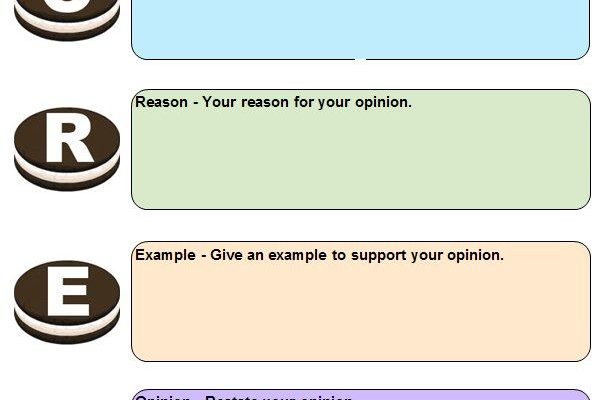
    Best Snack Opinion Writing Prompts with Graphic Organizer – Digital & Printable

    March 25, 2024
    By Matthew Lynch
  • Writing

    5 Best Paraphrasing Tools for Bloggers in 2024

    March 15, 2024
    By Matthew Lynch

Search

Login & Registration

  • Register
  • Log in
  • Entries feed
  • Comments feed
  • WordPress.org

Newsletter

Signup for The Tech Edvocate Newsletter and have the latest in EdTech news and opinion delivered to your email address!

About Us

Since technology is not going anywhere and does more good than harm, adapting is the best course of action. That is where The Tech Edvocate comes in. We plan to cover the PreK-12 and Higher Education EdTech sectors and provide our readers with the latest news and opinion on the subject. From time to time, I will invite other voices to weigh in on important issues in EdTech. We hope to provide a well-rounded, multi-faceted look at the past, present, the future of EdTech in the US and internationally.

We started this journey back in June 2016, and we plan to continue it for many more years to come. I hope that you will join us in this discussion of the past, present and future of EdTech and lend your own insight to the issues that are discussed.

Newsletter

Signup for The Tech Edvocate Newsletter and have the latest in EdTech news and opinion delivered to your email address!

Contact Us

The Tech Edvocate
910 Goddin Street
Richmond, VA 23231
(601) 630-5238
[email protected]

Copyright © 2025 Matthew Lynch. All rights reserved.