Learning Styles Debate: What Educators Should Know
“`html
The concept of learning styles theory has long sparked fervent discussions in the education sector. For decades, educators have utilized the notion that students have distinct preferences for how they learn, whether through visual, auditory, or kinesthetic means. But as research continues to evolve, so does the understanding of this theory. Is it time to reconsider how we approach teaching and learning?
Understanding Learning Styles Theory
At its core, learning styles theory suggests that individuals absorb information better when it is presented in a manner that aligns with their preferred learning modality. This theory gained traction in the late 20th century, particularly through the work of educational theorists like Howard Gardner, who introduced the idea of multiple intelligences. Gardner proposed that there are various types of intelligence, including linguistic, logical-mathematical, spatial, and musical, among others.
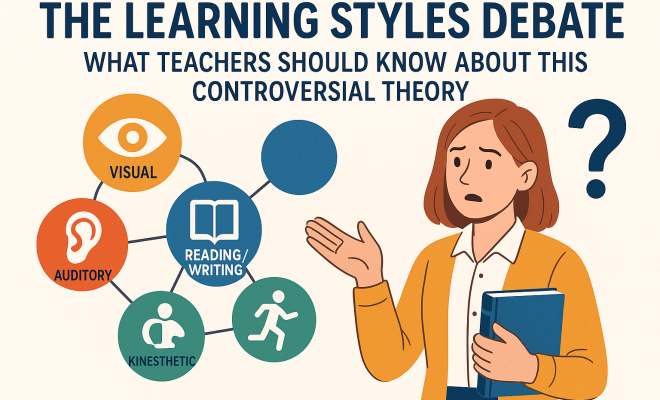
Following Gardner’s lead, many educators began to categorize students based on these different styles. The most commonly referenced models include:
- Visual learners: Prefer to see and visualize information.
- Auditory learners: Learn best through listening and speaking.
- Kinesthetic learners: Grasp concepts through hands-on experiences.
- Read/write learners: Excel when reading and writing materials.
This categorization led to an explosion of resources aimed at tailoring education to meet these diverse learning styles, with many teachers adopting strategies to cater to each type.
The Rise of the Learning Styles Movement
As the learning styles theory took root, numerous educational programs and resources emerged, promising to enhance student learning by identifying and addressing their unique styles. Schools began to implement learning style assessments, hoping to provide personalized instruction tailored to individual needs.
The movement gained momentum throughout the 1990s and early 2000s, with workshops, books, and training sessions dedicated to helping teachers identify and adapt to their students’ learning preferences. This led to a widespread belief among educators that understanding learning styles was essential for effective teaching.
The Backlash: Criticism and Skepticism
However, as time went on, research began to challenge the validity of learning styles theory. In 2009, a comprehensive review published in the journal Psychological Science in the Public Interest concluded that there was insufficient evidence to support the theory. Studies indicated that matching instruction to a student’s preferred learning style did not significantly enhance learning outcomes.
Education researchers like Daniel Willingham and Paul A. Kirschner have argued that the evidence for learning styles is not only limited but may also distract educators from more effective teaching strategies. Willingham, a cognitive scientist, has pointed out that while students may have preferences, these do not necessarily correlate with their best learning experiences.
What the Research Says
Numerous studies have since examined the learning styles hypothesis, often revealing that the effectiveness of teaching methods is not contingent on aligning instruction with students’ self-reported learning preferences. A meta-analysis published in 2015 in the journal Educational Psychologist reinforced earlier conclusions, indicating that the evidence supporting learning styles theory is lacking.
One of the critical findings, captured in a paper by Pashler et al. (2008), stated that “the learning styles hypothesis is not supported by the current body of research.” They indicated that while students might have preferences, these do not dictate how they learn best. For instance, a student who prefers visual learning may still benefit from auditory or kinesthetic instruction.
This begs the question: if learning styles don’t dictate success, what strategies should educators focus on instead? (comprehensive resource on OER)
Effective Teaching Strategies Beyond Learning Styles
Understanding that learning styles theory lacks robust empirical support doesn’t mean abandoning the pursuit of effective teaching. Instead, educators should focus on evidence-based strategies that enhance learning for all students. Here are a few approaches worth considering: (See: NIH on learning and education strategies.)
- Differentiated instruction: Tailoring teaching methods to accommodate various students’ needs and backgrounds.
- Active learning: Engaging students through activities that promote critical thinking and problem-solving rather than passive consumption of information.
- Universal Design for Learning (UDL): Creating a flexible learning environment that accommodates different learners’ strengths and needs.
- Feedback and assessment: Providing regular, constructive feedback helps students understand their progress and areas for improvement.
These strategies prioritize outcomes over preferences, fostering an inclusive environment where all students can thrive, regardless of their claimed learning style.
The Role of Technology in Learning
In today’s education landscape, technology plays a pivotal role in shaping how students learn. With the rise of digital tools, educators have the opportunity to implement diverse instructional strategies that cater to various learning preferences through interactive media, videos, podcasts, and more.
For instance, educational platforms like Khan Academy offer a multitude of resources that cater to different learning styles: students can watch instructional videos, engage in interactive exercises, or read texts. These platforms encourage a more holistic approach to education, allowing learners to choose how they want to engage with content. This builds on strategies for special education.
Moreover, technology facilitates personalized learning experiences by enabling educators to track students’ progress and tailor teaching methods accordingly. The key is not to force alignment with perceived learning styles but to leverage technology to provide multiple means of engagement and expression.
Practical Insights for Educators
Given the ongoing debate surrounding learning styles theory, here are some practical insights for educators to consider:
- Stay informed: Keep abreast of the latest research in education. Understanding the evolving landscape of pedagogy will empower you to make informed decisions in your classroom.
- Foster a growth mindset: Encourage students to view their abilities as improvable. Remind them that struggling with a concept does not define their overall capability.
- Encourage self-regulated learning: Teach students strategies for assessing their understanding and adjusting their approaches accordingly, rather than solely relying on learning style labels.
- Collaborate with colleagues: Share successful teaching strategies and discuss ways to improve instructional practices collectively.
By adopting these insights, educators can create a more dynamic and inclusive classroom environment that prioritizes student learning rather than strict adherence to outdated theories.
The Current Relevance of Learning Styles Theory
Despite the criticism, the idea of learning styles is still prevalent in various educational settings. Many educators continue to believe in the theory due to its intuitive appeal – after all, who wouldn’t want to tailor instruction to meet individual needs? This persistence can be attributed to several factors:
- Intuitive appeal: The idea resonates with many educators who wish to personalize learning and meet students where they are.
- Marketing of educational resources: Many products and programs marketed to educators continue to emphasize learning styles, reinforcing the notion.
- Tradition and habit: Established practices can be hard to break, particularly in education, where change often meets resistance.
As educators, it’s essential to navigate this landscape carefully. Embracing the insights from recent research while acknowledging the intuitive appeal of learning styles can lead to a balanced approach to teaching.
Learning Styles Theory in Different Contexts
Learning styles theory doesn’t just play a role in traditional classroom settings. It also has implications in various contexts, such as corporate training, online education, and informal learning environments. Understanding these contexts helps educators and trainers make more informed decisions about instructional design and delivery.
Corporate Training
In corporate training programs, employers often use the learning styles framework to enhance employee development. They provide training sessions that cater to different styles, such as interactive workshops for kinesthetic learners, webinars for auditory learners, and comprehensive manuals for read/write learners. This approach can improve engagement and retention of information, leading to more effective training outcomes.
However, the same skepticism about the effectiveness of learning styles applies. Companies should also consider other factors, such as the relevance of the content and the practical application of the skills being taught. A one-size-fits-all approach that solely focuses on learning styles may overlook critical aspects of adult learning theories, such as self-directed learning and experiential learning.
Online Education
Online education platforms, like Coursera or edX, have adopted various strategies to appeal to diverse learners. They often offer a mix of video lectures, quizzes, forums, and reading materials. This variety allows learners to engage with content in multiple ways, which aligns with the principle of Universal Design for Learning (UDL).
Additionally, online courses can leverage adaptive learning technologies that respond to a learner’s progress and adjust the material accordingly. This technology-enhanced approach goes beyond labeling students by their learning styles and creates a more personalized learning experience. For more on this, see leveraging challenges with OER.
Informal Learning Settings
Informal learning environments, such as workshops, community classes, and extracurricular activities, also benefit from an understanding of learning preferences. These settings often allow for more flexibility and creativity, enabling instructors to incorporate varied teaching methods. For example, an art workshop might include hands-on projects, discussions, and visual presentations to engage participants with different preferences.
Ultimately, in all these contexts, the goal is to foster an environment where learners feel comfortable and engaged, which can lead to better outcomes irrespective of any categorization.
Statistics and Insights on Learning Preferences
Despite the controversy surrounding learning styles theory, several studies shed light on how students perceive their learning preferences. In a survey conducted by the VARK (Visual, Aural, Read/Write, Kinesthetic) organization, it was found that a significant percentage of students identified with one or more learning styles. Approximately 60% of participants identified as visual learners, while 30% identified as auditory learners, and around 20% as kinesthetic learners.
Furthermore, a study from the University of California revealed that when students were taught using a method that aligned with their preferred learning style, they reported higher satisfaction and engagement levels. However, the same study highlighted that their actual test scores were not significantly different from students who were taught using a standard pedagogical approach.
These statistics indicate that while learners may have preferences, the correlation between learning styles and academic performance remains tenuous.
Expert Perspectives on Learning Styles Theory
Several educational experts have shared their views on the learning styles theory, encapsulating the ongoing debate within the academic community. For instance, Richard E. Mayer, a prominent figure in educational psychology, emphasizes the importance of evidence-based teaching. Mayer argues that while students may enjoy activities aligned with their perceived learning styles, these preferences should not dictate instructional methods.
Similarly, cognitive scientist Barbara Oakley has expressed concerns regarding the overemphasis on learning styles. She advocates for a more holistic approach, where educators focus on various cognitive strategies rather than relying on a single framework. Oakley suggests that learning should adapt to the content rather than forcing content to fit into a learning style model.
Frequently Asked Questions (FAQ)
1. What are learning styles?
Learning styles refer to the preferred ways individuals absorb, process, and retain information. The most recognized categories include visual, auditory, kinesthetic, and read/write learners.
2. Is there scientific evidence supporting learning styles theory?
Research has shown limited evidence supporting learning styles theory. Many studies indicate that matching instruction to students’ preferred styles does not significantly improve learning outcomes.
3. How can teachers effectively engage different learners?
Teachers can engage students by employing a variety of instructional strategies that cater to different learning preferences, such as active learning, differentiated instruction, and the use of technology to provide multiple means of engagement.
4. What is Universal Design for Learning (UDL)?
Universal Design for Learning (UDL) is an educational framework that aims to optimize teaching by providing multiple means of representation and engagement, accommodating diverse learners’ strengths and needs.
5. How can technology enhance learning for different styles?
Technology enhances learning by offering interactive and multimedia resources that can appeal to various learning preferences. For example, students can access videos, podcasts, and hands-on simulations that allow them to engage with content in different ways.
6. Can learning styles change over time?
Yes, learning styles can evolve as individuals grow and encounter new experiences. Factors such as age, education, and exposure to various teaching methods can influence how a person prefers to learn at different stages of their life.
7. Are there any negative effects of believing in learning styles?
Believing too strongly in learning styles may lead educators to neglect effective instructional practices. This can create a rigid approach to teaching, where lessons are overly tailored to perceived preferences rather than addressing the content’s nature or the students’ actual needs.
8. How can students identify their learning preferences?
Students can identify their learning preferences through self-reflection, taking surveys or assessments designed to evaluate learning styles, or discussing their experiences with teachers. However, they should keep in mind that preferences do not dictate effective learning methods.
9. What are some common misconceptions about learning styles?
Some misconceptions include the belief that everyone fits neatly into one learning style category, that teaching to preferred styles guarantees success, and that learning styles are fixed traits. In reality, individuals often have mixed preferences and can benefit from various instructional methods.
10. What should educators focus on instead of learning styles?
Educators should prioritize evidence-based instructional strategies that promote engagement and understanding. This includes active learning, collaborative projects, critical thinking, and adaptability to students’ needs rather than solely focusing on their perceived learning styles. We covered design principles using OER in more detail.
Conclusion: A Balanced Approach to Learning
The learning styles theory has sparked an important dialogue about how we perceive and facilitate learning. While the evidence supporting the effectiveness of tailoring instruction to specific learning styles is limited, the underlying desire to enhance education for every student is commendable. Educators must focus on engaging students through diverse, evidence-based strategies that foster critical thinking, creativity, and collaboration.
Ultimately, the goal should not be to pigeonhole students into categories but to cultivate an environment where they can thrive as individuals. By moving beyond the confines of learning styles theory, educators can embrace a more inclusive and effective approach to teaching, ensuring that all students have the opportunity to succeed.
“`
Trending Now
Frequently Asked Questions
What are the different types of learning styles?
The most commonly referenced learning styles include visual learners, who prefer to see information; auditory learners, who grasp concepts through listening; kinesthetic learners, who learn best through hands-on experiences; and read/write learners, who excel with reading and writing materials.
Is the learning styles theory still relevant in education?
While the learning styles theory gained popularity in the late 20th century, recent research has prompted educators to reconsider its effectiveness. Many experts now suggest that a more flexible approach that incorporates various teaching methods may benefit all students, rather than strictly adhering to learning styles.
How did the learning styles theory originate?
The learning styles theory gained traction in the late 20th century, largely due to Howard Gardner's work on multiple intelligences. Gardner proposed that individuals possess different types of intelligence, leading educators to categorize students based on their preferred learning modalities.
What impact did learning styles have on teaching methods?
The learning styles theory influenced teaching methods by prompting educators to develop resources and strategies tailored to individual learning preferences. Schools began implementing learning style assessments to personalize instruction, aiming to enhance student engagement and understanding.
Are learning styles effective for improving student learning?
The effectiveness of learning styles in improving student learning has come under scrutiny. Recent studies indicate that while students may have preferences, adapting teaching methods to fit these styles does not necessarily lead to better learning outcomes, suggesting a need for diverse instructional strategies.
Have you experienced this yourself? We'd love to hear your story in the comments.