The Iran Bombshell: Will Oil Prices Really Fall for Good?
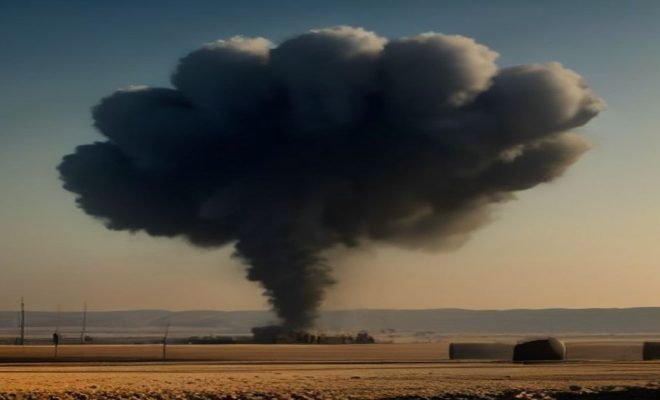
The global energy landscape just got a jolt. On Monday, August 3, 2026, the oil markets reacted with a palpable sigh of relief, or perhaps a gasp of anticipation, as news broke that the United States was moving towards renewed talks with Iran. The immediate effect? A significant drop in oil prices, nearly 5% in a single day. Brent crude, the international benchmark, tumbled to $83.81 per barrel, while West Texas Intermediate (WTI), the US standard, followed suit, settling at $80.72. It’s a move that sent ripples through every corner of the global economy, from the gas pump in your neighborhood to the boardrooms of multinational corporations.
This isn’t just about a couple of dollars off a barrel; it’s about the psychological shift in a market that has been on edge for months. The Middle East, as it so often does, has been a hotbed of conflict, specifically since late February. This recent bout of instability had cast a long shadow over the crucial Strait of Hormuz, effectively threatening its closure and triggering extreme volatility in oil prices. When you consider that roughly a fifth of the world’s total oil consumption, and a substantial portion of its liquefied natural gas, passes through this narrow maritime chokepoint, you start to grasp the sheer scale of the disruption – and the relief – we’re talking about. The prospect of these talks, announced by US President Donald Trump, offered a glimmer of hope that the geopolitical tensions might de-escalate, and with them, the fears of a catastrophic supply disruption. So, why did oil prices fall so sharply, and what does it really mean for the future?
The Strait of Hormuz: A Bottleneck of Global Significance
To truly understand why oil prices fall so dramatically at the mere mention of peace talks concerning Iran, you need to understand the Strait of Hormuz. Imagine a tiny bottleneck, just 21 nautical miles wide at its narrowest point, through which flows an immense river of energy. This isn’t just any waterway; it’s arguably the most strategically important oil transit chokepoint in the world. Bordered by Iran to the north and Oman and the United Arab Emirates to the south, it connects the Persian Gulf with the Arabian Sea and beyond.
The numbers speak for themselves. According to the U.S. Energy Information Administration, an average of 21 million barrels of oil per day, or approximately 21% of global petroleum liquids consumption, passed through the Strait in 2018. That figure has only grown since. This includes crude oil, refined petroleum products, and liquefied natural gas (LNG). Any disruption here sends shockwaves through every major economy. Think about it: if oil can’t get out, it means less supply for Europe, Asia, and North America. Less supply, all else being equal, means higher prices. It’s a fundamental economic principle, but when applied to a commodity as vital as oil, the consequences are profound and immediate.
The recent conflict, which flared up in late February, had ratcheted up the risk premium on oil. Shipping companies faced increased insurance costs, rerouting became a consideration, and the mere threat of naval blockades or attacks on tankers was enough to send traders into a frenzy. This constant state of anxiety pushed prices higher and higher. When President Trump announced that negotiations were on the table to end the Middle East war and, crucially, to reopen the Strait of Hormuz effectively, it was like a pressure valve releasing. Suddenly, the specter of a completely shut-down Strait seemed a little less imminent, leading to an immediate relaxation in the market and a swift decline in oil prices.
Donald Trump’s Announcement and Its Immediate Impact
The news came directly from the top. President Donald Trump, known for his dramatic pronouncements, made the announcement that the US was engaging in new talks with Iran. His statement was clear: the goal was to de-escalate the conflict in the Middle East and ensure the free flow of oil through the Strait of Hormuz. This wasn’t just a casual remark; it was a carefully delivered message designed to signal a shift in diplomatic strategy. Trump's outlook on Iran deal offers useful background here.
The markets, ever sensitive to geopolitical developments, reacted almost instantaneously. Within hours of Trump’s announcement, crude oil futures began their descent. Investors, who had been piling into oil assets as a hedge against the ongoing conflict and potential supply shortages, began to unwind those positions. The “risk premium” that had been baked into oil prices for months started to evaporate. This premium represents the extra cost buyers are willing to pay for oil due to fears of future supply disruptions. With the prospect of diplomacy, that fear diminished, and so did the premium.
It’s important to remember that oil markets are incredibly liquid and driven by sentiment as much as fundamentals. Even the hint of a resolution can trigger significant price movements. Think of it like a crowded theater: if someone yells “fire,” even if it’s a false alarm, a panic ensues. Similarly, if someone announces the “fire” is out, relief spreads quickly. This immediate drop in oil prices was a testament to how acutely the market felt the pressure of the previous months and how eager it was for any sign of stability. (See: Oil prices fall after US-Iran talks.)
Iran’s Counter-Narrative: A Deal with Oman?
Here’s where the plot thickens, and where the initial market euphoria might need a dose of reality. While President Trump was speaking of renewed US-Iran talks, Iran’s response was, shall we say, less enthusiastic. Iranian officials quickly denied any direct talks with the United States. This denial throws a wrench into the narrative and introduces a layer of complexity that savvy market watchers will not ignore.
Instead, Iran stated it was nearing a separate deal with Oman for a new route through the Strait of Hormuz. This is a fascinating development. Oman, a long-standing mediator in regional disputes, has often served as a back channel for communications between Iran and Western powers. A deal for a “new route” through the Strait, presumably one that offers greater security or reduces reliance on the most contested sections, could be a significant step. It suggests Iran is actively seeking ways to mitigate the impact of potential future disruptions, regardless of direct US engagement.
This Iranian counter-narrative introduces uncertainty. Is Trump’s announcement a precursor to direct talks, or is it a strategic move to push Iran towards a deal with Oman, which ultimately serves US interests by stabilizing the Strait? For investors, this discrepancy means that while the immediate fear of a full Strait closure might have eased, the underlying geopolitical tensions haven’t entirely disappeared. The market’s initial reaction, while strong, might be tempered as details emerge and the true nature of these diplomatic overtures becomes clearer. A deal with Oman is good, but it’s not the same as a comprehensive peace accord involving all major players, which would offer more robust long-term stability.
Investor Psychology and Market Dynamics When Oil Prices Fall
The dramatic fall in oil prices on August 3, 2026, perfectly illustrates the powerful role of investor psychology in commodity markets. When geopolitical risks escalate, a “fear premium” gets built into prices. Traders, anticipating potential supply disruptions, bid up prices to secure future deliveries. This isn’t irrational; it’s a calculated response to perceived risk.
Conversely, when those risks appear to recede, even slightly, the fear premium rapidly unwinds. This unwinding can be just as dramatic as the initial build-up. What we saw was a classic example of a market pricing in a reduction of geopolitical risk. Hedge funds and institutional investors, who had taken long positions (betting on higher prices) during the conflict, began to sell off their holdings. This rush to liquidate positions can create a cascading effect, pushing prices down further and faster than fundamental supply and demand might dictate on their own.
Think about the sheer volume of capital involved in oil trading. Billions of dollars move in and out of futures contracts every day. When a major piece of news breaks, algorithms kick in, executing trades at lightning speed. Human traders, too, react swiftly, often guided by herd mentality. No one wants to be the last one holding a position that’s rapidly losing value. This dynamic explains why a nearly 5% drop could occur in a single trading session, even before any tangible barrels of oil have changed hands based on a new diplomatic reality. It’s a forward-looking market, constantly trying to discount future events, and any strong signal, positive or negative, creates immediate ripple effects.
The Broader Geopolitical Context: Why Now?
It’s worth asking why these talks are emerging now. The conflict, ongoing since late February, has undoubtedly taken a toll on all parties involved, both economically and politically. For the US, high oil prices translate into higher consumer costs, potentially impacting electoral prospects and overall economic stability. A sustained period of elevated energy costs can choke economic growth, making everything from manufacturing to transportation more expensive. For an administration, especially one facing an upcoming election cycle, tackling inflation and bringing down energy costs is often a top priority.
For Iran, while the conflict may serve certain strategic aims, prolonged isolation and economic pressure are unsustainable in the long run. The effective closure or extreme risk in the Strait of Hormuz, while a powerful bargaining chip, also makes it harder for Iran to export its own oil, which is a vital source of revenue for the regime. The current situation might have pushed both sides to a point where the costs of continued confrontation outweigh the perceived benefits. Diplomacy, even if indirect, offers a way to de-escalate without either side appearing to lose face completely.
The role of regional players, like Oman, also can’t be understated. Countries in the Gulf often bear the brunt of regional instability, and they have a vested interest in promoting peace and stability. Their diplomatic efforts, often conducted quietly behind the scenes, can create the necessary groundwork for more public negotiations. The timing, therefore, isn’t accidental; it’s likely a culmination of internal pressures, external mediations, and a realization that the status quo was simply too costly for everyone involved. (See: Impact of Middle East tensions on oil.) We covered Iran's stagflation concerns in more detail.
Who Benefits from Oil Prices Falling?
When oil prices fall, it’s not just a number on a screen; it’s a massive redistribution of wealth and opportunity across the global economy. Let’s start with the obvious beneficiaries: consumers. Lower crude oil prices eventually translate into lower prices at the gas pump and reduced heating costs. This puts more money back into people’s pockets, which they can then spend on other goods and services, potentially boosting retail sales and overall economic activity. Airlines, shipping companies, and logistics firms also see their operating costs decrease significantly, which can improve their profit margins or allow them to offer more competitive pricing to their customers. Think about every product you buy – its journey to you likely involved transportation powered by oil. Cheaper oil means cheaper goods.
Countries that are net oil importers, like many nations in Europe, Japan, South Korea, and India, also receive a massive economic boost. They spend less foreign currency on energy imports, which improves their trade balances and strengthens their domestic currencies. This can free up resources for investment in other sectors of their economies. For central banks grappling with inflation, a drop in oil prices is a welcome development, as it eases inflationary pressures and might provide more flexibility in monetary policy decisions.
On the flip side, oil-exporting nations and energy companies naturally feel the squeeze. Countries like Saudi Arabia, Russia, and even the US (which is a major producer) see their revenues decline. This can impact government budgets, investment in new oil projects, and even social spending. Energy companies, especially those with higher production costs, might see their profitability diminish, potentially leading to reduced capital expenditures or even layoffs. It’s a zero-sum game in many respects, where the gains of one sector or nation come at the expense of another.
The Ripple Effect: Beyond Crude Barrels
The impact of changing oil prices extends far beyond just crude barrels. Think about the entire energy ecosystem. Natural gas prices, often correlated with oil, can also see downward pressure. This affects industries that rely heavily on natural gas for power generation or as a feedstock for chemicals. Petrochemical companies, for example, use crude oil and natural gas liquids as raw materials. When these inputs become cheaper, their production costs fall, potentially leading to higher profits or lower prices for plastics, fertilizers, and other chemical products.
The shipping and logistics sectors, as mentioned, are direct beneficiaries. But the ripple goes further. Supply chain risk management becomes a little less fraught when a major chokepoint like the Strait of Hormuz is perceived as less volatile. Companies can plan with greater certainty, potentially reducing the need for costly inventory stockpiling or rerouting strategies. This improved predictability can lead to greater efficiency across global supply chains. Investment strategies also shift. Investors might move away from energy stocks that thrive on high prices and towards sectors that benefit from lower energy costs, such as consumer discretionary or industrials.
Even renewable energy projects can be indirectly affected. While lower fossil fuel prices might make renewables seem less economically competitive in the short term, the long-term trend towards decarbonization remains. However, a sustained period of low oil prices could slow down some investment in riskier or less mature renewable technologies if the economic imperative for switching away from fossil fuels temporarily diminishes. It’s a complex web of interconnected markets and industries, and a significant move in one major commodity like oil sends vibrations throughout the entire structure.
What to Watch For: Sustained Stability or Fleeting Relief?
The critical question now is whether this dip in oil prices represents a fleeting moment of relief or the beginning of a more sustained period of stability. The answer hinges entirely on the authenticity and efficacy of the diplomatic efforts. If the US and Iran genuinely engage in constructive dialogue, and if the Strait of Hormuz can indeed be secured through a verifiable agreement, then we could see oil prices stabilize at lower levels. This would bring welcome news for global economic recovery and ease inflationary pressures.
However, there are significant caveats. Iran’s denial of direct talks with the US, coupled with its focus on a separate Omani deal, suggests that the path forward is anything but straightforward. Diplomatic negotiations, especially in the Middle East, are notoriously complex and often fraught with misdirection and strategic posturing. Past attempts at de-escalation have often faltered. Investors will be scrutinizing every statement from Tehran and Washington, looking for concrete signs of progress, not just rhetoric. (See: Energy Information Administration insights.)
Furthermore, the underlying causes of the conflict that began in February haven’t magically disappeared. Unless there’s a fundamental shift in the geopolitical dynamics and a resolution to the deeper disagreements between regional powers, the risk of renewed tensions remains. A fragile peace, or an agreement that is not fully embraced by all key factions within Iran, could easily unravel, sending oil prices soaring once again. For now, the market is breathing a collective sigh of relief, but savvy observers know that in the volatile world of geopolitics and energy, calm can be fleeting.
Navigating the Volatility: Advice for Businesses and Investors
For businesses and investors alike, the recent dramatic swing in oil prices offers a stark reminder of market volatility and the need for robust strategies. If you’re running a business with significant exposure to energy costs – think transportation, manufacturing, or agriculture – this is a moment to reassess your hedging strategies. Can you lock in lower fuel prices through futures contracts? Are there opportunities to optimize your supply chain to take advantage of potentially lower shipping costs? Diversifying your energy sources and improving energy efficiency remain crucial long-term goals, regardless of short-term price fluctuations. For logistics companies, reviewing contracts and considering fuel surcharge adjustments might be prudent.
For individual investors, this situation highlights the importance of a diversified portfolio. While some might be tempted to jump into or out of energy stocks based on headlines, a long-term perspective is usually best. Understanding that geopolitical events can create rapid, sometimes irrational, market movements is key. If you’re interested in the energy sector, consider companies with strong balance sheets that can weather price swings, or look at integrated oil companies that have both upstream (production) and downstream (refining, marketing) operations, as these can sometimes balance out when oil prices fall.
This episode also underscores the value of staying informed. What happens in the Strait of Hormuz, or in diplomatic backrooms, directly impacts your wallet. Keeping abreast of geopolitical developments, understanding their potential implications for commodity markets, and having a clear, disciplined investment or business strategy are your best defenses against the inherent unpredictability of global events. Don’t chase headlines; understand the underlying forces at play and position yourself accordingly.
The news that oil prices fall in response to renewed diplomatic efforts is undoubtedly a positive sign, offering a glimpse of potential stability in a notoriously turbulent region. However, the path forward is complex, marked by conflicting statements and deep-seated geopolitical rivalries. Whether this heralds a lasting peace or merely a temporary reprieve remains to be seen. What’s certain is that the world will be watching the Strait of Hormuz, and the diplomatic dance between Washington and Tehran, with bated breath. See also Congress's response to Trump.
Trending Now
- this guide on the astonishing truth: why these micro-credentials trump degrees for 2026 careers
- The Silent Revolution: How Non-Degree Credentials…
- Why Millions Are Rethinking College: Online Certifications vs Traditional Degrees
- Why Millions Are Ditching Degrees for…
- this guide on your degree isn’t dead yet: how ai is reshaping education, not replacing it
Frequently Asked Questions
Why did oil prices drop after talks with Iran were announced?
Oil prices dropped nearly 5% following the announcement of renewed talks between the U.S. and Iran due to a psychological shift in the market. The potential for de-escalation of geopolitical tensions, particularly concerning the Strait of Hormuz, alleviated fears of a catastrophic supply disruption, prompting a significant decline in oil prices.
What is the significance of the Strait of Hormuz in oil transportation?
The Strait of Hormuz is a critical maritime chokepoint, through which approximately 20% of the world's oil consumption and a significant portion of liquefied natural gas flows. Its narrow width makes it vulnerable to geopolitical tensions, affecting global oil prices and supply security.
How do geopolitical tensions influence oil prices?
Geopolitical tensions can create uncertainty in the oil markets, leading to price volatility. Events such as conflicts or negotiations in oil-rich regions like the Middle East can trigger fears of supply disruptions, causing prices to rise or fall sharply, as seen with the recent U.S.-Iran talks.
What impact do oil price fluctuations have on the global economy?
Fluctuations in oil prices can have widespread effects on the global economy, influencing everything from consumer gas prices to the operational costs of multinational corporations. A significant drop in oil prices can lead to increased consumer spending and decreased inflationary pressures.
Will oil prices continue to fall after the Iran talks?
While the announcement of talks with Iran has led to a temporary drop in oil prices, future trends will depend on the outcomes of these discussions and ongoing geopolitical developments. Market sentiment, supply-demand dynamics, and additional factors will ultimately determine the trajectory of oil prices.
What did we miss? Let us know in the comments and join the conversation.