Your Degree Isn’t Dead Yet: How AI Is Reshaping Education, Not Replacing It
“`html
It’s a question whispered in lecture halls, debated in dorms, and shouted across social media: Will artificial intelligence make your hard-earned degree worthless? You’ve seen the headlines, haven’t you? AI drafting legal briefs, writing code, even generating marketing campaigns. It’s enough to make any student — or parent, for that matter — wonder if those years of tuition payments and late-night study sessions are about to be rendered obsolete. The concern is real, and it’s valid. In an age where AI-powered tools are becoming incredibly adept at tasks once reserved for skilled professionals, the future of traditional education feels, well, a little shaky. But let’s take a deep breath together. While the landscape is undoubtedly shifting, the short answer is far less apocalyptic than some might fear. AI isn’t here to replace your degree; it’s here to redefine it, to reshape how we learn, what skills truly matter, and how we prepare for careers that are evolving at warp speed. Understanding the nuanced relationship between AI and traditional degrees is crucial, not just for students, but for educators and employers alike.
The Lingering Question: Will AI Really Replace Us?
The fear is palpable, isn’t it? When you see AI writing articles that sound almost human, or crafting complex spreadsheets in seconds, it’s natural to feel a pang of anxiety about your own future. Students today are investing tens of thousands, sometimes hundreds of thousands, of dollars and years of their lives into traditional degree programs. The idea that a machine could suddenly perform many of the tasks they’re training for is deeply unsettling. This isn’t just a hypothetical concern; it’s a very real worry that’s influencing career choices and educational pathways right now. Think about the discussions happening on Reddit or TikTok – young people expressing genuine distress, asking if they should even bother with a four-year degree when a sophisticated AI can seemingly learn and execute tasks faster and cheaper. This emotional charge is why the topic of AI and traditional degrees has gone viral, fueling countless debates and think pieces.
But let’s unpack that fear. Is it truly about AI ‘replacing’ humans, or is it more about AI augmenting human capabilities and shifting the demand for certain skills? History offers some perspective here. When calculators became ubiquitous, we didn’t stop teaching math; we simply shifted the focus from rote calculation to problem-solving and conceptual understanding. The industrial revolution didn’t eliminate jobs; it transformed them, creating entirely new industries and roles. AI is, in many ways, the next wave of this technological evolution. It’s a powerful tool, not an existential threat to human intellect itself. The challenge, and the opportunity, lies in understanding how to wield this tool effectively and adapt our educational systems accordingly.
AI’s Transformative Role in the Learning Experience
Forget the image of AI as a robot teacher standing at the front of the classroom. Its influence on education is far more subtle, pervasive, and frankly, more exciting. AI is already transforming how students learn, often without them even realizing it. Think about personalized learning platforms that adapt to your pace and style, offering remediation where you struggle and accelerated content where you excel. This isn’t some futuristic fantasy; it’s happening now. AI algorithms can analyze your performance, identify knowledge gaps, and recommend specific resources or exercises tailored just for you. This level of individualized attention was once the hallmark of exclusive, one-on-one tutoring, but AI is making it scalable and accessible.
Moreover, AI tools are becoming invaluable study aids. Plagiarism detection software, powered by AI, helps maintain academic integrity. AI-driven writing assistants can help students refine their prose, check grammar, and even suggest structural improvements, fostering better writing skills rather than undermining them. We’re also seeing AI used for grading, particularly for objective assessments, freeing up instructors to focus on more complex, qualitative feedback and direct student interaction. This isn’t about automating the teacher out of a job; it’s about automating the mundane, allowing educators to dedicate more time to mentorship, critical thinking development, and fostering creativity—the truly human elements of teaching.
The Shifting Sands of Skill Development
Here’s where the conversation around AI and traditional degrees gets really interesting. The skills employers demand are changing dramatically. Repetitive, rule-based tasks? Those are increasingly being handed over to AI. What remains, and what is growing in importance, are skills that AI struggles with: critical thinking, complex problem-solving, creativity, emotional intelligence, ethical reasoning, and collaboration. These are precisely the ‘soft skills’ that traditional liberal arts education has always aimed to cultivate, often through discussions, project-based learning, and interdisciplinary studies.
So, while AI might make certain technical skills less valuable, it elevates the importance of uniquely human capabilities. A lawyer in the age of AI won’t spend hours sifting through legal precedents manually; an AI will do that in seconds. But that lawyer will still need to interpret nuanced legal arguments, understand client psychology, negotiate effectively, and make ethical judgments. A marketer will use AI to analyze vast datasets and generate ad copy, but they’ll still need creative vision, strategic thinking, and empathy to connect with an audience on a human level. Degrees, particularly those focused on broad intellectual development, might actually become more valuable as they equip students with these adaptable, future-proof skills.
Online Certifications vs. Degrees: A False Dichotomy?
Another popular narrative suggests that online certifications and short-form skill-based courses, often cheaper and faster, will outright replace traditional degrees. After all, if a company just needs someone to manage a specific AI tool, why would they care about a four-year degree in philosophy? This perspective has merit, especially for highly specialized, rapidly evolving technical roles. Platforms like Coursera, edX, and Google Certificates offer excellent pathways to acquire specific, in-demand skills quickly. They’re fantastic for upskilling, reskilling, and addressing immediate industry needs. (See: impact of AI on education.)
However, framing this as an either/or scenario misses the point. Online certifications are superb for depth in a narrow area. A traditional degree, on the other hand, aims for breadth, foundational knowledge, and the development of transferable skills. It teaches you how to learn, how to think critically across disciplines, and how to adapt to unforeseen challenges. Many employers still value degrees because they signal a certain level of commitment, intellectual rigor, and a broad understanding that a short certificate often can’t convey. In many cases, the ideal approach isn’t one or the other, but a complementary strategy: a traditional degree for foundational knowledge and critical thinking, augmented by specific certifications to stay current with AI tools and other rapidly changing technologies. This hybrid model offers both depth and breadth, preparing individuals for a dynamic career landscape.
How Companies Are Re-evaluating Degree Requirements
Students’ worries about companies de-emphasizing degrees in favor of skills aren’t entirely unfounded. There’s a definite trend, particularly in the tech sector, towards ‘skills-first’ hiring. Major companies like IBM and Google have publicly stated they are prioritizing skills and experience over traditional degrees for certain roles. This shift is driven by the rapid pace of technological change and the need for highly specific, current proficiencies that might not be fully covered in a traditional curriculum. Why wait for someone to get a four-year degree when you need someone with immediate expertise in, say, prompt engineering for large language models? For more context, see explore the impact of technology on education.
However, it’s crucial to understand the nuance here. This doesn’t mean degrees are becoming irrelevant across the board. For many foundational roles, leadership positions, or professions requiring deep theoretical understanding (like medicine, law, or complex engineering), a degree remains a non-negotiable prerequisite. What we’re seeing is a diversification of hiring pathways. Companies are becoming more flexible, recognizing that talent can come from various sources. A degree might still be the most common and often preferred path, but it’s no longer the only path. This puts pressure on universities to ensure their curricula are relevant and that graduates are not just knowledgeable, but also highly skilled and adaptable.
The Ethical Imperative: AI, Education, and Responsibility
As AI becomes more integrated into our lives and work, the ethical considerations become paramount. This isn’t just about whether AI can write a better essay; it’s about the societal impact of these technologies. Who is responsible when an AI makes a biased decision? How do we ensure fairness and transparency in AI systems? What are the implications for privacy and data security? These are not technical questions; they are deeply philosophical and ethical ones.
Traditional degrees, particularly in fields like philosophy, sociology, ethics, and even literature, are uniquely positioned to address these complex issues. They foster the kind of critical thinking, historical perspective, and moral reasoning necessary to navigate the ethical minefield of AI. Universities have a vital role to play in educating future leaders who can not only build AI but also guide its development responsibly. Without a strong ethical foundation, technological advancement can easily lead to unintended and harmful consequences. Therefore, far from being obsolete, these humanities-focused degrees become more crucial than ever in shaping a humane future alongside AI. Related reading: impact of AI on education.
The Role of Educators in an AI-Driven World
Educators are at the forefront of this transformation, and their role is evolving significantly. The days of simply delivering information are largely over, especially with AI providing instant access to vast amounts of data. Instead, educators must become facilitators, mentors, and guides. Their focus shifts from content delivery to cultivating higher-order thinking skills, fostering creativity, and teaching students how to effectively use AI as a tool for learning and problem-solving.
This means rethinking pedagogical approaches. Project-based learning, interdisciplinary studies, and real-world problem-solving become even more important. Educators will need to teach students not just what to think, but how to think critically about AI-generated information, how to verify sources, and how to apply AI ethically. It’s about empowering students to collaborate with AI, leveraging its strengths while understanding its limitations. This requires ongoing professional development for faculty, ensuring they are not only comfortable with AI tools but also adept at integrating them into their teaching methodologies in a meaningful way. The future of education isn’t about AI replacing teachers; it’s about AI empowering teachers to be even more effective.
Adapting Curricula: Bridging the Gap Between AI and Traditional Degrees
For traditional degrees to remain relevant, universities must adapt their curricula. This isn’t about throwing out centuries of foundational knowledge, but rather about integrating AI literacy and applications across disciplines. A history student, for example, might learn to use AI to analyze vast historical datasets, identifying patterns that would be impossible for a human to discern. An art student might use AI tools to generate new visual styles or to assist in digital design. Even in fields like nursing, AI is being used for diagnostics and patient monitoring, meaning future nurses need to understand how to interact with these systems.
This integration needs to happen in two key ways: first, by offering dedicated courses in AI ethics, machine learning fundamentals, and data science; and second, by embedding AI applications and discussions into existing courses across all departments. The goal isn’t to turn every student into an AI developer, but to ensure every graduate is AI-literate – capable of understanding, interacting with, and critically evaluating AI technologies in their chosen field. Universities that proactively revise their programs to reflect this new reality will be the ones that thrive, ensuring that their traditional degrees continue to open doors and provide a robust foundation for future success.
The Global Impact of AI on Education: Beyond Western Models
It’s easy to focus on AI’s impact within familiar educational systems, but the reality is much broader. AI has the potential to dramatically reshape access to education and skill development in developing nations, where traditional higher education might be out of reach for many. Imagine AI-powered tutors available on low-cost devices, delivering personalized instruction in local languages. Or AI-driven platforms that connect learners in remote areas with job opportunities requiring specific, certifiable skills. This democratizing potential is massive. (See: AI and education research.)
However, there are challenges too. The digital divide could widen if access to necessary technology isn’t equitable. Cultural nuances in learning styles and ethical considerations for AI deployment need careful attention to avoid imposing Western-centric models. International collaborations and localized AI development will be key to harnessing AI’s positive impact globally, ensuring that traditional degrees and new learning pathways alike contribute to a more educated and skilled global workforce, not just an elite few. For more context, see compare video editing tools for educational content.
The Entrepreneurial Edge: AI and Innovation
Traditional degrees have always been seen as pathways to established careers, but AI is also fueling a new wave of entrepreneurship. Students with a strong foundational degree, coupled with AI literacy, are uniquely positioned to identify problems and build innovative AI-powered solutions. Think about a business graduate who understands market dynamics and can now leverage AI to predict consumer trends or automate customer service. Or an engineering graduate who can use AI to optimize supply chains or design new materials.
Universities are recognizing this and incorporating entrepreneurial thinking into their curricula, often through incubators, startup competitions, and interdisciplinary projects. The goal is to not just produce job seekers, but job creators. This blend of traditional academic rigor and practical, AI-fueled innovation prepares graduates to not only adapt to change but to actively drive it, creating new industries and opportunities where none existed before. It’s about empowering students to be pioneers in the AI era.
Beyond the Hype: Practical Examples of AI in Specific Fields
Let’s get concrete. How is AI specifically changing the value proposition of traditional degrees in various sectors?
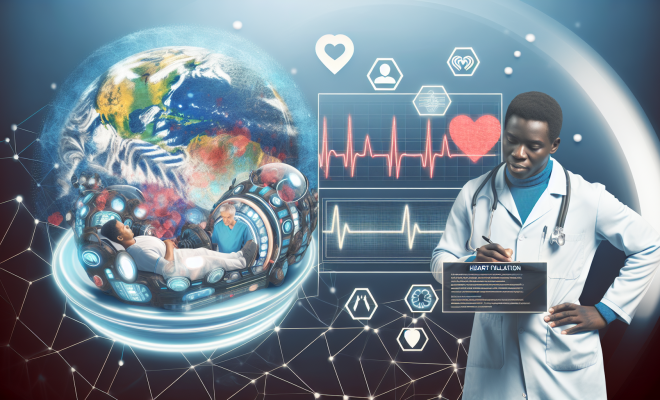
- Healthcare (e.g., Medicine, Nursing): A medical degree still requires deep anatomical and physiological knowledge. AI, however, is revolutionizing diagnostics (e.g., interpreting medical images with higher accuracy than humans), drug discovery, and personalized treatment plans. Future doctors and nurses will need to understand how to interpret AI’s recommendations, critically assess its limitations, and communicate complex AI-driven insights to patients. The human touch, empathy, and ethical decision-making remain paramount, augmented by AI’s analytical power.
- Law (e.g., Juris Doctor): Legal degrees teach complex reasoning, argumentation, and ethical frameworks. AI tools now handle tasks like contract review, legal research, and predicting litigation outcomes. Lawyers will shift from manual document review to strategic oversight, leveraging AI to quickly find precedents, draft initial documents, and identify risks. Their value will be in nuanced interpretation, courtroom advocacy, and client counseling.
- Finance (e.g., Business, Economics): Degrees in finance and economics provide a macro and micro understanding of markets. AI is used for algorithmic trading, fraud detection, and predictive analytics. Graduates will need skills in data interpretation, financial modeling augmented by AI, and understanding the ethical implications of AI in investment decisions. The ability to explain complex financial models, even if generated by AI, to human clients is still a crucial, human-centric skill.
- Creative Arts (e.g., Fine Arts, Journalism): AI can generate art, music, and text. Does this diminish a fine arts degree? Not at all. It means artists, musicians, and journalists can use AI as a tool for inspiration, rapid prototyping, or automating mundane tasks (like transcribing interviews). The human artist’s vision, emotional expression, and storytelling ability become even more vital as AI provides new mediums and tools for expression.
In each case, the traditional degree provides the foundational knowledge and critical thinking, while AI offers powerful tools for efficiency and new capabilities. It’s about synergy.
FAQs: Navigating AI and Your Degree
Q1: Should I still pursue a traditional four-year degree with AI advancing so rapidly?
Absolutely. A traditional degree provides foundational knowledge, critical thinking skills, and a broad understanding that remains invaluable. While AI can automate tasks, it can’t replicate human creativity, complex problem-solving, emotional intelligence, or ethical reasoning. A degree equips you with these ‘future-proof’ skills, making you adaptable and resilient in a changing job market. Think of it as your operating system, on which you can install various AI ‘applications’ through continuous learning.
Q2: Will my degree be obsolete by the time I graduate?
It’s highly unlikely your degree will be obsolete. What will likely change are the specific tasks within your chosen profession. Universities are actively updating curricula to include AI literacy, data science, and ethical considerations. Your degree will provide the theoretical framework and problem-solving abilities to understand and leverage new AI tools, rather than be replaced by them. For more context, see learn how to create engaging presentations with video. (See: AI's role in reshaping careers.)
Q3: Are certifications better than degrees for AI-related jobs?
It’s not an either/or situation; they are complementary. Certifications are excellent for acquiring specific, in-demand technical skills quickly (e.g., how to use a particular AI platform). A traditional degree, however, offers broader intellectual development, critical thinking, and a deeper understanding of underlying principles. Many employers value a combination: a degree for foundational knowledge and certifications for specialized, current skills.
Q4: How can I make my traditional degree more “AI-proof”?
Focus on developing uniquely human skills like critical thinking, creativity, communication, emotional intelligence, and ethical reasoning. Seek out opportunities to learn about AI, even if it’s not directly in your major – take electives, attend workshops, or pursue online certifications in AI literacy or prompt engineering. Learn how to use AI tools effectively to augment your work, rather than fearing them.
Q5: What role do humanities degrees play in an AI-driven world?
Humanities degrees are more crucial than ever. They cultivate critical thinking, ethical reasoning, historical perspective, and an understanding of human behavior and societal impact. These skills are essential for navigating the complex ethical dilemmas posed by AI, ensuring its development is guided by human values, and communicating its implications effectively. Philosophers, ethicists, and sociologists will be vital in shaping AI policy and responsible innovation.
Q6: Will AI replace teachers?
No, AI will not replace teachers. It will transform their role. AI can handle administrative tasks, personalize learning paths, and provide data analytics. This frees up teachers to focus on mentorship, fostering creativity, facilitating complex discussions, and developing students’ critical thinking – the human elements of education that AI cannot replicate. Teachers will become guides in an AI-augmented learning environment.
The Future is Hybrid: AI-Augmented Human Potential
So, will AI and traditional degrees coexist? Absolutely. The most likely future isn’t one where AI replaces human intelligence or education, but one where it augments it. Think of it as a powerful co-pilot, not a replacement driver. AI can handle the data crunching, the repetitive tasks, the initial drafts, and the pattern recognition, freeing up humans to focus on the higher-level cognitive functions that AI still struggles with: innovation, empathy, strategic vision, and complex decision-making in ambiguous situations.
The successful professionals of tomorrow will be those who master the art of working alongside AI. They will be critical thinkers who can leverage AI’s capabilities, ethical leaders who can guide its development, and creative problem-solvers who can use it to push the boundaries of what’s possible. Traditional degrees, particularly those that emphasize critical thinking, communication, and interdisciplinary understanding, will provide the essential framework for these skills. When combined with practical AI literacy and continuous learning, they will equip graduates not just to survive, but to truly thrive in an AI-powered world. The conversation isn’t about the end of degrees, but the beginning of a more intelligent, adaptable, and human-centered approach to education and work.
“`
Trending Now
Frequently Asked Questions
Will AI replace traditional degrees?
AI is not here to replace traditional degrees but to reshape the educational landscape. While AI can perform tasks that were once the domain of skilled professionals, it also emphasizes the importance of adaptability and new skill sets that are essential for future careers.
How is AI changing education?
AI is transforming education by personalizing learning experiences, automating administrative tasks, and providing tools that enhance teaching methods. This shift encourages a focus on developing critical thinking and problem-solving skills, rather than just rote memorization.
Should students still pursue a college degree with AI advancements?
Yes, students should still pursue a college degree as it provides foundational knowledge and critical thinking skills. While AI will change some job roles, a degree can still offer significant advantages in understanding complex concepts and fostering creativity.
What skills will be important in an AI-driven job market?
In an AI-driven job market, skills such as critical thinking, creativity, emotional intelligence, and adaptability will be crucial. Understanding how to work alongside AI technologies and leveraging them for productivity will also be important.
Are degrees becoming obsolete due to AI?
Degrees are not becoming obsolete; rather, they are evolving. The integration of AI into various fields necessitates a shift in educational focus, emphasizing skills that complement AI technologies and preparing graduates for a rapidly changing job landscape.
What's your take on this? Share your thoughts in the comments below — we read every one.