The Billion-Dollar Proctoring Boom: Is AI Threatening Your Privacy More Than Cheaters?

The integrity of examinations, once a relatively straightforward affair involving stern-faced proctors and hushed exam halls, has become a hotbed of technological innovation and controversy. In our increasingly digital world, where education often transcends physical classrooms, the question of how to ensure fairness and prevent fraud in assessments is no longer simple. Recent incidents, like the widespread NEET paper leak, have thrown a stark spotlight on just how vulnerable traditional assessment systems can be, sparking a global scramble for more robust solutions. This has led to a massive surge in demand for Edtech solutions – think remote proctoring, biometric identity verification, and sophisticated cloud-based digital assessment platforms. It’s a race against time, and against increasingly sophisticated cheating methods.
Enter AI proctoring. It’s a technology that’s gone from niche to mainstream almost overnight, now deployed by a staggering 78% of higher education institutions. We’re talking about a market projected to hit a colossal $1.8 billion by 2026. But despite its rapid adoption and the promise of ironclad security, AI proctoring vs traditional exams raises some serious questions. Is it truly the silver bullet for academic integrity, or does it introduce new, perhaps even more troubling, challenges related to algorithmic bias, false positives, and, most critically, student privacy? Let’s dig into the heated debate surrounding AI proctoring vs traditional exams and explore whether this technological leap is a step forward or a leap into the unknown.
1. The Rise of AI Proctoring: A Digital Watchdog for Online Exams
It wasn’t that long ago that online exams felt like the Wild West. Instructors struggled to ensure students weren’t simply Googling answers or collaborating with friends just out of frame. The pandemic, of course, accelerated the shift to remote learning, making the problem of exam security even more urgent. This created a fertile ground for AI proctoring solutions to flourish. These systems leverage a combination of artificial intelligence, machine learning, and biometric technologies to monitor students during online assessments.
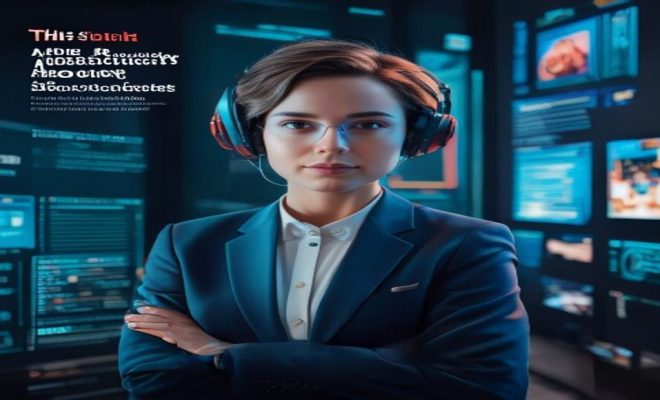
Typically, an AI proctoring system might require a student to perform an initial identity verification using their webcam and sometimes a government-issued ID. During the exam, the AI continuously monitors their webcam feed for suspicious eye movements, multiple faces, or unauthorized objects. It listens for unusual sounds, flags instances of talking, and even tracks keyboard and mouse activity for unusual patterns. The goal is to create a virtual proctor that’s always vigilant, theoretically eliminating opportunities for cheating that traditional proctors might miss in a crowded exam hall. It’s an attractive proposition for institutions trying to maintain academic standards in a distributed learning environment.
2. Traditional Exam Methods: The Gold Standard, or a Relic?
For centuries, the traditional, in-person exam has been the bedrock of academic assessment. Picture this: a large lecture hall, rows of desks, students hunched over paper exams, and a handful of human proctors patrolling the aisles. This method relies on the physical presence of students and invigilators to deter cheating. The very act of being watched, of knowing a human eye might catch you glancing at a neighbor’s paper or pulling out a forbidden cheat sheet, is a powerful deterrent.
The strengths of traditional exams are clear: direct human oversight, the ability for proctors to intervene immediately if they suspect foul play, and a relatively low barrier to entry in terms of technology for the students themselves. There’s also a certain psychological comfort in the tangible nature of a paper exam. You write your answers, you hand it in, and the process feels definitive. However, traditional exams are resource-intensive, requiring physical spaces, printing materials, and a significant number of paid proctors. They also lack scalability, especially for large institutions or distance learning programs. And let’s be honest, even the most eagle-eyed human proctor can’t catch everything.
3. Academic Integrity: The Core Challenge: Can AI Deliver?
The entire debate around AI proctoring vs traditional exams boils down to one critical question: which method better ensures academic integrity? The digital age has introduced new cheating vectors that traditional methods struggle to counter. Students can now access vast amounts of information instantly, use AI tools for generating answers, or even outsource their exams to others. This makes the job of ensuring that the person taking the test is truly the one learning the material, and that they’re doing so honestly, incredibly complex.
Proponents of AI proctoring argue that its constant, objective monitoring offers an unprecedented level of security. It can detect patterns of behavior that human proctors might miss, analyze data at a scale impossible for humans, and provide a detailed audit trail of an exam session. This data can then be used to flag suspicious activity for review, creating a more robust system for identifying and addressing cheating. The promise is a uniform application of rules, reducing the potential for human error or bias that can sometimes creep into traditional proctoring. But that’s the promise; the reality can be quite different, as we’ll see.
4. Privacy Concerns: A Double-Edged Sword
Here’s where the conversation about AI proctoring vs traditional exams often gets heated: student privacy. To function, AI proctoring systems typically require access to a student’s webcam, microphone, and desktop. This means the software is recording video and audio of the student, scanning their environment, and monitoring their computer activity. For many students, this feels like an invasive surveillance operation, especially when conducted in their private homes. (See: Youth Risk Behavior Surveillance System.)
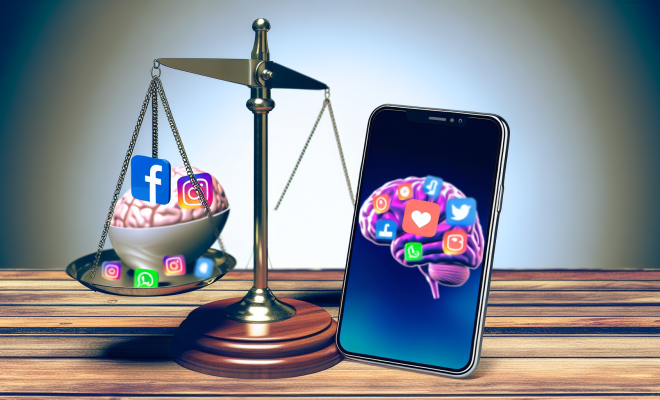
The data collected, including biometric information, raises significant questions about storage, security, and who has access to it. What happens to these recordings after the exam? How long are they kept? Are they used to train AI models without consent? These aren’t just theoretical concerns; there have been numerous reports of students feeling uncomfortable, stressed, and even violated by the level of scrutiny. The balance between academic integrity and individual privacy is a delicate one, and many argue that AI proctoring tips the scales too far in favor of surveillance, potentially eroding trust between institutions and their students.
5. Algorithmic Bias and False Positives: The AI’s Blind Spots
Another major point of contention in the AI proctoring vs traditional exams debate is the issue of algorithmic bias. AI systems are only as good as the data they’re trained on. If that data is skewed or unrepresentative, the AI’s decisions will also be biased. This can manifest in various ways: for example, facial recognition algorithms have historically struggled with accuracy for individuals with darker skin tones, leading to higher rates of false positives for these students. A student fidgeting due to anxiety might be flagged as suspicious, or someone in a low-light environment might be unfairly targeted. For more context, see best productivity tools for Edtech.
False positives are a significant problem. Imagine being accused of cheating because the AI misidentified a reflection in your glasses as another person, or because your internet briefly cut out. These errors can lead to immense stress for students, require time-consuming manual reviews, and undermine the credibility of the entire proctoring system. It also places an undue burden on students who are already under pressure, forcing them to justify their innocent actions against an unfeeling algorithm. While developers are working to mitigate these biases, they remain a persistent and troubling aspect of current AI proctoring technologies.
6. Cost and Accessibility: Unequal Playing Fields
When comparing AI proctoring vs traditional exams, it’s crucial to consider the practicalities of cost and accessibility. Traditional exams, while requiring physical resources, are generally accessible to anyone who can physically attend the location. AI proctoring, however, introduces a new set of technological requirements. Students need a reliable internet connection, a functioning webcam and microphone, and a computer that meets the software’s specifications. This isn’t always a given.
Students from lower socioeconomic backgrounds, those in rural areas with limited internet access, or individuals who can’t afford up-to-date hardware might be at a distinct disadvantage. This creates an unequal playing field, potentially excluding deserving students from courses or programs that rely heavily on AI-proctored assessments. Furthermore, the cost of AI proctoring solutions, while scalable for institutions, can be significant. These expenses are often passed on to students, either directly as a proctoring fee or indirectly through tuition increases, adding another layer of financial burden.
7. The Human Element: Proctoring with Empathy
One of the often-overlooked aspects of the AI proctoring vs traditional exams discussion is the role of human empathy and discretion. A human proctor can observe a student, understand nuances in behavior, and make real-time judgments based on context. If a student looks nervous, a human proctor might offer a word of encouragement rather than flagging them for suspicious activity. They can respond to technical glitches or unexpected interruptions with understanding and flexibility.
AI, by its very nature, lacks this human touch. It operates on rules and algorithms, unable to interpret human emotions or contextualize unusual behavior. This can lead to a dehumanizing experience for students, who feel like they are interacting with a machine rather than a supportive educational environment. The absence of a human connection can exacerbate anxiety and create a more stressful testing environment, potentially impacting student performance in ways that have nothing to do with their actual knowledge or integrity.
8. The Future of Assessment: A Hybrid Approach, or a Return to Basics?
Given the complexities, what does the future hold for academic assessment? It’s clear that neither AI proctoring nor traditional exams are perfect solutions on their own. The challenges posed by AI-driven cheating are real, and institutions are actively exploring new countermeasures. Interestingly, some institutions are even reviving traditional oral examinations to verify student understanding and authorship, moving away from purely written, easily manipulated formats. This suggests a recognition that technology alone isn’t always the answer.
Perhaps the most pragmatic path forward involves a hybrid approach, carefully blending the strengths of both methods. This might mean using AI proctoring for certain types of low-stakes assessments while reserving high-stakes exams for in-person, human-proctored environments. Or it could involve integrating AI proctoring with robust human review processes, where AI flags are always followed up by a human proctor who can apply judgment and empathy. Ultimately, the goal should be to create an assessment system that is secure, fair, accessible, and respects student privacy, without stifling the educational experience. Striking that balance will define the credibility of qualifications for years to come.
9. The Evolution of Cheating: Staying Ahead of the Curve
It’s a cat-and-mouse game. As proctoring methods evolve, so do cheating tactics. Traditional exams saw students using elaborate cheat sheets, writing notes on their arms, or even swapping papers. The digital age, however, has supercharged these efforts. We’re now contending with tiny earpieces, hidden cameras transmitting questions to external helpers, and sophisticated software designed to bypass proctoring safeguards. The rise of generative AI tools like ChatGPT presents an entirely new frontier. Students can now feed exam questions into these models and receive well-articulated answers in seconds, making the detection of plagiarism or unauthorized assistance incredibly difficult.
This escalating sophistication in cheating is a major driver for the adoption of AI proctoring. Institutions feel a desperate need to keep pace. However, the question remains: can AI truly outsmart human ingenuity when it comes to finding loopholes? Many argue that AI proctoring, despite its advanced algorithms, can still be fooled. Students have already found ways to trick eye-tracking software, use virtual machines to hide activity, or employ second devices just out of webcam range. It’s a continuous arms race, and institutions need to understand that no single solution will ever be 100% foolproof. The focus needs to shift from simply detecting cheating to designing assessments that are inherently more cheat-resistant. (See: Online exams and proctoring challenges.)
10. Designing Cheat-Resistant Assessments: A Proactive Approach
Instead of solely relying on surveillance, a more effective strategy in the AI proctoring vs traditional exams debate involves rethinking assessment design itself. If an exam primarily tests rote memorization or easily searchable facts, it’s inherently vulnerable to cheating, regardless of the proctoring method. Here are some proactive approaches:
- Open-Book, Application-Based Exams: Instead of asking “What is X?”, ask “How would you apply X in scenario Y?”. This shifts the focus from recall to critical thinking and problem-solving, making it harder to simply Google answers or use AI to generate them.
- Authentic Assessments: Design assignments that mirror real-world tasks, like case studies, project-based learning, simulations, or presentations. These require deeper understanding and original thought, making cheating far less effective.
- Personalized Questions: Craft questions that require students to integrate personal experiences or unique interpretations, making it harder to share answers or use generic AI outputs.
- Oral Examinations and Viva Voce: As mentioned earlier, a direct conversation with an instructor can quickly ascertain a student’s true understanding and authorship, especially for high-stakes assessments.
- Low-Stakes, Frequent Assessments: Breaking down the overall grade into many smaller assignments and quizzes reduces the pressure on any single high-stakes exam, potentially reducing the incentive to cheat.
- Randomized Question Banks: For multiple-choice or short-answer questions, drawing from a large pool of randomized questions ensures that no two students have the exact same exam, complicating collaboration.
By focusing on what students can do with knowledge, rather than just what they know, educators can create assessments that genuinely measure learning outcomes and are less susceptible to technological workarounds. For more context, see troubleshooting digital assessment platforms.
11. Expert Perspectives and Case Studies
The conversation around AI proctoring isn’t just theoretical; it’s playing out in real institutions and drawing strong opinions from experts. For instance, Dr. Sarah Eaton, an associate professor at the University of Calgary and a leading researcher in academic integrity, has consistently highlighted the ethical dilemmas of AI proctoring, particularly around privacy and equity. She argues that the focus should be on creating a culture of integrity rather than solely on punitive surveillance.
A notable case study involves the University of Illinois Urbana-Champaign, which faced significant student backlash and even a lawsuit over its use of the proctoring software Proctorio. Students cited privacy concerns, technical issues, and the stress induced by the software. This led to a re-evaluation of their proctoring policies and a greater emphasis on alternative assessment methods. Conversely, some large online universities, like Western Governors University (WGU), have successfully integrated AI proctoring as a core part of their scalable assessment strategy, emphasizing its role in maintaining credential integrity for thousands of remote students.
These varying experiences underscore that there isn’t a one-size-fits-all answer. The effectiveness and acceptance of AI proctoring depend heavily on the institutional context, the type of assessment, and crucially, how institutions communicate and implement these tools with their students.
Frequently Asked Questions (FAQ)
Q1: What exactly is AI proctoring?
AI proctoring refers to the use of artificial intelligence and machine learning technologies to monitor students during online exams. It typically involves a webcam, microphone, and screen monitoring to detect suspicious behaviors like eye movements, talking, multiple faces, unauthorized objects, or unusual computer activity. The AI flags these incidents for review by human proctors or instructors.
Q2: How is AI proctoring different from traditional in-person proctoring?
Traditional proctoring relies on human invigilators physically present in an exam room to observe students. AI proctoring, on the other hand, uses algorithms and sensors (like webcams and microphones) to remotely monitor students, often in their own homes. AI proctoring offers scalability and potentially greater vigilance for specific patterns, while traditional proctoring provides human discretion and empathy.
Q3: What are the main benefits of AI proctoring?
Proponents argue that AI proctoring enhances academic integrity by providing constant, objective monitoring, detecting subtle cheating behaviors, and offering a scalable solution for remote assessments. It can reduce the logistical challenges and costs associated with staffing traditional exam halls, especially for large student bodies or distance learning programs.
Q4: What are the biggest concerns about AI proctoring?
The primary concerns revolve around student privacy (recording private spaces, biometric data collection), algorithmic bias (higher false positive rates for certain demographics or conditions), technical accessibility issues (requiring specific hardware and internet), and the dehumanizing experience for students due to the lack of human empathy and discretion. For more context, see designing effective communication for educational newsletters. (See: Harvard University research on education technology.)
Q5: Can AI proctoring systems be fooled?
Yes, like any security system, AI proctoring can be circumvented. Students have developed various methods, including using virtual machines, second devices, hidden earpieces, or techniques to trick eye-tracking software. The effectiveness of AI proctoring is a continuous cat-and-mouse game between developers and those seeking to bypass the system.
Q6: Is AI proctoring legal?
The legality of AI proctoring often depends on jurisdiction and specific data privacy laws (like GDPR in Europe or state-specific laws in the US). While generally legal if proper consent is obtained and data handling policies are transparent, it faces legal challenges related to privacy, data security, and potential discrimination from algorithmic bias. Institutions usually inform students and get their agreement before using such systems.
Q7: What are alternatives to AI proctoring for ensuring academic integrity?
Alternatives include designing cheat-resistant assessments (e.g., open-book, application-based, personalized questions, project-based learning), using low-stakes frequent assessments, randomized question banks, traditional in-person proctoring, and oral examinations. A hybrid approach combining some of these methods is also common.
Q8: How do institutions typically handle false positives from AI proctoring?
Most reputable AI proctoring systems flag suspicious activities, but do not automatically accuse students of cheating. These flags are usually reviewed by human proctors or instructors who apply their judgment and context before taking any action. Students should also have a clear process for appealing any accusations stemming from proctoring flags.
Q9: What impact does AI proctoring have on student anxiety?
Many studies and student testimonials indicate that AI proctoring can significantly increase student anxiety. The feeling of being constantly monitored, combined with fears of technical glitches leading to false accusations and the lack of human interaction, contributes to a more stressful testing environment, which can negatively impact performance.
Q10: What is the future outlook for AI proctoring?
The future likely involves a more nuanced and hybrid approach. While AI proctoring will continue to evolve and improve, institutions are increasingly recognizing the need to balance security with student well-being, privacy, and accessibility. This could mean more selective use of AI proctoring, stronger human oversight, and a greater emphasis on designing assessments that are inherently less prone to cheating, regardless of the proctoring method.
Trending Now
Frequently Asked Questions
How does AI proctoring work in online exams?
AI proctoring uses advanced algorithms to monitor students during online exams. It analyzes video feeds, detects suspicious behavior, and verifies student identities through biometric methods. This technology aims to prevent cheating while ensuring the integrity of assessments in a remote learning environment.
What are the privacy concerns with AI proctoring?
AI proctoring raises significant privacy concerns, including the collection and storage of sensitive data such as video recordings and biometric information. Critics argue that this surveillance can lead to algorithmic bias and false accusations of cheating, potentially infringing on students' rights.
Is AI proctoring more effective than traditional exams?
AI proctoring offers enhanced security features compared to traditional exams, particularly in preventing cheating during online assessments. However, its effectiveness is debated, as it may introduce new challenges, such as false positives and privacy issues, making it a complex solution for academic integrity.
What is the market trend for AI proctoring technologies?
The market for AI proctoring technologies is experiencing rapid growth, projected to reach $1.8 billion by 2026. This surge is driven by the increasing adoption of remote learning and the need for secure assessment methods in higher education institutions worldwide.
Can AI proctoring eliminate cheating in exams?
While AI proctoring significantly reduces opportunities for cheating by monitoring students closely, it cannot completely eliminate it. Sophisticated cheating methods may still emerge, indicating that ongoing adaptations and improvements in proctoring technologies are necessary to maintain academic integrity.
Agree or disagree? Drop a comment and tell us what you think.