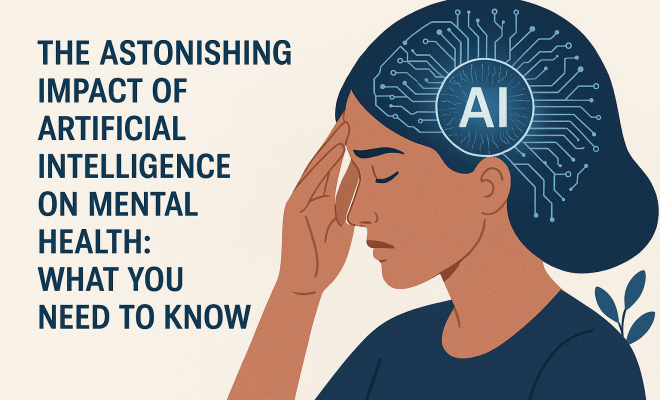
AI’s Astonishing Impact on Mental Health: Revolutionizing Support
“`html
The intersection of artificial intelligence and mental health is sparking a revolution in how we approach therapy and emotional support. As platforms like Talkspace and others roll out AI-driven tools, a new world of judgment-free, accessible mental health solutions is emerging. For individuals grappling with mild to moderate depression and anxiety, these tools promise significant support through innovations like chatbots, one of which is known as Therabot. But as we embrace this technological advancement, questions arise about the depth of human connection, the nuances of mental health crises, and the overall impact of AI on our emotional well-being.
1. The Rise of AI in Mental Health
Over the past few years, the mental health landscape has seen a significant shift with the incorporation of artificial intelligence. AI-driven therapy tools are designed to provide immediate support to those who might otherwise hesitate to seek help. This has been particularly beneficial during times of increased anxiety, such as the COVID-19 pandemic, when traditional therapy resources were stretched thin.
Research indicates that platforms utilizing AI have reported positive outcomes for users. For instance, many individuals have found chatbots like Therabot helpful in expressing their feelings and receiving immediate feedback. This on-demand support can help bridge the gap between needing help and getting it, making mental health care more accessible than ever before.
One major driving force behind this shift is the growing public awareness and de-stigmatization of mental health issues. As more people recognize the importance of seeking help, AI tools serve as an entry point for those who may feel uncomfortable reaching out to human therapists. These tools can provide a low-pressure environment for individuals to explore their emotions and mental states.
2. How Chatbots Are Used in Therapy
Chatbots like Therabot serve as the frontline AI tools in therapy, providing users with a safe space to express their thoughts and feelings. These systems are programmed to engage users in conversation, offering coping strategies, mindfulness exercises, and even basic emotional support. For many, this feels less intimidating than a face-to-face therapy session.
Moreover, users report experiencing significant improvements in their symptoms of depression and anxiety. The anonymity provided by chatbots allows individuals to communicate openly without fear of judgment, making it easier to address sensitive topics. In essence, these AI tools act as facilitators, guiding users toward better mental health while complementing traditional therapeutic practices.
Interestingly, studies have shown that users often feel a sense of companionship with AI chatbots, attributing human-like qualities to them, which can further enhance their therapeutic experience. A study by Stanford University noted that over 70% of users reported feeling understood by their chatbot, highlighting the potential for these tools to create a semblance of emotional connection, albeit through artificial means.
These chatbots are not just limited to text-based interactions. Voice-enabled AI, like Woebot, adds another layer of engagement, allowing users to have conversations using natural language. This feature can make the experience feel more personal and relatable, encouraging users to engage openly.
3. The Controversy: AI vs. Human Connection
Despite the promising developments in AI mental health tools, there are growing concerns regarding the nuances of empathy and emotional understanding. Clinical experts, such as Dr. Cynthia Catchings, emphasize that AI lacks the human touch critical for effective therapy. The nuances involved in crisis intervention or complex trauma care are often beyond the capabilities of algorithms, raising concerns about who should be trusted with our mental health.
This raises an important question: Can AI truly replace the invaluable human connection fostered in traditional therapy? Critics argue that while AI can provide supplementary support, it should never fully replace the role of licensed professionals in addressing deeper emotional issues.
Additionally, some researchers argue that the risk of AI misinterpreting emotional cues could lead to inappropriate responses that might exacerbate a user’s condition. Human therapists are trained to recognize subtle signs of distress and adjust their approach accordingly, a level of sensitivity that AI is still far from achieving.
Proponents of AI tools suggest that these technologies can be beneficial as first-line resources, helping individuals who may be reluctant to seek out professional help. They believe that AI can act as a bridge, encouraging users to eventually pursue traditional therapy when necessary.
4. Mixed Research Outcomes on AI Efficacy
The body of research on the effectiveness of AI in mental health is still evolving. Some studies indicate that while AI tools may alleviate mild symptoms of stress or anxiety, they often fall short in providing comprehensive emotional support. For example, a study published in the Journal of Medical Internet Research found no significant benefit of chatbot interventions on overall well-being. (See: Statistics on mental illness prevalence.) For more on this, see top mental health programs.
This mixed evidence has fueled a heated debate among mental health professionals, researchers, and users. Is AI a helpful supplement to therapy, or does it pose a risk of reducing the quality of mental health care? The lack of consensus illuminates a critical area of inquiry for future research and development.
Both anecdotal evidence and clinical studies have revealed that user engagement plays a significant role in the success of AI mental health tools. Higher engagement often correlates with more substantial improvements in mental health status, suggesting that the effectiveness of AI could be closely tied to how users interact with these systems. Continuous monitoring of user experiences will be key in understanding the full potential of AI in mental health.
5. User Perspectives: The Good, The Bad, and The Uncertain
Users’ experiences with AI therapy tools vary widely, shaping the ongoing discussion about their value. Many users appreciate the immediate support and convenience these chatbots offer, especially in moments of emotional distress. They often cite the relief of having someone—or something—to talk to without the complications of scheduling or cost associated with traditional therapy.
Conversely, some users express dissatisfaction, feeling that AI tools lack the depth and understanding of human therapists. They miss the nuances of a real conversation—the emotional cues, the body language, and the empathy that cannot be replicated by an algorithm. This dichotomy of experiences adds to the complexity of incorporating AI into mental health care.
A survey conducted by the American Psychological Association revealed that while 60% of users found AI tools helpful, 40% expressed concerns over the lack of personalized care. Furthermore, users reported varying levels of trust in AI-related mental health interventions, with some preferring to see human therapists for deeper issues.
It is essential to recognize that while AI can provide significant advantages, the user experience is highly subjective. Tailoring AI tools to meet the unique needs of different users can enhance their effectiveness and acceptance. Personalization could involve adapting conversation styles, expanding the range of topics, or providing more robust resources based on individual symptoms.
6. The Ethical Debate Surrounding AI in Mental Health
The ethical implications of using AI in mental health treatment are profound and warrant serious consideration. As algorithms take on roles traditionally held by human therapists, concerns arise about data privacy, consent, and the potential for misdiagnosis. How much are users willing to share with a non-human entity, and what safeguards are in place to protect their sensitive information?
Furthermore, the reliance on AI raises questions about accountability. If an AI tool fails to provide adequate support, who is responsible? These ethical dilemmas highlight the need for clear guidelines and robust regulations as we navigate the integration of technology into mental health care.
Another significant concern is the potential for algorithmic bias. AI systems are only as unbiased as the data they are trained on. If the training data lacks diversity or contains biases, the resulting AI applications could inadvertently perpetuate these issues. This adds another layer of complexity when considering the role of AI in an already sensitive field like mental health.
Discussions about ethical frameworks for AI in mental health are ongoing. Experts advocate for involving mental health professionals in the design and implementation of AI tools to ensure that ethical considerations are at the forefront of their development.
7. The Future of AI in Mental Health Care
The future of artificial intelligence in mental health remains uncertain but promising. As technology continues to advance, so too will the capabilities of AI tools. Researchers are exploring ways to enhance the empathy of AI systems, incorporating more nuanced conversational patterns and emotional recognition technologies. exploring childhood anxiety offers useful background here.
Additionally, hybrid models combining AI support with human therapists could emerge as a way to balance the accessibility of technology with the invaluable human touch. This approach may address many concerns about the limitations of AI while leveraging its strengths to improve mental health outcomes.
One possible future scenario involves the integration of biometric data, such as heart rate or facial recognition, to help AI systems gauge a user’s emotional state more accurately. This could empower AI to respond with greater empathy and relevance during interactions, creating a more personalized experience.
Research indicates that as AI systems become more sophisticated, they could assist therapists by providing data-driven insights into patient behaviors and responses. This partnership could enhance the therapeutic process, giving therapists valuable information to tailor their approaches effectively.
8. Real-life Impacts: Case Studies and Success Stories
Numerous case studies highlight the positive impacts of AI on mental health. For instance, a project in the United Kingdom utilized an AI chatbot to provide support for individuals experiencing anxiety and depression. Users reported feeling more empowered and engaged with their mental health journeys, with many noting a decrease in their symptoms over time. (See: World Health Organization on mental health.)
Another success story comes from a telehealth platform that integrates AI into its services. By offering users a combination of chatbot support and access to licensed therapists, they’ve managed to create a system that complements traditional therapy while allowing clients to engage with their mental health at their own pace.
Furthermore, AI tools have been used effectively in college mental health services, where students often face high levels of stress and anxiety. A case study showed that a university implemented an AI chatbot that helped students manage their stress levels, increase awareness of mental health resources, and reduce the stigma around seeking help. The results were promising, demonstrating a higher engagement rate in mental health resources among students who interacted with the AI.
Some organizations are even taking the concept of AI in mental health a step further by developing platforms that not only provide chat support but also conduct mental health screenings. These integrated systems can alert users to potential issues before they escalate, allowing for early intervention.
9. Balancing Technology with Traditional Therapy
As the landscape of mental health evolves, finding a balance between technology and traditional therapeutic practices is crucial. While AI tools can provide immediate support, they should not be seen as replacements for personalized care. Licensed therapists bring invaluable skills that AI cannot replicate, especially in more complex cases.
It’s essential for users to approach AI tools as part of a broader mental health strategy, which may include traditional therapy, support groups, and self-care practices. This multifaceted approach not only enhances the benefits of AI but also ensures that individuals receive the depth of care they need.
As we move forward, it’s vital to foster a collaborative environment where AI tools and human therapists can work together. By integrating technology into existing frameworks, we can enhance the overall quality of mental health care while ensuring that human empathy and understanding remain central to treatment.
10. The Road Ahead: Navigating the Future of Mental Health
As we stand at the crossroads of mental health care and artificial intelligence, it’s clear that the road ahead will require careful navigation. The integration of AI into mental health presents both opportunities and challenges that we must address thoughtfully. As users, professionals, and researchers, we have the responsibility to shape this future in a way that prioritizes ethical considerations, emotional well-being, and the preservation of human connection.
Ultimately, the goal should be to create a mental health care system that is inclusive, empathetic, and effective. By embracing the potential of artificial intelligence while honoring the essential human component of therapy, we can redefine how individuals access support and improve their mental health. This ongoing dialogue will be fundamental in determining how artificial intelligence can best serve our emotional needs. (support for teachers' mental health)
11. Frequently Asked Questions (FAQ)
What is AI in mental health?
AI in mental health refers to the use of artificial intelligence technologies to assist in mental health care, including chatbots, virtual therapists, and predictive analytics. These tools aim to provide support, guidance, and resources for individuals experiencing mental health issues.
Are AI chatbots effective for mental health treatment?
AI chatbots can be effective for providing immediate support and resources, especially for mild to moderate symptoms. However, their effectiveness can vary significantly among users, and they should not replace traditional therapy for more severe issues. This builds on impact of violence on children.
Can AI replace human therapists?
While AI can augment mental health care by providing supplementary support, it is not equipped to replace human therapists. The nuances of human emotion and complex psychological issues require the empathy and understanding that trained professionals offer.
Is my data safe with AI mental health tools?
Data privacy is a critical concern when using AI mental health tools. Most reputable platforms implement strict data protection protocols, but it’s essential for users to understand the privacy policies and safeguards in place before sharing personal information.
What should I do if I need urgent help?
If you’re in crisis or need urgent help, it’s important to reach out to a licensed mental health professional or call emergency services. AI tools can provide valuable support, but they are not a substitute for immediate professional assistance during a crisis.
How do AI mental health tools ensure personalized support?
AI mental health tools can offer personalized support through algorithms that adapt to user interactions. The more a user engages with the chatbot, the better the AI can understand their preferences and needs, tailoring responses accordingly.
Can I use AI mental health tools alongside traditional therapy?
Yes, using AI mental health tools alongside traditional therapy can create a comprehensive mental health strategy. Many people find that combining both approaches enhances their overall well-being and provides them with a greater variety of coping mechanisms and resources.
12. Exploring Different Types of AI Tools in Mental Health
AI in mental health isn’t limited to chatbots. Various tools and applications have emerged, each with unique functionalities aimed at different needs. For example, mood-tracking apps like Woebot and Moodfit allow users to log their feelings and provide tailored suggestions based on individual emotional trends. These applications often incorporate cognitive-behavioral therapy (CBT) principles to help users challenge negative thoughts and foster healthier thinking patterns.
Another promising development is the use of AI-driven platforms for teletherapy. These platforms can analyze user interactions and outcomes to recommend specific therapy techniques or courses of action for therapists, enhancing the quality of care provided.
Additionally, wearable technology integrated with AI is making strides in monitoring mental health. Devices that track physiological responses—like heart rate variability—can signal stress or anxiety, prompting users to engage in mindfulness activities or reach out for support when they need it most.
The diversity of AI tools available underscores the potential for a more tailored mental health care experience, meeting individuals where they are in their journey and enabling a proactive approach to mental wellness.
13. Impact of AI on Mental Health Awareness and Education
AI tools are not just changing how therapy is delivered; they are also playing a significant role in mental health education and awareness. Many platforms now offer not only therapeutic support but also resources and educational materials about mental health conditions. By providing users with easy access to information, AI can help demystify mental health issues and empower individuals to take charge of their well-being.
Social media campaigns leveraging AI technology are also on the rise. For instance, algorithms can analyze trending topics related to mental health, allowing organizations to tailor their outreach efforts effectively. This data-driven approach increases awareness and encourages more open conversations about mental health, ultimately helping to reduce stigma.
AI’s role in mental health education emphasizes an informed public that understands the importance of mental well-being. As technology continues to evolve, its contributions to mental health awareness will likely grow, fostering a society that prioritizes emotional health just as much as physical health.
“`
Trending Now
Frequently Asked Questions
How is artificial intelligence used in mental health?
Artificial intelligence is transforming mental health care by providing accessible therapy tools, such as chatbots like Therabot. These AI-driven platforms offer immediate support and help individuals express their feelings, making mental health care more accessible, especially during times of increased anxiety, such as the COVID-19 pandemic.
What are the benefits of using AI for therapy?
AI tools in therapy provide immediate support, reduce stigma, and create a low-pressure environment for users. They help bridge the gap between needing help and receiving it, allowing individuals to explore their emotions without the fear of judgment, making mental health care more accessible.
Can chatbots really help with mental health issues?
Yes, chatbots like Therabot have been reported to help users express their feelings and receive immediate feedback. While they may not replace human therapists, they can be particularly beneficial for individuals experiencing mild to moderate depression and anxiety.
What impact has COVID-19 had on mental health therapy?
The COVID-19 pandemic has increased anxiety and stretched traditional therapy resources, leading to a surge in the use of AI-driven mental health tools. These platforms provide immediate support to those hesitant to seek help, enhancing accessibility during challenging times.
Is AI therapy effective for everyone?
While AI therapy tools can be effective for many, particularly those with mild to moderate mental health issues, they may not be suitable for everyone. Individuals with severe mental health crises should seek traditional therapy from human professionals for comprehensive care.
Agree or disagree? Drop a comment and tell us what you think.