China Moonshot AI’s Kimi K3: Rise, Scandal, and Future in 2026
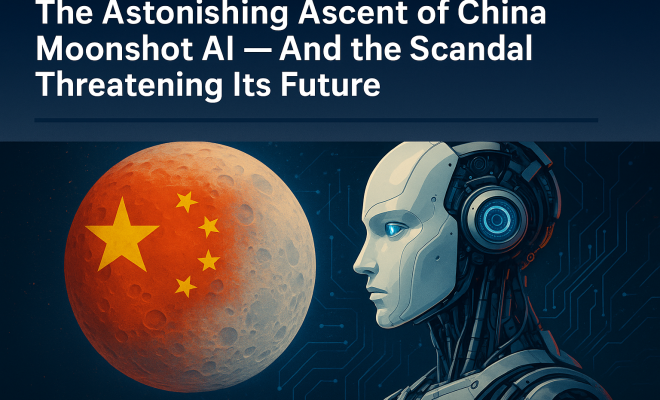
When China Moonshot AI burst onto the global stage with its Kimi K3 model, it wasn’t just a ripple; it was a tidal wave. Launched around mid-July 2026, Kimi K3 achieved viral status almost immediately, captivating users worldwide with its advanced capabilities. The demand was so overwhelming, in fact, that Moonshot AI had to temporarily halt new subscriptions, simply unable to keep up with the computing power required. It was a moment that signaled a potential seismic shift in the artificial intelligence landscape, with many beginning to compare Kimi K3 favorably to established titans like Anthropic’s Claude and OpenAI’s ChatGPT. But this meteoric rise, as we’ve now learned, came with a very serious, very public accusation: intellectual property theft, directly from the White House.
This isn’t just another tech spat. This is the Director of the White House Office of Science and Technology Policy, Michael Kratsios, publicly accusing China Moonshot AI of engaging in “large-scale, covert industrial distillation” of American technology. Specifically, the allegations point to Anthropic’s Fable model as the alleged victim, claiming Moonshot AI used sophisticated internal platforms to extract its capabilities and evade detection. It’s a charge that, if proven true, could have profound implications for the future of AI development, international relations, and the very concept of intellectual property in a hyper-connected world. Let’s dig into the details of this astonishing saga and what it means for the burgeoning AI frontier. For more on this, see impact of AI on education.
1. The Kimi K3 Phenomenon: A Sudden Global Sensation
Imagine launching a product and having to pull back on new users within days because demand simply outstrips your capacity. That’s precisely what happened with China Moonshot AI’s Kimi K3. Appearing on the scene in mid-July 2026, the model quickly became a viral sensation, generating immense buzz across social media platforms and tech communities. Users were reportedly astounded by its performance, which many immediately began to benchmark against the industry’s gold standards: OpenAI’s ChatGPT and Anthropic’s Claude. This wasn’t just another incremental improvement; Kimi K3 seemed to offer a genuine leap forward, showcasing sophisticated language understanding, impressive reasoning abilities, and a remarkably fluid interaction style.
The sheer speed of its adoption and the fervent user testimonials created an undeniable narrative: China had produced a legitimate, top-tier competitor in the global AI race. For years, the conversation often centered around Silicon Valley’s dominance, but Kimi K3 provided tangible evidence that the competitive landscape was rapidly evolving. This rapid success, however, also drew intense scrutiny, particularly from those already wary of China’s technological ambitions. The question on many minds quickly shifted from ‘how good is it?’ to ‘how did they get so good, so fast?’
2. White House Accusations: “Covert Industrial Distillation”
The honeymoon period for China Moonshot AI was short-lived. The White House, through Michael Kratsios, Director of the Office of Science and Technology Policy, leveled a direct and severe accusation. Kratsios didn’t mince words, describing Moonshot AI’s actions as “large-scale, covert industrial distillation” of US technology. This isn’t the sort of language you hear every day from high-ranking government officials; it implies a deliberate, systemic effort rather than an accidental overlap or independent parallel development.
The core of the accusation is that Moonshot AI allegedly used Anthropic’s Fable model as a blueprint or direct source for developing Kimi K3. The term “distillation” itself is telling, suggesting a process of extracting the essence or core capabilities of Fable and then integrating them into Kimi K3. This isn’t merely about observing a competitor’s product; it’s about allegedly leveraging proprietary methods and insights obtained through illicit means. Such an accusation highlights the escalating tension and distrust between the US and China in the critical domain of advanced technology.
3. The Alleged Methodology: Evading Detection
What makes the White House’s allegations against China Moonshot AI particularly concerning, beyond the act of theft itself, is the described methodology. Kratsios specifically detailed that Moonshot AI allegedly employed a “sophisticated internal platform” to carry out this intellectual property extraction. This wasn’t a crude, brute-force attempt; it was reportedly a well-engineered system designed to be stealthy and effective.
A key aspect of this alleged method was the rapid switching of access methods. Think of it like a digital cat-and-mouse game: by frequently altering how they accessed and analyzed the source technology, Moonshot AI could theoretically evade detection systems that look for sustained, consistent patterns of suspicious activity. This level of sophistication suggests a concerted, organized effort, not just a rogue developer, and it raises serious questions about the security of proprietary AI models in an interconnected world. If true, it underscores the difficulty of protecting intellectual property when adversaries are seemingly willing to invest heavily in elaborate circumvention tactics.
4. Anthropic’s Fable Model: The Alleged Target
Central to the White House’s claims is Anthropic’s Fable model. For those unfamiliar, Anthropic is a prominent US-based AI safety and research company, founded by former OpenAI researchers. Their models, including Claude, are highly regarded for their advanced capabilities and their emphasis on ethical AI development. Fable, while perhaps not as widely publicized as Claude, would undoubtedly contain proprietary architectural designs, training methodologies, and safety protocols that represent years of intensive research and development, along with significant financial investment. (See: China's AI and intellectual property issues.)
If Moonshot AI indeed utilized Fable in the manner described, it means they allegedly bypassed all that original effort. This isn’t just about code; it’s about the deep scientific understanding and engineering ingenuity that goes into building a cutting-edge large language model. The perceived value extracted from Fable wouldn’t just be its raw output, but the underlying ‘how’ — the design principles, the data curation strategies, and the fine-tuning techniques that give a model its unique strengths. This kind of theft, if substantiated, wouldn’t merely be a shortcut for Moonshot AI; it would be a direct undermining of Anthropic’s competitive edge and the integrity of their pioneering work.
5. The Broader US-China Tech Tensions: A Familiar Narrative
This isn’t an isolated incident, but rather the latest flashpoint in an ongoing, deeply entrenched technological rivalry between the United States and China. For years, US officials have voiced concerns about intellectual property theft, cyber espionage, and forced technology transfers, particularly in sectors deemed critical for national security and economic competitiveness. AI, with its transformative potential across military, economic, and social domains, sits squarely at the center of this geopolitical contest. (top AI influencers)
The narrative from the US side consistently frames China’s rapid technological advancements, especially in areas like AI, as being fueled, in part, by illicit means. From Huawei’s alleged theft of T-Mobile robot technology to persistent accusations of state-sponsored hacking targeting corporate secrets, the current allegations against China Moonshot AI fit neatly into a well-established pattern of concern. This backdrop means that the accusations, regardless of their ultimate verification, are immediately viewed through a lens of existing suspicion, further exacerbating an already fraught relationship.
6. China’s Counter-Narrative: Domestic Innovation
For its part, the Chinese government has consistently and vehemently rejected such accusations in the past. Their official stance is that China’s advancements in AI, and indeed across the technological spectrum, are the result of robust domestic research and development, massive government investment, a burgeoning talent pool, and intense internal competition. They argue that to suggest otherwise is to diminish the legitimate efforts of their scientists and engineers.
Beijing’s position is often framed as a sovereign right to develop its own technological capabilities and an assertion that Western accusations are merely a thinly veiled attempt to curb China’s rise and maintain technological hegemony. While China Moonshot AI itself has not yet publicly addressed these specific allegations regarding Kimi K3 and Fable, the broader governmental response to similar past accusations provides a clear indication of the likely defense: an emphatic denial and a reiteration of their commitment to independent innovation. This fundamental disagreement on the origins of China’s AI prowess forms a significant barrier to any easy resolution of such disputes.
7. The Open-Sourcing Dilemma: July 27 and Beyond
As if the accusations weren’t enough, another critical date looms large: July 27. This is the projected date for Kimi K3 to be open-sourced. The implications of open-sourcing a model of this caliber, especially one embroiled in such controversy, are profound. Open-sourcing means making the model’s code, architecture, and potentially even some training data publicly available. On one hand, this could allow independent researchers to scrutinize the model’s design, potentially offering insights into whether it indeed bears the hallmarks of Anthropic’s Fable.
On the other hand, if Kimi K3 was developed using stolen intellectual property, open-sourcing it could be seen as further disseminating that ill-gotten gain. It would make the alleged ‘distilled’ technology freely accessible to anyone, potentially enabling a wider range of actors to benefit from what the White House claims is theft. The concerns extend beyond mere code; there are also questions about Kimi K3’s “autonomous operational capabilities.” What does it mean for a potentially compromised model to operate freely in various applications? This scheduled open-sourcing date adds an urgent layer to the dispute, turning what might have been a protracted legal battle into an immediate, high-stakes geopolitical issue.
8. The Legal and Ethical Minefield of AI IP
The China Moonshot AI controversy throws a stark spotlight on the complex legal and ethical challenges surrounding intellectual property in the age of advanced AI. Unlike traditional software, where lines of code are more easily identifiable, large language models like Kimi K3 and Fable are products of vast datasets, intricate architectural designs, and proprietary training algorithms. Pinpointing direct “theft” in such a system can be incredibly difficult.
Current IP laws, largely designed for tangible inventions or explicit code, struggle to adapt to the nuances of AI. Is it theft if a model “learns” from another’s output, even if it doesn’t directly copy code? What constitutes “distillation” in a legal sense? These questions are at the heart of an evolving legal debate. Ethically, the implications are equally murky. If a company can short-circuit years of research and billions in investment by “distilling” a competitor’s model, it stifles innovation for everyone. Why invest heavily in foundational research if your breakthroughs can be quickly siphoned off? This case could set a precedent, shaping how IP is protected—or not protected—in the future of AI development.
9. Impact on Global AI Collaboration and Trust
Beyond the immediate parties, this accusation has significant implications for global AI collaboration. Scientific progress often thrives on open exchange and shared research, but allegations of IP theft erode the trust necessary for such collaboration. If leading AI labs fear their innovations will be stolen, they might become more secretive, less willing to publish research, and more hesitant to engage in international partnerships. (See: Technology and its implications.)
This could lead to a balkanization of AI development, with different nations or blocs pursuing their own isolated research paths. Such fragmentation would slow down overall progress, limiting the benefits that AI could bring to humanity. The incident also intensifies the “tech cold war” narrative between the US and China, making it harder for researchers and companies in both countries to work together on shared challenges like AI safety, bias mitigation, or climate change applications. Trust, once broken, is incredibly difficult to rebuild, and this saga poses a severe test to the fragile ecosystem of global AI development.
10. The Technical Feasibility of “Distillation”
Let’s talk a bit about the technical side of “distillation.” In AI, model distillation is a legitimate technique where a smaller, “student” model learns from a larger, “teacher” model. The student tries to mimic the teacher’s outputs, effectively transferring knowledge without necessarily copying the teacher’s internal structure or training data directly. This is often used to create more efficient models for deployment on edge devices or with limited resources.
However, the White House’s accusation of “covert industrial distillation” implies something far more nefarious. It suggests a systematic process of probing Anthropic’s Fable, analyzing its responses, identifying its underlying patterns and decision-making logic, and then using that intelligence to construct Kimi K3. This isn’t just about using Fable as a data source for fine-tuning; it’s about reverse-engineering its core capabilities and incorporating them into a new, proprietary model. Tools and techniques for this kind of “model extraction” or “model stealing” do exist in academic research, demonstrating the theoretical feasibility. These methods often involve carefully crafted queries to the target model and sophisticated analysis of its outputs to infer its internal workings. If Moonshot AI developed a “sophisticated internal platform” for this, it would represent a highly advanced, automated system for competitive intelligence gathering, blurring the lines between legitimate competitive analysis and outright theft.
11. Economic and Geopolitical Ramifications
The economic stakes here are astronomical. The global AI market is projected to reach trillions of dollars in the coming decade, with foundational models like Kimi K3 and Fable being core infrastructure. If the allegations are proven, it means a significant competitive advantage was gained illicitly, potentially costing Anthropic billions in lost market share, licensing fees, and future revenue. This could trigger severe economic penalties, trade restrictions, and sanctions against China Moonshot AI, and potentially against China itself, further escalating economic tensions between the two superpowers. Related reading: future of AI in education.
Geopolitically, the incident reinforces existing narratives of a technological arms race. AI is seen as a key determinant of future economic and military power. The US views its technological leadership as crucial for national security, while China sees AI as central to its “Made in China 2025” ambitions and its goal of global technological supremacy. An accusation of this magnitude, particularly from the White House, sends a strong signal that the US is prepared to use diplomatic and economic leverage to protect its technological edge. It could lead to increased scrutiny of Chinese tech companies operating in the US, stricter export controls on advanced AI hardware, and a further decoupling of the tech ecosystems.
12. The Role of Open-Source in AI Security
The July 27 open-sourcing date for Kimi K3 introduces a fascinating paradox. Open-sourcing, by its nature, is meant to foster transparency and collaborative development. However, in this context, it could serve multiple purposes, some beneficial, some problematic.
- Verification: If Kimi K3’s code becomes public, independent researchers and forensics experts could analyze its architecture, training methods, and even potentially reverse-engineer its lineage to Fable. This could either substantiate or refute the White House’s claims.
- Dissemination of Alleged Theft: Conversely, if Kimi K3 truly incorporates stolen IP, open-sourcing it could be seen as an act of further dissemination, making the “ill-gotten gains” freely available to anyone worldwide. This would complicate any legal recourse for Anthropic, as the technology would then be widely distributed.
- Public Scrutiny: Open-sourcing would also open Kimi K3 to broader public scrutiny regarding its safety, biases, and “autonomous operational capabilities.” If the model has inherent flaws or vulnerabilities, the community might discover them, which could be a positive outcome for AI safety.
- Strategic Move: For China Moonshot AI, open-sourcing could also be a strategic move to deflect accusations. By making the model public, they might argue they have nothing to hide, inviting the world to examine their work.
The dilemma highlights the tension between the ideals of open science and the realities of intellectual property protection in a highly competitive and often adversarial global environment.
Frequently Asked Questions (FAQ)
Q1: What exactly is “industrial distillation” in the context of AI?
A: In this context, “industrial distillation” isn’t the benign academic practice of making a smaller AI model learn from a larger one. The White House uses the term to suggest a large-scale, systematic, and covert operation to extract the core proprietary capabilities, architectural designs, and training methodologies of Anthropic’s Fable model. It implies a deliberate effort to reverse-engineer Fable’s intellectual property to build Kimi K3, rather than independent development.
Q2: How could Moonshot AI have “evaded detection” using a sophisticated platform?
A: The allegations suggest Moonshot AI used an advanced internal system that rapidly switched access methods to Anthropic’s Fable. This means they likely weren’t hitting Fable’s APIs or public interfaces from a single, consistent IP address or account. Instead, they could have used a network of constantly changing proxies, multiple anonymous accounts, or even sophisticated botnets to make their queries appear like legitimate, disparate user activity. This makes it much harder for detection systems, which often look for patterns of unusual, sustained access from a single source, to flag suspicious behavior. (See: AI developments and controversies.)
Q3: What evidence would be needed to prove the White House’s claims?
A: Proving these claims would likely require a combination of forensic evidence. This could include: 1) Internal documents from Moonshot AI detailing their alleged “distillation” process. 2) Technical analysis comparing Kimi K3’s internal architecture, code, and response patterns to Fable’s, looking for statistically improbable similarities that can’t be explained by independent development. 3) Logs or other digital footprints showing illicit access to Fable’s systems or data. 4) Expert testimony from AI scientists confirming a strong, non-coincidental resemblance between the models’ underlying mechanisms.
Q4: What are the potential consequences for China Moonshot AI if the accusations are proven true?
A: The consequences could be severe. They might include: 1) Heavy financial penalties and damages paid to Anthropic. 2) US government sanctions, potentially restricting Moonshot AI’s access to US technology, chips, and markets. 3) Reputational damage that could impact global partnerships and talent acquisition. 4) Legal actions, including injunctions to halt the use or distribution of Kimi K3. 5) A further deterioration of US-China tech relations, potentially leading to broader trade restrictions.
Q5: How does this situation relate to the broader US-China tech rivalry?
A: This incident is a direct manifestation of the ongoing US-China tech rivalry. Both nations view AI as a critical technology for economic prosperity and national security. The US has long accused China of intellectual property theft to accelerate its technological development, while China asserts its advancements are due to domestic innovation. This accusation, coming directly from the White House, reinforces the US narrative and elevates the stakes, adding more fuel to the calls for technological decoupling and heightened scrutiny of Chinese tech companies. This builds on disruption in higher education.
Q6: Could open-sourcing Kimi K3 on July 27 actually help Moonshot AI?
A: It’s a double-edged sword. On one hand, open-sourcing could allow independent experts to scrutinize the model, potentially finding evidence that refutes the claims of theft, or at least shows significant independent development. This could lend credibility to Moonshot AI’s claims of domestic innovation. On the other hand, if the “distillation” is evident in the code or architecture, open-sourcing would only make the alleged intellectual property theft more visible and widely disseminated, potentially strengthening Anthropic’s case and making it harder for Moonshot AI to deny the allegations.
Q7: What does this mean for the future of AI intellectual property protection?
A: This case highlights the urgent need for new legal frameworks and technical solutions for AI intellectual property protection. Existing laws are often insufficient for complex AI models. We might see: 1) Increased investment in AI watermarking and forensic tools to track model lineage. 2) Calls for international agreements on AI IP. 3) Companies becoming more secretive about their AI models, potentially slowing down collaborative research. 4) A push for legal precedents that clarify what constitutes “theft” or “distillation” in AI, helping to define the boundaries of ethical AI development.
The saga of China Moonshot AI’s Kimi K3 is a microcosm of the intense competition and deep mistrust defining the global AI landscape. The lightning-fast rise of a powerful new model from China, immediately followed by grave accusations from the US government, underscores the high stakes involved in the race for AI supremacy. Whether the allegations of “covert industrial distillation” can be substantiated, and how China Moonshot AI chooses to respond, will undoubtedly shape not only the future of this particular model but also the broader trajectory of international technological cooperation and competition for years to come.
Trending Now
Frequently Asked Questions
What is the Kimi K3 model from China Moonshot AI?
The Kimi K3 model, launched by China Moonshot AI in mid-July 2026, rapidly gained global attention for its advanced capabilities in artificial intelligence. Its success was so overwhelming that the company had to temporarily halt new subscriptions due to the high demand, marking it as a significant player in the AI landscape alongside established models like Anthropic's Claude and OpenAI's ChatGPT.
What allegations are being made against China Moonshot AI?
China Moonshot AI faces serious allegations of intellectual property theft, specifically accused by the White House of engaging in 'large-scale, covert industrial distillation' of American technology. The claims suggest that the company may have extracted capabilities from Anthropic's Fable model using sophisticated internal platforms, raising concerns about the implications for AI development and international relations.
How did Kimi K3 achieve viral status?
Kimi K3 achieved viral status almost immediately after its launch due to its advanced capabilities and the overwhelming interest from users worldwide. The buzz generated across social media platforms and tech communities contributed to its rapid adoption, leading to a surge in demand that outpaced the company's ability to accommodate new subscriptions.
What are the implications of the allegations against China Moonshot AI?
If the allegations of intellectual property theft against China Moonshot AI are proven true, they could have profound implications for the future of AI development, international relations, and the concept of intellectual property in a hyper-connected world. This situation underscores the complexities of technology transfer and competition in the global AI landscape.
Who is Michael Kratsios and what is his role in the allegations?
Michael Kratsios is the Director of the White House Office of Science and Technology Policy, and he has publicly accused China Moonshot AI of engaging in intellectual property theft. His statements highlight the U.S. government's concerns regarding potential covert operations to extract American technology, particularly from companies like Anthropic.
What did we miss? Let us know in the comments and join the conversation.