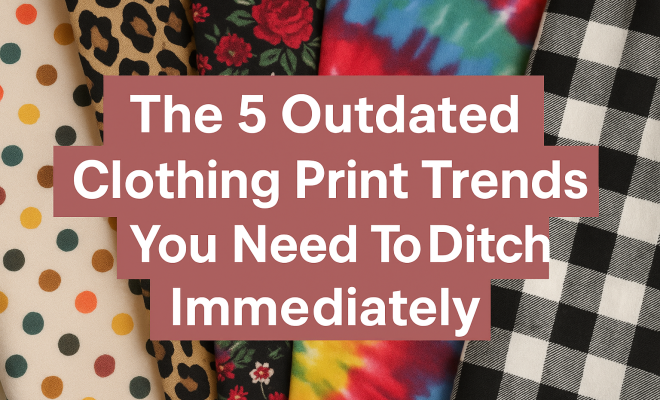
The 5 Outdated Clothing Print Trends You Need To Ditch Immediately
Fashion, much like life itself, is a constant cycle of ebb and flow. What’s hot today can be decidedly not tomorrow, and nothing highlights this more dramatically than clothing print trends. We’ve all been there: you invest in a piece you absolutely adore, convinced it’s timeless, only to find it quietly (or not so quietly) relegated to the ‘outdated’ pile a season or two later. It’s not just about what’s new; it’s also about what’s been overdone, over-saturated, and ultimately, over. And as we look ahead to 2026, some once-dominant patterns are officially waving their goodbyes.
It’s a conversation that always sparks strong opinions, especially on social media. People get attached to their prints! But the truth is, staying current in your style often means being willing to let go. So, if you’ve been wondering which prints are holding your wardrobe back, or if you’re just curious about the shifting sands of style, you’re in the right place. Let’s delve into the specific outdated clothing print trends that are making way for fresher perspectives and a more refined aesthetic.
Leopard Print’s Reign Ends: Enter the Dalmatian
Ah, leopard print. For decades, it was the undisputed queen of animal motifs. From the roaring twenties flappers to the punk rock rebels of the ’70s and the supermodels of the ’90s, leopard print has had an undeniable, fierce allure. It exuded confidence, a touch of danger, and a certain undeniable glamor. Whether it was a full coat, a slinky dress, or just a pair of shoes, leopard print was a statement. But like all monarchies, even its reign must eventually come to an end. There’s a fuller look at top fashion schools worldwide.
The issue isn’t that leopard print is inherently bad; it’s that it became ubiquitous. It was everywhere, on everything, and often, not in the most discerning ways. The market became saturated with cheap interpretations, diluting its inherent sophistication. When something becomes that common, it loses its edge, its ability to truly stand out. Think of it like a hit song played too many times – eventually, even the most beloved tune starts to grate.
So, what’s stepping into the void left by the dethroned leopard? According to the latest whispers and declarations from the fashion world, it’s the dalmatian print. Yes, those charming, irregular black spots on a crisp white background. It offers a similar graphic punch to leopard but feels undeniably fresher, cleaner, and a touch more playful. It’s less about overt sex appeal and more about chic whimsy. We’re seeing it pop up on everything from tailored blazers to elegant scarves and even statement bags. It’s a print that feels sophisticated without trying too hard, a subtle nod to the wild without the historical baggage of its predecessor. If you’re looking for an animal print that truly feels modern in 2026, the dalmatian is your new best friend.
The Demise of Logomania: A Quiet Luxury Revolution
Remember the early 2000s? Or even parts of the 2010s? Logomania was a force to be reckoned with. Wearing your designer brand loud and proud, plastered across every surface of your outfit, was the ultimate status symbol. Think Louis Vuitton monograms covering bags, Fendi logos on everything from sunglasses to shoes, and Gucci’s double Gs emblazoned on belts and tracksuits. The bigger the logo, the more visible the brand, the better. It was an era of overt consumption, a clear declaration of ‘I can afford this!’ to the world.
But times, they are a-changin’. And rapidly. The pendulum has swung decisively in the opposite direction, ushering in what’s been widely dubbed the ‘quiet luxury’ aesthetic. This movement is all about understated elegance, impeccable craftsmanship, and high-quality materials that speak for themselves, rather than relying on a flashy brand name. It’s about ‘if you know, you know’ rather than ‘everyone must know.’ Think perfectly tailored cashmere, butter-soft leather, and classic silhouettes from brands like Loro Piana, The Row, or even minimalist iterations from larger houses.
This shift means that monogram prints and overtly branded clothing are firmly among the outdated clothing print trends for 2026. Wearing a shirt covered in repeating designer logos now feels less like a statement of wealth and more like a desperate cry for attention. It clashes with the current mood of sophistication and discretion. People are seeking authenticity and intrinsic value over superficial branding. So, if your wardrobe is still heavily reliant on visible brand names, it might be time to reconsider. The new luxury is subtle, refined, and speaks volumes without uttering a single word. (See: how fashion works in cycles.)
From Traditional Florals to Dimensional Blooms
Florals for spring? Groundbreaking, as Miranda Priestly famously quipped. And while her sarcasm was directed at a broader idea, it rings especially true for the kind of traditional, flat printed florals that have dominated fashion for so long. There’s nothing inherently wrong with a pretty floral pattern, but like leopard print, it reached a point of oversaturation. Every high street store, every fast fashion brand, every summer collection seemed to feature the same predictable, often two-dimensional floral prints.
The problem with these traditional prints is their lack of depth and originality. They often feel generic, failing to evoke genuine interest or artistry. In a world where consumers are increasingly looking for unique pieces and artisanal touches, a flat, mass-produced floral just doesn’t cut it anymore. It’s become one of those outdated clothing print trends that signals a lack of imagination rather than a celebration of nature.
What’s blooming instead? We’re seeing a significant shift towards more dramatic, dimensional, and tactile floral designs. Think beyond the printed surface. Embroidered florals, for instance, add texture, a handcrafted feel, and an undeniable sense of luxury. The stitches create a raised effect, giving the flowers a tangible presence. Even more avant-garde are 3D florals, where fabric manipulations, appliqués, or even sculptural elements bring the blooms literally off the garment. These aren’t just patterns; they’re wearable art. They command attention not because of their bright colors, but because of their intricate detail and innovative construction. So, if you’re craving a floral touch, look for pieces that offer depth, texture, and a sense of unique craftsmanship. Your wardrobe will thank you for it.
Chevron’s Muted Return: Less Is More
The chevron print had its moment in the sun, didn’t it? For a while, those bold, zigzagging lines were everywhere – dresses, skirts, home decor, accessories. It was a lively, energetic print that added a graphic punch to any ensemble. It felt playful and modern, particularly popular in the early to mid-2010s. Bright, contrasting colors often accompanied the chevron, making it an undeniable focal point. It was fun, it was vibrant, and it definitely made a statement.
However, like many trends that burn brightly, chevron eventually became tiresome. Its inherent boldness meant it could easily overwhelm an outfit, and its omnipresence led to it feeling less special and more, well, expected. The bright, high-contrast versions, in particular, started to feel a bit juvenile or even dated as fashion moved towards more sophisticated palettes and nuanced designs. It’s another prime example of an outdated clothing print trend that, in its original form, has simply run its course. This builds on leading fashion programs.
But here’s an interesting twist: chevron isn’t entirely gone; it’s just evolved. Instead of the loud, high-contrast iterations, we’re seeing a much more muted, sophisticated return of the zigzag. Imagine chevron patterns rendered in neutral tones – soft creams, gentle grays, understated browns, or tone-on-tone variations within a single color family. The lines themselves might be thinner, less aggressive, creating a subtle texture rather than a jarring pattern. This new iteration of chevron works beautifully with the quiet luxury aesthetic, offering visual interest without screaming for attention. It’s a testament to how even seemingly ‘outdated’ prints can find new life when reinterpreted with a more refined sensibility. So, if you still have a soft spot for zigzags, look for pieces that whisper rather than shout.
The Over-Reliance on Gingham and Plaid
Gingham and plaid. These classic prints have a timeless quality to them, right? And in many contexts, they absolutely do. Gingham evokes charming picnic blankets and retro Americana, while plaid conjures images of cozy autumn days, punk rock rebellion, or preppy sophistication. They’ve been staples for generations, beloved for their versatility and inherent charm. But even classics can fall victim to over-application, pushing them into the territory of outdated clothing print trends when not handled with care.
The issue isn’t the prints themselves, but their ubiquitous and often uninspired use. When every summer collection features a plethora of gingham sundresses, or every autumn brings an endless parade of identical plaid flannel shirts, these prints lose their distinctiveness. They become background noise. Furthermore, the type of gingham and plaid matters. Large-scale, cartoonish ginghams, or specific plaid patterns that became synonymous with a particular fast-fashion trend, can quickly feel dated. The charm fades when the execution is repetitive or lacks thoughtful design.
To keep these prints feeling fresh, the key lies in unexpected applications, elevated fabrics, and sophisticated color palettes. Instead of a standard gingham dress, perhaps a subtly textured gingham blazer in a unique color combination. For plaid, move beyond the predictable red and black flannel and explore luxurious wool plaids in muted earth tones or even abstract, oversized iterations that border on art. It’s about treating these classics not as default patterns, but as elements that require careful curation and a fresh perspective. Otherwise, a wardrobe full of generic gingham and plaid will definitely lean into the outdated category.
Understanding the Cycle: Why Prints Become Outdated
It’s fascinating, isn’t it, how quickly a print can go from being the height of fashion to firmly outdated? This isn’t just arbitrary; there are clear drivers behind this cycle. One major factor is saturation. When a print becomes so popular that it’s available everywhere, at every price point, it loses its exclusivity and its aspirational quality. Think of the way certain celebrity-backed trends explode and then fizzle out. When everyone can have it, it’s no longer special. (See: fashion trends for 2021.) See also innovative wearable tech in fashion.
Another crucial element is cultural shifts and overarching aesthetic movements. The move from logomania to quiet luxury is a perfect example. This isn’t just about prints; it reflects a broader societal shift towards valuing authenticity, discretion, and quality over overt displays of wealth. Prints that don’t align with these larger movements will naturally fall out of favor. Similarly, a growing emphasis on sustainability and mindful consumption might make mass-produced, generic prints feel less appealing than those with artisanal touches or unique designs.
Finally, innovation and boredom play a role. Designers are constantly pushing boundaries, experimenting with new techniques, materials, and forms. When something genuinely new and exciting emerges, older, less innovative prints naturally recede into the background. And let’s be honest, as consumers, we get bored! We crave novelty, freshness, and something that sparks joy. Sticking to the same old patterns, no matter how beloved they once were, eventually feels stagnant. Understanding these underlying forces helps us not just identify outdated clothing print trends, but also anticipate what might be on the horizon.
The Art of Updating Your Wardrobe Without Starting From Scratch
So, you’ve read about these outdated clothing print trends, and maybe you’ve realized your closet has a few culprits. Don’t panic! Fashion isn’t about discarding everything you own every season. It’s about strategic updates and thoughtful curation. Here’s how to navigate this:
- Evaluate and Edit: Go through your wardrobe with a critical eye. Do those leopard print pieces still make you feel great? Or do they feel a bit… tired? If a print truly makes you happy and feels authentic to your personal style, keep it. But if it’s just ‘there,’ consider letting it go.
- Focus on New Silhouettes: Sometimes, a print feels dated because it’s on an outdated silhouette. A modern cut can sometimes breathe new life into an older print, but this is a tricky balance. It’s often safer to invest in new pieces with current prints on current silhouettes.
- Accessorize Smartly: If you love a print but it’s now considered passé, relegate it to smaller accessories. A vintage leopard print scarf might still feel chic, whereas a full leopard print dress might not. This allows you to indulge a fondness without committing to a full ‘outdated’ look.
- Embrace the New: Actively seek out the fresh alternatives. Swap that traditional floral top for one with embroidered details. Look for dalmatian print instead of leopard. Explore neutral, subtle chevrons. This is where you can truly refresh your look.
- Invest in Timeless Basics: The best defense against rapidly changing print trends is a solid foundation of timeless, unprinted basics. Think well-fitting jeans, classic white shirts, tailored blazers, and elegant knitwear. These pieces will always be in style and provide a versatile canvas for any print, current or not.
Updating your wardrobe doesn’t have to be an expensive overhaul. It’s about making conscious choices that reflect the current fashion zeitgeist while staying true to your personal aesthetic. Remember, style is personal, but trends are a collective conversation.
The Influence of Social Media and Fast Fashion
It’s impossible to discuss rapidly changing fashion trends, especially when it comes to prints, without acknowledging the immense influence of social media and fast fashion. These two forces have accelerated the trend cycle to an unprecedented degree. In the past, trends might have slowly percolated from high fashion runways to magazines, then to department stores, taking months or even years to fully disseminate. Now? A print can appear on a runway, be seen on an influencer’s feed, and then replicated in fast fashion stores within weeks. This speed is a double-edged sword.
On one hand, it democratizes fashion, making current styles accessible to more people. It allows for rapid experimentation and self-expression. On the other hand, it creates a relentless pressure to constantly consume and discard. Prints become ‘outdated’ faster not just because of natural evolution, but because social media feeds demand constant novelty. Once a print has been seen on every influencer and every budget-friendly brand, it quickly loses its appeal and is deemed ‘over’ by the trendsetters.
This rapid turnover contributes to the feeling that you’re constantly falling behind if you don’t keep up. It also fuels the fast fashion industry’s model of producing high volumes of low-cost clothing, often with significant environmental and ethical consequences. As consumers, understanding this dynamic is crucial. It encourages us to be more thoughtful about our purchases, investing in pieces that we truly love and that have staying power, rather than blindly chasing every fleeting print trend. It also highlights why some prints become outdated so quickly – they simply burn out from overexposure. (See: impact of fashion trends on consumer behavior.) For more on this, see new trends in campus wear.
Beyond Prints: The Broader Shift in Fashion Aesthetics
While we’ve focused on specific outdated clothing print trends, it’s worth taking a moment to consider the broader aesthetic shifts happening in fashion. These print changes aren’t isolated; they’re symptoms of a larger movement. The shift from maximalism to quiet luxury, for instance, isn’t just about logos; it’s about a preference for clean lines, sophisticated fabrics, and an overall sense of understated elegance. It’s a rejection of overt flashiness in favor of refined taste.
There’s also a growing appreciation for authenticity and craftsmanship. This explains the rise of embroidered and 3D florals over flat prints – people are looking for pieces that feel special, unique, and demonstrate a level of skill beyond mass production. This isn’t just about luxury brands; it’s influencing mid-range and even some more ethical fast-fashion brands to incorporate more tactile and textural elements.
Furthermore, there’s a greater emphasis on personal style over slavish trend following. While certain prints might be declared ‘outdated,’ the most stylish individuals are those who adapt trends to fit their unique aesthetic, rather than simply adopting them wholesale. They understand that true style transcends fleeting fads. These broader shifts inform why certain prints are fading and others are emerging, pointing towards a fashion landscape that values quality, subtlety, and individuality more than ever before.
Embracing the New: What’s Next for Prints?
So, we’ve covered the prints that are taking a backseat. But what’s on the horizon? While we’ve highlighted dalmatian print as a fresh animal motif and dimensional florals as the new bloom, the overall direction points towards prints that offer either sophisticated subtlety or genuine artistic flair. Think abstract patterns that resemble modern art, or graphic prints that play with geometric shapes in unexpected ways. We might see a rise in prints that are more textural, mimicking natural surfaces or woven patterns, adding a tactile dimension even if they are printed.
Color palettes will also play a huge role. Prints in softer, more muted tones, or those that blend seamlessly with the garment’s base color, will likely continue to dominate. High contrast, jarring prints will likely remain among the outdated clothing print trends for some time. There’s also a strong undercurrent of individuality, meaning that bespoke or limited-edition prints, or even designs that allow for some level of personalization, could gain traction. The future of prints seems to be less about a single dominant pattern and more about thoughtful design, unique expression, and a clear rejection of anything that feels generic or overdone.
Ultimately, fashion is a conversation, and prints are a vital part of that dialogue. While it’s wise to be aware of what’s considered outdated, the most important thing is to wear what makes you feel confident and authentic. But if you’re looking to refresh your wardrobe and ensure your style feels truly current as we head into 2026, then saying goodbye to leopard print, overt logos, traditional florals, and bold chevrons is a very smart place to start. Embrace the new, and let your personal style shine with a fresh perspective.
Trending Now
Frequently Asked Questions
What clothing print trends are considered outdated?
Some of the most outdated clothing print trends include leopard print, which has become overly common and diluted in quality. Other prints may also be losing their appeal as fashion evolves, making way for fresher styles and aesthetics.
Why should I ditch leopard print?
Leopard print, once a fashion staple, is now viewed as outdated due to its saturation in the market. As it became ubiquitous, its unique charm faded, prompting fashion experts to suggest replacing it with more current prints like Dalmatian.
How can I update my wardrobe for 2026?
To update your wardrobe for 2026, consider letting go of outdated prints such as leopard and exploring newer alternatives. Embrace unique patterns that are on-trend, allowing your style to reflect the latest fashion sensibilities.
What are some fresh alternatives to outdated prints?
Fresh alternatives to outdated prints include Dalmatian print and other unique patterns that offer a more refined aesthetic. These new prints can revitalize your wardrobe and keep your style current.
How do clothing print trends change over time?
Clothing print trends change over time due to shifting consumer preferences, market saturation, and the cyclical nature of fashion. What was once popular can quickly become outdated as new styles emerge and take their place.
What did we miss? Let us know in the comments and join the conversation.