The Unseen Scandal: Europe Just Banned Brands From Torching Unsold Clothes
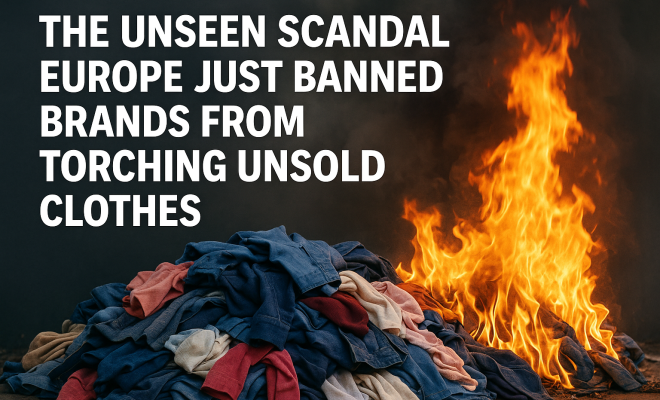
For years, behind the gleaming storefronts and glossy magazine spreads, a dirty little secret festered within the fashion industry: burning unsold clothes. Yes, you read that right. While consumers eagerly snapped up the latest trends, unaware, countless garments, shoes, and accessories that didn’t make the cut were quietly incinerated or condemned to landfills. It’s a practice that, frankly, sounds like something from a dystopian novel, not the reality of a multi-billion-dollar global industry. But the tide is finally turning, thanks to a groundbreaking move by the European Union.
Effective July 19, 2026, large fashion companies operating within the EU will no longer be able to destroy their leftover collections. This isn’t just a slap on the wrist; it’s a seismic shift, forcing brands to confront their massive environmental footprint head-on. The new regulation demands that these companies find far more sustainable solutions – think recycling, reuse, or resale – instead of resorting to the wasteful, polluting methods of incineration or landfill disposal. This move is a huge win for environmental advocates and a stark reminder that the pursuit of sustainable fashion is no longer just a niche concern; it’s a regulatory imperative.
The Shocking Scale of Fashion’s Waste Problem
Let’s be brutally honest: the fashion industry has a colossal waste problem. It’s not just a minor oversight; it’s an ingrained, systemic issue that impacts our planet in devastating ways. Every single year, the world churns out an estimated 100 billion garments. Just try to picture that number for a moment – it’s almost impossible to truly grasp the sheer volume. And what happens to all those clothes? A staggering percentage of them, tens of millions of tons of textiles, eventually find their way into landfills, piling up like monstrous, colorful mountains of discarded dreams.
This isn’t just about clothes taking up space. When textiles decompose in landfills, especially synthetic ones like polyester, they can take hundreds of years to break down, leaching harmful chemicals into the soil and groundwater. Natural fibers, like cotton, might decompose faster, but their production often requires immense amounts of water and pesticides, creating environmental burdens long before they’re even worn. And then there’s the burning. Incineration, while it reduces volume, releases greenhouse gases and toxic pollutants into the atmosphere, contributing directly to air pollution and climate change. It’s a lose-lose situation, and for too long, many brands simply looked away.
Why Brands Burned Unsold Goods: A Look Behind the Curtain
So, why would a brand, especially a high-end one, choose to destroy perfectly good merchandise? It seems counterintuitive, right? The reasons are complex, often rooted in a blend of brand image protection, inventory management, and even tax incentives. For luxury brands, maintaining exclusivity and preventing their products from being devalued on secondary markets or discount racks has historically been a major driver. Imagine a high-fashion handbag being sold for pennies; it could dilute the brand’s perceived value and desirability. Burning or shredding ensured that didn’t happen.
Beyond luxury, even mass-market retailers sometimes found it ‘easier’ or more cost-effective to destroy surplus stock rather than deal with the logistics of deeply discounting it, transporting it to outlet stores, or exploring other avenues like donation or recycling. Sometimes, it was simply about clearing warehouse space for new collections. And in some jurisdictions, companies could even claim tax write-offs for destroyed inventory, making it a financially palatable, albeit environmentally disastrous, solution. It was a practice shrouded in secrecy, an open secret among industry insiders, but one that few consumers ever truly comprehended.
The EU’s Bold New Mandate: What It Means for Fashion
The European Union’s ban is a monumental step forward. It’s not just a suggestion; it’s a legally binding regulation. Starting July 19, 2026, large companies will be prohibited from destroying unsold textiles and footwear. This isn’t a blanket ban on all businesses immediately; small and medium-sized enterprises (SMEs) will receive a six-year derogation, giving them more time to adapt to the new requirements. This phased approach acknowledges the different capacities and resources available to businesses of varying sizes, aiming for a smooth, albeit transformative, transition across the industry.
This regulation is part of a broader package of measures under the EU’s Ecodesign for Sustainable Products Regulation (ESPR), designed to make products more durable, reusable, repairable, and recyclable. It’s a comprehensive strategy to move away from the linear ‘take-make-dispose’ model of production towards a circular economy. The ban on destruction is a direct attack on one of the most visible and egregious forms of waste in the fashion sector, signaling a clear shift in regulatory philosophy. Companies will now have to re-evaluate their entire supply chain, from design to end-of-life, with sustainability as a core consideration.
Beyond the Ban: The Push for Circularity and Sustainable Fashion Solutions
So, if burning and landfilling are out, what are the alternatives? The EU’s mandate pushes brands towards genuine circular economy principles. This means prioritizing solutions like robust recycling programs, where old garments are broken down and spun into new fibers. It means expanding reuse initiatives, such as repair services, rental models, and robust second-hand markets. And it means actively exploring resale channels, ensuring that unsold items find new homes rather than being discarded. (See: BBC on fashion waste and sustainability.)
Consider the growth of platforms like Vestiaire Collective or The RealReal, which specialize in reselling luxury goods. These models demonstrate that there’s significant value in pre-owned items. Brands themselves could increasingly embrace these platforms or even launch their own. We’re also seeing innovations in textile recycling, like fiber-to-fiber technologies that can chemically or mechanically break down old fabrics into raw materials for new ones. These technologies are still scaling up, but the EU ban will undoubtedly accelerate investment and development in these crucial areas. The goal isn’t just to stop waste; it’s to design waste out of the system entirely.
Consumer Awareness and the Power of Choice
This news has gone viral, and for good reason. For many consumers, the revelation that fashion brands were routinely destroying unsold goods has been a genuine shock. It pulls back the curtain on an industry that often presents a glamorous, aspirational image, exposing a much darker reality. This increased awareness is incredibly powerful. When consumers understand the true environmental and ethical costs of their purchases, it inevitably influences their choices.
Social media is abuzz with discussions about brand accountability and the need for more transparent practices. People are demanding to know what brands are doing with their unsold stock, where their clothes are made, and what impact their purchases have. This collective consumer pressure is a significant force, compelling brands to not only comply with new regulations but to go above and beyond, demonstrating genuine commitment to sustainable fashion. After all, in an era of heightened environmental consciousness, a brand’s reputation for sustainability can be as valuable as its latest collection.
The Global Ripple Effect: Will Other Regions Follow Suit?
The EU has often been a trailblazer in environmental legislation, and its latest move is likely to create a significant ripple effect across the globe. When a market as large and influential as the European Union implements such a stringent ban, it forces global brands to adapt their practices across all their operations, not just within Europe. Why? Because it’s often more efficient and cost-effective for multinational corporations to adopt a single, high standard for all their products and processes rather than maintaining separate systems for different regions.
We’ve seen this pattern before with regulations concerning chemicals, packaging, and data privacy. What starts in Europe often becomes a de facto global standard. It wouldn’t be surprising to see countries or blocs like the United States, Canada, or Australia begin to consider similar legislation in the coming years. The global push for ethical and sustainable fashion practices is gaining momentum, and the EU’s ban adds significant weight to that movement, setting a powerful precedent for corporate environmental responsibility worldwide.
Challenges and Opportunities for Fashion Brands
Implementing this ban won’t be without its challenges. Brands will need to invest heavily in new infrastructure for recycling, repair, and resale. This might involve setting up reverse logistics systems to collect old garments, partnering with textile recycling innovators, or developing new business models like rental services. It will also require a significant shift in design philosophy, moving towards ‘design for circularity,’ where products are created with their end-of-life in mind – using mono-materials that are easier to recycle, for example, or designing for easy disassembly and repair.
However, these challenges also present immense opportunities. Brands that embrace these changes early can position themselves as leaders in sustainable fashion, attracting environmentally conscious consumers and building stronger, more resilient supply chains. There’s a chance to foster innovation, create new jobs in green industries, and ultimately build a more responsible and future-proof business model. This isn’t just about compliance; it’s about evolving with the times and recognizing that true luxury and desirability in the 21st century will increasingly be linked to ethical and sustainable practices.
The Future of Fashion: A More Conscious Closet
The EU’s ban on destroying unsold clothes is more than just a regulatory change; it’s a symbolic moment. It marks a clear line in the sand, signaling an end to an era of unchecked waste and environmental disregard within the fashion industry. For too long, the true cost of our clothing has been hidden, externalized onto the environment and marginalized communities.
As we move towards 2026, expect to see a significant acceleration in innovation within the sustainable fashion space. We’ll likely witness more brands embracing transparency, investing in circular technologies, and fundamentally rethinking their relationship with their products from conception to disposal. This isn’t just about preventing brands from burning clothes; it’s about fostering a more conscious industry, one where every garment is valued, and waste is seen not as an inevitable byproduct, but as a design flaw to be overcome. The future of fashion, thankfully, looks a little less fiery and a lot more thoughtful.
The Environmental Costs Beyond Landfills and Incineration
While the focus has rightly been on the destruction of unsold goods, it’s crucial to understand that fashion’s environmental impact stretches far beyond just end-of-life waste. The production phase itself is a massive contributor to pollution and resource depletion. Think about the water footprint: growing cotton, for instance, is incredibly water-intensive. A single cotton t-shirt can require thousands of liters of water, from irrigation to dyeing. Then there’s the use of pesticides and fertilizers in conventional cotton farming, which can contaminate soil and water systems, harming ecosystems and human health. (See: New York Times on fashion industry waste.)
Synthetic fibers, like polyester and nylon, might use less water in their production, but they’re derived from fossil fuels. This means their manufacturing process contributes to greenhouse gas emissions and our reliance on finite resources. Plus, when clothes made from these synthetics are washed, they shed tiny plastic microfibers that end up in our waterways and oceans, eventually entering the food chain. Dyeing processes are another significant polluter, often discharging toxic chemicals into rivers in developing countries where environmental regulations are lax. It’s a complex web of environmental challenges, making the push for sustainable fashion a multi-faceted endeavor that touches every stage of a garment’s life cycle.
Expert Perspectives on Industry Transformation
Industry experts are largely welcoming the EU’s ban, seeing it as a necessary catalyst for change. Dr. Anna Smith, a leading researcher in textile sustainability, notes, “This regulation isn’t just about stopping a bad practice; it’s about forcing brands to innovate. We’ve known for years that the linear model isn’t sustainable, but sometimes you need a regulatory push to really accelerate the transition to circularity. This will drive investment in recycling infrastructure and design for longevity, which are critical.”
Fashion economist Michael Chen adds a business perspective: “Initially, there will be costs for brands to adjust, no doubt. But the long-term benefits of a more resilient, circular supply chain are immense. Consumers are increasingly demanding transparency and ethical practices. Brands that adapt quickly will gain a competitive edge, not just in terms of compliance, but in brand loyalty and market share. It’s an opportunity to future-proof their business models.” These insights highlight that while challenging, this shift is viewed by many as a vital step towards a more responsible and economically viable fashion industry.
The Role of Technology in Advancing Sustainable Fashion
Technology is proving to be a game-changer in the quest for sustainable fashion. Beyond advanced textile recycling, we’re seeing innovations across the entire value chain. Digital design and 3D prototyping, for example, can significantly reduce the need for physical samples, cutting down on material waste and transportation emissions during the design phase. On-demand manufacturing, enabled by automation and digital printing, allows brands to produce only what’s sold, minimizing excess inventory in the first place.
Material science is also making huge strides. Researchers are developing new bio-based textiles from sources like algae, mushrooms, or agricultural waste, which offer alternatives to traditional resource-intensive fibers. Traceability technologies, like blockchain, are emerging to provide consumers with verifiable information about a garment’s origin, production process, and environmental impact, fostering greater transparency. These technological advancements aren’t just incremental improvements; they represent fundamental shifts in how clothes are designed, made, and consumed, pushing us closer to a truly circular and sustainable model.
Comparing Regulatory Approaches: EU vs. Other Regions
While the EU is leading with its direct ban on destruction, it’s interesting to see how other regions are approaching sustainable fashion. In the United States, legislation tends to be more fragmented, often focusing on extended producer responsibility (EPR) schemes for packaging rather than textiles directly. However, individual states like California are starting to explore textile recycling mandates and chemical restrictions. Asia, a major manufacturing hub, is also seeing a rise in sustainable initiatives, often driven by international brand demands or local environmental pressures, but a comprehensive, continent-wide ban like the EU’s is still some way off.
The EU’s holistic approach, linking the destruction ban with broader ecodesign principles, sets it apart. It’s not just tackling a symptom (waste destruction) but aiming to redesign the entire system. This comprehensive strategy is what makes the EU’s move so impactful and why it’s likely to influence future legislation globally, as other governments look to successful models for addressing similar environmental challenges within their own borders.
Frequently Asked Questions About the EU Ban and Sustainable Fashion
Q1: What exactly does the EU ban on destroying unsold clothes cover?
The ban, effective July 19, 2026, prohibits large companies operating within the EU from destroying unsold textiles and footwear. This means they can’t incinerate these items or send them to landfills. Instead, they must find alternative, more sustainable solutions like recycling, reuse, or resale. Small and medium-sized enterprises (SMEs) have a six-year grace period to adapt. (See: WHO on environmental health in Europe.)
Q2: Why did fashion brands burn or landfill unsold goods in the first place?
There were several reasons. Luxury brands often destroyed goods to maintain exclusivity and prevent products from being devalued on secondary markets. For all brands, it could be seen as a simpler or more cost-effective way to manage excess inventory, clear warehouse space, or even claim tax write-offs in some jurisdictions, rather than dealing with the logistics of discounting, donating, or recycling.
Q3: What are the main alternatives to destroying unsold garments?
The primary alternatives promoted by the EU’s ban are aligned with circular economy principles. These include robust recycling programs (breaking down old garments into new fibers), reuse initiatives (repair services, rental models, second-hand markets), and resale channels (selling unsold items through discount outlets or dedicated platforms). The goal is to keep products and materials in use for as long as possible.
Q4: How will this ban impact consumers?
Consumers will likely see more brands offering repair services, rental options, and enhanced second-hand initiatives. It could also lead to more transparency from brands about their supply chains and waste management practices. Ultimately, it pushes the industry towards more ethical and environmentally friendly options, making it easier for consumers to make more sustainable choices.
Q5: Is this ban part of a larger EU strategy?
Yes, absolutely. The ban is a key component of the EU’s broader Ecodesign for Sustainable Products Regulation (ESPR). This larger framework aims to make all products placed on the EU market more durable, reusable, repairable, and recyclable. It’s part of the EU’s ambitious Green Deal, which seeks to transition Europe towards a circular economy and achieve climate neutrality by 2050.
Q6: What challenges might brands face in complying with the new regulation?
Brands will need to invest significantly in new infrastructure for reverse logistics, sorting, recycling, and repair. They might have to re-evaluate their entire design and production processes to create products that are easier to recycle or repair. Developing new business models, like rental or subscription services, will also require strategic planning and investment. It’s a substantial operational and cultural shift for many companies.
Q7: How can I, as a consumer, support sustainable fashion?
There are many ways! You can choose to buy less, but buy better quality. Opt for second-hand items through thrift stores or resale platforms. Support brands that are transparent about their supply chains and demonstrate a commitment to ethical and sustainable practices. Repair your clothes when possible, and properly dispose of textiles through recycling programs if available in your area. Asking brands tough questions about their sustainability efforts also sends a strong message.
Trending Now
Frequently Asked Questions
Why did Europe ban brands from burning unsold clothes?
Europe banned brands from burning unsold clothes to combat the environmental impact of textile waste. Effective July 19, 2026, this regulation requires fashion companies to adopt sustainable practices such as recycling and resale, shifting away from wasteful disposal methods that contribute to pollution.
What happens to unsold clothes in the fashion industry?
In the fashion industry, unsold clothes are often incinerated or sent to landfills. This practice has been a hidden issue, with millions of tons of textiles discarded each year, contributing significantly to environmental degradation and waste.
How does the fashion industry contribute to waste?
The fashion industry contributes to waste by producing around 100 billion garments annually, with a large percentage ending up in landfills. The disposal of textiles generates pollution and environmental harm, highlighting the industry's systemic waste problem.
What are the alternatives to burning unsold clothes?
Alternatives to burning unsold clothes include recycling, reusing, and reselling garments. The new EU regulation encourages fashion brands to adopt these sustainable practices to minimize their environmental footprint and reduce textile waste.
When will the ban on burning unsold clothes take effect?
The ban on burning unsold clothes will take effect on July 19, 2026. This regulation aims to enforce sustainable practices within the fashion industry, requiring brands to find environmentally friendly solutions for their leftover collections.
What's your take on this? Share your thoughts in the comments below — we read every one.