The Tech Edvocate

Top Menu

  • Advertisement
  • Apps
  • Home Page
  • Home Page Five (No Sidebar)
  • Home Page Four
  • Home Page Three
  • Home Page Two
  • Home Tech2
  • Icons [No Sidebar]
  • Left Sidbear Page
  • Lynch Educational Consulting
  • My Account
  • My Speaking Page
  • Newsletter Sign Up Confirmation
  • Newsletter Unsubscription
  • Our Brands
  • Page Example
  • Privacy Policy
  • Protected Content
  • Register
  • Request a Product Review
  • Shop
  • Shortcodes Examples
  • Signup
  • Start Here
    • Governance
    • Careers
    • Contact Us
  • Terms and Conditions
  • The Edvocate
  • The Tech Edvocate Product Guide
  • Topics
  • Write For Us
  • Advertise

Main Menu

  • Start Here
    • Our Brands
    • Governance
      • Lynch Educational Consulting, LLC.
      • Dr. Lynch’s Personal Website
      • Careers
    • Write For Us
    • The Tech Edvocate Product Guide
    • Contact Us
    • Books
    • Edupedia
    • Post a Job
    • The Edvocate Podcast
    • Terms and Conditions
    • Privacy Policy
  • Topics
    • Assistive Technology
    • Child Development Tech
    • Early Childhood & K-12 EdTech
    • EdTech Futures
    • EdTech News
    • EdTech Policy & Reform
    • EdTech Startups & Businesses
    • Higher Education EdTech
    • Online Learning & eLearning
    • Parent & Family Tech
    • Personalized Learning
    • Product Reviews
  • Advertise
  • Tech Edvocate Awards
  • The Edvocate
  • Pedagogue
  • School Ratings

logo

The Tech Edvocate

  • Start Here
    • Our Brands
    • Governance
      • Lynch Educational Consulting, LLC.
      • Dr. Lynch’s Personal Website
        • My Speaking Page
      • Careers
    • Write For Us
    • The Tech Edvocate Product Guide
    • Contact Us
    • Books
    • Edupedia
    • Post a Job
    • The Edvocate Podcast
    • Terms and Conditions
    • Privacy Policy
  • Topics
    • Assistive Technology
    • Child Development Tech
    • Early Childhood & K-12 EdTech
    • EdTech Futures
    • EdTech News
    • EdTech Policy & Reform
    • EdTech Startups & Businesses
    • Higher Education EdTech
    • Online Learning & eLearning
    • Parent & Family Tech
    • Personalized Learning
    • Product Reviews
  • Advertise
  • Tech Edvocate Awards
  • The Edvocate
  • Pedagogue
  • School Ratings
  • Ramp’s Staggering $60 Billion Valuation: 8 Reasons Why Investors Are Piling In

  • Uncovering the Cost: Why This AI Startup’s Collapse Is a Troubling Sign for Tech

  • The Silent Crisis: Why Your Next Console Will Cost a Fortune

  • Advisers urged to steer clear of ‘hyperscale’ AI models

  • The Quiet Crisis: Is AI in Education Creating an ‘Illusion of Learning’?

  • 84% of Ransomware Attacks Use AI: This Is How Your Own Systems Are Turning Against You

  • The Staggering Truth About Healthcare Cyberattacks: 76.6 Million Records Exposed in 2026

  • This Crucial Deadline For Rogue AI Is Much Closer Than You Think

  • This RNA Breakthrough Could Rewrite Alzheimer’s Treatment

  • This One Thing Is Silently Crushing US Consumer Inflation — And Your Wallet

Elementary EducationOnline Learning & eLearning
Home›Elementary Education›Tested: Does Your M.2 NVMe SSD Need a Heatsink?

Tested: Does Your M.2 NVMe SSD Need a Heatsink?
By Matthew Lynch
March 30, 2023
0
Spread the love

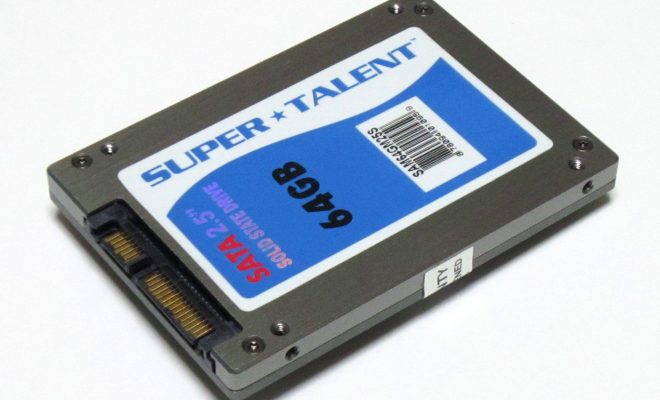
Solid-state drives (SSDs) have been around for quite some time, and they have significantly revolutionized the storage industry. With the introduction of NVMe SSDs, storage performance has become astonishing, with read and write speeds that can easily max out in excess of 3,000MB/s. However, as the demand for faster and more advanced technologies increases, these NVMe drives have started overheating, leading to a decrease in performance.

To combat such overheating, the answer has been to add a heatsink. However, the bigger question is, does your M.2 NVMe SSD need a heatsink? This article will cover that very question, providing you the necessary knowledge on whether to invest in a heatsink for your system or not.

On paper, an NVMe SSD generates less heat than a standard SSD since it lacks the ability to defragment. The chip on an NVMe drive that does the heavy lifting is small and is responsible for drawing a minimal amount of power compared to its HDD counterparts. However, because the chip is small and crammed into a tiny M.2 form factor, heat dissipation becomes a challenge.

Thermal throttling is a performance-reducing mechanism in which an NVMe drive scales back on its performance due to overheating. Therefore, if you’re facing performance issues with your NVMe SSD, it’s time to investigate if your drive is overheating. Most modern motherboards come with built-in heatsinks installed over the M.2 slot. This feature helps to dissipate any heat generated by the NVMe drive.

On the other hand, some SSDs ship with factory-fitted heatsinks that may be a little more capable in cooling than their motherboard counterparts. These heatsinks come in various sizes and designs ranging from slimline options to massive stacks of copper heatsinks.

To verify the effect of heatsinks on NVMe SSD performance, we ran tests to see whether the built-in motherboard heatsinks were sufficient or the extra cost of purchasing an aftermarket heatsink was worth it.

Our test involved using a stable M.2 NVMe SSD on a motherboard with a built-in heatsink, followed by installing an aftermarket heatsink. We then ran the same stress test on the NVMe SSD to check whether there was any difference between the two.

The tests showed that the aftermarket heatsink led to a reduction in operating temperatures compared to the motherboard heatsink, and as a result, led to better sustained performance because of reduced thermal throttling. Even though the improved sustained read/write speeds were minimal, the thermal reduction has long-term benefits regarding drive durability.

It is important to note that heatsinks are not a necessity for all M.2 NVMe SSDs. Only drives that are subjected to intensive workloads that last for extended periods may need a heatsink to operate at optimal performance for longer. However, if you plan to use your NVMe SSD for long hours, investing in an aftermarket heat sink will help to reduce thermal throttling significantly.

In summary, if you’re looking to improve your NVMe SSD performance, investing in a heatsink could be an excellent move. Though, if you are a typical home user who uses their system for everyday work such as browsing, photo editing, or video editing, then the stock heatsink will suffice. On the other hand, if you are a user who does a lot of gaming, video rendering, machine learning, or heavy disk-intensive workloads, we recommend purchasing an aftermarket heatsink to keep your NVMe SSD cool, thus improving durability and performance.

Previous Article

TechTarget Enterprise Technology News

Next Article

The “i” Icon on an Apple Watch: ...

Matthew Lynch

Related articles More from author

  • Online Learning & eLearning

    How to Watch Netflix, Hulu, and Amazon Prime on Linux

    March 27, 2023
    By Matthew Lynch
  • How to Use System Restore in Windows 11
    Elementary EducationOnline Learning & eLearning

    Keyboard Shortcuts for Using Virtual Desktops on Windows 11

    March 28, 2023
    By Matthew Lynch
  • Online Learning & eLearning

    How To Track Attendance During Virtual Learning

    February 1, 2021
    By Matthew Lynch
  • Elementary Education

    20 Lovable Lion-Themed Activities

    April 7, 2025
    By Matthew Lynch
  • Elementary EducationOnline Learning & eLearning

    The Best Websites to Find Images with a Transparent Background

    March 31, 2023
    By Matthew Lynch
  • Online Learning & eLearning

    Top 12 Ways to Fix Safari Not Working on iPhone and iPad

    April 1, 2023
    By Matthew Lynch

Search

Login & Registration

  • Log in
  • Entries feed
  • Comments feed
  • WordPress.org

Newsletter

Signup for The Tech Edvocate Newsletter and have the latest in EdTech news and opinion delivered to your email address!

About Us

Since technology is not going anywhere and does more good than harm, adapting is the best course of action. That is where The Tech Edvocate comes in. We plan to cover the PreK-12 and Higher Education EdTech sectors and provide our readers with the latest news and opinion on the subject. From time to time, I will invite other voices to weigh in on important issues in EdTech. We hope to provide a well-rounded, multi-faceted look at the past, present, the future of EdTech in the US and internationally.

We started this journey back in June 2016, and we plan to continue it for many more years to come. I hope that you will join us in this discussion of the past, present and future of EdTech and lend your own insight to the issues that are discussed.

Newsletter

Signup for The Tech Edvocate Newsletter and have the latest in EdTech news and opinion delivered to your email address!

Contact Us

The Tech Edvocate
910 Goddin Street
Richmond, VA 23231
(601) 630-5238
[email protected]

Copyright © 2026 Matthew Lynch. All rights reserved.