The Tech Edvocate

Top Menu

  • Advertisement
  • Apps
  • Home Page
  • Home Page Five (No Sidebar)
  • Home Page Four
  • Home Page Three
  • Home Page Two
  • Home Tech2
  • Icons [No Sidebar]
  • Left Sidbear Page
  • Lynch Educational Consulting
  • My Account
  • My Speaking Page
  • Newsletter Sign Up Confirmation
  • Newsletter Unsubscription
  • Our Brands
  • Page Example
  • Privacy Policy
  • Protected Content
  • Register
  • Request a Product Review
  • Shop
  • Shortcodes Examples
  • Signup
  • Start Here
    • Governance
    • Careers
    • Contact Us
  • Terms and Conditions
  • The Edvocate
  • The Tech Edvocate Product Guide
  • Topics
  • Write For Us
  • Advertise

Main Menu

  • Start Here
    • Our Brands
    • Governance
      • Lynch Educational Consulting, LLC.
      • Dr. Lynch’s Personal Website
      • Careers
    • Write For Us
    • The Tech Edvocate Product Guide
    • Contact Us
    • Books
    • Edupedia
    • Post a Job
    • The Edvocate Podcast
    • Terms and Conditions
    • Privacy Policy
  • Topics
    • Assistive Technology
    • Child Development Tech
    • Early Childhood & K-12 EdTech
    • EdTech Futures
    • EdTech News
    • EdTech Policy & Reform
    • EdTech Startups & Businesses
    • Higher Education EdTech
    • Online Learning & eLearning
    • Parent & Family Tech
    • Personalized Learning
    • Product Reviews
  • Advertise
  • Tech Edvocate Awards
  • The Edvocate
  • Pedagogue
  • School Ratings

logo

The Tech Edvocate

  • Start Here
    • Our Brands
    • Governance
      • Lynch Educational Consulting, LLC.
      • Dr. Lynch’s Personal Website
        • My Speaking Page
      • Careers
    • Write For Us
    • The Tech Edvocate Product Guide
    • Contact Us
    • Books
    • Edupedia
    • Post a Job
    • The Edvocate Podcast
    • Terms and Conditions
    • Privacy Policy
  • Topics
    • Assistive Technology
    • Child Development Tech
    • Early Childhood & K-12 EdTech
    • EdTech Futures
    • EdTech News
    • EdTech Policy & Reform
    • EdTech Startups & Businesses
    • Higher Education EdTech
    • Online Learning & eLearning
    • Parent & Family Tech
    • Personalized Learning
    • Product Reviews
  • Advertise
  • Tech Edvocate Awards
  • The Edvocate
  • Pedagogue
  • School Ratings
  • This One Thing Is Quietly Reshaping High School Education Forever

  • Millions of Student Loan Borrowers Face Unprecedented Chaos: Is Your Repayment Plan Next?

  • The Astonishing Truth About Student Loan Refinance Rates: What You Need to Know Now

  • Devastating: AI Agents Just Found a Zero-Day in Medical Software in 11 Minutes

  • The AI Education Revolution: 10 Urgent Questions Universities Must Answer Now

  • Explosive Zero-Day Vulnerability: 15 Million Websites Under Siege – Is Yours Next?

  • The Ultimate Kuru Footwear Trio: A Comfort Revolution for Every Adventure

  • Why Your Mortgage Could Be Denied by Biased AI – And What the Fed Is Doing About It

  • Unprecedented: Lawsuit Demands Total AI Shutdown Amid Rising Global Panic

  • The Astonishing Truth: Microcredentials Now Trump MBAs for Data Science Jobs

Digital & Mobile Technology
Home›Digital & Mobile Technology›Terabytes, Gigabytes, & Petabytes: How Big Are They?

Terabytes, Gigabytes, & Petabytes: How Big Are They?
By Matthew Lynch
May 30, 2023
0
Spread the love

In a digital age where technology is so prevalent and almost every aspect of our lives is stored in electronic form, it is of utmost importance to understand the various measures of digital information – terabytes, gigabytes, and petabytes. These measures are often thrown around, but what exactly do they mean?

Firstly, let’s define what digital information is. Digital information, in simple terms, is data in electronic form that can be stored, processed, and transmitted through a computer system. This data could be photos, videos, music, documents, or any other form of electronic data.

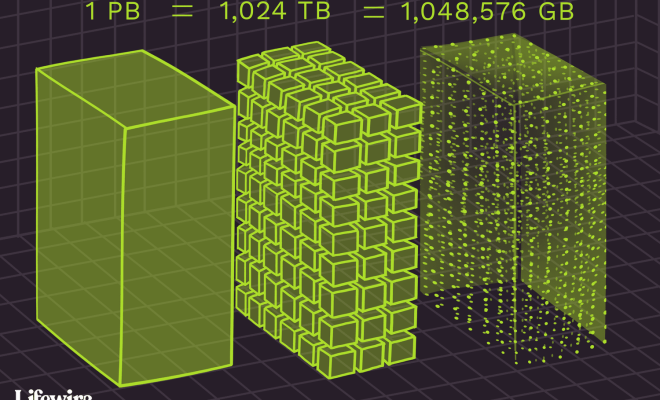
Terabytes (TB) is a measure of digital information comprising 1 trillion bytes. To put this into perspective, imagine a standard DVD being equal to 4.7GB. Therefore, a terabyte of data equates to nearly 200 DVDs worth of information. With the ever-increasing amount of data being produced worldwide, terabytes of data storage have become increasingly more common, with many computers now having more than a terabyte of storage space.

Gigabytes (GB), on the other hand, is a measure of digital information that consists of 1 billion bytes. A gigabyte can store a significant amount of data, including documents, music, and video. For instance, a single high-quality movie usually takes up around 1GB of storage space. In terms of storage sizes, a gigabyte is a relatively small measure when compared to terabytes, but it is still prevalent in everyday usage.

Petabytes (PB) is a measure of digital information equal to 1,000 terabytes. A petabyte can store an enormous amount of data, and it is estimated that the amount of data generated in the world doubles every two years. Huge data platforms like Facebook or Google have reached the petabyte scale, and it is predicted that in the coming years, more companies and organizations will require petabyte-level storage capacity.

It is essential to note that these digital storage measures are not just random numbers. They are part of an organized system of measurement that follows the International System of Units (SI) standards. This system ensures that everyone across the world uses the same scale to measure digital storage space.

In conclusion, understanding the meaning of digital storage measures like terabytes, gigabytes, and petabytes is essential. They have become a significant part of our daily lives, and as we produce more data, the need for storing it increases. Whether it is for personal storage, business requirements, or data management, the knowledge of these measures can help you make informed decisions about your digital storage requirements.


Previous Article

How to Make a Map in Minecraft

Next Article

How to Change Directories in CMD (Command ...

Matthew Lynch

Related articles More from author

  • Digital & Mobile Technology

    How to Uncover the Android 12 Easter Egg

    August 5, 2023
    By Matthew Lynch
  • Digital & Mobile Technology

    How to Print Your Outlook Address Book

    July 30, 2023
    By Matthew Lynch
  • Digital & Mobile Technology

    Where to Download iPhone Manuals for Every Model

    June 4, 2023
    By Matthew Lynch
  • Digital & Mobile Technology

    What is Visual FoxPro (VFP)?

    May 14, 2023
    By Matthew Lynch
  • Digital & Mobile Technology

    How to Install a POS System

    April 27, 2023
    By Matthew Lynch
  • Digital & Mobile Technology

    How to Send Digital Steam Gift Cards to Friends

    August 3, 2023
    By Matthew Lynch

Search

Login & Registration

  • Log in
  • Entries feed
  • Comments feed
  • WordPress.org

Newsletter

Signup for The Tech Edvocate Newsletter and have the latest in EdTech news and opinion delivered to your email address!

About Us

Since technology is not going anywhere and does more good than harm, adapting is the best course of action. That is where The Tech Edvocate comes in. We plan to cover the PreK-12 and Higher Education EdTech sectors and provide our readers with the latest news and opinion on the subject. From time to time, I will invite other voices to weigh in on important issues in EdTech. We hope to provide a well-rounded, multi-faceted look at the past, present, the future of EdTech in the US and internationally.

We started this journey back in June 2016, and we plan to continue it for many more years to come. I hope that you will join us in this discussion of the past, present and future of EdTech and lend your own insight to the issues that are discussed.

Newsletter

Signup for The Tech Edvocate Newsletter and have the latest in EdTech news and opinion delivered to your email address!

Contact Us

The Tech Edvocate
910 Goddin Street
Richmond, VA 23231
(601) 630-5238
[email protected]

Copyright © 2026 Matthew Lynch. All rights reserved.