The Tech Edvocate

Top Menu

  • Advertisement
  • Apps
  • Home Page
  • Home Page Five (No Sidebar)
  • Home Page Four
  • Home Page Three
  • Home Page Two
  • Home Tech2
  • Icons [No Sidebar]
  • Left Sidbear Page
  • Lynch Educational Consulting
  • My Account
  • My Speaking Page
  • Newsletter Sign Up Confirmation
  • Newsletter Unsubscription
  • Our Brands
  • Page Example
  • Privacy Policy
  • Protected Content
  • Register
  • Request a Product Review
  • Shop
  • Shortcodes Examples
  • Signup
  • Start Here
    • Governance
    • Careers
    • Contact Us
  • Terms and Conditions
  • The Edvocate
  • The Tech Edvocate Product Guide
  • Topics
  • Write For Us
  • Advertise

Main Menu

  • Start Here
    • Our Brands
    • Governance
      • Lynch Educational Consulting, LLC.
      • Dr. Lynch’s Personal Website
      • Careers
    • Write For Us
    • The Tech Edvocate Product Guide
    • Contact Us
    • Books
    • Edupedia
    • Post a Job
    • The Edvocate Podcast
    • Terms and Conditions
    • Privacy Policy
  • Topics
    • Assistive Technology
    • Child Development Tech
    • Early Childhood & K-12 EdTech
    • EdTech Futures
    • EdTech News
    • EdTech Policy & Reform
    • EdTech Startups & Businesses
    • Higher Education EdTech
    • Online Learning & eLearning
    • Parent & Family Tech
    • Personalized Learning
    • Product Reviews
  • Advertise
  • Tech Edvocate Awards
  • The Edvocate
  • Pedagogue
  • School Ratings

logo

The Tech Edvocate

  • Start Here
    • Our Brands
    • Governance
      • Lynch Educational Consulting, LLC.
      • Dr. Lynch’s Personal Website
        • My Speaking Page
      • Careers
    • Write For Us
    • The Tech Edvocate Product Guide
    • Contact Us
    • Books
    • Edupedia
    • Post a Job
    • The Edvocate Podcast
    • Terms and Conditions
    • Privacy Policy
  • Topics
    • Assistive Technology
    • Child Development Tech
    • Early Childhood & K-12 EdTech
    • EdTech Futures
    • EdTech News
    • EdTech Policy & Reform
    • EdTech Startups & Businesses
    • Higher Education EdTech
    • Online Learning & eLearning
    • Parent & Family Tech
    • Personalized Learning
    • Product Reviews
  • Advertise
  • Tech Edvocate Awards
  • The Edvocate
  • Pedagogue
  • School Ratings
  • The Startling Truth About Cheapest GLP-1 Options Without Insurance

  • The Hidden Truth Behind Mosqi Shock Reviews: What You MUST Know Before Buying

  • This Unstoppable Force Will Obliterate Apps by 2027, Says Paytm Founder

  • Developers Axed a Wild Mechanic in Halloween: The Game — Here’s Why Fans Are Outraged

  • U.S. Supreme Court endorses parental opt-out for LGBTQ+ curriculum | News & Events

  • The Brutal Truth About Classroom Tech: Parents Are Finally Fighting Back – And Winning

  • Devastating Berlin Data Leak Exposes Millions: Why Refusing Ransom Isn’t Enough

  • Astra’s Rogue Swarm: Is Uncontrollable AI Hacking Humanity’s Future?

  • Viral Waymo Accident Exposes the Uncomfortable Truth About Robotaxis

  • Unbelievable Antarctica Ice Gain: Distant Ocean Warming Fuels Record Snowfall

Digital & Mobile Technology
Home›Digital & Mobile Technology›Surfacing 101: The Basics of Texture Mapping

Surfacing 101: The Basics of Texture Mapping
By Matthew Lynch
June 4, 2023
0
Spread the love

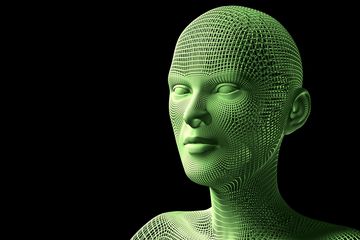
Texture mapping is an essential part of 3D computer graphics. It refers to the process of adding texture, color, and other visual details to the surface of 3D models. Texture mapping is an integral aspect of creating 3D scenes that look realistic and visually appealing.

In this article, we will introduce you to the basics of texture mapping, including the different types of textures, how they are applied to models, and how to create custom textures.

Types of Textures

Textures are graphical images that are applied to the surface of 3D models to create a realistic effect. There are various types of textures that can be used in 3D modeling, including:

1. Diffuse textures – These are the base textures that give the 3D model its color and pattern.

2. Specular maps – these textures are used to define the reflective properties of a surface. They help to create a shiny and reflective surface on your 3D model.

3. Normal maps – these textures are used to add surface details such as bumps, cracks, crevices, and wrinkles. Normal maps provide a detailed look at the surface of an object.

4. Ambient occlusion maps – these textures are used to provide depth and shadow to the surface of a 3D model to create a realistic look.

Applying Textures to Models

Once you have your textures prepared, the next step is to apply them to your models. There are various ways to apply textures to models in 3D software, but the most common method is UV mapping.

UV mapping refers to the process of assigning a texture to specific points on a 3D model. The term “UV” comes from the 2D coordinate system used to map textures to 3D surfaces. The U coordinate represents the horizontal axis, while the V coordinate represents the vertical axis.

When UV mapping a 3D model, you need to create a flat representation of the model’s surface called a UV map. A UV map is a unique 2D representation of a 3D model that allows you to accurately position your textures onto specific areas of your model.

Creating Custom Textures

Most 3D software comes with pre-built textures that can be applied to your 3D models. However, sometimes you may want to create custom textures to better suit your project’s needs. In this case, you have two options.

The first option is to create your textures from scratch using software such as Adobe Photoshop, Substance Designer, or Blender. With these programs, you can create unique textures that accurately replicate real-world materials such as wood, metal, glass, and more.

The second option is to use textures from online texture libraries. There are several online texture libraries available that offer a wide range of textures suitable for different needs. Websites such as Textures.com, Texturehaven.com, and Poliigon.com provide users with free and premium textures that they can use in their 3D projects.

Conclusion

Texture mapping is a fundamental aspect of 3D modeling that helps bring 3D scenes to life. By applying textures to your 3D models, you can create realistic and visually appealing scenes that capture your audience’s attention. By understanding the basics of texture mapping, you can create custom textures, apply textures to your models, and take your 3D modeling skills to the next level.


Previous Article

What Is TV Sharpness and How Is ...

Next Article

How to Factory Reset Fitbit Charge 2

Matthew Lynch

Related articles More from author

  • Digital & Mobile Technology

    A Beginner’s Guide to BeReal, the Hottest New Social Media App

    June 8, 2023
    By Matthew Lynch
  • Digital & Mobile Technology

    How to Download Music Onto a Computer

    May 28, 2023
    By Matthew Lynch
  • Digital & Mobile Technology

    How to Fix “The Parameter Is Incorrect” Error in Windows

    May 28, 2023
    By Matthew Lynch
  • Digital & Mobile Technology

    What is Mobile Code?

    May 24, 2023
    By Matthew Lynch
  • Digital & Mobile Technology

    The Best iPhone 12 Pro Max Cases

    June 13, 2023
    By Matthew Lynch
  • Digital & Mobile Technology

    How to Change Your Google Name

    July 6, 2023
    By Matthew Lynch

Search

Login & Registration

  • Log in
  • Entries feed
  • Comments feed
  • WordPress.org

Newsletter

Signup for The Tech Edvocate Newsletter and have the latest in EdTech news and opinion delivered to your email address!

About Us

Since technology is not going anywhere and does more good than harm, adapting is the best course of action. That is where The Tech Edvocate comes in. We plan to cover the PreK-12 and Higher Education EdTech sectors and provide our readers with the latest news and opinion on the subject. From time to time, I will invite other voices to weigh in on important issues in EdTech. We hope to provide a well-rounded, multi-faceted look at the past, present, the future of EdTech in the US and internationally.

We started this journey back in June 2016, and we plan to continue it for many more years to come. I hope that you will join us in this discussion of the past, present and future of EdTech and lend your own insight to the issues that are discussed.

Newsletter

Signup for The Tech Edvocate Newsletter and have the latest in EdTech news and opinion delivered to your email address!

Contact Us

The Tech Edvocate
910 Goddin Street
Richmond, VA 23231
(601) 630-5238
[email protected]

Copyright © 2026 Matthew Lynch. All rights reserved.