Sungrazing Comet C/2026 A1 (MAPS): A Celestial Spectacle
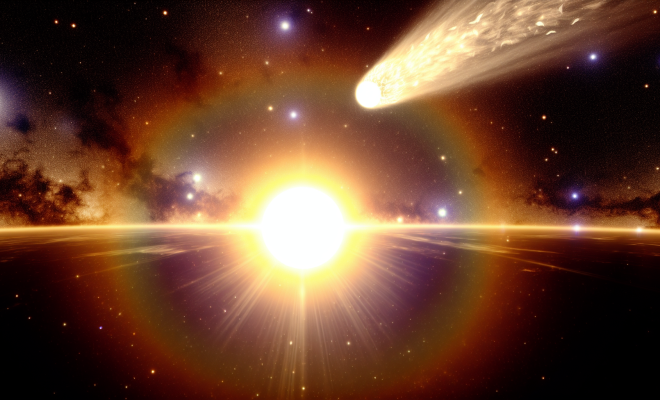
As enthusiasts and casual observers of the night sky alike prepare for an exciting astronomical event, Comet C/2026 A1 (MAPS) has recently caught the attention of the astronomical community. This sungrazing comet, which has brightened to a magnitude of 10 by mid-March, offers a tantalizing glimpse of what might be a spectacular show in the coming months.
Understanding Sungrazing Comets
Sungrazing comets are a unique subset of comets that come extremely close to the Sun during their orbit. The proximity to the Sun can result in dramatic changes in brightness, often due to the intense heat and solar radiation that can either disintegrate the comet or enhance its visibility. The upcoming C/2026 A1 is set to make its closest approach to the Sun on April 4, 2026, at a distance of just 160,000 kilometers from the solar surface—an incredibly close encounter considering the Sun’s diameter of approximately 1.39 million kilometers.
When and Where to Spot C/2026 A1
For sky watchers eager to catch a glimpse of Comet C/2026 A1, the best viewing opportunities will occur around the new moon on March 18-19, 2026. During this time, the comet will be relatively low in the western sky, making it more accessible for those with small telescopes.
- Visibility: Brightness expected to reach magnitude 10.
- Date for Observation: March 18-19, 2026.
- Location: Low in the western sky, particularly favorable for lower latitudes.
While this brightness level may allow for sightings with the naked eye under optimal conditions, using a telescope will significantly enhance the chances of observing the comet.
Potential for Brightness
Post-perihelion, the comet may undergo significant changes in brightness. If it survives its close encounter with the Sun, estimates suggest that it could reach magnitudes of -5 or even -15. Such brightness levels would make it a rival to both Venus and the full Moon, offering a stunning sight in the night sky, even amidst solar glare.
Closest Approach to Earth
The comet will reach its closest point to Earth shortly after perihelion, on April 5-6, 2026, at a distance of approximately 143 million kilometers. This proximity will provide an additional opportunity for enthusiasts to observe the comet, provided it remains intact after its encounter with the Sun.
The Uncertainty of Survival
Despite the excitement surrounding C/2026 A1, the survival of the comet remains uncertain. The intense heat from close solar proximity poses a substantial risk of disintegration. Many sungrazing comets have met their end in the fiery embrace of the Sun, and while some have emerged intact, others have been completely obliterated.
Recent images captured by astronomers Gerald Rhemann and Michael Jager show the comet’s distinct greenish coma, a characteristic often attributed to the presence of diatomic carbon and cyanogen gases. Such visual indicators add to the excitement of observing this celestial body.
What to Expect in the Coming Months
As we approach the comet’s perihelion, astronomers and enthusiasts alike are keeping a close watch on its trajectory and brightness. Here are some key points to consider as the date nears:
- Monitoring Brightness: Keep track of updates on the comet’s brightness as it approaches perihelion.
- Optimal Viewing Conditions: Identify potential viewing locations with minimal light pollution for the best experience.
- Engage with the Community: Join online forums or local astronomy clubs to share observations and insights.
The anticipation surrounding Comet C/2026 A1 (MAPS) reflects the enduring fascination humanity has with the cosmos. As we await this celestial event, it serves as a reminder of the dynamic processes occurring beyond our planet and the wonders that await those who look up at the night sky.
Stay tuned for further updates on this exciting astronomical phenomenon, as the countdown to its closest encounter with the Sun and Earth continues!