March 2026: Meteor Showers & Planetary Alignments
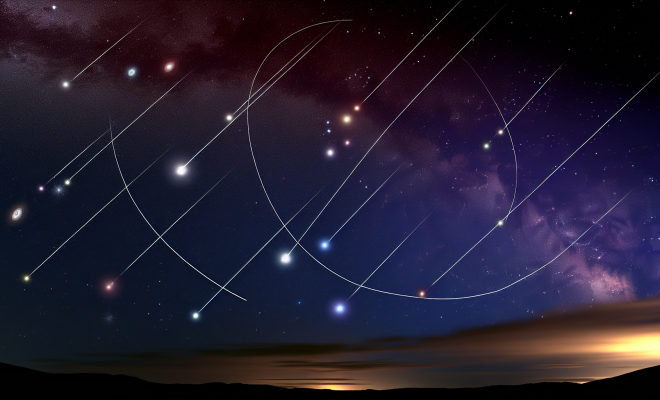
As winter transitions to spring, March 2026 offers a splendid array of celestial events that will captivate astronomy enthusiasts and casual stargazers alike. From meteor showers to planetary alignments, the night sky will be alive with activity this month. Whether you’re an experienced observer or a novice looking to explore the cosmos, March promises to deliver some unforgettable sights.
Key Celestial Events
March is set to feature several notable astronomical events, including meteor showers, lunar occultations, and planetary sightings. Here’s a closer look at the highlights:
The Gamma Normids Meteor Shower
One of the month’s most anticipated events is the peak of the Gamma Normids meteor shower, which occurs on March 14. This annual meteor shower is known for producing an average of 6 meteors per hour under optimal viewing conditions. The meteors, originating from the constellation Normid, can be best observed in dark skies away from city lights. This peak offers a great opportunity for observers to witness shooting stars streaking across the night sky.
Lunar Occultation of Pluto
Following the Gamma Normids, March 15 brings an intriguing event: a lunar occultation of Pluto. During this occurrence, the Moon will pass in front of the distant dwarf planet, temporarily obscuring it from view. This event presents a unique chance for astronomers to observe the interaction between the Moon and Pluto, particularly for those equipped with telescopes. Observers should locate a clear horizon to the west to catch this rare celestial moment.
Planetary Alignments and Visibility
This month also features several significant alignments and visibility of various planets:
Mercury and Mars Near the Moon
On March 17, stargazers will have the opportunity to see Mercury and Mars positioned close to the Moon. Mercury, the closest planet to the Sun, will shine brightly, while Mars, known for its reddish hue, will be visible as well. Observers should look towards the western horizon shortly after sunset to catch this stunning conjunction.
Eta Virginids Meteor Shower
Another highlight of March is the peak of the Eta Virginids meteor shower, which occurs on March 18. While this shower typically produces about 2 meteors per hour, it coincides with the perihelion passage of Comet 88P/Howell. This means that while the meteor shower may not be prolific, the presence of a comet adds an exciting element to the night sky, making it worthwhile to take a look.
Planetary Brightness and Visibility
As the month progresses, several planets will be prominently visible, each with its own distinct characteristics:
Venus: The Evening Star
One of the brightest objects in the night sky, Venus, will shine at an impressive magnitude of -3.8 throughout March. Often referred to as the “Evening Star,” Venus will be visible shortly after sunset, providing a dazzling sight for observers. Its brightness makes it a key feature of the March sky, drawing attention from both amateur and professional astronomers.
Mars: A Faint Companion
In contrast to Venus, Mars will be less conspicuous, shining at a magnitude of 1.1. Although it may prove challenging to observe, its proximity to the Moon on March 17 could aid in locating it. Stargazers should seek out dark locations and use binoculars or telescopes to enhance their chances of spotting the Red Planet.
Uranus: A Distant Gem
Uranus, the seventh planet from the Sun, will be visible after sunset during March, shining at a magnitude of 5.7. This distant gas giant can be seen under dark skies, making it an exciting target for those equipped with telescopes. Its unique blue-green hue adds to the allure, providing a remarkable contrast against the backdrop of stars.
C/2026 A1 (MAPS): A Faint Comet
Mid-month, the sungrazing comet C/2026 A1 (MAPS) will remain faint at a magnitude of 13. While it may be difficult to observe without a telescope, its presence serves as a reminder of the dynamic nature of our solar system. As the month progresses, this comet may brighten, offering an exciting opportunity for observers to track its journey.
Conclusion
March 2026 promises a wealth of astronomical events that should not be missed. With meteor showers, lunar occultations, and the visibility of several planets, the night sky will be a vibrant spectacle. Whether you’re gazing up from your backyard or venturing to a dark-sky site, make sure to mark your calendars for these celestial highlights. Prepare your telescopes, grab your binoculars, and immerse yourself in the wonders of the universe as March unfolds its cosmic treasures.