Sophie Cunningham’s WNBA Trans Athlete Stance Sparks Debate
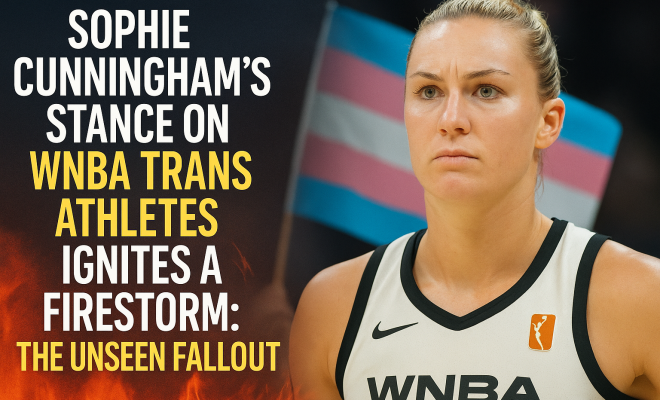
Sophie Cunningham, the WNBA star whose name often echoes with viral moments and spirited on-court exchanges, has recently thrown herself into one of the most polarizing debates of our time: the inclusion of transgender athletes in women’s sports. Her comments, made during a candid ESPN interview, weren’t just a ripple; they were a tidal wave, drawing both fervent applause and blistering condemnation. It’s a conversation that’s been simmering for years, but Cunningham’s directness has brought it to a boiling point, particularly within the context of the WNBA and the broader professional sports landscape.
Her declaration was unequivocal: she wants to “protect young girls in a locker room, or young girls in sport who shouldn’t have to go against biological men.” This isn’t a nuanced academic discussion for Cunningham; it’s about what she sees as a fundamental issue of fairness and safety for biological women and girls in competitive environments. You can imagine how quickly such a statement would circulate, especially coming from an athlete who already commands significant attention for her fiery personality and memorable interactions – remember that incident with Caitlin Clark that set social media ablaze? This time, however, the stakes feel even higher, touching on deeply held beliefs about identity, biology, and the future of women’s athletics.
The WNBA, as an organization, generally leans towards inclusivity, a stance that seemingly puts Cunningham at odds with the league’s prevailing ethos. This divergence has only fueled the flames, creating a fascinating and often uncomfortable tension. Her words didn’t just disappear into the ether; they became a flashpoint, turning her into a lightning rod. Some have even given her the moniker “MAGA Barbie,” a label that itself carries a heavy political charge, underscoring just how intertwined this sporting debate has become with wider cultural and political divides. The sheer volume of social media engagement her comments generated speaks volumes about the raw nerves she touched. It’s a testament to the fact that this isn’t just a niche sports issue; it’s a national, even international, conversation with profound implications for how we define competition, fairness, and identity in the 21st century. The discussion around WNBA trans athletes is no longer just theoretical; it’s playing out in real-time, with real athletes taking real stances.
The Genesis of a Viral Stance: Cunningham’s Core Argument
To truly understand the seismic reaction to Sophie Cunningham’s comments, we need to unpack the core of her argument. When she spoke about protecting “young girls in a locker room, or young girls in sport who shouldn’t have to go against biological men,” she wasn’t just offering a casual opinion. She was articulating a viewpoint held by a significant, though often quieter, segment of the population, particularly within women’s sports circles. This perspective centers on the belief that biological differences between sexes, specifically those related to puberty and male advantage in strength, speed, and bone density, fundamentally alter the playing field when transgender women compete against cisgender women.
For proponents of this view, it’s not about denying anyone’s identity, but rather about preserving what they see as the integrity and fairness of women’s competitive categories. The locker room aspect adds another layer, touching on issues of privacy and comfort that are deeply personal and often emotionally charged. Cunningham, whether intentionally or not, tapped into a wellspring of concern that many feel has been overlooked or dismissed in the broader push for transgender inclusion. She gave voice to a sentiment that, for many, is rooted in a desire to ensure that the category of “women’s sports,” created precisely to provide equitable opportunities for biological females, doesn’t inadvertently undermine its own purpose.
Her directness cut through the often-academic language surrounding the debate, presenting it in terms that resonated with a wide audience. It wasn’t framed as a complex scientific or sociological puzzle, but rather as a straightforward question of competitive equity and safeguarding spaces for biological girls and women. This simplification, while perhaps oversimplified for some, was precisely what made her comments so impactful and, for many of her supporters, so refreshing. They saw an athlete willing to speak plainly on an issue they felt was being complicated by political correctness or fear of backlash. This is precisely why the debate around WNBA trans athletes has become such a lightning rod.
The WNBA’s Stance Versus Individual Athlete Voices
The WNBA, much like many progressive professional sports leagues in North America, has generally adopted a policy of inclusivity regarding transgender athletes. This approach aligns with broader societal trends that seek to affirm gender identity and create welcoming environments for all individuals. The league’s official stance typically reflects a commitment to diversity, equity, and inclusion, recognizing that transgender women are women and should be afforded the same opportunities as their cisgender counterparts. This position is often guided by guidelines from governing bodies like the NCAA, which have historically grappled with how to balance inclusion with competitive fairness, evolving their policies over time.
However, Sophie Cunningham’s outspoken comments highlight a significant tension between institutional policies and the individual voices of athletes. While a league can issue a blanket statement or policy, the locker room, the court, and the personal experiences of its players are far more complex. Cunningham’s willingness to diverge from what might be perceived as the league’s preferred narrative demonstrates that not all athletes within these inclusive frameworks necessarily agree with every aspect of the policy, especially when it touches on what they perceive as fundamental issues of fairness or safety. (See: transgender athletes in sports debate.)
This dynamic isn’t unique to the WNBA. We’ve seen similar scenarios play out in various sports, where athletes, often women, express concerns that run counter to official guidelines. It forces a crucial question: how do leagues navigate the imperative for inclusion while also acknowledging and addressing the genuine concerns of some of their athletes, particularly when those concerns are rooted in biology and competitive equity? It’s a delicate balancing act, and Cunningham’s comments have certainly made that tightrope walk even more precarious for the WNBA. The discussion about WNBA trans athletes is far from settled, and individual voices like Cunningham’s ensure it remains a live and evolving debate.
The “MAGA Barbie” Label: Political Crosscurrents
The immediate backlash to Cunningham’s comments saw her quickly dubbed “MAGA Barbie” by some critics. This label is far more than just a playful nickname; it’s a potent political weapon, designed to associate her stance with a specific conservative political movement and, by extension, to discredit her views in the eyes of those who oppose that movement. The term “MAGA” (Make America Great Again) is shorthand for the political ideology associated with former President Donald Trump, and its connection to “Barbie” — a symbol of mainstream, often idealized femininity — creates a striking, if somewhat pejorative, juxtaposition.
What this label reveals is how deeply intertwined the debate over transgender athletes has become with broader political and cultural wars. For many, taking a position like Cunningham’s isn’t seen as a neutral stance on athletic fairness but rather as an alignment with conservative values, which often include traditional views on gender and biology. Conversely, supporting transgender inclusion is often viewed as aligning with progressive politics. This politicization means that the discussion often moves beyond the specifics of sports science or competitive advantage, becoming instead a proxy battle in a much larger ideological conflict.
The “MAGA Barbie” moniker, therefore, serves to immediately place Cunningham and her arguments within a partisan framework, making it harder for her views to be considered on their own merits by those on the opposing political side. It’s a tactic designed to polarize, to sort individuals into ideological camps, and to simplify complex issues into easily digestible, politically charged soundbites. This unfortunate reality often stifles genuine dialogue and makes finding common ground on sensitive issues like the inclusion of WNBA trans athletes incredibly challenging.
Social Media’s Role in Amplifying and Polarizing the Debate
In our hyper-connected world, social media platforms act as both accelerants and echo chambers, and Sophie Cunningham’s comments on WNBA trans athletes are a prime example of this phenomenon. The moment her words hit the airwaves, they were instantly clipped, shared, and debated across X (formerly Twitter), Instagram, TikTok, and Facebook. This rapid dissemination meant her stance reached millions within hours, far beyond the typical sports news cycle.
But social media doesn’t just amplify; it polarizes. Algorithms tend to show users more of what they already agree with, creating insulated communities where opposing viewpoints are rarely encountered, or are encountered only to be ridiculed. For Cunningham’s supporters, her comments were brave, sensible, and long overdue. They rallied around her, praising her courage to speak truth to power. For her detractors, her words were bigoted, harmful, and exclusionary, and they responded with outrage, condemnation, and the aforementioned “MAGA Barbie” label. Hashtags trended, comment sections exploded, and the sheer volume of engagement underscored the raw, emotional chord she had struck.
This constant, instantaneous feedback loop means that nuanced discussion often gets lost. Soundbites replace thoughtful arguments, and the pressure to take a side becomes immense. Athletes, who once might have expressed an opinion in a more contained environment, now find their every word scrutinized by a global audience, each faction ready to either deify or demonize them. Social media, in this context, didn’t just report on the controversy; it became an integral part of its unfolding, shaping public perception and intensifying the already heated debate surrounding WNBA trans athletes. We covered children's gender identity in more detail.
White House Recognition: A Political Endorsement
Perhaps one of the most significant and unexpected developments following Sophie Cunningham’s comments was the recognition from the White House. This wasn’t a casual nod; it was a deliberate endorsement that elevated her stance from a sports controversy to a matter of national policy discussion. When the White House, or at least elements within it, lauded her views, it sent a powerful signal. It suggested that her concerns about biological women in sports resonated with, or were being strategically aligned with, the priorities of a major political administration. This move immediately broadened the scope of the debate, pulling it firmly into the political arena.
Such an endorsement carries considerable weight. For Cunningham’s supporters, it validated her courage and the perceived righteousness of her position. It transformed her from a lone voice in the WNBA into an athlete whose perspective was seen as aligning with, or even informing, federal-level discussions on gender, sports, and education. For those who oppose her views, this White House recognition likely deepened their frustration, seeing it as further evidence of politicization and an attack on transgender rights. It also highlights the stark partisan divide on this issue, where the executive branch can actively weigh in on what might otherwise be considered a sports-specific debate. (See: LGBTQ youth health resources.)
This political endorsement also serves as a reminder that the conversation about WNBA trans athletes is not confined to locker rooms or sports arenas. It has become a battleground in the wider culture war, with high-level political figures and institutions choosing sides. This kind of top-down validation can significantly influence public opinion, empower certain advocacy groups, and further entrench the existing divisions, making resolution or compromise even more elusive. It shows that what an athlete says on a court can have reverberations that reach the highest offices in the land.
The Broader Impact on Women’s Sports and Future Policies
The controversy ignited by Sophie Cunningham’s comments goes far beyond her individual statements; it has profound implications for the future of women’s sports and the policies that govern them. Her intervention pushes the conversation about WNBA trans athletes squarely into the mainstream, forcing leagues, governing bodies, and even individual teams to confront the deeply held, often conflicting, views within their own ranks and fan bases.
One major impact is the increased pressure on sports organizations to articulate clear, transparent, and defensible policies regarding transgender inclusion. The current landscape is often a patchwork of varying rules, some based on hormone levels, others on gender identity alone, and some still on biological sex assigned at birth. Cunningham’s stance, and the support it garnered, signals that a significant portion of the public, and indeed athletes themselves, are demanding clarity and what they perceive as fairness. This could lead to a re-evaluation of existing guidelines, potentially pushing for more restrictive policies in women’s categories in some jurisdictions, or at least a more robust defense of current inclusive policies in others.
Furthermore, this debate affects athlete advocacy. Cunningham has, perhaps inadvertently, empowered other athletes who might hold similar views but were hesitant to express them for fear of backlash. Her willingness to speak out might encourage more open discussion, or conversely, create an environment where athletes feel pressured to align with one side or the other. Ultimately, the controversy underscores the urgent need for comprehensive, evidence-based discussions that consider both the principles of inclusion and the unique purpose and history of women’s sports categories. How these discussions evolve will shape the competitive landscape for generations of female athletes, both cisgender and transgender.
Understanding the Nuance: Biology vs. Identity
At the heart of the WNBA trans athletes debate is a fundamental tension between two powerful concepts: biological sex and gender identity. For many, including those who align with Sophie Cunningham’s perspective, biology is paramount in sports. They argue that the physiological differences between biological males and females—differences in bone density, muscle mass, lung capacity, and cardiovascular efficiency that develop during puberty—are so significant that they create an insurmountable competitive advantage for transgender women over cisgender women, even after hormone therapy. From this viewpoint, sports categories were created based on biological sex precisely to ensure fair competition and equal opportunity for biological females, and to disregard these differences is to undermine the very foundation of women’s sports.
On the other side, proponents of full transgender inclusion emphasize gender identity. They argue that a person’s gender identity, their internal sense of being male, female, both, or neither, is a fundamental aspect of who they are. To exclude transgender women from women’s sports, they contend, is discriminatory, harmful, and invalidates their identity. They often point to the mental health benefits of participation, the importance of inclusion, and sometimes argue that hormone therapy sufficiently mitigates any biological advantages, or that such advantages are not as significant as often portrayed, or are simply part of the natural variation in athletic ability seen among cisgender women as well.
The challenge, then, is how to reconcile these two deeply held and often conflicting perspectives. Is it possible to uphold both the principle of inclusion and the principle of fair competition for biological women simultaneously? This is the core dilemma that sports organizations, scientists, and policymakers are grappling with. There’s no easy answer, and the debate is often framed as a zero-sum game, where one side’s rights or fairness comes at the expense of the other’s. Cunningham’s comments vividly illustrate this intractable conflict, forcing everyone to confront the complexities of biology versus identity in the context of competitive sport.
Historical Context: Why Women’s Sports Exist
To truly appreciate the depth of the current debate, especially when it comes to WNBA trans athletes, it’s essential to understand the historical context of women’s sports. The creation of separate sports categories for women wasn’t an arbitrary decision; it was a deliberate and hard-won victory for equity. For centuries, women were largely excluded from competitive athletics, or relegated to secondary, often less physically demanding, roles. When opportunities began to emerge, it quickly became evident that if women were to compete directly against biological men, they would face significant disadvantages due to inherent physiological differences, particularly after male puberty. (See: transgender health and rights.)
Title IX in the United States, enacted in 1972, is a landmark example of this historical push. It mandated equal opportunities in education and sports, leading to the explosion of women’s collegiate and professional athletics. The very purpose of women’s sports categories was to create a protected space where biological females could compete fairly amongst themselves, develop their skills, and achieve athletic excellence without being overshadowed by the typical biological advantages of males. It was about creating a level playing field, recognizing that while individual variation exists, the average biological male possesses inherent advantages in strength, speed, and power over the average biological female.
Therefore, when athletes like Sophie Cunningham voice concerns about biological men competing in women’s sports, they are, in essence, invoking this historical rationale. They see the current debate as a challenge to the foundational principle upon which women’s sports were built. For them, protecting women’s categories is not about exclusion in a general sense, but about preserving the integrity of a system specifically designed to ensure fairness for biological women. This historical lens adds considerable weight to their arguments, framing the issue not just as a contemporary social debate, but as a potential undoing of decades of progress for female athletes.
Looking Ahead: The Unfolding Future of Inclusive Sports
The debate surrounding WNBA trans athletes, ignited anew by Sophie Cunningham’s powerful statements, is far from over. In fact, it’s likely to intensify as sports organizations, governments, and society at large grapple with how to move forward. We are at a critical juncture where the principles of inclusion, fairness, and biological reality are in a complex, often uncomfortable, collision. There will undoubtedly be more athletes, both cisgender and transgender, who will step into the spotlight, sharing their perspectives and experiences, further shaping public discourse.
What the future holds is uncertain, but a few pathways seem possible. We might see a continued push for more nuanced policies, perhaps involving different tiers of competition, or more stringent requirements for transgender women to compete in women’s categories. Some jurisdictions might lean towards biological sex as the primary determinant, while others may double down on gender identity. The legal landscape will also continue to evolve, with court cases and legislative actions likely influencing how sports policies are shaped. The scientific community will also play a crucial role, as ongoing research into the effects of hormone therapy on athletic performance could provide new insights, though it’s unlikely to fully resolve the ethical and philosophical debates.
Ultimately, the hope is for a future where all athletes feel valued and have opportunities to participate in sports. However, achieving that while simultaneously ensuring competitive fairness for biological women remains one of the most significant challenges facing sports today. Sophie Cunningham has certainly ensured that this conversation, uncomfortable as it may be for some, will not be silenced. Her voice, alongside many others, will continue to echo as the world attempts to chart an equitable path forward for all athletes in the intricate landscape of modern sports.
Trending Now
Frequently Asked Questions
What did Sophie Cunningham say about transgender athletes in the WNBA?
Sophie Cunningham expressed her desire to protect young girls in sports from competing against biological men. Her comments during an ESPN interview sparked significant debate about fairness and safety for biological women in competitive environments.
How has Sophie Cunningham's stance affected her reputation?
Cunningham's outspoken views on transgender athletes have made her a polarizing figure, drawing both support and criticism. Her comments have turned her into a 'lightning rod' for controversy, leading to labels like 'MAGA Barbie' and igniting discussions within the sports community.
What is the WNBA's general stance on transgender athletes?
The WNBA generally promotes inclusivity and has policies supporting the participation of transgender athletes. Cunningham's contrasting views highlight the tension between individual opinions and the league's broader ethos of inclusivity.
Why is the debate over transgender athletes in women's sports so controversial?
The debate is controversial because it touches on deeply held beliefs about identity, biology, and fairness in competition. As more athletes voice their opinions, it has become a flashpoint for broader cultural and political discussions.
What impact has social media had on the discussion of Cunningham's comments?
Social media has amplified Cunningham's comments, leading to widespread engagement and debate. Her statements quickly circulated online, drawing attention from both supporters and detractors, and demonstrating how sports discussions can intersect with political divides.
What did we miss? Let us know in the comments and join the conversation.