SETI Scans Interstellar Object 3I/ATLAS for Alien Signals
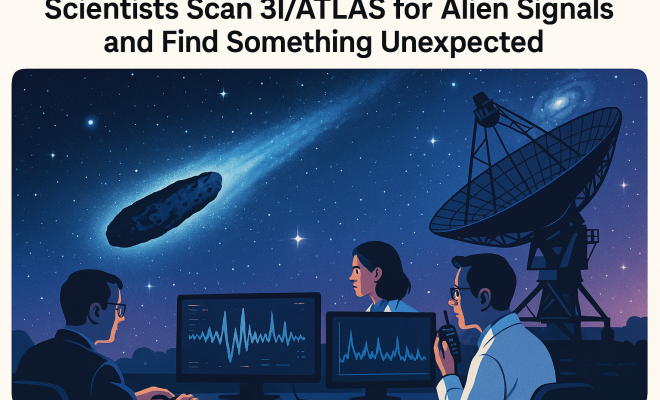
“`html
The search for extraterrestrial life has always sparked our curiosity. The thrill of discovering alien signals, especially from interstellar objects, fuels imaginations and debates across the globe. Recently, researchers from the SETI Institute teamed up with Breakthrough Listen to scan the interstellar object 3I/ATLAS, hoping to find any signs of artificial signals that could indicate the presence of advanced alien technology. As always, the results have stirred discussions, raising questions about the nature of interstellar objects and the tantalizing idea that we are not alone in the universe.
Understanding 3I/ATLAS
3I/ATLAS is an intriguing celestial body. It was first identified as a comet, but its characteristics have led many to speculate about its true nature. Discovered by the Asteroid Terrestrial-impact Last Alert System (ATLAS) in 2020, this interstellar object is notable for its hyperbolic trajectory, suggesting it comes from another star system. What sets 3I/ATLAS apart from typical comets is its high speed and unusual shape. Some researchers wonder if its peculiar features could hint at something more than just a frozen mass of rock and ice.
The SETI Institute and Breakthrough Listen Collaboration
Founded in 1984, the SETI (Search for Extraterrestrial Intelligence) Institute is at the forefront of the quest for alien life. Their mission is to explore, understand, and explain the origin and nature of life in the universe. Breakthrough Listen, part of the Breakthrough Initiatives program, aims to expand the search for intelligent life beyond Earth. The collaboration between these two organizations allowed scientists to deploy advanced technologies in their pursuit of detecting alien signals.
Scanning for Alien Signals
The study of 3I/ATLAS involved an extensive scan across a wide range of radio frequencies, targeting signals that could potentially indicate artificial origins. Researchers meticulously filtered the data down to 211 signals deemed interesting enough to warrant further investigation. This meticulous approach highlights the intersection of hope and skepticism that often characterizes the search for extraterrestrial life. Every signal detected is an opportunity to uncover something groundbreaking, yet the reality often falls short of the excitement generated.
What Were the Findings?
After extensive analysis, researchers determined that none of the 211 signals indicated any evidence of technology or intelligent life. All the signals were ultimately attributed to radio-frequency interference, a common occurrence when scanning the cosmos. This revelation, while disappointing for those eager to believe in the existence of alien signals, reinforces the importance of rigorous scientific inquiry. It emphasizes that even negative findings can contribute to our understanding of the universe.
The Role of Radio-Frequency Interference
Radio-frequency interference (RFI) is a significant challenge in astrophysical research. It occurs when unwanted signals from man-made sources, such as satellites, aircraft, or terrestrial communications, mask or mimic the signals being sought in the cosmos. Scientists often spend a considerable amount of time filtering out these interferences to ensure that any detected signals are genuine. This reinforces the complexity of the search for alien signals. It’s a reminder that the universe is not only filled with cosmic phenomena but also the noise of human activity.
The Broader Implications of Searching for Alien Signals
The quest for alien signals has profound implications that go beyond mere scientific curiosity. It taps into our desire to understand our place in the universe. Every failed attempt to find life elsewhere can lead to deeper questions about existence, the potential for life to emerge under different conditions, and the future of humanity. Even as researchers sift through data and encounter disappointment, the process itself enriches our knowledge about the cosmos.
Why Are We So Fascinated with Alien Life?
Human fascination with aliens is not new. The idea of life on other planets has been a staple of science fiction for decades. Movies, books, and documentaries continually explore the topic, feeding our imagination and driving discussion. But why this obsession? The search for alien signals represents hope for humanity—a hope that we are not alone, that somewhere in the vastness of space, life exists that could share knowledge, culture, and experience with us. (See: Wikipedia page on 3I/ATLAS.)
What’s Next for the Search?
While the results from scanning 3I/ATLAS didn’t yield the anticipated breakthrough, they represent just one step in an ongoing journey. The search for alien signals is far from over. Scientists are continually developing more sophisticated technologies to enhance their capabilities to detect potential extraterrestrial communications. Future projects will likely target other interstellar objects, expanding the scope of investigation beyond our solar system. Each of these endeavors builds on the knowledge gained from previous studies, leading us closer to answering the age-old question: are we alone in the universe?
The Human Factor in Scientific Inquiry
Scientific inquiry is not just about numbers and data; it involves human emotion and imagination. The pursuit of alien signals often intertwines with our hopes, fears, and dreams. Each negative result can feel disheartening, yet it also spurs renewed effort and creativity among researchers. The emotional stakes are high, and so is the potential for discovery. It’s a delicate balance between skepticism and optimism that drives the scientific community forward.
Concluding Thoughts
The search for alien signals remains one of the most captivating endeavors in modern science. Although the findings from scanning 3I/ATLAS did not uncover evidence of extraterrestrial technology, they remind us of the complexities involved in astrobiology. The journey to uncover the mysteries of the universe is a long one, filled with challenges and unexpected twists. And while disappointment is a part of the process, it is also a catalyst for further exploration. As we continue to look to the stars, the possibility of discovering alien signals keeps our imaginations alive, propelling both scientists and enthusiasts alike into the vast unknown.
Additional Interstellar Objects and Their Significance
While 3I/ATLAS was a key focus, it’s worth noting that this isn’t the only interstellar object that has piqued interest. Another notable example is ‘Oumuamua, detected in 2017. Its unusual shape and high speed led to speculations about its origins, including the possibility of it being an alien probe. Though subsequent studies suggested it was likely a natural object, the discussions around its alien potential contributed to a surge in interest regarding interstellar exploration and the hunt for alien signals.
The Science Behind Signal Detection
Detecting alien signals involves a variety of scientific techniques and technologies. The primary method is using radio telescopes, which can capture electromagnetic waves emitted from celestial bodies. These waves can provide crucial information about the composition, distance, and even possible intelligence behind them. The most famous facility, the Arecibo Observatory, played a significant role in the search for extraterrestrial intelligence before its collapse in 2020. Its legacy continues to influence current research methodologies.
Current Technologies in the Search for Alien Signals
Today, researchers employ advanced technologies to sift through the vast amount of data collected from radio telescopes. Machine learning algorithms are increasingly being utilized to identify potential alien signals among the background noise. These systems can analyze data more efficiently than humans, identifying patterns and anomalies that may indicate artificial origins. The integration of artificial intelligence in this field marks a significant leap forward, making the search for extraterrestrial life a more precise and promising endeavor.
Statistics on Extraterrestrial Life
While no direct evidence of alien signals has been found to date, statistics from various studies provide intriguing insights. According to a 2020 study published in the journal “Astrobiology,” scientists estimate that there could be as many as 36 intelligent extraterrestrial civilizations in our galaxy alone. This figure is based on the Drake Equation, which considers factors such as the number of stars, the fraction of stars with planets, and the likelihood of life developing on those planets. The potential discovery of alien signals could dramatically shift our understanding of these estimates.
Expert Perspectives on Alien Signals
Experts in the field share a range of opinions on the search for alien signals. Dr. Jill Tarter, a former director of the SETI Institute, emphasizes the importance of perseverance in the search: “The universe is a big place. We need to keep listening.” Her sentiments resonate with many researchers who acknowledge that each effort, regardless of outcome, contributes to our understanding of life’s possibilities beyond Earth. Meanwhile, physicist Neil deGrasse Tyson often highlights the philosophical implications of finding extraterrestrial life, stating, “The moment we find evidence of alien life is the moment we redefine what it means to be human.” (See: NASA's overview of asteroids and comets.)
Frequently Asked Questions (FAQ)
What are alien signals?
Alien signals refer to electromagnetic signals, particularly radio waves, that could potentially indicate the presence of extraterrestrial intelligence. Scientists monitor these signals for patterns that may suggest artificial origins.
How do scientists search for alien signals?
Scientists utilize powerful radio telescopes to scan the skies for signals. They analyze frequencies of radio waves and filter out noise to identify potential signals of interest. Advanced computational methods, including machine learning, are employed to assist in this process.
Have any alien signals been detected?
While numerous signals have been detected over the years, none have been definitively attributed to extraterrestrial intelligence. Most signals identified so far have been explained by natural phenomena or human-made interference.
What was the significance of ‘Oumuamua?
‘Oumuamua was the first known interstellar object to pass through our solar system. Its unusual characteristics sparked conversations about its nature, with some proposing it could be an alien probe. However, subsequent studies suggested it was likely a natural object.
Why is the search for alien signals important?
The search for alien signals is crucial as it addresses fundamental questions about our existence and whether we are alone in the universe. Discovering alien life would have profound implications for science, philosophy, and humanity as a whole.
What are the future prospects for detecting alien signals?
As technology advances, the prospects for detecting alien signals improve. Researchers are optimistic about future missions that will target new celestial objects and employ cutting-edge technologies to enhance detection capabilities.
Challenges in the Detection Process
Detecting alien signals isn’t just about scanning the sky; it involves numerous challenges that scientists must navigate. One significant hurdle is the vastness of space itself. With billions of stars in our galaxy alone, the chances of pinpointing a signal from a distant civilization are slim. Additionally, the signals we seek may not be transmitted in a format or frequency we currently understand. The universe could be filled with communications beyond our current technological capabilities to detect.
The Evolution of the Search for Extraterrestrial Signals
The search for extraterrestrial signals has evolved significantly since the early days of the SETI Institute. Initially characterized by basic monitoring techniques, the field has now embraced complex algorithms, machine learning, and multi-wavelength astronomy. These advancements allow researchers to analyze vast datasets at unprecedented speeds, increasing the likelihood of detecting meaningful signals. Historical efforts, such as the Wow! signal detected in 1977, have also paved the way, inspiring future generations of scientists to continue this critical work.
Potential Future Discoveries
Looking ahead, the potential for discovery is both thrilling and daunting. As we enhance our technology and understanding of the universe, the likelihood of encountering alien signals may increase. Projects like the Square Kilometre Array (SKA), set to be the world’s largest radio telescope, could forever change our approach to searching for extraterrestrial intelligence. The SKA’s ability to survey the sky with incredible detail and sensitivity may lead to significant breakthroughs in the quest for alien signals.
Public Interest and Cultural Impact
The search for alien signals has touched not just scientific communities but also the public imagination. Television shows, movies, and documentaries often depict the excitement of alien encounters, inspiring generations to think critically about our place in the cosmos. Events such as World UFO Day or the annual SETI Institute’s “SETI Talks” help to keep the conversation alive, encouraging enthusiasts and professionals alike to engage with the ongoing search for extraterrestrial life.
International Collaboration in the Search
As the search for alien signals becomes more sophisticated, international collaboration is increasingly critical. Research institutions around the world are sharing data and resources, recognizing that the quest for extraterrestrial intelligence is not confined to one nation. Collaborative projects can harness diverse expertise and technologies, amplifying the search efforts. The European Space Agency (ESA) and NASA, for instance, are exploring joint missions that could enhance our understanding of potential alien signals.
Ethical Considerations in Contacting Extraterrestrial Life
As we advance our capabilities to detect potential alien signals, ethical considerations arise regarding how we might respond if we do make contact. Scientists and ethicists are debating protocols for communicating with extraterrestrial civilizations. Should we attempt to engage with them, or could that lead to unforeseen consequences? These discussions highlight the importance of careful consideration as humanity moves closer to potentially life-altering discoveries.
Final Reflections on the Future of SETI
As we stand on the brink of potential discoveries, the future of the Search for Extraterrestrial Intelligence (SETI) remains bright. The continual influx of new technologies and methodologies, combined with a growing sense of urgency and curiosity, propels this field forward. Each new discovery, whether a promising signal or another lesson in patience, serves as a stepping stone toward a more profound understanding of the universe. The quest for alien signals continues to inspire hope, wonder, and a relentless pursuit of knowledge, ensuring that the search for life beyond our planet remains a vital part of our scientific journey.
“`
Trending Now
- this guide on how the 2026 national parent survey reveals what parents truly desire for their families
- this guide on unlocking the power of apple health google health integration: a comprehensive guide
- our breakdown of what you need to know about mazdutide and orforglipron for obesity and diabetes
- Why Clothing Discovery Trends Are Driving Unprecedented Shopping Demand Right Now
- Why Clothing Shopping Searches Are Skyrocketing:…
Frequently Asked Questions
What is 3I/ATLAS?
3I/ATLAS is an interstellar object first identified as a comet by the Asteroid Terrestrial-impact Last Alert System (ATLAS) in 2020. It features a hyperbolic trajectory, suggesting it originates from another star system, and is notable for its high speed and unusual shape, prompting speculation about its true nature.
What did scientists find when scanning 3I/ATLAS for alien signals?
Researchers from the SETI Institute and Breakthrough Listen scanned 3I/ATLAS for signs of artificial signals. While the article indicates they found something unexpected, it raises intriguing questions about the nature of the object and the potential for extraterrestrial technology.
What is the SETI Institute?
The SETI Institute, founded in 1984, is dedicated to the search for extraterrestrial intelligence. It aims to explore and understand the origins and nature of life in the universe, using advanced technologies in collaboration with organizations like Breakthrough Listen.
How does Breakthrough Listen contribute to the search for alien life?
Breakthrough Listen is part of the Breakthrough Initiatives program, focused on expanding the search for intelligent life beyond Earth. It collaborates with organizations like the SETI Institute to utilize advanced technologies in detecting potential extraterrestrial signals.
Why is the scan of 3I/ATLAS significant?
The scan of 3I/ATLAS is significant because it targets an interstellar object that may exhibit characteristics beyond typical comets, inviting speculation about advanced alien technology. The findings contribute to ongoing discussions regarding the search for extraterrestrial life and the nature of such celestial bodies.
What did we miss? Let us know in the comments and join the conversation.