Rare Supernova SN 2021yfj: Unveiling a Dying Star’s Core
“`html
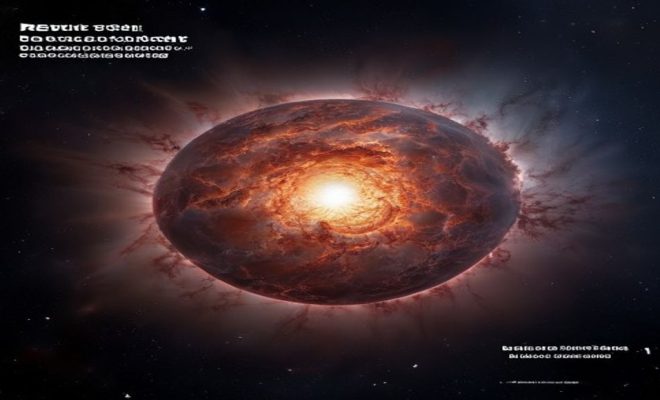
The cosmos never ceases to amaze us, and the recent discovery surrounding the rare supernova SN 2021yfj is a testament to that wonder. For astronomers, this phenomenon isn’t just another cosmic explosion; it’s a groundbreaking opportunity to peer into the inner workings of a star that is in its final throes of existence. SN 2021yfj has peeled back the outer layers of a dying star, revealing its core and providing unprecedented insights into stellar evolution, a subject that has fascinated scientists and space enthusiasts alike.
The Significant Discovery of SN 2021yfj
In June 2026, astronomers made headlines with their remarkable observations of SN 2021yfj. This rare supernova is categorized as an extremely stripped supernova, a classification that indicates it has lost much of its outer layers before the explosive end. What makes this discovery even more extraordinary is that it provided scientists with a rare glimpse into the star’s interior—something typically shrouded in mystery. By analyzing the data, researchers could observe materials from some of the deepest layers of the star that are usually obscured during such cosmic events.
Understanding Supernovae
Before diving deeper into this discovery, it’s crucial to understand what a supernova is. A supernova occurs at the end of a massive star’s life cycle when the star exhausts its nuclear fuel. This leads to a catastrophic explosion, ejecting the star’s outer layers into space, while the core collapses under its own gravity. Supernovae are classified mainly into two types: Type I and Type II, with Type II often being associated with stars that have a sufficiently massive core. SN 2021yfj is a Type II supernova, which has provided unique insights due to its extreme stripping of outer layers.
The Stripping Process
What does it mean for a supernova to be “extremely stripped”? In the case of SN 2021yfj, this refers to the pre-explosion process where the star loses most of its outer material, revealing its inner structure. This stripping can occur due to various reasons, including interactions with a companion star in binary systems or intense stellar winds. The implications of these processes are significant, as they help astronomers better understand how massive stars evolve and ultimately explode.
Peeling Back the Layers
The actual observation of SN 2021yfj has been described as peeling an onion. Each layer that gets stripped away by the supernova reveals more about the star’s intricate structure. Researchers involved in studying SN 2021yfj reported that they could observe not just the outer hydrogen layers, which are typically blown away, but also the deeper layers containing heavier elements like helium and carbon. This is crucial because it allows scientists to analyze the abundance and distribution of these materials, which can shed light on the processes leading up to the explosion.
Implications for Stellar Evolution
The insights gained from SN 2021yfj challenge long-held assumptions about stellar death and evolution. For years, astronomers have relied on models that suggest most of the outer layers of a star are lost during a supernova, leaving little room for observing the core and its immediate surroundings. The discovery that SN 2021yfj allows direct observation of the star’s deeper layers fundamentally alters our understanding of how these massive celestial bodies end their lives.
New Perspectives on Supernova Mechanisms
Researchers highlighted that the rare supernova SN 2021yfj offers a unique opportunity to refine theoretical models of supernova explosions. The data collected may help resolve discrepancies between observed supernovae and simulations that predict how they behave. For example, understanding the composition of the ejected materials can improve models of how elements are synthesized and spread throughout the universe. This is particularly relevant for astrophysics, as many of the elements necessary for life on Earth were formed in the cores of massive stars and subsequently distributed by supernova explosions. (See: Understanding supernovae and their types.)
Collaboration and Technology Behind the Discovery
The discovery of SN 2021yfj would not have been possible without the collaboration of astronomers and the use of advanced observational technology. The event was detected by a network of telescopes that monitor the sky for transient cosmic events, including those associated with supernovae. Using both ground-based observatories and space telescopes, scientists were able to capture multi-wavelength data that illuminated different aspects of the explosion. This coordinated effort exemplifies the modern approach to astronomical research, where collaboration across disciplines and geography enhances our understanding of the universe.
Future Research Directions
As the excitement surrounding SN 2021yfj continues to grow, astronomers are already thinking about the next steps. Ongoing research will attempt to analyze the data collected further, looking for patterns and correlations that could inform our understanding of other supernovae. Additionally, they aim to investigate whether more examples of extremely stripped supernovae can be found, as this could lead to a tidal wave of new discoveries. Each supernova could potentially unveil new secrets, contributing to our overall knowledge about stellar life cycles.
What This Means for Space Enthusiasts
For space enthusiasts, the discovery surrounding the rare supernova SN 2021yfj represents one of those moments that ignites the imagination. It reminds us that the universe is full of surprises, and there’s still so much left to discover. Whether you’re an avid amateur astronomer or just someone captivated by the wonders of the cosmos, the peeling back of layers in SN 2021yfj is a compelling narrative that highlights our capacity to learn from the universe.
The Role of Supernovae in Cosmic Chemistry
One of the most critical aspects of supernovae like SN 2021yfj is their role in cosmic chemistry. When a supernova explodes, it doesn’t just mark the end of a star; it also serves as a factory for creating elements. The intense heat and pressure conditions of such explosions lead to nucleosynthesis, the process that forms new atomic nuclei. Elements such as carbon, oxygen, and iron are synthesized in the hearts of these massive stars and released into the interstellar medium once they explode. This process contributes to the cosmic abundance of elements necessary for forming planets and even life itself.
Statistics on Supernovae Occurrences
Supernovae are relatively rare events in the universe. On average, the Milky Way galaxy experiences approximately one to three supernovae per century. However, the number of detectable supernovae has increased in recent years due to advancements in technology and the establishment of dedicated sky survey projects that monitor the heavens for transient events. In fact, the last supernova observed in our galaxy was SN 1604, also known as Kepler’s Supernova. On the other hand, in distant galaxies, supernovae can be observed at a much higher rate, providing researchers with a wealth of data for study.
Expert Perspectives on SN 2021yfj
A number of leading astrophysicists have weighed in on the significance of SN 2021yfj. Dr. Emily Carver, a supernova researcher at the Space Telescope Science Institute, stated, “The unique characteristics of SN 2021yfj provide us with a pivotal case study. It’s not just the layers that we can see; it’s about understanding the evolution of stars like this that can lead to new revelations about the universe’s history.” Similarly, Dr. Jonathan Kim, a theoretical astrophysicist, emphasized the importance of studying stripped supernovae: “These events can fundamentally change our understanding of stellar life cycles and the fate of the universe’s most massive stars.”
Comparing SN 2021yfj to Other Supernovae
When you look at SN 2021yfj in the context of other well-known supernovae, its uniqueness becomes apparent. For instance, SN 1987A, one of the most studied supernovae, provided significant insights into the processes surrounding such cosmic explosions, but it was also a more typical Type II supernova. In contrast, SN 2021yfj’s extreme stripping means it offers a different perspective on the final stages of a star’s life. By comparing these instances, researchers can build a more nuanced understanding of the different pathways stars take to their explosive ends.
Frequently Asked Questions about Rare Supernovae
What is a rare supernova?
A rare supernova is typically classified as one that exhibits unusual characteristics or occurs under conditions not commonly observed in typical supernovae. SN 2021yfj, for example, is deemed rare due to its extreme stripping and the wealth of data it provides about the star’s core. (See: NASA's insights on supernovae phenomena.)
How do astronomers detect supernovae?
Astronomers use a combination of ground-based telescopes and space-based observatories to detect supernovae. Surveys are conducted to monitor the night sky, capturing transient events across multiple wavelengths, which helps identify new supernovae as they occur.
Are all supernovae the same?
No, supernovae can vary significantly based on their progenitor stars, the processes leading to their explosions, and their subsequent observations. They are mainly categorized into Type I and Type II, with several subclasses within each type.
What happens to the material expelled by a supernova?
The material ejected during a supernova explosion enriches the surrounding interstellar medium with heavy elements. This material can later be incorporated into new stars and planetary systems, influencing the chemical makeup of future celestial bodies.
Can we predict when a supernova will occur?
While astronomers can identify stars that are likely to explode as supernovae given their age and characteristics, predicting the exact time of an explosion remains highly uncertain. Supernovae occur at the end of a star’s life cycle, which can span millions of years.
The Cultural Impact of Supernovae
Supernovae have not only contributed to our scientific understanding of the universe but have also made their mark on culture and art throughout history. From ancient civilizations that viewed the sudden brightness of a supernova as an omen or a message from the gods to modern media that frequently depicts these cosmic events, the allure of supernovae is undeniable. The spectacular visuals associated with them often capture the imagination of artists and writers, leading to a rich tapestry of stories and interpretations. For instance, the famous painting “Starry Night” by Vincent van Gogh evokes the wonder of the cosmos, suggesting a connection to the explosive beauty of supernovae.
Supernovae and Dark Energy
Interestingly, the study of supernovae has also played a crucial role in understanding dark energy, a mysterious force thought to be driving the accelerated expansion of the universe. Observations of Type Ia supernovae, which occur in binary systems, have provided key evidence for this phenomenon. By measuring the brightness and redshift of these supernovae, astronomers were able to infer information about the rate of expansion of the universe. This groundbreaking work earned the Nobel Prize in Physics in 2011 and opened up new avenues for research into the fate of the cosmos. (See: Scientific studies on supernova characteristics.)
Current and Future Observations
With the advent of next-generation telescopes like the James Webb Space Telescope, astronomers are poised to delve even deeper into the mysteries surrounding supernovae. JWST’s advanced capabilities will allow for the observation of supernovae at unprecedented distances and resolutions. By studying the light curves and spectra of these explosions, scientists hope to gather critical information not just about SN 2021yfj but also about other rare supernova events occurring in distant galaxies. This could lead to a new era of understanding regarding the lifecycle of stars and the evolution of galaxies.
Key Takeaways about SN 2021yfj
- SN 2021yfj is classified as an extremely stripped supernova, offering new insights into the processes leading to stellar explosions.
- This rare supernova allows astronomers to observe previously hidden layers of the star’s structure, altering our understanding of stellar death.
- The findings from SN 2021yfj could refine existing models of supernovae and enhance knowledge about nucleosynthesis in massive stars.
- Technological advancements and collaboration among global observatories were pivotal in discovering and studying this rare event.
- The ongoing research will set the stage for future discoveries, potentially unveiling new examples of stripped supernovae and enhancing our understanding of cosmic evolution.
The Future of Supernova Research
The future of supernova research looks promising, with a wealth of opportunities to discover and understand the nuances of these cosmic events. As observational technology improves and new methodologies are developed, astronomers can expect to uncover even more about the lifecycle of stars. The potential for discovering new types of supernovae or refining the characteristics of known types remains a key area of focus.
Collaborative efforts will continue to play a vital role in the future of this field, as scientists from diverse backgrounds combine their expertise to tackle the remaining questions about supernovae. Increased funding towards astronomical research and the establishment of international partnerships can lead to groundbreaking discoveries that will shape our understanding of the universe.
The Role of Citizen Science in Supernova Discovery
Citizen science has emerged as an important tool in the discovery and monitoring of supernovae. Amateur astronomers, equipped with their telescopes and passion, contribute significantly to the data collection process. By participating in projects that involve monitoring specific regions of the sky or analyzing light curves of potential supernova candidates, enthusiasts help professional astronomers identify key events. This collaborative approach not only accelerates the pace of discovery but also brings a community of astronomy lovers into the fold, enriching the field with new perspectives and insights.
Conclusion: The Unfolding Story of Stellar Life and Death
As we continue to study the cosmos, every discovery like SN 2021yfj enriches our understanding of the universe and our place within it. This rare supernova not only challenges existing models of stellar evolution but also opens new avenues for exploration and curiosity. It’s a reminder that even in death, stars can reveal their deepest secrets, embracing both the beauty and the complexity of the cosmos. With every supernova, we’re not merely observing an explosion; we’re witnessing the intricate story of life and death unfold in the universe.
“`
Trending Now
Frequently Asked Questions
What is supernova SN 2021yfj?
Supernova SN 2021yfj is a rare Type II supernova that occurred in June 2026. It is classified as an extremely stripped supernova, meaning it lost much of its outer layers before the explosion, allowing astronomers to gain unprecedented insights into the star's core and the processes of stellar evolution.
How do supernovae occur?
Supernovae occur at the end of a massive star's life cycle when it exhausts its nuclear fuel. This leads to a catastrophic explosion that ejects the outer layers of the star into space while the core collapses under its own gravity, resulting in a spectacular cosmic event.
What insights did SN 2021yfj provide to astronomers?
SN 2021yfj provided astronomers with a rare glimpse into the inner workings of a dying star. By analyzing the data from this supernova, researchers observed materials from the star's deepest layers, offering valuable information about stellar evolution and the processes leading up to a supernova.
What does 'extremely stripped' mean in relation to supernovae?
The term 'extremely stripped' refers to a supernova that has lost a significant amount of its outer material before the explosion. In the case of SN 2021yfj, this stripping process allowed scientists to study the star's core and deeper layers, which are typically hidden during such cosmic events.
What are the main types of supernovae?
Supernovae are mainly classified into two types: Type I and Type II. Type I supernovae occur in binary systems, while Type II supernovae are typically associated with massive stars that have sufficient core mass. SN 2021yfj falls under the Type II category due to its characteristics.
Have you experienced this yourself? We’d love to hear your story in the comments.