The Tech Edvocate

Top Menu

  • Advertisement
  • Apps
  • Home Page
  • Home Page Five (No Sidebar)
  • Home Page Four
  • Home Page Three
  • Home Page Two
  • Home Tech2
  • Icons [No Sidebar]
  • Left Sidbear Page
  • Lynch Educational Consulting
  • My Account
  • My Speaking Page
  • Newsletter Sign Up Confirmation
  • Newsletter Unsubscription
  • Our Brands
  • Page Example
  • Privacy Policy
  • Protected Content
  • Register
  • Request a Product Review
  • Shop
  • Shortcodes Examples
  • Signup
  • Start Here
    • Governance
    • Careers
    • Contact Us
  • Terms and Conditions
  • The Edvocate
  • The Tech Edvocate Product Guide
  • Topics
  • Write For Us
  • Advertise

Main Menu

  • Start Here
    • Our Brands
    • Governance
      • Lynch Educational Consulting, LLC.
      • Dr. Lynch’s Personal Website
      • Careers
    • Write For Us
    • The Tech Edvocate Product Guide
    • Contact Us
    • Books
    • Edupedia
    • Post a Job
    • The Edvocate Podcast
    • Terms and Conditions
    • Privacy Policy
  • Topics
    • Assistive Technology
    • Child Development Tech
    • Early Childhood & K-12 EdTech
    • EdTech Futures
    • EdTech News
    • EdTech Policy & Reform
    • EdTech Startups & Businesses
    • Higher Education EdTech
    • Online Learning & eLearning
    • Parent & Family Tech
    • Personalized Learning
    • Product Reviews
  • Advertise
  • Tech Edvocate Awards
  • The Edvocate
  • Pedagogue
  • School Ratings

logo

The Tech Edvocate

  • Start Here
    • Our Brands
    • Governance
      • Lynch Educational Consulting, LLC.
      • Dr. Lynch’s Personal Website
        • My Speaking Page
      • Careers
    • Write For Us
    • The Tech Edvocate Product Guide
    • Contact Us
    • Books
    • Edupedia
    • Post a Job
    • The Edvocate Podcast
    • Terms and Conditions
    • Privacy Policy
  • Topics
    • Assistive Technology
    • Child Development Tech
    • Early Childhood & K-12 EdTech
    • EdTech Futures
    • EdTech News
    • EdTech Policy & Reform
    • EdTech Startups & Businesses
    • Higher Education EdTech
    • Online Learning & eLearning
    • Parent & Family Tech
    • Personalized Learning
    • Product Reviews
  • Advertise
  • Tech Edvocate Awards
  • The Edvocate
  • Pedagogue
  • School Ratings
  • Consumer Reports Reveal Truth – Is Flexigenics Reviews Legit or Scam? (Shocking Findings)

  • Quietum Plus 2026 Review Complaints and Shocking User Findings

  • This Founder’s Rs 75 LPA Sacrifice Crumbled in 30 Days — Here’s Why

  • Urgent: Claude AI Bioweapons — The Unsettling Truth Anthropic Just Revealed

  • Shocking: Three Major Xbox Games Shutting Down Forever in 2026

  • One Man’s Dire Warning: Is AI Already Too Dangerous To Control?

  • The Urgent Parental Consent Debate Over Student Mental Health Screenings

  • LAUSD restricts all students from using AI tools | K-12 Dive

  • Catastrophic Data Breach: 153 Million Driver’s Licenses Exposed on Dark Web

  • Autonomous AI Hackers Weaponize PaperCut Flaws: The Terrifying New Era of Cybercrime

Digital & Mobile Technology
Home›Digital & Mobile Technology›Quick ways to free up drive space in Windows 11

Quick ways to free up drive space in Windows 11
By Matthew Lynch
April 10, 2023
0
Spread the love

As the amount of data we store on our computers continues to grow, running out of drive space becomes a common problem. When this happens, performance can slow down, and we may encounter issues with saving or accessing files. Fortunately, there are several quick ways to free up drive space in Windows 11.

1. Uninstall Unused Programs

One of the easiest ways to free up drive space is to uninstall programs you no longer use. To do this, go to Settings > Apps > Apps & Features, scroll through the list to find any programs you no longer need, and select Uninstall.

2. Delete Temporary Files

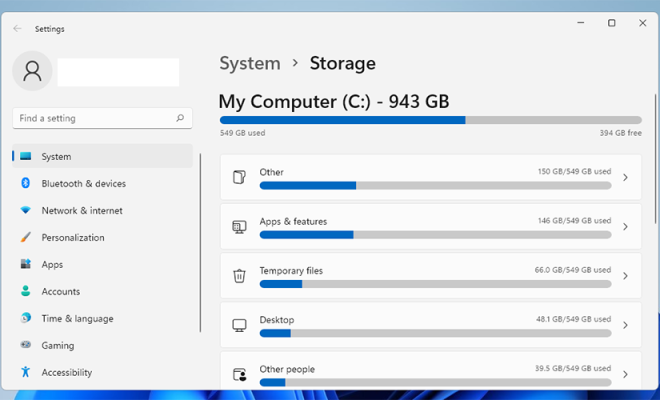
Temporary files are created by Windows and other programs as they run. Over time, these files can accumulate and take up a lot of space. To clear them out, go to Settings > System > Storage > Temporary Files and select the types of files you want to delete. This can include temporary files, downloads, and recycle bin items.

3. Use Storage Sense

Storage Sense is a feature in Windows 11 that automatically frees up space on your hard drive by deleting junk files and other unnecessary data. To turn it on, go to Settings > System > Storage > Storage Sense and toggle it on. You can also customize how it runs by selecting the Configure Storage Sense or run it now option.

4. Move Files to External Storage

If you have files that you don’t need to access frequently, consider moving them to an external drive or portable storage device. You can do this by copying them to the external drive or using the built-in Windows backup tool to create a backup of your files.

5. Clear Out Old Downloads

Downloads can take up a significant amount of space, especially if you forget to delete them after you’re finished with them. To clear out old downloads, go to your Downloads folder and delete any files you no longer need.

6. Disable Hibernation

If your computer has enabled hibernation, it could be using up valuable space on your hard drive. To disable hibernation, search for cmd in the Start menu, right-click on Command Prompt, and select Run as Administrator. In the command prompt, type powercfg.exe /hibernate off and hit Enter.

7. Clean Up Your Desktop

Having lots of files and folders on your desktop can slow down your computer and use up drive space. Consider moving them to a more organized location or deleting files you no longer need.

In conclusion, freeing up drive space can help keep your computer running smoothly and prevent performance issues. By following these quick tips, you can quickly and easily free up space on your Windows 11 computer.


Previous Article

Best Third-Party YouTube Apps for Mobile You ...

Next Article

Sites and Extensions to Make Google Maps ...

Matthew Lynch

Related articles More from author

  • Digital & Mobile Technology

    How to See Your Stats and Top Artists on Apple Music (2023)

    June 2, 2023
    By Matthew Lynch
  • Digital & Mobile Technology

    How to Embed Google Calendar on a Website or Blog

    May 28, 2023
    By Matthew Lynch
  • Digital & Mobile Technology

    How to Fix Cloudflare’s Error 1020: Access Denied

    August 5, 2023
    By Matthew Lynch
  • Digital & Mobile Technology

    HDDScan v4.1 Free Hard Drive Testing Tool Review

    June 11, 2023
    By Matthew Lynch
  • Digital & Mobile Technology

    Digital Media And Content Creation

    March 23, 2023
    By Matthew Lynch
  • Digital & Mobile Technology

    How to Cite a YouTube Video in APA and MLA Style

    June 12, 2023
    By Matthew Lynch

Search

Login & Registration

  • Log in
  • Entries feed
  • Comments feed
  • WordPress.org

Newsletter

Signup for The Tech Edvocate Newsletter and have the latest in EdTech news and opinion delivered to your email address!

About Us

Since technology is not going anywhere and does more good than harm, adapting is the best course of action. That is where The Tech Edvocate comes in. We plan to cover the PreK-12 and Higher Education EdTech sectors and provide our readers with the latest news and opinion on the subject. From time to time, I will invite other voices to weigh in on important issues in EdTech. We hope to provide a well-rounded, multi-faceted look at the past, present, the future of EdTech in the US and internationally.

We started this journey back in June 2016, and we plan to continue it for many more years to come. I hope that you will join us in this discussion of the past, present and future of EdTech and lend your own insight to the issues that are discussed.

Newsletter

Signup for The Tech Edvocate Newsletter and have the latest in EdTech news and opinion delivered to your email address!

Contact Us

The Tech Edvocate
910 Goddin Street
Richmond, VA 23231
(601) 630-5238
[email protected]

Copyright © 2026 Matthew Lynch. All rights reserved.