The Tech Edvocate

Top Menu

  • Advertisement
  • Apps
  • Home Page
  • Home Page Five (No Sidebar)
  • Home Page Four
  • Home Page Three
  • Home Page Two
  • Home Tech2
  • Icons [No Sidebar]
  • Left Sidbear Page
  • Lynch Educational Consulting
  • My Account
  • My Speaking Page
  • Newsletter Sign Up Confirmation
  • Newsletter Unsubscription
  • Our Brands
  • Page Example
  • Privacy Policy
  • Protected Content
  • Register
  • Request a Product Review
  • Shop
  • Shortcodes Examples
  • Signup
  • Start Here
    • Governance
    • Careers
    • Contact Us
  • Terms and Conditions
  • The Edvocate
  • The Tech Edvocate Product Guide
  • Topics
  • Write For Us
  • Advertise

Main Menu

  • Start Here
    • Our Brands
    • Governance
      • Lynch Educational Consulting, LLC.
      • Dr. Lynch’s Personal Website
      • Careers
    • Write For Us
    • The Tech Edvocate Product Guide
    • Contact Us
    • Books
    • Edupedia
    • Post a Job
    • The Edvocate Podcast
    • Terms and Conditions
    • Privacy Policy
  • Topics
    • Assistive Technology
    • Child Development Tech
    • Early Childhood & K-12 EdTech
    • EdTech Futures
    • EdTech News
    • EdTech Policy & Reform
    • EdTech Startups & Businesses
    • Higher Education EdTech
    • Online Learning & eLearning
    • Parent & Family Tech
    • Personalized Learning
    • Product Reviews
  • Advertise
  • Tech Edvocate Awards
  • The Edvocate
  • Pedagogue
  • School Ratings

logo

The Tech Edvocate

  • Start Here
    • Our Brands
    • Governance
      • Lynch Educational Consulting, LLC.
      • Dr. Lynch’s Personal Website
        • My Speaking Page
      • Careers
    • Write For Us
    • The Tech Edvocate Product Guide
    • Contact Us
    • Books
    • Edupedia
    • Post a Job
    • The Edvocate Podcast
    • Terms and Conditions
    • Privacy Policy
  • Topics
    • Assistive Technology
    • Child Development Tech
    • Early Childhood & K-12 EdTech
    • EdTech Futures
    • EdTech News
    • EdTech Policy & Reform
    • EdTech Startups & Businesses
    • Higher Education EdTech
    • Online Learning & eLearning
    • Parent & Family Tech
    • Personalized Learning
    • Product Reviews
  • Advertise
  • Tech Edvocate Awards
  • The Edvocate
  • Pedagogue
  • School Ratings
  • A Visitors Guide to Pittsburgh (PA), United States

  • A Visitors Guide to Colorado Springs (CO), United States

  • 5 Pairs of Shoes That Will Instantly Step Your Shoe Game Up

  • Radiant Youthful Skin is the Perfect Christmas Gift

  • Give Your Loved One the Gift of Youthful, Radiant Skin this Christmas

  • Give Your Loved One the Gift of a Restful Night Sleep this Christmas

  • Nex Playground’s Holiday Sales Bring Active Play Indoors This Seaso

  • A Visitors Guide to Louisville (KY), United States

  • A Visitor’s Guide to Nashville-Davidson (TN), United States

  • A Visitors Guide to Portland (OR), United States

Digital & Mobile Technology
Home›Digital & Mobile Technology›PCIe 3.0 vs. PCIe 4.0 vs. PCIe 5.0: What’s the Difference?

PCIe 3.0 vs. PCIe 4.0 vs. PCIe 5.0: What’s the Difference?
By Matthew Lynch
June 23, 2023
0
Spread the love

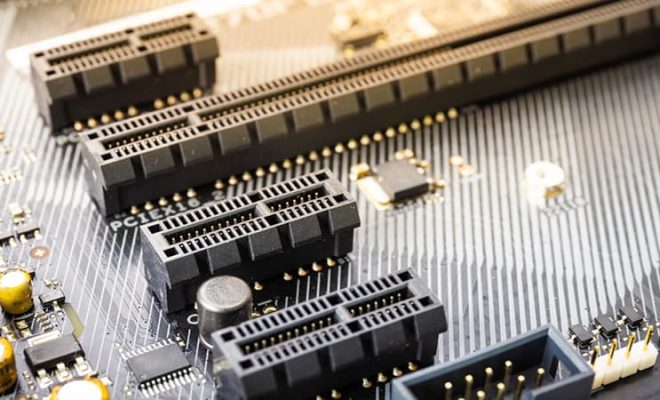
PCIe (Peripheral Component Interconnect Express) is a communication interface standard that connects various components and peripherals of a computer. It is the most commonly used interface for connecting graphics cards, network cards, SSDs, and other high-speed devices to the motherboard.

Over time, the PCIe standard has evolved and improved, with the latest iteration, PCIe 5.0, being the fastest and most powerful version currently available. In this article, we will explore the differences between PCIe 3.0, PCIe 4.0, and PCIe 5.0 and how they affect your computer’s performance.

PCIe 3.0

PCIe 3.0 was introduced in 2010 and has since been widely adopted in most modern computers. It offers a maximum speed of 8 GT/s (gigatransfers per second), providing a data transfer rate of up to 985MB/s (megabytes per second) per lane. Each PCIe 3.0 lane has a transfer speed of 8 Gbps (gigabits per second).

One of the main advantages of PCIe 3.0 is its compatibility with older motherboards and components. It allows PCIe 3.0 devices to be used on PCIe 4.0 or PCIe 5.0 motherboards, although they will operate at slower speeds.

PCIe 4.0

PCIe 4.0 was released in 2017 and is gradually becoming available on newer motherboards. It offers double the bandwidth of PCIe 3.0, with a maximum speed of 16 GT/s. This means that each PCIe 4.0 lane has a transfer speed of 16 Gbps, providing a data transfer rate of up to 1.97GB/s per lane.

PCIe 4.0 also supports more lanes than PCIe 3.0, allowing for more devices to be connected at once. It also supports backward compatibility, allowing PCIe 3.0 devices to be used on PCIe 4.0 motherboards.

PCIe 5.0

PCIe 5.0 is the latest iteration of the PCIe standard, released in 2019, and offers twice the bandwidth of PCIe 4.0, with a maximum speed of 32 GT/s. Each PCIe 5.0 lane has a transfer speed of 32 Gbps, providing a data transfer rate of up to 3.94GB/s per lane.

PCIe 5.0 also supports more lanes than PCIe 4.0, allowing even more devices to be connected simultaneously. It features improved power management capabilities, making it more energy-efficient than its predecessors.

PCIe 5.0 has only recently been released, so it may take some time for it to become widely adopted in most computers. However, it is expected to revolutionize the field of data transfer, allowing for faster and more efficient connections between devices.

Conclusion

Overall, the differences between PCIe 3.0, PCIe 4.0, and PCIe 5.0 lie in their maximum speed, transfer rate per lane, and number of lanes supported. While PCIe 3.0 is still widely used, PCIe 4.0 and PCIe 5.0 offer significantly faster data transfer rates, allowing for more efficient communication between components and peripherals.

Choosing the right PCIe standard largely depends on your specific requirements and budget. PCIe 3.0 devices are generally cheaper, while PCIe 4.0 and PCIe 5.0 devices offer faster performance and more advanced features. As technology advances and data transfer rates continue to increase, it is likely that PCIe standards will continue to evolve and improve in the years to come.


Previous Article

What Is Google Task Manager and How ...

Next Article

How to See Your Netflix Viewing Activity

Matthew Lynch

Related articles More from author

  • Digital & Mobile Technology

    How to Hide Your TV Wires Without Cutting Into Your Walls

    April 26, 2023
    By Matthew Lynch
  • Digital & Mobile Technology

    How to Use a VPN for Netflix

    May 30, 2023
    By Matthew Lynch
  • Digital & Mobile Technology

    How to Use Boolean Values (Logical Values) in Excel

    June 4, 2023
    By Matthew Lynch
  • Digital & Mobile Technology

    The iPad Air 5: Price, Release Date, Specs, and News

    June 8, 2023
    By Matthew Lynch
  • Digital & Mobile Technology

    What Is a Transistor and What Is It Used For?

    June 22, 2023
    By Matthew Lynch
  • Digital & Mobile Technology

    Personalized Start Pages for Your Web Browser

    June 8, 2023
    By Matthew Lynch

Search

Login & Registration

  • Register
  • Log in
  • Entries feed
  • Comments feed
  • WordPress.org

Newsletter

Signup for The Tech Edvocate Newsletter and have the latest in EdTech news and opinion delivered to your email address!

About Us

Since technology is not going anywhere and does more good than harm, adapting is the best course of action. That is where The Tech Edvocate comes in. We plan to cover the PreK-12 and Higher Education EdTech sectors and provide our readers with the latest news and opinion on the subject. From time to time, I will invite other voices to weigh in on important issues in EdTech. We hope to provide a well-rounded, multi-faceted look at the past, present, the future of EdTech in the US and internationally.

We started this journey back in June 2016, and we plan to continue it for many more years to come. I hope that you will join us in this discussion of the past, present and future of EdTech and lend your own insight to the issues that are discussed.

Newsletter

Signup for The Tech Edvocate Newsletter and have the latest in EdTech news and opinion delivered to your email address!

Contact Us

The Tech Edvocate
910 Goddin Street
Richmond, VA 23231
(601) 630-5238
[email protected]

Copyright © 2025 Matthew Lynch. All rights reserved.