NASA’s Moon Base: The Groundbreaking Plan for Humanity’s Next Giant Leap
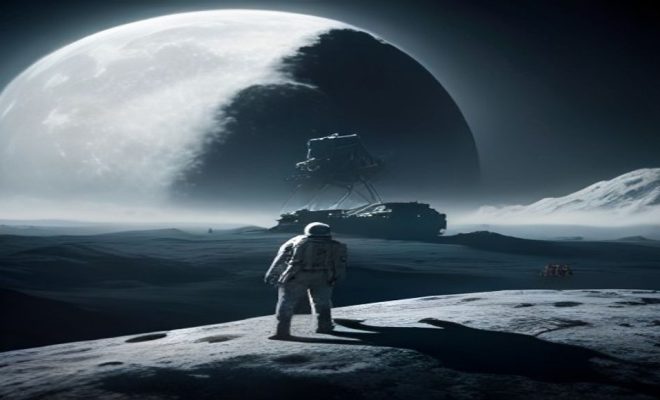
For decades, the idea of a permanent human presence on the Moon felt like a distant dream, a staple of science fiction rather than a tangible goal. Yet, as we approach the mid-2020s, that dream is rapidly solidifying into an ambitious, meticulously planned reality. NASA, with a renewed sense of purpose and an invigorated network of commercial partners, is actively laying the groundwork for a sustained human outpost near the Moon’s South Pole. This isn’t just about planting a flag; it’s about building a home, a scientific laboratory, and a stepping stone to deeper space exploration.
The agency’s strategy is remarkably clear: a phased approach that leverages cutting-edge robotics and private industry innovation to mitigate risk and accelerate progress. We’re talking about a flurry of missions—more than 20 robotic lunar landings slated between now and 2029—all designed to meticulously test the technologies and techniques essential for human habitation. These aren’t mere flybys or quick touch-and-go operations; each mission is a crucial piece of a complex puzzle, bringing the vision of a permanent NASA moon base ever closer to fruition.
This initiative isn’t just a technical marvel; it’s a potent symbol of human ambition and ingenuity. It signals a new era in space exploration, one driven by collaboration, commercialization, and a long-term vision that extends far beyond our home planet. The implications are profound, touching upon everything from geopolitics and resource ownership to the very definition of human expansion. What was once the stuff of speculation is now becoming a very real, very exciting prospect, and the world is watching closely as humanity prepares for its next giant leap.
The Strategic Importance of the Lunar South Pole
Why the South Pole, you might ask? It’s not an arbitrary choice; it’s a strategic decision rooted in scientific discovery and practical necessity. For years, orbital missions have provided compelling evidence of water ice deposits in permanently shadowed craters at the Moon’s poles. This isn’t just interesting; it’s a potential game-changer. Water isn’t just for drinking; it can be broken down into hydrogen and oxygen, the fundamental components of rocket fuel and breathable air. Imagine the liberation of not having to haul all your essential consumables from Earth!
Furthermore, the South Pole offers areas of near-constant sunlight on the rims of some craters. This is crucial for power generation, allowing solar panels to operate with maximum efficiency for extended periods, avoiding the brutal two-week lunar night experienced elsewhere on the Moon. These ‘peaks of eternal light’ are incredibly valuable real estate, providing a stable energy source that is absolutely vital for any long-term human habitat. The combination of accessible water ice and consistent solar power makes the South Pole an unparalleled location for the first permanent NASA moon base.
The topography itself presents unique challenges and opportunities. The highly varied terrain, with its deep craters and towering peaks, offers unparalleled scientific research potential, allowing geologists and astrobiologists to study ancient lunar history and potentially even search for signs of past microbial life in the sheltered ice. The strategic selection of this region underscores the multi-faceted approach NASA is taking, blending scientific inquiry with the pragmatic needs of human survival and expansion.
A Fleet of Robotic Pathfinders Paving the Way
The sheer number of planned robotic missions — over two dozen by 2029 — highlights the methodical, risk-averse approach NASA is employing. Think of these as trailblazers, each carrying specific instruments and conducting vital tests before humans set foot on the lunar surface for an extended stay. These aren’t just one-off missions; they’re an interconnected series of experiments designed to build a robust understanding of the lunar environment and the technologies needed to thrive there.
These missions will tackle everything from precision landing technologies, ensuring future human-crewed landers can touch down exactly where intended, to advanced communication relays that will keep the NASA moon base connected to Earth. We’ll see new generations of rovers traversing the rugged terrain, mapping potential resource deposits and identifying safe routes for future human exploration. Power systems, designed to withstand the extreme lunar temperatures and radiation, will be rigorously tested, laying the foundation for sustainable energy infrastructure.
Partnerships with commercial entities like Blue Origin and Firefly Aerospace are absolutely central to this strategy. These companies bring innovative approaches, speed, and cost-effectiveness to the table, allowing NASA to leverage private sector capabilities while focusing its own resources on the most complex, high-risk elements. This collaborative model represents a significant shift from previous space exploration paradigms, fostering a dynamic ecosystem that benefits both public and private interests.
The Critical Role of In-Situ Resource Utilization (ISRU)
If you’re going to build a permanent outpost on another celestial body, you simply cannot rely on resupply missions for everything. The cost and logistical complexity would be astronomical. This is where In-Situ Resource Utilization, or ISRU, becomes not just important, but absolutely fundamental to the success of the NASA moon base. ISRU is all about living off the land, using local resources to create what you need. (Artemis III preparations)
The prime target for ISRU on the Moon is undoubtedly water ice. As mentioned, it’s not just for drinking; it’s a source of oxygen for breathing and hydrogen for rocket fuel. Imagine being able to refuel rockets on the Moon itself, turning the lunar surface into a cosmic gas station for missions deeper into the solar system. This dramatically reduces the mass that needs to be launched from Earth, making future expeditions to Mars and beyond far more feasible and affordable. (See: NASA's Moon Exploration Plans.)
Companies like Lunar Station Corp. are already working closely with NASA, utilizing agency data to identify and map these precious water ice deposits. Their work isn’t just theoretical; it involves detailed planning for extraction methods, processing techniques, and storage solutions. We’re talking about sophisticated robotic drills, heating systems to sublimate the ice, and purification plants to ensure the resulting water is suitable for human use or electrolysis. The development of robust ISRU capabilities will transform the Moon from a destination into a true staging ground for humanity’s expansion, making the NASA moon base a self-sufficient hub.
The New Space Race and Geopolitical Implications
It’s impossible to discuss the NASA moon base without acknowledging the broader context of what many are calling the ‘new space race.’ This isn’t just about scientific discovery or even human expansion; it’s about national prestige, technological leadership, and ultimately, resource ownership. Several nations, notably China, have articulated their own ambitious lunar exploration plans, fueling a renewed sense of competition. See also impact of reduced cargo costs.
The geopolitical implications are significant. Who owns the resources on the Moon? What are the rules of engagement for extracting them? The Outer Space Treaty of 1967, while a landmark agreement, predates the current era of lunar resource potential and commercial spaceflight. It prohibits national appropriation of celestial bodies but is less clear on the ownership of resources extracted by commercial entities. This ambiguity creates a complex legal and political landscape that will undoubtedly be shaped by the actions taken in the coming years.
Establishing a permanent NASA moon base is not just a scientific endeavor; it’s a clear statement of intent. It signals a commitment to leading human expansion beyond Earth, ensuring that American interests and values play a central role in shaping the future of lunar development. The ‘new space race’ isn’t just about who gets there first; it’s about who establishes a sustainable, long-term presence and, by extension, helps define the norms and governance of the lunar frontier. This is a high-stakes game with global implications.
Monetization Opportunities: Lunar Real Estate and Mining
The prospect of a permanent NASA moon base isn’t just exciting for scientists and engineers; it’s generating significant buzz in the business world. We’re looking at entirely new industries emerging around lunar development, creating unprecedented monetization opportunities. Think about ‘lunar real estate,’ for instance. While outright ownership of lunar territory is prohibited by international treaties, the selection and designation of prime lander sites, research outposts, and future habitat locations will undoubtedly hold immense commercial value.
Beyond lander sites, consider the burgeoning field of ‘space mining.’ If water ice and other valuable resources can be extracted and processed on the Moon, the companies that develop these capabilities stand to make fortunes. Investors are already looking at opportunities in space mining companies, infrastructure development firms specializing in lunar construction, and even ventures focused on manufacturing using lunar regolith (moon dust) as raw material. This isn’t science fiction anymore; it’s a tangible investment thesis.
For those interested in the financial aspects, transactional searches like ‘invest in lunar mining’ or ‘space exploration stocks’ are becoming increasingly common. The potential for exponential growth in these nascent markets is attracting venture capitalists and institutional investors alike, eager to get in on the ground floor of what could be the next great economic frontier. The long-term vision of a thriving lunar economy, anchored by the NASA moon base, is a powerful draw.
The Evolving Landscape of Space Law and Governance
As lunar activities ramp up, the existing legal framework of outer space is facing unprecedented challenges. The 1967 Outer Space Treaty, while foundational, simply wasn’t designed for a world where commercial entities are planning to mine asteroids or establish private lunar habitats. This has created a fertile ground for the development of new international space law and resource agreements.
Who has the right to extract resources? What are the environmental protections for celestial bodies? How are disputes resolved? These are not hypothetical questions; they are pressing issues that legal experts and policymakers are grappling with right now. The Artemis Accords, a U.S.-led international agreement outlining principles for responsible space exploration, represent one attempt to address these gaps, focusing on transparency, peaceful purposes, and the registration of space objects.
The demand for ‘space law firms’ and legal services specializing in international space agreements is growing exponentially. Companies and nations alike will need expert guidance to navigate this complex legal terrain, ensuring their activities comply with international norms and avoid potential conflicts. The establishment of the NASA moon base will serve as a powerful catalyst for the evolution of these legal frameworks, pushing humanity to define the rules of engagement for this new frontier.
Beyond the Moon: A Stepping Stone to Mars and Deeper Space
While the immediate focus is on establishing a permanent NASA moon base, it’s crucial to remember that the Moon is not the ultimate destination; it’s a vital proving ground and a strategic stepping stone. The technologies and operational experience gained on the Moon will be directly applicable to future human missions to Mars and beyond. Think of it as a cosmic dress rehearsal. There’s a fuller look at moon lander strategy insights.
Operating in a sustained off-world environment, learning to live off the land through ISRU, developing closed-loop life support systems, and understanding the long-term effects of reduced gravity and radiation on the human body – all of these lessons are invaluable for a journey to the Red Planet. The Moon offers a relatively close, accessible laboratory where these challenges can be tackled and overcome before embarking on the much longer, more hazardous journey to Mars.
The NASA moon base will serve as a launchpad, both literally and figuratively. Rockets could be refueled with lunar-derived propellant, making Mars missions more efficient and cost-effective. It will also be a training ground for astronauts, preparing them psychologically and physically for the rigors of deep-space travel. The vision is clear: establish a sustainable presence on the Moon, and then use that platform to propel humanity further into the solar system, making our species truly multi-planetary. (See: NASA's Artemis Program Overview.)
The Long-Term Vision: Human Expansion Beyond Earth
Ultimately, the NASA moon base is more than just a scientific outpost or a geopolitical chess piece; it represents a profound step in humanity’s long-term trajectory. It’s about expanding our presence beyond our home planet, securing our future, and unleashing an unprecedented era of discovery and innovation. This isn’t just about what we can gain from the Moon, but what we can become as a species by reaching for the stars.
The challenges are immense, from engineering hurdles and funding complexities to the psychological impacts of living in an isolated, extreme environment. Yet, the human drive to explore, to push boundaries, and to understand our place in the cosmos has always prevailed. The development of a permanent lunar outpost will foster new scientific breakthroughs, inspire generations, and catalyze technological advancements that will inevitably benefit life on Earth.
The next few years, with their flurry of robotic missions and the steady progression towards human habitation, will be absolutely pivotal. We are witnessing the dawn of a new age of exploration, one where the Moon is no longer just a distant light in the night sky, but a very real, very tangible frontier waiting to be explored, inhabited, and ultimately, transformed into humanity’s off-world home. The NASA moon base is not just a project; it’s a promise to the future.
Technological Innovations Essential for a Sustainable Lunar Base
Building a permanent habitat on the Moon isn’t just about getting there; it’s about staying there. This demands a suite of technological innovations that go beyond traditional spaceflight. For example, habitat construction will likely move away from Earth-launched modules. We’re seeing concepts like inflatable habitats, which are lighter to launch and expand once on the surface, offering more living space. Think of Bigelow Aerospace’s BEAM module that’s already been tested on the ISS – these are the precursors.
Another crucial area is advanced life support systems. On Earth, our environment does most of the work, but on the Moon, everything needs to be recycled. We’re talking about closed-loop systems that purify air, recycle water, and even process waste to generate resources. The goal is to minimize reliance on resupply from Earth, making the base as self-sufficient as possible. This includes developing lunar agriculture, where plants grown in controlled environments using lunar regolith (with added nutrients) could provide fresh food and contribute to air revitalization.
Then there’s the challenge of radiation shielding. The Moon lacks a thick atmosphere and a strong magnetic field, leaving it exposed to cosmic rays and solar flares. Future habitats will need robust shielding, potentially using regolith piled over structures, or even building habitats underground. Developing lightweight, effective radiation protection that can be deployed or constructed on-site is a significant engineering hurdle that teams are actively working on. These are just a few examples of the cutting-edge tech that will turn the NASA moon base into a long-term reality.
The Human Element: Crew Training and Psychological Preparedness
While technology is key, the most important component of any NASA moon base will be the humans living and working there. Sending astronauts to the Moon for extended stays presents unique challenges beyond the technical ones. We’re talking about extreme isolation, confinement in a small habitat, and the constant awareness of being millions of miles from home. This demands rigorous psychological screening and specialized training.
Astronauts selected for lunar missions will undergo training that simulates these conditions, often in analogue environments on Earth like the NEEMO (NASA Extreme Environment Mission Operations) underwater habitat or remote polar stations. This helps them practice teamwork, problem-solving under pressure, and coping with limited resources and communication delays. They’ll also receive extensive medical training, as immediate access to Earth-based doctors won’t be possible. Telemedicine and autonomous diagnostic tools will be vital.
Maintaining crew morale and mental well-being will be paramount. This means providing opportunities for privacy, recreation, and communication with loved ones on Earth, even with time delays. The design of the habitats themselves will play a role, incorporating elements that reduce feelings of claustrophobia and promote a sense of ‘home.’ Understanding and mitigating the human factors of long-duration spaceflight is just as critical as perfecting the hardware, ensuring the crew of the NASA moon base can thrive, not just survive.
Economic Impact and Spin-off Technologies
The investment in a NASA moon base isn’t just an expenditure; it’s an economic engine. Historically, major space programs like Apollo have spurred incredible technological advancements that later found widespread use on Earth. Think about satellite communication, advanced medical imaging, memory foam, and even scratch-resistant lenses – all have roots in space exploration. (See: New York Times on Moon Base Plans.)
The push for a lunar base is already driving innovation in areas like advanced robotics, autonomous systems, new materials science, and renewable energy solutions. For instance, the need for efficient power generation and storage on the Moon could lead to breakthroughs in battery technology or solar panel efficiency that benefit terrestrial applications. The development of closed-loop life support systems could revolutionize sustainable living practices on Earth, particularly in arid regions or disaster relief scenarios.
The commercial partnerships involved also create jobs and stimulate growth in the private sector. Companies building lunar landers, developing ISRU technologies, or designing habitats are expanding their workforces and investing in research and development. This economic ripple effect extends beyond the space industry, touching manufacturing, software development, and even education as a new generation is inspired to pursue STEM careers. The NASA moon base, therefore, is not just an extraterrestrial endeavor, but a significant contributor to Earth’s economy and technological progress.
Frequently Asked Questions about the NASA Moon Base
What is the timeline for establishing a permanent NASA moon base?
NASA aims to have a sustained human presence on the Moon, specifically near the South Pole, by the late 2020s or early 2030s. The initial phase involves numerous robotic missions (over 20 by 2029) to scout locations, test technologies, and gather data. Human missions, starting with Artemis III, will progressively increase in duration and complexity, leading to the construction and operation of the base over several years.
What are the primary goals of the NASA moon base?
The goals are multi-faceted: scientific research (studying lunar geology, water ice, and the Moon’s formation), technological development (testing ISRU, advanced habitats, and life support systems), and preparing for future deep-space missions to Mars and beyond. It’s also about establishing a long-term human presence and fostering a sustainable lunar economy.
How will the moon base be powered?
The primary power source will be solar energy. The lunar South Pole offers areas known as ‘peaks of eternal light’ where sunlight is nearly constant, allowing solar panels to operate efficiently for long periods. NASA is also exploring complementary power sources like small fission power systems for continuous, reliable energy, especially during periods of darkness or for operations in permanently shadowed regions. For more on this, see Artemis II crew mission recap.
Will civilians be able to visit the moon base?
Initially, the NASA moon base will be exclusively for astronauts, scientists, and engineers involved in research and development. However, as lunar infrastructure develops and commercial space tourism matures, it’s conceivable that private citizens could visit the Moon in the distant future. This would likely be a very high-cost, specialized form of tourism, far removed from the base’s primary scientific and operational functions.
What are the biggest challenges in building and maintaining a moon base?
Challenges include the extreme lunar environment (radiation, temperature swings, abrasive regolith), logistical complexities of transporting materials from Earth, developing reliable life support and power systems, and ensuring crew health and psychological well-being during long-duration missions. ISRU development is also a significant hurdle, requiring robust technologies to extract and process lunar resources.
How does the NASA moon base relate to the Artemis program?
The NASA moon base is a core component of the Artemis program. Artemis is NASA’s overarching initiative to return humans to the Moon, establish a sustainable presence, and prepare for Mars missions. The base itself, often referred to as ‘Artemis Base Camp,’ is the physical embodiment of Artemis’s long-term goals for lunar habitation and exploration.
Trending Now
Frequently Asked Questions
What is NASA's plan for a moon base?
NASA's plan involves establishing a permanent human presence on the Moon, specifically near the lunar South Pole. This initiative includes over 20 robotic lunar landings by 2029 to test technologies necessary for human habitation, aiming to create a scientific outpost that serves as a stepping stone for deeper space exploration.
Why is the lunar South Pole important for exploration?
The lunar South Pole is strategically important due to its potential for scientific discovery, particularly regarding water ice deposits. These resources could support human life and provide fuel for further space missions, making it a prime location for NASA's moon base.
How will NASA collaborate with private companies for the moon base?
NASA plans to leverage partnerships with commercial space companies to accelerate the development of the moon base. This collaboration focuses on innovation and the use of cutting-edge robotics to enhance mission efficiency and safety while reducing costs.
What are the goals of NASA's lunar missions?
The goals of NASA's lunar missions include testing essential technologies for human habitation, conducting scientific research, and establishing a sustainable outpost. These missions are crucial for preparing for future exploration of Mars and beyond.
What are the implications of a permanent moon base?
A permanent moon base has profound implications, including advancements in technology, geopolitical dynamics, and resource ownership. It represents a significant step in human expansion into space and reflects a collaborative future in exploration.
What's your take on this? Share your thoughts in the comments below — we read every one.