Virgin Galactic’s Latest Delay: What It Means for Space Tourism’s Future
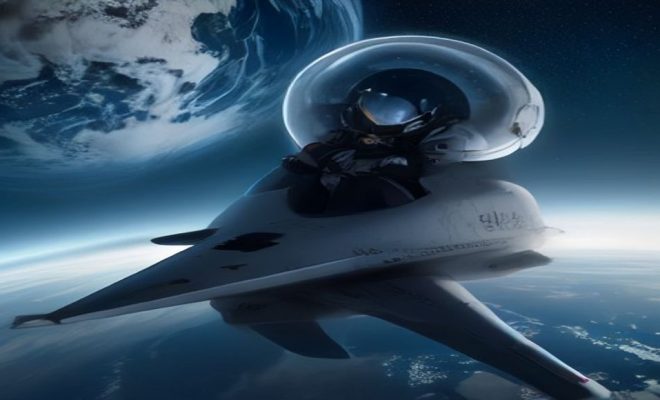
When Virgin Galactic announced on August 12, 2026, that it was pushing back the resumption of its commercial spaceflights until February 2027, it wasn’t just a minor blip on a corporate calendar. This latest Virgin Galactic spaceflight delay, moving the goalposts from a late 2026 target, sent ripples through the nascent space tourism industry, caused Virgin Galactic’s shares to tumble, and sparked a fresh wave of discussion among investors and the eager cohort of future space tourists who’ve held tickets for years. It’s a moment that forces us to ask: what exactly is going on, and what does it tell us about the challenging path to making space travel a regular reality?
The company attributed this latest setback to what it described as a “modest time-duration extension across hundreds of relatively small but important installation tasks” for its new Delta-class vehicles. This isn’t a single, catastrophic engineering failure, it seems, but rather the cumulative effect of countless tiny complexities. Think of it like building a bespoke luxury yacht, where every rivet, every wire, every piece of custom cabinetry has to be absolutely perfect, and each perfection takes a little longer than anticipated. When you multiply that by hundreds of tasks, the ‘modest’ extensions suddenly add up to months.
Virgin Galactic’s vision for these advanced Delta planes is nothing short of ambitious: they’re designed to fly with unprecedented frequency, potentially ferrying passengers to the edge of space twice per week. That kind of operational tempo is critical for making space tourism economically viable and accessible to a wider (though still elite) clientele. The first Delta spaceship is still expected to be ferried to Spaceport America in October 2026, which is a positive sign, but the subsequent integration and flight readiness process is clearly proving more arduous than initially projected. This isn’t just about getting a vehicle off the ground; it’s about establishing a reliable, repeatable, and safe commercial service, and that’s a fundamentally different beast.
The Delta-Class Promise: More Than Just a New Ship
The Delta-class spacecraft aren’t just an iteration; they represent a significant leap forward in Virgin Galactic’s strategy. The current VSS Unity, which completed its commercial flights earlier in 2024, was essentially a proof-of-concept, demonstrating the feasibility of suborbital space tourism. It was a marvel of engineering, no doubt, but limited in its operational cadence and passenger capacity. The Delta-class vehicles, however, are engineered from the ground up for high-frequency operations and an improved passenger experience. They aim to be the workhorses of the space tourism fleet, capable of turning around flights much faster and carrying more people.
Virgin Galactic’s business model hinges on this increased throughput. With tickets costing hundreds of thousands of dollars, the only way to achieve profitability and scale is to fly often. Imagine an airline that can only fly one plane once a month – it’s simply not sustainable. The Delta ships are designed to change that equation, moving towards a model closer to conventional aviation, albeit for an extraordinary destination. This requires not just robust spacecraft, but also streamlined ground operations, efficient maintenance protocols, and a highly trained, scalable crew. All these elements contribute to the ‘hundreds of small tasks’ that are causing this Virgin Galactic spaceflight delay.
Building a new class of aerospace vehicle is an undertaking of immense complexity, pushing the boundaries of materials science, propulsion, aerodynamics, and human safety. Every component, every system, has to be rigorously tested and validated. When you’re dealing with human lives and the unforgiving environment of space, there’s absolutely no room for error. This isn’t like rolling out a new car model; it’s more akin to developing a new generation of fighter jet, but with the added layer of commercial viability and public expectation. Related reading: explosive market growth.
The Cumulative Effect of ‘Small But Important’ Tasks
It’s easy to dismiss “modest time-duration extensions across hundreds of relatively small but important installation tasks” as corporate jargon for ‘we messed up.’ However, in the context of advanced aerospace manufacturing, it’s a very real and common challenge. Think about the construction of a skyscraper. One delayed delivery of steel might push back a floor’s completion by a day. Multiply that across dozens of floors, hundreds of material types, and thousands of individual components, and suddenly a building project can be delayed by months, even years, without any single ‘catastrophic’ event.
In aerospace, the stakes are infinitely higher. A seemingly minor miscalibration in a sensor, a slightly off-spec component from a supplier, or a more complex-than-anticipated wiring harness installation can all cascade into significant delays. Each ‘small task’ often requires specialized tooling, highly skilled technicians, and stringent quality control checks. If one task takes an extra hour, and there are 500 such tasks in sequence or parallel, that’s 500 extra hours of labor – which quickly adds up to weeks or months when you factor in dependencies and retesting. This isn’t just about physical installation; it also encompasses software integration, systems validation, and comprehensive safety reviews that are inherently time-consuming.
The fact that Virgin Galactic isn’t pointing to a single, major defect might be a silver lining. It suggests that the fundamental design of the Delta-class is sound, but the execution of its assembly and integration is proving more intricate than planned. This kind of delay is frustrating, certainly, but perhaps less alarming than a fundamental design flaw or a major structural issue that would require a complete re-evaluation of the vehicle’s architecture. Still, for investors and eager ticket-holders, the outcome is the same: a longer wait.
Investor Reaction and Market Volatility
The immediate aftermath of the Virgin Galactic spaceflight delay announcement was predictable: a significant tumble in the company’s shares. In the high-stakes world of publicly traded companies, especially those in novel and capital-intensive sectors like space tourism, investor confidence is a fragile thing. Repeated delays, even if explained logically, erode that confidence. Investors want to see consistent progress towards profitability and scalable operations, and any setback pushes that horizon further away.
Virgin Galactic operates in a unique space, combining the allure of cutting-edge technology with the speculative nature of a nascent market. Its stock performance often reflects not just its current operational status, but also the broader sentiment around space exploration and luxury travel. When a company announces a delay of over six months, it impacts financial projections, cash burn rates, and the perceived risk profile of the investment. Many investors might view this as another sign of the inherent difficulties in commercializing space travel, leading to divestment or a more cautious approach. (See: Virgin Galactic and space tourism.)
Beyond the immediate share price impact, such delays also affect the company’s ability to raise capital in the future, if needed. A consistent track record of hitting milestones is crucial for securing favorable financing terms. While Virgin Galactic likely has sufficient cash reserves for the immediate future, a pattern of delays could make future fundraising efforts more challenging or expensive. It’s a delicate balance between transparency and maintaining market confidence, and in this instance, the transparency of the delay came with a clear market penalty.
The Broader Implications for Space Tourism
This Virgin Galactic spaceflight delay isn’t just a headache for one company; it has broader implications for the entire space tourism sector. While companies like Blue Origin also offer suborbital experiences and others like SpaceX are focused on orbital tourism, Virgin Galactic has arguably been the most publicly visible pioneer in the suborbital luxury segment. When they hit a snag, it inevitably raises questions about the industry as a whole.
The public’s fascination with space tourism is undeniable, fueled by a primal curiosity about the cosmos and the ultimate adventure. However, for it to truly take off as a viable industry, it needs to move beyond the experimental phase and into a realm of predictable, safe, and relatively frequent operations. Delays, no matter how well-explained, can foster skepticism among potential customers and the wider public. It reinforces the perception that space travel is still exceptionally difficult, incredibly risky, and perpetually ‘just around the corner.’
On the other hand, the industry is still in its infancy. It’s important to remember that the early days of aviation were also plagued by frequent crashes, mechanical failures, and slow progress. It took decades for air travel to become commonplace and reliable. Space tourism is arguably at an even earlier stage, dealing with far more extreme engineering challenges. What we’re seeing might simply be the natural growing pains of an industry pushing the boundaries of human achievement. The question then becomes: how much patience do investors and customers have for these growing pains?
Lessons from History: Aerospace Development is Rarely Linear
If there’s one thing the history of aerospace development teaches us, it’s that timelines are almost always optimistic, and delays are more the norm than the exception. From the Apollo program to the Space Shuttle, and more recently with the development of commercial rockets like SpaceX’s Starship, every major aerospace endeavor has faced significant setbacks, technical hurdles, and schedule slips. The sheer complexity of designing, building, and testing vehicles that operate in such extreme environments makes perfect execution on schedule incredibly rare.
Consider the development of the Boeing 787 Dreamliner, a commercial aircraft, not a spacecraft. It was years behind schedule, plagued by battery issues and manufacturing flaws, but eventually became a highly successful and widely used plane. Or look at the James Webb Space Telescope, which took decades and billions more dollars than initially planned, but is now delivering unprecedented scientific discoveries. These examples highlight that while delays are frustrating, they don’t necessarily spell doom, especially if the underlying technology and vision remain sound.
For Virgin Galactic, the challenge is not just technical, but also financial and reputational. Unlike government-funded programs, a commercial entity has to continuously demonstrate progress to satisfy shareholders and attract future customers. This creates immense pressure to meet deadlines, which can sometimes lead to overly ambitious initial projections. The current Virgin Galactic spaceflight delay is a stark reminder that even with significant investment and brilliant engineering, space remains an incredibly tough nut to crack.
The Customer’s Perspective: Patience and Perseverance
What about the hundreds of individuals who have paid significant sums – some deposits, some full ticket prices – to secure their seats on a future Virgin Galactic flight? For them, each delay is a test of patience. Many of these early adopters are genuine space enthusiasts, driven by a lifelong dream of seeing Earth from above. They understand the inherent risks and challenges, but even their enthusiasm has its limits. There’s a fuller look at cost reductions in space travel.
The company has done a commendable job of keeping these future astronauts engaged through exclusive events, updates, and a sense of community. However, repeated postponements can erode even the most steadfast resolve. Some ticket holders have been waiting for over a decade, having bought their spots in the early days of Virgin Galactic’s inception. While the destination remains extraordinary, the journey to get there is proving to be a marathon, not a sprint.
It’s also worth considering the psychological impact. The anticipation builds with each announced date, only to be reset. For a luxury experience priced at a quarter-million dollars or more, customers expect not just the flight itself, but a seamless and reassuring journey leading up to it. Virgin Galactic will need to continue its efforts to maintain engagement and transparency with its customer base, perhaps offering additional exclusive experiences or incentives to keep their dreams alive through this extended waiting period.
Competition and the Race to Commercialize Space
While Virgin Galactic focuses on suborbital tourism, it operates within a broader competitive landscape. Blue Origin, with its New Shepard rocket, also offers suborbital flights, having already flown several crews, including its founder Jeff Bezos. Though New Shepard’s operations have also seen their share of pauses and resumptions, they represent an alternative for those seeking the suborbital experience.
Beyond suborbital, companies like SpaceX are pushing the boundaries of orbital and even interplanetary travel. While these are different markets, the public’s perception of ‘space tourism’ often blends them. Successes by one company can build confidence in the sector, while setbacks can cast a shadow. The race to commercialize space is not just about technical achievement; it’s also about market leadership and public perception. A significant Virgin Galactic spaceflight delay allows competitors more time to refine their offerings or even capture a larger share of the nascent market. (See: NASA's role in space exploration.) space tourism overview offers useful background here.
This dynamic means that Virgin Galactic isn’t just battling engineering challenges; it’s also engaged in a strategic battle for mindshare and market position. How quickly they can get the Delta-class flying, and with the promised frequency, will be crucial in solidifying their place as a leader in suborbital space tourism. The window of opportunity, while still vast, isn’t infinite.
Expert Perspectives on Aerospace Development
Aerospace engineers and industry veterans often emphasize that managing complex projects is less about avoiding problems and more about effectively mitigating them. Dr. Elena Petrova, a retired NASA propulsion engineer, once noted in a conference, “When you’re innovating at the edge of what’s possible, the unknowns far outweigh the knowns. Delays aren’t failures; they’re data points informing the path forward.” Her sentiment echoes across the industry, highlighting a fundamental acceptance of iterative development and learning through challenges.
Another perspective comes from financial analysts specializing in the space sector. Sarah Chen, a senior analyst at SpaceVest Partners, recently commented, “For investors, the key isn’t zero delays, it’s transparency and a clear path to resolution. Virgin Galactic’s explanation, while frustrating, does signal a methodical approach rather than a panic. However, the market will demand tangible progress in the coming months.” This suggests that while the current delay is a hit, consistent, detailed updates and visible milestones towards the new launch window could help rebuild trust.
These expert views underscore that the Virgin Galactic spaceflight delay, while unwelcome, isn’t necessarily a sign of systemic failure. Instead, it reflects the inherent difficulties of pioneering a new industry and the meticulous standards required for human spaceflight. The space industry operates on a different clock than many other sectors, where perfection often trumps speed, especially when lives are on the line.
The Regulatory Landscape and Safety Standards
Another crucial, often underestimated, factor in spaceflight timelines is the stringent regulatory environment. Agencies like the Federal Aviation Administration (FAA) in the U.S. play a vital role in ensuring the safety of commercial space operations. Every new vehicle, every operational procedure, and every modification must undergo rigorous review and approval processes. This isn’t just about Virgin Galactic’s internal checks; it’s about meeting federal safety mandates.
The certification process for a new class of human-rated spacecraft like the Delta-class is incredibly comprehensive. It involves detailed documentation of design, manufacturing processes, materials, testing results, operational procedures, and crew training. Any “small but important installation tasks” that take longer than expected might also require re-evaluations or additional submissions to regulatory bodies, adding further time to the schedule. This meticulous oversight is for our collective good, ensuring that as space tourism expands, it does so with the highest possible safety standards.
This regulatory layer adds a significant, non-negotiable component to any space company’s timeline. It’s a testament to the industry’s commitment to safety, even if it contributes to what the public perceives as delays. You can’t simply rush through these approvals; they are a fundamental part of making space travel truly safe and sustainable.
FAQ: Understanding the Virgin Galactic Spaceflight Delay
Q1: What exactly caused the latest Virgin Galactic spaceflight delay?
A: Virgin Galactic stated the delay is due to “modest time-duration extensions across hundreds of relatively small but important installation tasks” for its new Delta-class vehicles. This means it’s not one big problem, but many small complexities adding up during the assembly and integration process.
Q2: When is Virgin Galactic now expected to resume commercial flights?
A: The company has pushed back the resumption of commercial spaceflights to February 2027.
Q3: What are Delta-class vehicles, and why are they so important?
A: Delta-class vehicles are Virgin Galactic’s next generation of spacecraft. They are designed for higher frequency operations and increased passenger capacity (six passengers plus two pilots), which is crucial for the company’s long-term profitability and scaling its space tourism business. (See: Challenges in commercial spaceflight.)
Q4: How does this delay impact customers who have already bought tickets?
A: Customers will experience a further wait for their flights. Virgin Galactic typically keeps ticket holders engaged through updates and exclusive events, but repeated delays can test even the most patient customers’ resolve.
Q5: Is this a common occurrence in the aerospace industry?
A: Yes, delays are quite common in complex aerospace development. Historically, projects from the Apollo program to modern commercial aircraft and rockets have faced significant setbacks due to the inherent challenges of pioneering new technology and ensuring safety. This builds on environmental concerns of luxury travel.
Q6: What is the financial impact of this delay on Virgin Galactic?
A: The announcement led to a significant drop in Virgin Galactic’s share price. Delays impact financial projections, cash burn rates, and investor confidence, potentially affecting future fundraising efforts.
Q7: How does Virgin Galactic’s approach compare to competitors like Blue Origin?
A: Both Virgin Galactic and Blue Origin offer suborbital space tourism. While Virgin Galactic uses a unique air-launch system with a spaceplane, Blue Origin uses a vertical-launch rocket and capsule. Both companies have experienced operational pauses and resumptions, reflecting the challenges of the nascent industry.
Q8: What are the next major milestones for Virgin Galactic?
A: A key milestone is the expected ferry flight of the first Delta spaceship to Spaceport America in October 2026. This will kick off the final integration, testing, and certification phase before commercial operations can begin in 2027.
Looking Ahead: The Path to February 2027 and Beyond
Despite the current Virgin Galactic spaceflight delay, the company’s long-term vision remains compelling. The goal of flying Delta-class vehicles twice per week, ferrying six passengers and two pilots, represents a truly transformative shift for space tourism. If they can achieve this operational tempo, it would significantly increase the number of people who can experience space and potentially drive down the per-seat cost over time, making it more accessible.
The expectation that the first Delta spaceship will arrive at Spaceport America in October 2026 is a key near-term milestone. This transfer will mark the beginning of the final integration, testing, and certification phase at the operational site. This period is critical, involving extensive ground testing, simulated flights, and eventually, uncrewed and crewed test flights before commercial operations can commence. It’s a meticulous process, designed to ensure the utmost safety and reliability.
For now, all eyes will be on Virgin Galactic’s progress towards that February 2027 target. The company needs to demonstrate not just that it can build these advanced vehicles, but that it can integrate them into a sustainable and predictable commercial operation. The dream of regular space travel is still very much alive, but as this latest delay reminds us, the journey to get there is proving to be as challenging and extended as the vastness of space itself.
Trending Now
Frequently Asked Questions
What caused Virgin Galactic's latest delay in spaceflights?
Virgin Galactic announced a delay in its commercial spaceflights, now set for February 2027, due to a 'modest time-duration extension' needed for hundreds of small but crucial installation tasks on their new Delta-class vehicles. This reflects the complexities of ensuring every detail is perfect rather than a major engineering failure.
How will the delay affect space tourism?
The delay in Virgin Galactic's spaceflights has caused concern within the space tourism industry, impacting investor confidence and ticket holders who have been waiting for years. It underscores the challenges of making space travel a regular reality and could delay the broader acceptance of space tourism.
What are Virgin Galactic's Delta-class vehicles designed for?
Virgin Galactic's Delta-class vehicles are designed for unprecedented operational frequency, with the aim of flying twice a week to the edge of space. This high frequency is crucial for making space tourism more economically viable and accessible to a wider clientele.
When is the first Delta spaceship expected to arrive at Spaceport America?
The first Delta spaceship is expected to be ferried to Spaceport America in October 2026. While this is a positive development, the subsequent integration and flight readiness process is proving to be more challenging than initially anticipated.
What does the delay indicate about the future of space tourism?
The delay in Virgin Galactic's spaceflights highlights the complexities and challenges of developing reliable space tourism. It suggests that while the vision is ambitious, the path to regular commercial space travel involves overcoming numerous technical hurdles and ensuring safety and reliability.
What's your take on this? Share your thoughts in the comments below — we read every one.