This Wild Stunt Just Ignited China’s EV War — Here’s Why You Should Care
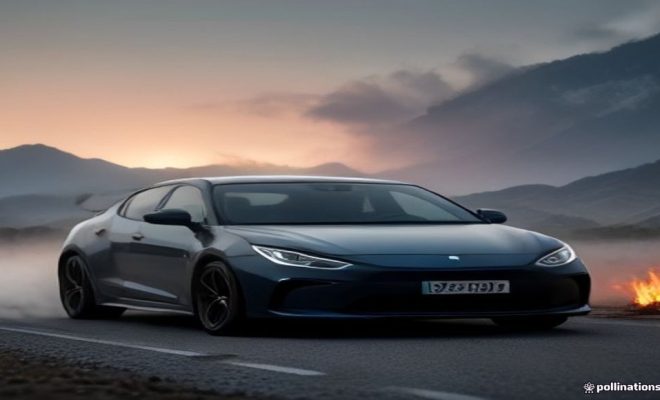
The battle for autonomous driving supremacy in China just took a dramatic turn, played out on one of the country’s most terrifying roads. Geely, a titan in the automotive world, recently dropped a promotional film that sent shockwaves through the electric vehicle (EV) community, showcasing its brand-new Galaxy E5 electric SUV seemingly navigating the treacherous Lanying Cliff Road with an almost supernatural ease. This wasn’t just a simple car commercial; it was a gauntlet thrown down, a direct challenge to industry rivals Nio and Tesla, both of whom had previously garnered viral fame for their own high-stakes drives on the very same perilous path.
Released on September 23, 2026, Geely’s film isn’t just about showing off a new model; it’s a bold declaration of intent. It highlights the Geely Galaxy E5’s self-steering capabilities on a road that, to put it mildly, is a nightmare for even the most experienced human drivers. We’re talking about a path less than three meters wide, carved into the side of a mountain, with dizzying drops of over 1,000 meters just inches from the tires. The claim? That the Galaxy E5 perceived this unmarked, perilous route clearly, even without traditional lane markings, and deftly navigated obstacles that would normally be hidden in blind spots. This isn’t just marketing; it’s an assertion of technological prowess designed to capture attention and, crucially, market share.
But why this particular road, and why now? The Lanying Cliff Road has become an unofficial proving ground, a digital coliseum where EV manufacturers and enthusiasts pit their autonomous systems against nature’s raw fury. Geely’s move is a direct, undeniable jab at Nio’s Onvo L60, which had its own viral moment on this road earlier in September. And let’s not forget the Chinese Tesla owner who, back in June, put the Lanying Cliff Road on the global map with a captivating video of his car on FSD v14. Each video, each challenge, builds on the last, escalating a fascinating, high-stakes technological arms race. The controversy, however, quickly followed: Geely, perhaps strategically, perhaps due to technical limitations, didn’t release unedited footage or specify the exact software version driving the Geely Galaxy E5. This omission, as you might imagine, has fueled intense debate among automotive enthusiasts and EV proponents, sparking a global conversation about the true capabilities and authenticity of autonomous driving systems under the most extreme conditions.
The Lanying Cliff Road: A Digital Proving Ground for EVs
Let’s take a moment to understand the star of this unfolding drama: the Lanying Cliff Road itself. For those unfamiliar, imagine a ribbon of asphalt clinging precariously to the sheer face of a mountain, often with no guardrails, and drops that literally disappear into the clouds. It’s a road built for adventure, perhaps, but certainly not for testing cutting-edge AI. Yet, that’s precisely what it has become. Its notoriety began organically, with a Tesla owner’s daring video in June, showcasing FSD v14 navigating its dizzying turns. That video went viral, capturing the imagination of millions and inadvertently setting a new standard for perceived autonomous capability.
What makes this road so uniquely challenging for autonomous systems? It’s not just the narrowness or the terrifying drops. It’s the complete lack of conventional road markings, the uneven surfaces, the unpredictable lighting conditions, and the potential for unexpected obstacles like falling rocks or even small animals. Traditional ADAS (Advanced Driver-Assistance Systems) often rely heavily on clear lane lines and well-defined road edges. The Lanying Cliff Road offers none of that. For an autonomous system to succeed here, it needs to interpret the environment in a far more sophisticated way, essentially ‘seeing’ and ‘understanding’ the road as a human driver would, relying on a complex interplay of sensors, AI, and predictive algorithms. This is why each manufacturer’s attempt on this road becomes such a significant benchmark, not just for PR, but for demonstrating genuine progress in autonomous intelligence.
Geely’s Bold Play with the Geely Galaxy E5
Geely’s entry into this high-stakes competition with the Geely Galaxy E5 wasn’t just another product launch; it was a meticulously orchestrated strategic move. By choosing the Lanying Cliff Road, Geely immediately positioned itself as a direct contender against the established giants. The Galaxy E5, a sleek new electric SUV, is clearly designed to be a volume seller, and associating it with such a dramatic display of technological prowess instantly elevates its perceived value and capability. The promotional film itself is a masterclass in suspense and visual drama, perfectly suited for the social media age.
The core claim is fascinating: the Geely Galaxy E5 supposedly perceived the path clearly without lane markings and navigated obstacles in blind spots. This suggests a highly advanced perception system, one that goes beyond simple line following. It implies robust object detection, sophisticated path planning, and perhaps even an understanding of the road’s ‘intent’ – where a human driver would instinctively know the road is leading, even without visual cues. If true, this represents a significant leap forward in autonomous technology. The decision to release this footage, however edited, demonstrates Geely’s confidence, or at least its desire to project confidence, in its burgeoning autonomous driving division. It’s a powerful statement in a market where perception often equals reality, especially when it comes to cutting-edge tech.
The Onvo L60 and Tesla FSD: Setting the Precedent
Before the Geely Galaxy E5 made its dramatic appearance, Nio’s Onvo L60 and Tesla’s FSD v14 had already staked their claims on the Lanying Cliff Road. Nio’s Onvo brand, designed to be a more accessible, family-oriented sub-brand, used its L60 SUV to demonstrate that advanced autonomous capabilities weren’t exclusive to premium, high-end EVs. Their video, while perhaps less dramatic than Geely’s, reinforced Nio’s reputation for technological innovation and user experience. It suggested that even a more mainstream EV from the Nio family could handle extraordinary conditions, a powerful message for potential buyers.
Tesla, of course, was the original trailblazer. The Chinese owner’s video of his Tesla on FSD v14 navigating the cliff road was a sensation. It showcased the raw, sometimes unnervingly confident, nature of Tesla’s Full Self-Driving system. While FSD has always been a point of contention and debate, its ability to tackle such an unstructured, challenging environment with apparent ease was undeniably impressive. These earlier videos created a benchmark, a ‘gauntlet’ if you will, that any subsequent contender would have to match or exceed. Geely understood this perfectly, and their Galaxy E5 film was a direct response, aiming to not just participate, but to dominate the narrative around autonomous capability on this iconic road.
The Authenticity Debate: Unedited Footage and Software Versions
Here’s where the plot thickens and the controversy truly begins: Geely did not release unedited footage of the Geely Galaxy E5’s drive, nor did it specify the exact software version used. This omission is a massive red flag for many in the autonomous driving community. In a field where transparency is paramount for building trust and validating claims, edited footage immediately raises questions. Was human intervention required at any point? Were there multiple takes? What level of ‘autonomy’ was truly at play? (See: Electric vehicle overview on Wikipedia.)
The lack of specified software version is equally problematic. Autonomous driving software is constantly evolving, with new iterations released frequently. A system that performs well on version X might struggle on version Y, or vice versa. Without this crucial detail, it’s impossible for experts and enthusiasts to properly assess the technological achievement. This secrecy, while perhaps intended to build mystique or protect proprietary information, ultimately fuels skepticism. Critics argue that without full transparency, these promotional films become less about demonstrating genuine capability and more about creating compelling, yet potentially misleading, marketing spectacles. It’s a delicate balance for automakers, who want to impress but also need to maintain credibility in a highly scrutinized industry.
Social Media Reaction and Industry Implications
Regardless of the authenticity debate, Geely’s promotional film for the Geely Galaxy E5 achieved its primary goal: massive social media sharing and engagement. The dramatic visuals, the competitive narrative, and the sheer audacity of the stunt created an instant viral hit. Forums, WeChat groups, and Weibo feeds exploded with discussions. Automotive enthusiasts dissected every frame, speculating on the technology, debating the ethics of such stunts, and, crucially, comparing the Galaxy E5’s performance to that of Nio and Tesla.
This kind of engagement is invaluable in the cutthroat Chinese EV market. It generates buzz, builds brand awareness for the Geely Galaxy E5, and positions Geely as a serious player in the autonomous driving space. But the implications stretch beyond mere marketing. This ‘cliff road challenge’ has inadvertently become a public proving ground, forcing manufacturers to push the boundaries of their autonomous systems and demonstrate tangible progress. It also puts pressure on regulators and industry bodies to establish clearer standards for validating and communicating autonomous driving capabilities, especially when such high-stakes demonstrations are used for commercial purposes. The court of public opinion, shaped by viral videos, is now a powerful force influencing the trajectory of autonomous development.
The Future of Autonomous Driving Demonstrations
What does this mean for future autonomous driving demonstrations? It’s clear that the bar has been raised. Gone are the days of simple highway cruising demonstrations. Consumers and enthusiasts now expect to see autonomous systems tackling real-world, highly challenging scenarios. The Lanying Cliff Road has set a precedent, and we can expect to see other extreme environments become the new battlegrounds for showcasing AI prowess.
However, this trend also highlights a critical need for greater transparency and standardization. If these demonstrations are to be truly meaningful and contribute to public trust, automakers will need to move beyond highly edited, cinematic productions. The demand for unedited, raw footage, accompanied by detailed technical specifications (including software versions), will only grow. Perhaps independent third-party verification will become a standard practice for such high-profile stunts. The ultimate goal shouldn’t just be to impress, but to genuinely inform and build confidence in a technology that promises to revolutionize transportation. Without that trust, even the most impressive feats risk being dismissed as mere parlor tricks.
Geely’s Broader Strategy in the EV Market
Geely isn’t just a single brand; it’s an automotive empire, encompassing brands like Volvo, Polestar, Zeekr, Lotus, Lynk & Co, and, of course, its namesake Geely Auto. The introduction of the Galaxy series, and specifically the Geely Galaxy E5, signals a concerted effort to consolidate and strengthen its position in the rapidly evolving EV market, particularly within China. The Galaxy brand is designed to be a premium, technologically advanced offering that competes directly with local rivals like Nio, Xpeng, and BYD, as well as international players like Tesla.
This aggressive marketing strategy, epitomized by the Lanying Cliff Road stunt, is crucial for Geely to stand out in an incredibly crowded and competitive landscape. By showcasing the Galaxy E5’s autonomous capabilities in such a dramatic fashion, Geely is not only promoting a single model but also reinforcing the perception of its entire ecosystem as a leader in innovation. It’s about demonstrating that Geely, with its vast resources and diverse portfolio, is not just playing catch-up but actively defining the future of electric and intelligent mobility. The company understands that in the modern automotive world, technological leadership is as important as design or performance, and a bold statement with the Geely Galaxy E5 can resonate across its entire brand family.
The Ethical Considerations of Extreme Autonomous Driving Tests
While the Lanying Cliff Road stunt makes for compelling viewing, it also raises significant ethical questions. Is it responsible to test, or at least portray the testing of, autonomous systems on such inherently dangerous roads for promotional purposes? What are the risks involved, not just for the vehicle and its occupants, but for anyone else who might be on the road? While these films often feature controlled environments or carefully planned shoots, the perception they create can be that autonomous driving is infallible, even in extreme conditions. This could lead to a false sense of security among consumers.
Automakers face a delicate balance: they need to demonstrate capability to drive adoption, but they also have a responsibility to ensure safety and avoid misleading the public. The debate around unedited footage and software versions isn’t just about technical validation; it’s also about ethical transparency. As autonomous technology continues to advance, the industry will need to grapple with these ethical dilemmas more directly, ensuring that the pursuit of viral marketing doesn’t overshadow the paramount importance of safety and responsible development. After all, the goal is to make roads safer, not to turn them into high-stakes publicity stunts.
Deep Dive: The Technology Behind Lanying Cliff Road Navigation
So, what exactly allows an autonomous vehicle like the Geely Galaxy E5 to even attempt a road as insane as Lanying Cliff? It’s a complex cocktail of hardware and software, far beyond what your average car’s cruise control can do. Think of it as a hierarchy of perception and decision-making. At the base, you have a sensor suite, typically including high-resolution cameras, LiDAR (Light Detection and Ranging) for 3D mapping, radar for speed and distance, and ultrasonic sensors for close-range obstacles. These sensors feed raw data into the vehicle’s central computing unit – essentially a supercomputer on wheels. (See: New York Times on China's EV market.)
This computer then runs advanced AI algorithms. For a road without lane markings, the system needs to rely heavily on what’s called “fused perception.” Instead of just looking for painted lines, it’s building a dynamic, real-time 3D model of the environment. It identifies the road edge based on changes in texture, elevation, and the presence of natural boundaries like rock faces or drops. It uses semantic segmentation to understand what different objects are – a rock, a tree, a pedestrian, another vehicle. Path planning algorithms then use this environmental understanding to plot the safest and most efficient trajectory, constantly adjusting for perceived obstacles or changes in the road’s condition. The ability to handle “blind spots” suggests a sophisticated predictive modeling capability, where the system anticipates what might be around a sharp, unseen bend, combining sensor data with pre-mapped information (if available) and learned behaviors.
The Role of High-Definition Mapping and Localization
While the Geely Galaxy E5’s promotional material emphasized its ability to operate without traditional lane markings, it’s important to consider the role of high-definition (HD) maps. For roads like Lanying Cliff, it’s highly probable that manufacturers either pre-scanned the route with specialized vehicles or used crowd-sourced data to create extremely precise maps. These HD maps aren’t just your Google Maps; they contain centimeter-level detail on lane geometry, road curvature, elevation changes, traffic signs, and even the exact location of potential hazards. An autonomous system doesn’t just ‘see’ the road; it overlays its real-time sensor data onto this highly detailed map. This allows for incredibly accurate localization – knowing exactly where the car is on the map – even when GPS signals are weak or the visual environment is ambiguous. If the Geely Galaxy E5 was indeed navigating without any pre-mapping, that would be a significantly more impressive feat, relying purely on real-time vision and perception. The ambiguity in Geely’s claims leaves this open to interpretation, which is precisely why transparency is so crucial.
Comparing Regulatory Landscapes: China vs. The West
The intensity of autonomous driving development and demonstration in China, as exemplified by the Lanying Cliff Road stunts, highlights a fascinating divergence in regulatory approaches compared to Western markets. China has shown a willingness to embrace and even accelerate the deployment of autonomous technologies, often through state-backed initiatives and a focus on national champions. This has fostered an environment where companies are incentivized to push boundaries and demonstrate capabilities rapidly. While safety is still paramount, the regulatory framework seems to allow for more aggressive testing and public showcasing.
In contrast, countries in North America and Europe tend to adopt a more cautious, incremental approach. Regulations are often more fragmented, varying by state or country, and there’s a stronger emphasis on liability, safety validation, and data privacy. This difference in regulatory philosophy can explain why we see such dramatic public demonstrations emerging from China, while Western companies often opt for more controlled, less visually spectacular tests in designated zones or on public roads with strict safety protocols. The “move fast and break things” mentality, even when adapted for automotive, has a different flavor depending on the overarching regulatory environment.
Expert Perspectives: A Double-Edged Sword?
Experts in autonomous driving view these cliff road demonstrations with a mix of awe and apprehension. On one hand, they acknowledge the immense technological achievement required to navigate such unstructured environments. “It shows a significant step forward in perception and path planning algorithms,” notes Dr. Li Wei, a professor of AI in mobility at a prominent Chinese university. “The ability to infer road geometry without clear markings is a cornerstone of true autonomous intelligence.”
However, many also caution against the potential for hype and misleading impressions. Sarah Chen, a former safety engineer at a leading AV startup, states, “While visually stunning, these videos often lack critical context. Was there a safety driver ready to intervene? How many attempts did it take? Without unedited footage and detailed telemetry, it’s hard to distinguish between a genuine breakthrough and a highly polished marketing stunt. The public needs to understand the nuance, or we risk overpromising and eroding trust.” The consensus seems to be that while these demonstrations prove technical feasibility, they don’t necessarily reflect the readiness for widespread, unsupervised deployment in all conditions.
Geely Galaxy E5 and the Broader Global Market
While the Lanying Cliff Road stunt is specifically aimed at the Chinese domestic market, the implications of the Geely Galaxy E5’s purported capabilities extend globally. Geely, through its various brands, is a major international player. Demonstrating advanced autonomous capabilities with the Galaxy E5, even in a promotional context, sends a clear signal to competitors and consumers worldwide: Chinese automakers are not just catching up, they are actively innovating at the forefront of automotive technology. This could influence consumer perceptions of Chinese-made EVs in markets like Europe and Southeast Asia, where Geely has a growing presence.
The Galaxy E5, positioned as a smart, connected SUV, will likely carry its autonomous features into other markets, albeit with adaptations for local regulations and road conditions. This aggressive showcasing is part of a larger strategy to establish Geely as a global leader in intelligent electric vehicles, challenging the long-held dominance of traditional Western and Japanese automakers. The Lanying Cliff Road, therefore, becomes not just a local proving ground, but a global stage for Geely’s ambitions.
Frequently Asked Questions (FAQ)
Q1: What is the Geely Galaxy E5?
A1: The Geely Galaxy E5 is a new electric SUV from Geely’s Galaxy brand, positioned as a technologically advanced, smart vehicle designed for the competitive Chinese EV market and potentially beyond. It’s highlighted for its autonomous driving capabilities. (See: Scientific articles on electric vehicles.)
Q2: Why is the Lanying Cliff Road significant for autonomous driving tests?
A2: The Lanying Cliff Road is an extremely narrow, winding, unmarked mountain road with sheer drops, making it one of the most challenging environments for autonomous systems. Its difficulty makes it a dramatic proving ground for a vehicle’s perception, planning, and navigation capabilities without traditional road markings.
Q3: Which other EV manufacturers have showcased autonomous driving on this road?
A3: Before Geely’s Galaxy E5, Nio showcased its Onvo L60, and a Chinese Tesla owner posted a viral video of a Tesla on FSD v14 navigating the same road. This has created a competitive narrative around the road.
Q4: Why is there controversy surrounding Geely’s video?
A4: Geely did not release unedited footage of the Galaxy E5’s drive, nor did it specify the exact software version used. This lack of transparency has led to skepticism among enthusiasts and experts, who question the true level of autonomy and whether human intervention was involved.
Q5: What kind of technology is required for a car to navigate a road like Lanying Cliff autonomously?
A5: It requires a sophisticated suite of sensors (cameras, LiDAR, radar), advanced AI algorithms for fused perception, real-time 3D environmental modeling, semantic segmentation, and robust path planning. High-definition (HD) maps of the route likely play a significant role in localization and navigation.
Q6: How does autonomous driving in China compare to Western markets?
A6: China generally exhibits a more accelerated and less fragmented regulatory approach, encouraging rapid development and public demonstrations. Western markets tend to be more cautious, with stricter regulations focusing on safety validation, liability, and data privacy, often leading to more controlled testing environments.
Q7: What are the ethical concerns of these extreme demonstrations?
A7: Ethical concerns include the safety risks of testing on dangerous roads, the potential for misleading the public about the infallibility of autonomous systems, and the need for greater transparency to build genuine trust rather than just generating hype. Responsible development and clear communication are key.
The Lanying Cliff Road saga, sparked by Tesla, continued by Nio, and dramatically escalated by Geely with its Galaxy E5, is more than just a series of viral videos. It’s a microcosm of the intense competition and rapid innovation defining the Chinese EV market. It showcases the lengths manufacturers are willing to go to prove their technological superiority and capture the public’s imagination. While the authenticity debate will undoubtedly continue, one thing is clear: the race for autonomous driving supremacy is heating up, and it’s being fought on the most spectacular and challenging stages imaginable. For consumers, it means more advanced technology, but also a greater need for critical thinking when evaluating these impressive, yet sometimes opaque, demonstrations.
Trending Now
- The Bombshell Truth About Slim Boost Tea: Don’t Buy Until You Read This
- our breakdown of this corgi tech startup just imploded — here’s how social media wrecked everything
- September 2026: The Latest in Tech…
- our breakdown of gta 6 collector’s box price: the $400 outrage that just broke gaming
Frequently Asked Questions
What is the significance of the Lanying Cliff Road in the EV industry?
The Lanying Cliff Road has become a crucial proving ground for electric vehicle manufacturers, showcasing their autonomous driving capabilities in extreme conditions. It serves as a competitive arena where companies like Geely, Nio, and Tesla demonstrate their technological prowess, drawing attention to their advancements in self-driving technology.
How did Geely's Galaxy E5 perform on the Lanying Cliff Road?
Geely's Galaxy E5 showcased impressive self-steering capabilities as it navigated the treacherous Lanying Cliff Road with ease. The promotional film emphasized its ability to perceive obstacles and navigate without traditional lane markings, positioning Geely as a strong contender in the autonomous driving race.
What other companies have challenged the Lanying Cliff Road?
Nio and Tesla have previously made headlines with their own high-stakes drives on the Lanying Cliff Road. These maneuvers have become viral sensations, contributing to the ongoing competition among EV manufacturers to prove their vehicles' advanced autonomous driving technologies.
Why did Geely release a promotional film for the Galaxy E5?
Geely's promotional film for the Galaxy E5 was released not just to showcase the new model, but to assert its technological leadership in the EV market. By demonstrating its self-driving capabilities on a perilous road, Geely aimed to capture market attention and challenge its competitors, particularly Nio and Tesla.
What are the challenges of driving on the Lanying Cliff Road?
The Lanying Cliff Road presents significant challenges due to its narrow width of less than three meters and steep drops of over 1,000 meters. These perilous conditions make it a daunting task for human drivers, thereby intensifying the importance of demonstrating autonomous driving technology in such an extreme environment.
What's your take on this? Share your thoughts in the comments below — we read every one.