Do mobile devices in the classroom really improve learning outcomes?
This article was written by Matthew Lynch
Mobile devices as teaching tools are becoming a more and more common part of the American education experience in classrooms, from preschool through graduate school. A recent Pew Research Center survey found that 58% of U.S. teachers own smartphones — 10 percentage points higher than the national average for adults. Those teachers are building that tech-savviness into their lesson plans, too, by embracing bring-your-own-device policies and leading the push for an iPad for every student. In 2013, an estimated 25% of U.S. schools had BYOD policies in place and it’s reasonable to assume those numbers have risen in the past two years.
What do these mobile devices really add, though? Is there more to this tech trend than just grabbing the attention of students? Is mobile technology boosting classroom instruction, or is it all just a flashy way to accomplish the same things as analog instruction?
Research finds benefits of mobile technology
That same Pew Research Center survey asked a group of Advanced Placement and National Writing Project teachers about the educational impact of Internet technology in the classroom. Here’s what those teachers had to say about mobile technology specifically:
- 73% of the teachers reported using mobile technology in their classrooms, either through their own instruction or by allowing students to use it to complete assignments
- English teachers are more likely to use mobile technology in the classroom than math teachers
- 47% of teachers strongly agreed, and an additional 44% somewhat agreed, that students need digital literacy courses to be successful academically and beyond.

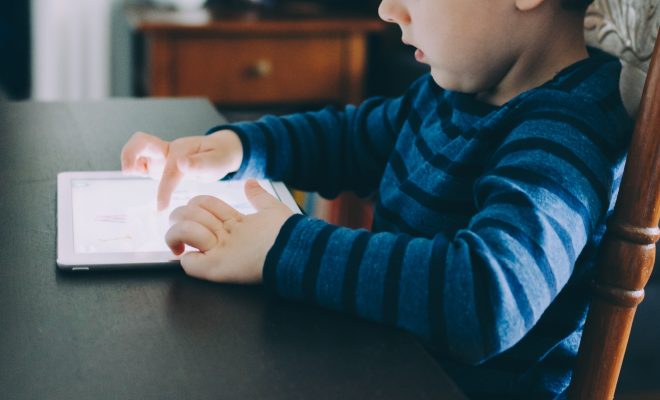
Even little pupils use tablets in some lesson plans. abg_colegio, CC BY
As far back as 2010, reports were surfacing that mobile apps are not only engaging, but educational, for children as young as preschool. PBS Kids, in partnership with the US Department of Education, found that the vocabulary of kids ages three to seven who played its Martha Speaks mobile app improved up to 31%. Abilene Christian University conducted research around the same time that found math students who used the iOS app “Statistics 1” saw improvement in their final grades. They were also more motivated to finish lessons on mobile devices than through traditional textbooks and workbooks.
More recently, two studies that separately followed fifth and eighth graders who used tablets for learning in class and at home found that learning experiences improved across the board. 35% of the 8th graders said that they were more interested in their teachers’ lessons or activities when they used their tablet, and the students exceeded teachers’ academic expectations when using the devices. When self-reporting, 54% of students say they get more involved in classes that use technology and 55% say they wish instructors used more educational games or simulations to teach lessons.
My own college students report back from student teaching in P-12 classrooms and say kids do seem to respond well to the stimulus of mobile devices. They stay on task, they correct mistakes in real-time and, most importantly, they get excited about learning.

The teacher’s at the front of the room – is anyone listening? technolibrary, CC BY-NC
Mobile devices also bring challenges
Alongside the benefits, mobile devices certainly come with their share of complications. Teacher authority, for example, is one area that can easily be undermined when mobile technology is allowed in classrooms. One of the often-mentioned benefits of mobile devices in classrooms is that they allow simultaneous work to take place — but does that undercut the master lesson plan?
There is also the question of cost. Of course there’s a price associated with schools purchasing the technology (and bringing teachers up to speed). But even having kids bring their own devices can be an issue. Bring-your-own-device policies may draw attention to situations where some students are more privileged than others, and there is always the potential for theft.
Tech policies are also more difficult to implement on personal electronics than on school-owned ones. A tablet that is owned by a particular school district, for example, can come pre-installed with the right programs and apps and not allow for any outside play. A device that goes home with a student, however, can’t have the same rules.
There are privacy issues to consider, too, especially now that tracking cookies are so prevalent on personal mobile devices. Do we really want third parties following our students on their learning paths? And should teachers have access to what students do on their mobile devices when outside the classroom?

Where they engage, mobile devices can help. Waag Society, CC BY-NC-SA
Mobile tech in classrooms: what works?
Simply using mobile technology in the classroom does not guarantee a rise in comprehension or even the attention of students. So what types of mobile technology use make the most sense for classrooms?
• E-readers. Part of the issue with traditional textbooks is that they’re so quickly outdated, both regarding subject matter and which formats best reach readers. E-readers eliminate that issue and allow real-time updates that are useful to students and teachers immediately, not the next school year when the new textbook is released.
• Individual mobile modules. Within educational apps and games are options for individual student logins. This gives students the chance to work at their own pace, taking extra time in the areas where they need it most.
• Text-response programs. Websites that allow teachers to send homework or test questions to students via text, and then ask for responses, do result in a more interactive approach to learning. Most of the programs that facilitate this technology allow for real-time feedback on the answers, allowing students to learn from mistakes and put it all in context in the moment. Pew Research found that American teens send an average of 60 text messages per day, making this an effective way to reach students in a medium that is close to universally used. The OneVille Project has tracked teachers and their experiences with texting high school students and has found that students become more motivated to come to school and to complete work on time when they have text message access to teachers.
• Seamless cloud learning. Using mobile technology that is connected to the cloud means that students can transition from working in the classroom to working at home — or anywhere else — easily, as long as they have access to a phone, tablet or computer. This saves time and improves organizational skills for students.

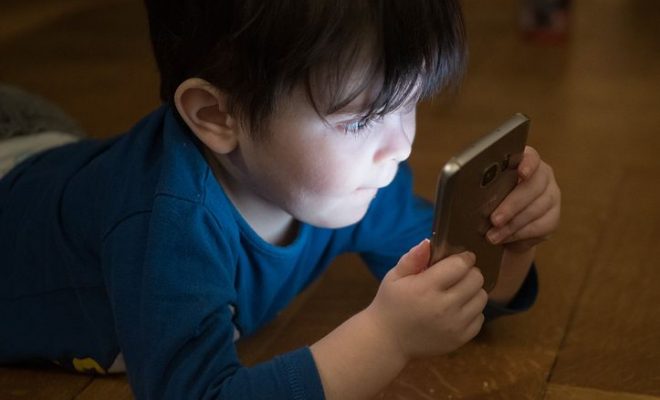
When it’s good, it can be very, very good…. technolibrary, CC BY-NC
Mobile learning can and does make a positive difference in how students learn, and it’s not just because of the “cool” factor. When used the right way, mobile technology has the potential to help students learn more and comprehend that knowledge.
In an ideal world, every student would have his or her own mobile device that syncs information between school and home, those devices would stay on task and the students would see significant gains in their academic achievement. Real-life classrooms are never picture perfect, though, not for any learning initiative.
Mobile devices are not a silver bullet. In 1995, Steve Jobs famously said that the problems facing education need more than technology to be fixed. Competent, engaged teachers are more necessary than ever in the Information Age, and balancing mobile educational advantages with healthy teaching interaction is the key to maximizing the worth of both.

Matthew Lynch, Dean, Syphax School of Education, Psychology & Interdisciplinary Studies, Virginia Union University
This article was originally published on The Conversation. Read the original article.