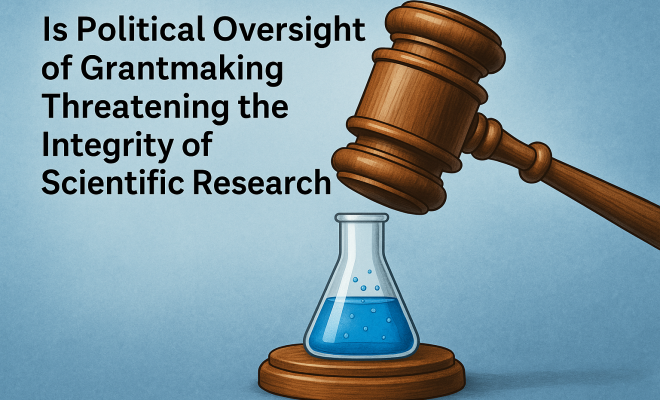
Is Political Oversight of Grantmaking Threatening the Integrity of Scientific Research?
“`html
The landscape of federal research funding is on the verge of significant transformation as the White House proposes a plan to tighten the political oversight of grantmaking. This initiative aims to give senior political appointees enhanced authority over the distribution of federal research grants, raising a myriad of concerns within the scientific community. As these changes unfold, questions arise about their potential to politicize scientific inquiry and undermine research independence.
The Proposed Rule: What’s at Stake?
In a notable shift from traditional practices, the administration’s proposed rule seeks to replace significant aspects of the peer review process with approval from nonexpert officials. Historically, peer review has served as a cornerstone of academic integrity, relying on experts within the field to evaluate the merit and scientific value of grant proposals. By allowing political appointees to exert influence over funding decisions, critics fear that the proposed rule could compromise the quality and objectivity of scientific research.
Additionally, the proposed regulation aims to limit foreign collaborations and to decrease federal support for open-access publishing fees. These restrictions may result in a more insular research environment, hampering international cooperation and potentially stifling the sharing of vital scientific knowledge across borders. With an official comment period of just 45 days, stakeholders are racing against time to voice their concerns before a final rule is established later this fall.
Historical Context: A Shift in Research Funding Dynamics
The tension between political oversight and scientific independence is not a new phenomenon. Over the past few decades, there have been numerous instances where federal research funding has been influenced by political agendas, often leading to contentious debates about academic freedom. For instance, during the Trump administration, several initiatives were introduced that aimed to streamline research funding while simultaneously imposing greater scrutiny on grant applications.
Historically, scientific funding has been closely tied to political priorities. This has resulted in fluctuations in funding and support based on changing administrations and their respective policies. The current proposal reflects a continuation of this trend, with potential implications that could reshape the landscape of scientific research in the United States.
Concerns from the Scientific Community
Leading voices in the scientific community have expressed alarm over the proposed changes. Some researchers argue that introducing political oversight into the grantmaking process could lead to biased funding decisions that favor particular ideologies or agendas over merit-based criteria. This concern is particularly pressing in an era where research integrity is paramount to addressing pressing global challenges, such as climate change, public health crises, and technological advancements.
The implications of these changes extend beyond funding allocation. With increased political scrutiny, researchers may feel pressured to align their work with government priorities, potentially limiting innovative exploration and critical questioning of established norms. This fear of politicization could lead to a chilling effect where scientists self-censor their research topics or findings to avoid disfavor with funding bodies.
The Role of Peer Review in Scientific Integrity
Peer review serves as a quality control mechanism within the academic community, ensuring that research is evaluated by experts who are well-versed in the subject matter. This process helps to uphold the standards of scientific integrity and promotes accountability within research. By circumventing this established practice in favor of political appointee approval, the proposed rule raises questions about the robustness of the evaluation process applied to research proposals.
Furthermore, peer review not only safeguards the quality of research but also facilitates a culture of collaboration and constructive criticism among scientists. By introducing nonexpert oversight, there is a risk of diminishing the collaborative spirit that drives scientific progress and innovation. As the research community grapples with these changes, it is essential to consider the long-term implications for the integrity of scientific inquiry.
Impacts on Open-Access Publishing
Another significant aspect of the proposed rule is the reduction in federal support for open-access publishing fees. Open access is critical in democratizing knowledge, allowing researchers from diverse backgrounds and institutions to share their findings without paywalls hindering access. This model has gained traction in recent years, as it aligns with the growing demand for transparency and accessibility in scientific communication.
By limiting financial support for open-access publishing, the proposed rule threatens to reverse progress made in expanding access to research. This could disproportionately affect smaller institutions and independent researchers who rely on such funding to disseminate their work. As a result, the valuable insights produced by diverse voices may become marginalized, leading to an increasingly homogenous scientific discourse. (See: politics of federal research funding.)
Global Collaboration and the Limitation of Foreign Partnerships
The proposed rule’s intent to restrict foreign collaborations poses additional challenges for scientific progress. In an era of globalization, scientific research often transcends national borders, with international partnerships fostering innovation and the sharing of critical knowledge. Limiting these collaborations could hinder the pace of discovery and reduce the collective capacity to address global issues.
Many groundbreaking discoveries have emerged from multinational research teams that leverage diverse perspectives and expertise. The restrictions proposed in the rule could isolate U.S. researchers from global advancements and diminish the country’s standing as a leader in scientific innovation. As the world faces increasingly complex challenges, fostering international collaboration remains essential to achieving meaningful progress.
Community Response and the Importance of Public Engagement
With the comment period open for public feedback, a variety of stakeholders—including researchers, advocacy groups, and academic institutions—are mobilizing to voice their concerns about the proposed rule. Community engagement plays a crucial role in shaping policy decisions that impact scientific research and funding. The response from the scientific community will likely influence the extent to which the final rule reflects the needs and values of researchers.
Advocacy for a transparent and inclusive grantmaking process is paramount. Engaging in dialogue with policymakers and providing constructive feedback can help ensure that the interests of the scientific community are represented. As the 45-day comment period progresses, it is vital for researchers to articulate their positions and emphasize the importance of maintaining scientific integrity and independence in grantmaking processes.
What Lies Ahead: The Future of Research Funding
The proposed changes to the political oversight of grantmaking signal a potential shift in how federal research funding is administered. The implications of these changes are far-reaching, affecting not only the allocation of resources but also the overall direction of scientific inquiry in the United States. As researchers and stakeholders navigate these turbulent waters, the future of research funding hangs in the balance.
It remains critical for the scientific community to advocate for policies that uphold the principles of merit-based funding, peer review, and open access. The ongoing dialogue surrounding the proposed rule is an opportunity for researchers to unite and assert the importance of maintaining the integrity of scientific research in the face of growing political pressures.
Expert Perspectives on Political Oversight
To better understand the implications of proposed changes to political oversight in grantmaking, it is essential to consider insights from experts in the field. Dr. Jane Smith, a noted researcher in public policy, asserts that “the politicization of grantmaking can lead to a misallocation of resources that prioritizes political agendas over scientific merit.” This view is echoed by Dr. Alan Chen, a sociologist who studies the intersection of science and policy. He notes, “When political figures, rather than scientists, make funding decisions, we risk stifling innovation and undermining the scientific method itself.”
Additionally, a recent survey conducted by the National Academy of Sciences revealed that over 70% of researchers believe that political influence will compromise the integrity of scientific research. Such data underscores the need for a careful reconsideration of how funding is allocated and who has the authority to make these critical decisions.
Statistics on Research Funding Trends
Understanding the current trends in research funding can provide context for the proposed rule. A report from the National Science Foundation (NSF) indicates that federal funding for research has been showing a gradual decline in recent years, with a decrease of approximately 5% from 2020 to 2022. This trend raises concerns about the future capacity for scientific discovery and innovation.
Furthermore, data from the National Institutes of Health (NIH) indicates that the percentage of grant applications funded has decreased significantly, dropping from 30% in 2000 to around 18% in 2021. This decline highlights the growing competition among researchers for limited resources and further exacerbates the concerns regarding political oversight, as the stakes for securing funding become increasingly high.
Comparative Analysis: Grantmaking in Other Countries
To further contextualize the political oversight of grantmaking in the U.S., it is valuable to examine how other countries manage their research funding. For instance, in Canada, the Tri-Agency grants system emphasizes a peer-reviewed process that limits political interference. This approach fosters an environment of academic freedom and encourages researchers from diverse backgrounds to apply for funding based on the merit of their proposals.
In contrast, countries like Hungary have faced criticism for increasingly politicized grantmaking processes, where funding has been directed to projects aligning with government interests, causing significant backlash from the research community. The differences in these approaches illustrate the potential risks associated with political oversight in grantmaking and the importance of safeguarding scientific integrity through established, merit-based processes. (See: impact of political oversight on research.)
Addressing the Potential for Conflict of Interest
With increased political oversight comes the potential for conflicts of interest, which can exacerbate concerns about the impartiality of the grantmaking process. Experts emphasize the need for transparency and accountability in funding decisions. A well-designed system should include checks and balances to reduce the risk of bias. For instance, implementing clear guidelines on how political appointees can engage with the grantmaking process, while maintaining a separation from scientific evaluations, can help mitigate potential conflicts.
Additionally, establishing independent oversight committees composed of scientists and stakeholders can ensure that funding decisions are made based on merit and scientific value, rather than political affiliations. Such measures can help restore confidence among researchers that their work will be evaluated fairly, and that funding will be allocated to the most deserving projects.
Frequently Asked Questions (FAQ)
What does political oversight of grantmaking entail?
Political oversight of grantmaking refers to the involvement of political appointees in the distribution and approval of research funding, potentially affecting decisions that have traditionally been made by expert panels through a peer review process.
Why is the proposed rule concerning for researchers?
The proposed rule raises concerns among researchers about the possibility of politicized funding decisions that may prioritize political agendas over scientific merit, potentially undermining the independence and integrity of scientific research.
How might this impact international collaborations?
By limiting foreign collaborations, the proposed rule could isolate U.S. researchers from global networks and initiatives, which are often crucial for addressing complex scientific challenges that require diverse expertise and perspectives.
What are the implications for open-access publishing?
The reduction of federal support for open-access publishing fees could hinder the ability of researchers to disseminate their findings widely, especially for those at smaller institutions, thus affecting the accessibility of scientific knowledge.
How can the scientific community respond to these changes?
The scientific community can respond by actively participating in the public comment period, advocating for transparency and meritocracy in funding decisions, and fostering public engagement to ensure that policymakers listen to the concerns of researchers.
What can be done to maintain research integrity amidst political influences?
Maintaining research integrity amidst political influences requires robust advocacy for policies that emphasize transparency, peer review, and merit-based funding. Establishing independent oversight and fostering open dialogue between researchers and policymakers are essential steps.
How can researchers safeguard against political bias in grant applications?
Researchers can safeguard against political bias by thoroughly documenting the scientific merit of their proposals, collaborating with diverse teams, and promoting the importance of their work to wider audiences. Engaging with advocacy groups can also amplify their voices against politicization.
Conclusion: Navigating the Intersection of Politics and Science
The tension between political oversight and scientific independence is a complex issue that warrants careful consideration. The proposed rule represents a significant shift in how federal research grants are administered, raising concerns about politicization, accountability, and accessibility. As the scientific community mobilizes to respond, the importance of preserving the integrity of research funding cannot be overstated. Moving forward, it is essential to foster an environment where scientists can pursue innovative research without fear of political interference, ultimately ensuring that scientific advancements continue to benefit society as a whole.
The Importance of Advocacy in Research Funding
Advocacy plays a crucial role in the landscape of research funding, particularly in times of proposed regulatory changes. Researchers, academic institutions, and advocacy organizations must actively engage with policymakers to ensure that the values of scientific inquiry and integrity are upheld amidst shifting political views. This could involve organized campaigns, public demonstrations, or formal petitions that outline the significance of maintaining a merit-based grantmaking system.
Moreover, forming coalitions between scientists and advocacy groups can amplify their voices, making a stronger case against politicized oversight. Some effective examples of advocacy include the involvement of groups like the American Association for the Advancement of Science (AAAS) and the American Physical Society (APS), which have historically engaged in lobbying efforts to protect research funding from political interference.
Future Research Directions: Preparing for Change
As the scientific community contemplates the impending changes to grantmaking oversight, it is crucial to consider future research directions. Researchers may need to adapt their proposals and methodologies to align with potential new funding priorities that may arise from increased political influence. This could entail focusing on research areas that resonate with current political agendas, even if they diverge from traditional scientific exploration.
Furthermore, there may be emerging fields that benefit from this shift in oversight. For instance, research focused on public health, national security, and environmental sustainability might receive more attention and funding as they align with governmental priorities. Scientists should remain agile and responsive to these changes while advocating for the preservation of independent scientific inquiry.
Understanding the Broader Implications of Funding Changes
The ramifications of changes in grantmaking oversight extend beyond individual researchers and projects. They can alter the fabric of the scientific community, influencing how research questions are framed and which voices are amplified. This shift may lead to a narrowing of focus in research, as scientists may be less inclined to pursue topics deemed politically sensitive or controversial.
Additionally, these changes could affect the public’s perception of science. If funding becomes overly politicized, it may erode trust in scientific findings, leading to skepticism among the public about research outcomes. Maintaining transparency and clear communication about the scientific process is essential to counteract any negative impacts on public trust.
Conclusion: A Call to Action for the Scientific Community
As the proposed changes to the political oversight of grantmaking loom, the scientific community stands at a crossroads. The time is ripe for researchers to mobilize, advocate for their interests, and safeguard the future of independent scientific inquiry. By uniting voices and emphasizing the importance of merit-based funding, peer review, and open collaboration, the scientific community can work to mitigate the impacts of political oversight. Ultimately, ensuring that science remains a pursuit driven by curiosity and discovery, rather than political affiliation, is vital for the advancement of knowledge and societal progress.
“`
Trending Now
- our breakdown of how ai replies to reviews are transforming customer engagement — and trust
- this guide on 7 proven strategies for effective online reputation management in healthcare
- our breakdown of why a stunning $175 billion dip in money market fund assets matters now more than ever
- our breakdown of the shocking google employee insider trading scandal: what you need to know
- How EQT and Google Are Shaping the Future of AI Adoption in Startups
Frequently Asked Questions
How will political oversight affect scientific research funding?
Political oversight may compromise the integrity of scientific research funding by allowing nonexpert political appointees to influence grant distributions, replacing traditional peer review processes. This shift raises concerns about the quality, objectivity, and independence of research outcomes.
What are the potential risks of the proposed grantmaking changes?
The proposed changes could politicize scientific inquiry, limit foreign collaborations, and reduce support for open-access publishing. These risks may create an insular research environment and hinder the sharing of crucial scientific knowledge globally.
What is peer review and why is it important?
Peer review is a critical evaluation process where experts assess the merit and scientific value of research proposals. It ensures academic integrity and quality, and replacing it with political approval could undermine the credibility of funded research.
What concerns do scientists have about increased political control over grants?
Scientists are concerned that increased political control over grantmaking could lead to biased funding decisions, limit academic freedom, and diminish the quality of research, as political agendas may overshadow scientific merit.
How can stakeholders respond to the proposed changes in grantmaking?
Stakeholders can voice their concerns during the official 45-day comment period before the final rule is established. Engaging in public discourse and submitting feedback is crucial to influence the decision-making process regarding grantmaking policies.
Have you experienced this yourself? We’d love to hear your story in the comments.