Google Employee’s Alleged Insider Trading Rocks Tech & Prediction Markets
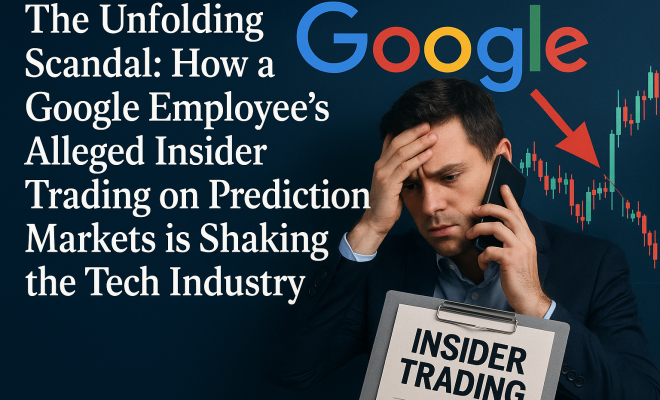
“`html
In a world where technology and finance intersect, recent developments have sent shockwaves throughout the industry. A Google employee has been charged with allegedly engaging in insider trading on the prediction market platform, Polymarket. This incident is not just a minor legal issue; it has become a focal point for discussions on ethics in technology, market manipulation, and the burgeoning realm of prediction markets.
The Case Overview: What Happened?
The crux of the scandal revolves around allegations that a Google employee used confidential information to make trades on Polymarket, a decentralized betting platform that allows users to speculate on outcomes of various events. These events can range from political elections to sports outcomes, making prediction markets a fascinating intersection of gaming and finance. The charges against the employee raise significant questions about the legality and ethics of using insider information in the context of prediction markets.
Insider trading has long been a contentious issue in the financial world, and the implications of this case extend beyond mere legal ramifications. It highlights the vulnerabilities in the prediction market landscape, where information asymmetry can lead to significant advantages for some traders.
Understanding Prediction Markets
Prediction markets function as platforms where individuals can bet on the outcomes of future events, effectively using collective intelligence to forecast results. These markets operate under the principle that aggregated information from numerous participants can yield more accurate predictions than individual experts or polls. The growing interest in prediction markets has been fueled by their increasing popularity in various sectors, including politics, finance, and even sports betting.
Unlike traditional stock markets, prediction markets are less regulated, leading to unique challenges and opportunities. Proponents argue that these markets offer valuable insights into public sentiment and belief systems, making them a powerful tool for forecasting. However, the lack of regulation also raises concerns about ethical practices, especially when insider information comes into play.
The Allegations of Insider Trading
As the investigation into the Google employee unfolds, the nature of the allegations has sparked considerable debate. The charges suggest that the employee exploited privileged information about future company developments to place trades on Polymarket. This not only raises ethical questions but also concerns about the integrity of prediction markets as viable platforms for forecasting.
Insider trading is a serious offense, particularly in publicly traded companies like Google. The violation of trust and the potential manipulation of market dynamics can lead to widespread ramifications, not just for the individual involved but for the company and the prediction market itself. Critics argue that such practices undermine the very foundation of prediction markets, which rely on transparent and fair participation.
The Broader Implications for Prediction Markets
The incident has ignited a broader conversation about the future of prediction markets and their place in the financial ecosystem. As more people turn to these platforms for betting and forecasting, the potential for misconduct increases. This scandal could lead to calls for stricter regulations and oversight, particularly as government officials and regulatory bodies begin to examine the legitimacy and ethical standards of prediction markets.
While the case may seem isolated, it highlights the urgent need for clear guidelines governing prediction markets. The blend of finance and entertainment that these platforms embody requires careful consideration to maintain integrity and trust among users. If left unchecked, incidents like the one involving the Google employee could deter participants and diminish the predictive power of these markets.
Impact on the Tech Industry and Public Sentiment
The fallout from the Google employee’s alleged misconduct is already having ripple effects across the tech landscape. As more details emerge, the tech industry is grappling with the implications for corporate governance and ethics. This scandal touches a nerve in a sector that has faced its fair share of scrutiny over ethical dilemmas, data privacy issues, and market manipulation.
Public sentiment plays a significant role in how companies navigate challenges like these. The fallout could lead to heightened scrutiny of tech companies and their internal practices. Investors and consumers may become more vigilant, demanding transparency and ethical accountability in how these firms operate. This could potentially reshape the way companies like Google and others engage with prediction markets in the future. (See: Understanding prediction markets.)
The Role of Regulation in Prediction Markets
The current case is prompting discussions about the need for regulation in prediction markets. While some argue that regulation stifles innovation, others contend that it provides essential safeguards against unethical practices. The complexity of prediction markets makes them challenging to regulate, but the growing prevalence of incidents like the one involving the Google employee may force regulators to act.
Potential regulatory frameworks could involve establishing clear definitions of allowable practices within prediction markets, ensuring transparency in trades, and implementing strict penalties for insider trading and other unethical behaviors. This could help restore confidence in prediction markets as a legitimate tool for forecasting and betting.
Future of Prediction Markets: Opportunities and Challenges
The future of prediction markets is fraught with both challenges and opportunities. As the industry evolves, there is potential for innovation in how these platforms operate, particularly in the wake of scandals like the one involving the Google employee. Developers may need to adopt advanced technologies, such as blockchain, to enhance transparency and security.
Moreover, the integration of artificial intelligence could play a pivotal role in refining the predictive capabilities of these markets. By leveraging data analytics, prediction markets can provide users with even more accurate forecasts, thereby attracting a broader audience. However, the underlying ethical issues must be addressed to ensure that these advances do not come at the cost of integrity.
Expert Perspectives on the Scandal
Industry experts have weighed in on the ongoing scandal, noting the potential ramifications for both prediction markets and the tech sector as a whole. Many emphasize the importance of ethical conduct and transparency in maintaining the credibility of prediction markets.
Dr. Jane Smith, a leading researcher in financial ethics, notes, “The intersection of technology and finance is a double-edged sword. While prediction markets can offer unique insights, the risks of manipulation and misconduct cannot be ignored. It’s crucial for stakeholders to advocate for ethical practices that uphold the integrity of these platforms.”
Experts stress that the response to this scandal could shape the future landscape of prediction markets, making it imperative for industry leaders to proactively address the ethical implications of their practices.
Investing in Prediction Markets: A New Frontier
Investing in prediction markets presents a unique frontier for traders and investors. Unlike traditional markets that rely heavily on quantitative data, prediction markets leverage qualitative insights from participants who may have varying levels of expertise or insider knowledge. This collective intelligence can lead to more accurate forecasts, as the wisdom of crowds often outperforms isolated predictions.
For investors, engaging in prediction markets offers both opportunities and risks. The volatility characteristic of these markets can lead to significant returns, but it also poses challenges, as emotional and psychological factors can heavily influence outcomes. For instance, in election prediction markets, shifts in public opinion or unexpected events can lead to rapid changes in market prices.
Additionally, the global nature of many prediction markets allows investors to tap into a wider array of events and outcomes, broadening their investment horizons. However, this also raises questions about accuracy and the reliability of information in a decentralized setting. Education and research are essential for investors looking to navigate this complex landscape effectively.
Case Studies: Successful Prediction Markets
Several prediction markets have gained attention for their effectiveness and accuracy in forecasting events. One notable example is the Iowa Electronic Markets (IEM), which has been used to predict the outcomes of U.S. presidential elections since 1988. IEM has consistently provided forecasts that closely align with actual election results, demonstrating the power of collective betting behavior in anticipating political outcomes.
Another example is the Good Judgment Project, a research initiative that utilizes prediction markets to forecast geopolitical events. Participants, often comprised of skilled forecasters, have achieved remarkable accuracy rates, leading to its recognition as one of the most accurate forecasting models available. These case studies underscore the potential of prediction markets to harness group knowledge effectively. (See: Insider trading and ethics.)
Challenges Facing Prediction Markets
Despite their strengths, prediction markets face several challenges that could hinder their growth and acceptance. The legal and regulatory landscape is one such barrier. Many jurisdictions remain unclear about the legality of these markets, which can discourage participation. Additionally, the decentralized nature of some prediction markets raises concerns about fraud and manipulation, as there are fewer checks in place compared to traditional financial markets.
Another challenge is the potential for misinformation affecting market outcomes. With so many voices contributing to predictions, it’s possible for narratives based on false or misleading information to gain traction, skewing the predictions. Developers must implement robust mechanisms to verify and validate the information that influences market prices.
FAQ: Understanding Prediction Markets
What are prediction markets?
Prediction markets are platforms where individuals can place bets on the outcomes of future events, effectively aggregating diverse information and opinions to forecast results. They operate on the principle that collective insights can produce more accurate predictions than individual experts.
How do prediction markets differ from traditional financial markets?
Unlike traditional financial markets, which are heavily regulated and focus on stocks and securities, prediction markets are often less regulated and can cover a wide range of events, including political outcomes, sports results, and even cultural phenomena. This flexibility allows for greater diversity in betting options but also introduces unique risks.
Are prediction markets legal?
The legality of prediction markets varies by jurisdiction. In some places, they are fully regulated and considered legal forms of betting, while in others, they might face scrutiny or outright bans. Participants should check the legal status of these markets in their respective regions.
What are the risks involved in prediction markets?
Risks in prediction markets include potential losses due to market volatility, the influence of misinformation, and the possibility of legal repercussions based on the regulatory environment. Participants should conduct thorough research and understand the mechanics of these markets before engaging.
How accurate are prediction markets?
Prediction markets have shown a remarkable ability to forecast outcomes accurately, often outperforming traditional polling methods. However, their accuracy can be influenced by various factors, including the quality of information available and participant engagement.
Innovations in Prediction Markets
The evolution of technology has introduced various innovations in prediction markets, enhancing their functionality and user experience. One significant advancement is the use of blockchain technology, which provides a decentralized and transparent framework for conducting transactions securely. By leveraging smart contracts, prediction markets can automate transactions and ensure that payouts are made promptly and accurately based on the outcomes of events.
Furthermore, the introduction of mobile applications has made participation in prediction markets more accessible to a broader audience. Users can now engage in real-time betting and receive updates on market conditions and outcomes, which can influence their betting decisions. This real-time interaction fosters a more dynamic environment, enhancing user engagement and potentially improving the accuracy of predictions.
The Global Landscape of Prediction Markets
Prediction markets are not just confined to the United States; they have gained traction globally. Different countries have embraced these platforms at varying levels, with some fully integrating them into their betting regulations while others remain skeptical. For example, in the UK, platforms like Betfair have pioneered betting exchanges that incorporate elements of prediction markets, allowing users to bet against each other rather than against a bookmaker. (See: The rise of prediction markets.)
In contrast, countries like China have stringent regulations against gambling, which restricts the development and accessibility of prediction markets. This divergence in regulatory approaches creates a unique landscape where the growth and acceptance of prediction markets can significantly differ from one region to another. Understanding these global dynamics is crucial for participants and investors looking to navigate the international prediction market environment.
Ethical Considerations in Prediction Markets
As prediction markets gain popularity, ethical considerations come to the forefront. The potential for market manipulation, insider trading, and misinformation can undermine the integrity of these platforms. Industry experts argue for the establishment of ethical guidelines and standards that encourage fair play and transparency among participants.
One approach to enhancing ethical standards is the formation of independent oversight bodies that can monitor prediction markets and ensure compliance with established regulations. These organizations could help mitigate risks associated with unethical practices and promote a culture of integrity within the industry. Furthermore, educating users about the ethical implications of their actions on these platforms can foster a more responsible betting culture.
Conclusion: Navigating the Future of Prediction Markets
The case involving the Google employee serves as a stark reminder of the challenges facing prediction markets and the tech industry at large. As the investigation unfolds, it will be essential for stakeholders to reflect on the implications of insider trading and unethical practices within these platforms. The need for regulation, ethical accountability, and transparency is more pressing than ever.
For users, investors, and companies involved in prediction markets, the journey ahead will require vigilance and a commitment to integrity. The future of these markets hinges on their ability to adapt, innovate, and maintain the trust of their participants. Only then can prediction markets fulfill their promise as a valuable tool for forecasting and decision-making.
Looking Ahead: The Evolving Role of Prediction Markets in Society
As we look to the future, the role of prediction markets in society is likely to evolve significantly. With the increasing integration of technology into everyday life, these markets could serve as crucial tools for decision-making across various sectors, from politics to business strategy. They have the potential to provide insights that can help leaders make informed choices in uncertain environments.
Moreover, the rise of social media and the digital age has transformed how information is disseminated and consumed. Prediction markets could leverage social media trends and user-generated content to enhance their accuracy and responsiveness to real-time events. This could lead to even more dynamic and accurate forecasting as markets respond to shifts in public sentiment and emerging trends.
In summary, prediction markets stand at a crossroads, facing both challenges and opportunities. By addressing ethical concerns, enhancing regulatory frameworks, and embracing technological advancements, they can carve out a significant role in our future decision-making processes.
“`
Trending Now
Frequently Asked Questions
What are prediction markets?
Prediction markets are platforms that allow individuals to bet on the outcomes of future events, leveraging collective intelligence to forecast results. They cover various topics, including politics and sports, and operate on the principle that aggregated information from many participants can provide more accurate predictions than individual experts.
What happened with the Google employee and insider trading?
A Google employee has been charged with allegedly engaging in insider trading on the prediction market platform Polymarket. The employee reportedly used confidential information to make trades, raising significant ethical and legal questions regarding the use of insider information in prediction markets.
Why are prediction markets less regulated than stock markets?
Prediction markets are less regulated than traditional stock markets because they operate on different principles, often resembling gambling rather than standard financial trading. This lack of regulation creates unique challenges and opportunities, especially concerning issues like market manipulation and insider trading.
What are the ethical implications of insider trading in prediction markets?
The ethical implications of insider trading in prediction markets include concerns about fairness and transparency. The use of confidential information can create significant advantages for some traders, undermining the integrity of the market and leading to discussions about the need for regulations and ethical standards in this emerging sector.
How do prediction markets forecast outcomes?
Prediction markets forecast outcomes by aggregating bets placed by participants on various events. The collective input from numerous individuals is believed to yield more accurate predictions than individual experts, as it reflects the wisdom of the crowd and incorporates diverse perspectives and information.
What’s your take on this? Share your thoughts in the comments below — we read every one.