How to use Google voice search
“`html
Voice search has become an integral part of how we interact with technology, and Google Voice Search stands at the forefront of this transformation. With its ability to understand and respond to natural language, it’s no wonder that millions of users rely on Google Voice Search to find information quickly and efficiently. In this article, we’ll explore how to use Google Voice Search effectively, its background, key features, and the impact it has on our daily lives.
1. Understanding Google Voice Search
Google Voice Search is a feature that allows users to perform searches using their voice rather than typing. Launched in 2011, it utilizes advanced technology, including natural language processing (NLP) and machine learning, to interpret spoken queries. This innovation has changed the way we access information, making it faster and more intuitive.
One of the key advantages of Google Voice Search is its ability to understand context. For instance, if you ask, “What’s the weather like today?” Google can discern that you’re looking for weather information tailored to your current location. This contextual awareness is a significant enhancement over traditional text-based searches.
2. Setting Up Google Voice Search
To start using Google Voice Search, you’ll need to ensure that you have compatible devices and software. Here’s how to set it up:
- Smartphones: Ensure that you have the Google app installed and updated to the latest version. Most modern smartphones, whether Android or iOS, come with this app pre-installed.
- Smart Speakers: Devices like Google Nest or Google Home come with built-in voice search. Simply connect it to your Wi-Fi and link your Google account.
- Computers: You can use Google Voice Search through the Chrome browser. Just make sure your microphone is enabled.
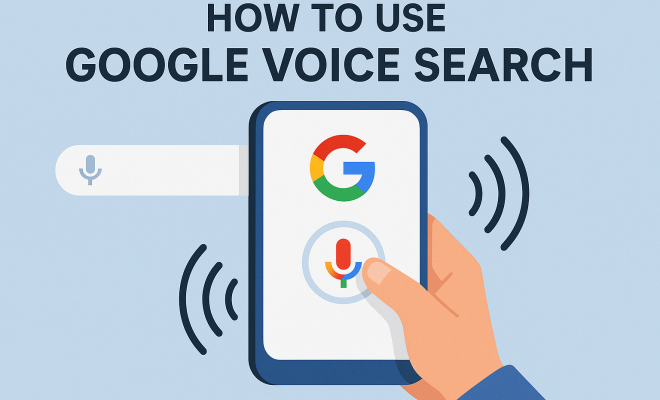
Once set up, you can activate voice search by saying “Hey Google” or by tapping the microphone icon in the app. Familiarizing yourself with these commands will enhance your voice search experience.
3. Voice Search Commands and Tips
Using Google Voice Search effectively involves knowing the commands that yield the best results. Here are some useful tips:
- Be Conversational: Google Voice Search is designed to understand natural language. Instead of saying, “Weather tomorrow,” ask, “What will the weather be like tomorrow?” This conversational approach yields better results.
- Use Complete Questions: The more specific your question, the better. Instead of asking, “Pizza places nearby,” ask, “What are the best pizza places near me?” This clarity helps Google deliver more accurate results.
- Utilize Context: Google understands follow-up questions. For instance, if you first search for a restaurant, you can later ask, “How do I get there?” and Google will know you’re referring to the restaurant you just searched.
By following these tips, you can significantly improve your experience with Google Voice Search.
4. The Role of Artificial Intelligence
Artificial intelligence plays a crucial role in the functionality of Google Voice Search. The technology behind it uses AI algorithms to analyze and interpret voice commands. Machine learning models continuously improve how the system understands speech and context.
Google’s AI models are trained on vast datasets of spoken language, enabling them to recognize accents, dialects, and variations in speech. This training means that Google Voice Search can cater to a diverse global audience. As AI technology evolves, we can expect even greater accuracy and personalization in voice search results.
5. Benefits of Using Google Voice Search
There are several advantages to using Google Voice Search that enhance user experience: See also creative classroom voice search ideas.
- Speed and Convenience: Voice search is often faster than typing, especially when you’re on the go. It allows for hands-free operation, which is particularly useful while driving or multitasking.
- Accessibility: Voice search makes information more accessible to individuals with disabilities or those who may struggle with typing.
- Enhanced User Interaction: The conversational nature of voice search fosters a more engaging interaction with technology, allowing for a more intuitive search process.
These benefits highlight why Google Voice Search is becoming a preferred choice for many users.
6. Challenges and Limitations
While Google Voice Search is highly effective, it does have its challenges and limitations. For instance: (See: Wikipedia article on voice search.)
- Accuracy Issues: Despite advancements, voice recognition may struggle with background noise or unfamiliar accents, leading to incorrect interpretations.
- Privacy Concerns: Voice data is often collected and stored, raising concerns about user privacy and data security. Understanding how Google handles this data is crucial for users.
- Complex Queries: While Google can handle straightforward questions, more complex or nuanced queries may not always yield accurate results.
Being aware of these limitations can help users set realistic expectations when utilizing Google Voice Search.
7. Google Voice Search in Everyday Life
The integration of Google Voice Search into daily routines has been remarkable. Whether it’s checking the weather, finding recipes, or making dinner reservations, voice search is changing how we access information.
For instance, many users find themselves asking their smart devices, “What’s on my calendar today?” or “Set a timer for ten minutes.” These commands streamline tasks, making everyday activities more efficient. Furthermore, businesses are increasingly optimizing their websites for voice search to cater to this growing trend, making it easier for consumers to find them.
8. The Future of Voice Search Technology
As technology continues to evolve, so too will Google Voice Search. Future enhancements may include even greater personalization, allowing the system to learn user preferences over time. Imagine a scenario where Google Voice Search not only understands your queries but also anticipates your needs based on past behavior.
Additionally, advancements in AI and machine learning could lead to improved contextual understanding, allowing for more complex queries. This evolution will likely drive even more users to adopt voice search technology in various aspects of their lives.
9. How Businesses Can Leverage Google Voice Search
For businesses, leveraging Google Voice Search can drive customer engagement and sales. Here are a few strategies to consider:
- Optimize for Local SEO: Since many voice searches are location-based, ensuring your business information is accurate across platforms can help you appear in local search results.
- Answer Frequently Asked Questions: Creating content that addresses common questions can improve your chances of being the answer Google provides in voice search responses.
- Focus on Long-Tail Keywords: Voice search queries are often longer and more conversational. Tailoring your SEO strategy to include these types of phrases can enhance visibility.
By adopting these strategies, businesses can tap into the potential of Google Voice Search, reaching customers more effectively.
10. Final Thoughts on Google Voice Search
Google Voice Search has transformed the way we interact with technology, making information retrieval more accessible, efficient, and user-friendly. By understanding how to use it effectively, users can leverage this technology to enhance their daily lives. As voice search continues to evolve, staying informed about its latest developments will allow you to make the most out of this powerful tool.
Whether you’re a casual user or a business owner, embracing Google Voice Search can open up new avenues for exploration and engagement. With the right approach, you can navigate this voice-activated world with ease and confidence.
11. Statistics on Voice Search Usage
Understanding the scale at which Google Voice Search is being adopted can provide insight into its future. Recent studies show:
- By 2022, 55% of households were expected to own a smart speaker, a clear indication of the rise in voice-controlled devices.
- The percentage of voice search queries is projected to reach 50% of all searches by 2025, emphasizing the shift in user behavior towards voice over text.
- Furthermore, a survey indicated that 72% of people who own voice-activated speakers find them helpful in their daily routines.
These statistics underscore the growing significance of voice search technology in our everyday lives and its potential to reshape how we seek information.
12. Popular Use Cases for Google Voice Search
Google Voice Search is being utilized in various ways across different demographics. Here are some of the most popular use cases:
- Navigation: Many users leverage Google Voice Search for directions, asking questions like, “How do I get to the nearest gas station?”
- Shopping: Voice search is also becoming a staple for online shopping. Users often ask, “Where can I buy shoes near me?” or “Find me the best deals on electronics.”
- Entertainment: Whether it’s finding a movie to watch or playing music, asking, “What are some good movies to watch tonight?” is a common voice search query.
Each of these use cases demonstrates how Google Voice Search simplifies interactions and enhances user experiences across different contexts.
13. How to Optimize Your Content for Google Voice Search
If you’re a website owner or content creator, optimizing for Google Voice Search can significantly increase your visibility. Here are some practical steps to follow: (See: CDC information on voice technology.)
- Use Natural Language: Write your content in a conversational tone that mirrors how people speak. This approach will help your content align with voice search queries.
- Structured Data: Implementing structured data (schema markup) can help Google understand your content better and potentially feature it in voice search results.
- Mobile Optimization: Ensure your website is mobile-friendly since most voice searches occur on mobile devices.
By focusing on these strategies, you can improve your chances of being featured in Google Voice Search results, driving more traffic to your site.
14. Industry Expert Perspectives on Voice Search
Industry experts have weighed in on the evolving landscape of voice search. According to a leading SEO expert, “Voice search is not just a trend; it’s a fundamental shift in how people access information. Businesses need to adapt quickly or be left behind.”
Another tech analyst highlighted, “With the rise of AI and machine learning, the accuracy and contextual relevance of voice search will only improve. This is an exciting time for both users and marketers.”
These insights indicate that the evolution of voice search technology is an ongoing process, and staying ahead of the curve will be essential for success.
15. FAQs about Google Voice Search
What devices support Google Voice Search?
Google Voice Search is supported on a wide range of devices, including Android smartphones, iPhones, Google Nest speakers, and computers using the Chrome browser.
How do I improve my speech recognition accuracy?
To enhance speech recognition accuracy, ensure you’re in a quiet environment and speak clearly and naturally. Additionally, adjust your device’s microphone settings if necessary.
Can I delete my voice search history?
Yes, you can manage your voice search history through your Google account settings. You can delete specific queries or your entire voice search history if desired.
Is Google Voice Search available in multiple languages?
Yes, Google Voice Search supports multiple languages. You can change your language settings in the Google app or your device settings to use voice search in your preferred language.
How do businesses optimize for voice search?
Businesses can optimize for voice search by focusing on local SEO, using natural language in their content, and addressing frequently asked questions to ensure their information is readily accessible.
What is the difference between voice search and traditional search?
The primary difference lies in user interaction; voice search allows users to ask questions in a conversational manner, while traditional search relies on typed keywords. Voice search also tends to provide more personalized and context-aware results. We covered essential Google search tips for students in more detail.
16. The Impact of Voice Search on SEO Strategies
The rise of Google Voice Search is prompting businesses to rethink their SEO strategies. Traditional SEO often focuses on short, keyword-based queries that work well for text searches. However, with voice search, the focus shifts to longer, more conversational phrases. This means businesses need to think about the kinds of questions their customers might ask verbally.
For example, instead of just targeting the keyword “pizza,” businesses should also consider longer phrases like “Where can I find the best pizza near me?” or “What pizza places deliver in my area?” By creating content that answers these more complex questions, businesses can improve their chances of appearing in voice search results. (See: New York Times article on Google Voice Search.)
17. Voice Search and Content Marketing
Content marketing is also evolving in response to voice search. Brands are increasingly crafting content that addresses specific queries or problems to capture the voice search audience. This includes creating blog posts that answer common questions, producing how-to guides, and even developing video content that can be easily discovered through voice queries.
For instance, a health and wellness brand might create FAQs around common health queries, such as “How do I boost my immune system?” or “What are the benefits of yoga?” By providing clear, concise answers, they can position themselves as a go-to resource for voice search users.
18. Voice Search in Different Languages and Dialects
Google Voice Search supports multiple languages and dialects, which opens up opportunities for businesses to reach diverse audiences. Understanding regional accents and colloquialisms is vital for effective communication. This means that businesses should consider localizing their content to fit the language preferences of their target audience.
For instance, a business in the UK might focus on British English phrases, while one in the US would use American English. This level of localization ensures that the voice search experience feels natural for users, enhancing engagement and increasing the likelihood of a successful conversion.
19. The Role of Smart Home Devices in Voice Search
Smart home devices like Google Home and Amazon Echo have become popular gateways for voice search. These devices not only facilitate voice searches but also integrate with other smart technologies in a user’s home, enhancing their functionality. For instance, you can ask your smart speaker to turn on the lights and simultaneously check the weather.
The convenience of accessing information and controlling home environments with just your voice is a significant factor driving the adoption of voice search technology. As more households integrate smart devices into their daily routines, the role of voice search will only continue to expand.
20. Conclusion: Embracing the Voice Search Revolution
The voice search revolution is reshaping how we find and interact with information online. Staying ahead of the trends and understanding how to optimize for voice search is essential for both users and businesses. Embracing this technology offers a chance to enhance engagement, streamline tasks, and provide valuable information in a more accessible way.
As voice search technology continues to evolve, both users and businesses should remain adaptable and informed. By leveraging Google Voice Search effectively, you can stay ahead in this fast-paced digital world, ensuring you never miss an opportunity to connect or discover.
In summary, Google Voice Search is rapidly changing how we find and interact with information. By understanding its features, challenges, and potential, both users and businesses can better navigate this dynamic landscape. As voice technology continues to advance, the possibilities for efficient information retrieval are limitless.
“`
Trending Now
Frequently Asked Questions
How do I enable Google Voice Search?
To enable Google Voice Search, ensure you have the Google app installed and updated on your smartphone. For smart speakers like Google Nest, connect the device to Wi-Fi and link your Google account. On computers, use the Chrome browser with the microphone enabled to access voice search.
What devices support Google Voice Search?
Google Voice Search is compatible with various devices, including smartphones running Android or iOS, smart speakers like Google Nest and Google Home, and computers using the Chrome browser. Make sure your microphone is enabled for optimal use.
What is the benefit of using Google Voice Search?
The main benefit of using Google Voice Search is its ability to understand natural language and context, allowing for quicker and more intuitive searches. This technology makes it easier to find information tailored to your needs without typing.
Can I use Google Voice Search on my computer?
Yes, you can use Google Voice Search on your computer through the Chrome browser. Just ensure your microphone is enabled and click on the microphone icon or say 'Hey Google' to start searching by voice.
How does Google Voice Search understand context?
Google Voice Search uses advanced technologies like natural language processing and machine learning to interpret spoken queries. This allows it to understand context, such as location-based inquiries, enhancing the search experience compared to traditional text searches.
Agree or disagree? Drop a comment and tell us what you think.