Unlock Your Heart’s Secrets: Using Apple Watch ECG
“`html
In recent years, the Apple Watch ECG feature has transformed how we monitor our cardiovascular health. As technology advances, wearables like the Apple Watch are no longer just fitness trackers; they are becoming critical tools in managing and understanding our health. In this guide, we’ll delve into the specifics of using the ECG feature on your Apple Watch, explore its benefits, and discuss its implications for heart health.
1. Understanding the Apple Watch ECG Feature
The Apple Watch ECG feature was first introduced with the Apple Watch Series 4 in 2018, marking a significant leap in wearable health technology. This feature allows users to take an electrocardiogram directly from their wrist, providing insights into their heart’s rhythm. Unlike traditional ECG devices that require professional medical supervision, the Apple Watch enables users to perform an ECG in just 30 seconds.
By monitoring the electrical signals of your heart, the Apple Watch can detect irregularities like atrial fibrillation (AFib), a condition that can lead to serious health complications. Once the ECG is taken, it generates a report that can be shared with healthcare providers, making it easier to track heart health over time.
2. How to Set Up Your Apple Watch for ECG
Before you can use the Apple Watch ECG feature, it’s essential to ensure your device is properly set up. First, make sure your Apple Watch is updated to the latest version of watchOS that supports ECG, which is typically available on Series 4 and later models.
To activate the ECG app, go to the App Store on your Apple Watch, search for the ECG app, and download it if it’s not already installed. Additionally, you need to enable the feature in the Health app on your iPhone. Open the Health app, navigate to the Browse section, select Heart, and then tap on Electrocardiogram (ECG). Follow the prompts to ensure everything is ready for your first ECG reading.
3. Taking an ECG: Step-by-Step Guide
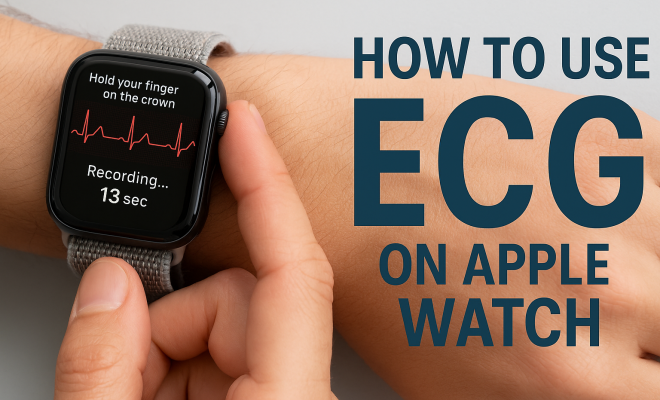
Once your Apple Watch is set up, taking an ECG is straightforward. Begin by wearing your Apple Watch snugly on your wrist, ensuring it’s positioned correctly for optimal readings. Launch the ECG app, which’s usually iconified with a heart symbol. You’ll be prompted to rest your arm on a flat surface.
Next, place a finger from your opposite hand on the Digital Crown. This action completes the electrical circuit, allowing the watch to measure the heart’s electrical signals. After 30 seconds, the ECG app will analyze the data and present the results. You’ll receive a notification indicating whether your heart rhythm is normal or if signs of AFib were detected.
4. Interpreting Your ECG Results
The results from your Apple Watch ECG can be incredibly informative. At the end of the test, the app categorizes your results into three main groups: normal sinus rhythm, atrial fibrillation, or inconclusive. A normal sinus rhythm indicates a typical heart rate and rhythm, while AFib suggests an irregular heartbeat that requires further evaluation by a healthcare provider.
If your results are inconclusive, this could mean there was not enough data for an accurate reading. Factors like movement or poor contact with the skin can affect the outcome. Always consult with a healthcare professional if you have any concerns about your results or if you experience symptoms such as palpitations, dizziness, or shortness of breath.
5. Benefits of Using the Apple Watch ECG
The benefits of monitoring your heart health with the Apple Watch ECG are numerous. First and foremost, it provides users with a proactive approach to managing their heart health. By being able to check your heart rhythm at any time, you can quickly identify potential irregularities and seek medical advice when necessary.
Moreover, the ECG feature promotes awareness about heart health in a population that may not routinely visit doctors for heart assessments. The convenience of having an ECG device on your wrist encourages users to take charge of their health, ultimately leading to more timely interventions and better long-term outcomes.
6. Limitations of the Apple Watch ECG
While the Apple Watch ECG is a pioneering tool, it does have limitations. It is not designed to replace traditional medical equipment or professional evaluation. For instance, it cannot detect all types of heart conditions, and its readings can be influenced by various factors such as movement or poor skin contact. (See: Atrial Fibrillation information from CDC.)
Additionally, the ECG feature is not available in all countries and regions. This limitation means that some users may not have access to this technology, which could widen health disparities. It’s essential to view the Apple Watch ECG as a supplementary tool rather than a comprehensive diagnostic device.
7. Apple Watch ECG and Your Healthcare Provider
Integrating the Apple Watch ECG into your healthcare routine can be beneficial, but it should be done in partnership with your healthcare provider. If you receive an AFib notification or other concerning results, sharing this data with your doctor can lead to more informed discussions about your cardiovascular health.
Your healthcare provider can use the ECG readings as a part of your overall health assessment, potentially recommending further tests or lifestyle changes based on your results. It’s vital to approach heart health as a collaborative effort between you and your medical team to ensure you receive the best possible care.
8. Staying Healthy: Lifestyle Changes
Using the Apple Watch ECG is just one aspect of maintaining heart health. Lifestyle changes play a crucial role as well. Regular exercise, a balanced diet rich in fruits and vegetables, and avoiding excessive alcohol and tobacco can significantly impact cardiovascular health.
Incorporating stress management techniques like yoga or meditation can also benefit your heart health. These lifestyle changes, combined with regular monitoring through the Apple Watch ECG, can help reduce the risk of heart disease and improve overall well-being.
9. The Future of Apple Watch ECG and Wearable Technology
The future looks bright for the Apple Watch ECG and wearable technology in general. As technology advances, we can expect even more sophisticated features that enhance health monitoring. Apple is continually working on improving its health algorithms, which could lead to better accuracy and more insights into our health data.
Moreover, the integration of additional sensors and features, such as blood pressure monitoring or glucose level tracking, could transform the Apple Watch into an all-in-one health management tool. As these developments occur, wearable technology will likely play an increasingly vital role in healthcare, empowering users to take charge of their health proactively.
10. Common Misconceptions about Apple Watch ECG
Despite the advancements in wearable technology, some misconceptions about the Apple Watch ECG persist. One common myth is that the Apple Watch can replace regular visits to a healthcare provider. While the ECG feature is a powerful tool for monitoring heart health, it does not eliminate the need for professional evaluations. Regular check-ups with your doctor are still essential for comprehensive health assessments.
Another misconception is that the ECG feature is only for those with existing heart conditions. In reality, the Apple Watch ECG can be beneficial for anyone interested in understanding their heart health better, regardless of their medical history. Early detection of irregularities can prompt lifestyle changes or further testing, which can ultimately save lives.
11. Technical Insights: How Apple Watch ECG Works
The Apple Watch ECG works by utilizing electrodes embedded in the Digital Crown and the back of the watch. When you initiate an ECG, the watch measures the electrical signals produced by your heart as they travel through your body. The app interprets these signals and produces a waveform that reflects the heart’s activity.
These electrical signals are recorded in a way similar to traditional ECG machines, but the Apple Watch streamlines the process to fit within a consumer device. The technology behind this is remarkably sophisticated, using algorithms that have been validated through clinical studies to analyze heart rhythms accurately.
12. Real-Life Impact: User Testimonials
Many users have shared their stories about how the Apple Watch ECG feature has impacted their lives. For instance, a user in their 50s mentioned that they had been feeling occasional palpitations but hadn’t seen a doctor in years. After using the ECG feature and receiving an AFib notification, they consulted with their healthcare provider. It turned out they had an underlying condition that required management, highlighting how the Apple Watch ECG can promote timely medical intervention.
Another user reported using the ECG feature as a tool for peace of mind. After experiencing anxiety related to their heart health, being able to take an ECG whenever they needed helped them feel more in control and less anxious about their heart rhythm.
13. Statistics and Research: The Effectiveness of Apple Watch ECG
The effectiveness of the Apple Watch ECG has been supported by various studies. Research published in the journal Circulation found that the Apple Watch ECG was able to accurately detect AFib in over 98% of cases when compared to traditional ECG devices. This high level of accuracy means that the Apple Watch can be a reliable tool for identifying potential heart rhythm issues. (See: NIH article on Apple Watch ECG technology.)
Another study indicated that patients wearing the Apple Watch were more likely to seek medical advice after receiving an AFib notification compared to those who did not have access to the device. This illustrates the potential of wearable technology not only in monitoring health but also in motivating users to take action regarding their health.
14. Apple Watch ECG and Health Equity
The introduction of the Apple Watch ECG raises important questions about health equity. While wearable technology has the potential to democratize health monitoring, access disparities still exist. Individuals in lower-income communities may not have the same access to such technology, which can lead to unequal health outcomes.
Efforts are underway to address these disparities. Some organizations are exploring ways to provide subsidized or free access to wearable devices for underserved populations. By increasing access, we can ensure that everyone benefits from advancements in health technology, potentially reducing the burden of cardiovascular diseases in at-risk communities.
15. Frequently Asked Questions (FAQ)
Q1: Can the Apple Watch ECG detect heart attacks?
A1: No, the Apple Watch ECG is not designed to detect heart attacks. It primarily monitors heart rhythm to identify irregularities such as AFib. If you suspect you are having a heart attack, seek immediate medical assistance.
Q2: Is the Apple Watch ECG available in my country?
A2: Availability may vary by region. It’s essential to check Apple’s official website or support documentation to confirm if the ECG feature is available in your country.
Q3: Do I need a prescription to use the Apple Watch ECG?
A3: No prescription is required to use the Apple Watch ECG. However, it’s advisable to consult with a healthcare provider if you have any concerns about your heart health.
Q4: How frequently should I use the Apple Watch ECG?
A4: You can use the ECG feature whenever you feel it is necessary, especially if you experience symptoms like palpitations or irregular heartbeats. Some users prefer to do it weekly or even daily for peace of mind.
Q5: What should I do if my ECG results are abnormal?
A5: If the ECG results indicate AFib or another irregularity, consult your healthcare provider as soon as possible for further evaluation and guidance.
Q6: Can the ECG feature be used during exercise?
A6: While it’s technically possible to take an ECG during light exercise, it’s best to take the reading when you’re at rest to ensure accuracy. Movement can affect the quality of the reading.
16. Understanding Atrial Fibrillation (AFib)
Atrial fibrillation is one of the most common heart rhythm disorders and can significantly increase the risk of stroke. In AFib, the heart’s upper chambers (the atria) experience chaotic electrical signals, causing the heart to beat irregularly. This can lead to complications such as blood clots, which can travel to the brain and cause strokes.
Statistics show that around 2.7 million Americans are currently living with AFib, and its prevalence is expected to increase as the population ages. The Apple Watch ECG feature can be a game-changer in early detection, allowing for timely medical intervention and management of symptoms. (See: Harvard Health on ECG technology.)
17. How Apple Watch ECG Helps in Preventative Health
The Apple Watch ECG is not just a reactive tool but also plays a critical role in preventative health. By encouraging regular heart rhythm checks, users can spot irregularities early, potentially preventing severe complications down the line. This proactive approach aligns with the growing trend in healthcare that focuses on prevention rather than treatment.
Incorporating heart health monitoring into daily routines can help individuals stay more attuned to their overall wellbeing. For instance, a study published in the Journal of the American College of Cardiology highlighted that individuals who monitored their heart health more frequently were more likely to adopt heart-healthy habits, such as improved diet and increased physical activity.
18. Integration with Other Health Apps
One of the standout features of the Apple Watch ECG is its ability to integrate seamlessly with other health and fitness applications. Users can link their ECG data with apps that track lifestyle choices, such as diet, exercise, and stress management. This comprehensive approach creates a more holistic view of heart health and overall wellness.
For example, if a user notices an irregular heartbeat following a particularly stressful day, they could utilize mindfulness apps to manage stress levels, potentially mitigating the effects of stress on their heart health. This kind of integration encourages users to take a more active role in their health management.
19. Research and Development: What’s Next for Apple Watch ECG?
As Apple continues to invest in research and development, the future of the Apple Watch ECG looks promising. Upcoming updates may feature enhanced algorithms for even more accurate readings or expanded capabilities to monitor additional health parameters.
Studies are also ongoing to understand the long-term implications of data collected through the ECG feature. Apple has partnered with academic institutions to analyze real-world data from users, which could lead to breakthroughs in cardiovascular health monitoring.
20. User Privacy and Data Security
With the increasing use of digital health technology, concerns about data privacy and security are paramount. Apple has emphasized its commitment to user privacy, stating that health data is encrypted and stored securely on the device. Users have control over who can access their data, ensuring that sensitive information remains private.
Educating users about their rights regarding data usage is essential, especially as more people rely on wearable technology for health management. Knowing how to keep data secure can instill greater confidence in using features like the Apple Watch ECG.
21. Conclusion
The Apple Watch ECG feature represents a significant advancement in personal health monitoring. Its ability to empower users to take control of their heart health while providing seamless integration with medical care has made it an invaluable tool. As technology continues to evolve, the role of devices like the Apple Watch in preventative health will only grow, paving the way for a healthier, more informed society.
“`
Trending Now
Frequently Asked Questions
How do I use the ECG on my Apple Watch?
To use the ECG feature on your Apple Watch, ensure your device is updated and the ECG app is installed. Open the app, rest your finger on the Digital Crown, and hold it for 30 seconds to capture your heart's rhythm.
What does the ECG feature on Apple Watch do?
The ECG feature on the Apple Watch allows users to take an electrocardiogram, monitoring heart rhythms and detecting irregularities like atrial fibrillation (AFib) directly from their wrist in just 30 seconds.
Do I need a prescription to use the ECG on Apple Watch?
No prescription is required to use the ECG feature on the Apple Watch. However, it's recommended to share the generated reports with your healthcare provider for professional guidance.
Which Apple Watch models support ECG?
The ECG feature is available on Apple Watch Series 4 and later models. Ensure your device is updated to the latest watchOS to access this health monitoring capability.
Can the Apple Watch ECG replace a doctor's visit?
While the Apple Watch ECG can provide valuable insights into your heart health, it should not replace regular check-ups with a doctor. Always consult healthcare professionals for comprehensive assessments.
What did we miss? Let us know in the comments and join the conversation.