The Tech Edvocate

Top Menu

  • Advertisement
  • Apps
  • Home Page
  • Home Page Five (No Sidebar)
  • Home Page Four
  • Home Page Three
  • Home Page Two
  • Home Tech2
  • Icons [No Sidebar]
  • Left Sidbear Page
  • Lynch Educational Consulting
  • My Account
  • My Speaking Page
  • Newsletter Sign Up Confirmation
  • Newsletter Unsubscription
  • Our Brands
  • Page Example
  • Privacy Policy
  • Protected Content
  • Register
  • Request a Product Review
  • Shop
  • Shortcodes Examples
  • Signup
  • Start Here
    • Governance
    • Careers
    • Contact Us
  • Terms and Conditions
  • The Edvocate
  • The Tech Edvocate Product Guide
  • Topics
  • Write For Us
  • Advertise

Main Menu

  • Start Here
    • Our Brands
    • Governance
      • Lynch Educational Consulting, LLC.
      • Dr. Lynch’s Personal Website
      • Careers
    • Write For Us
    • The Tech Edvocate Product Guide
    • Contact Us
    • Books
    • Edupedia
    • Post a Job
    • The Edvocate Podcast
    • Terms and Conditions
    • Privacy Policy
  • Topics
    • Assistive Technology
    • Child Development Tech
    • Early Childhood & K-12 EdTech
    • EdTech Futures
    • EdTech News
    • EdTech Policy & Reform
    • EdTech Startups & Businesses
    • Higher Education EdTech
    • Online Learning & eLearning
    • Parent & Family Tech
    • Personalized Learning
    • Product Reviews
  • Advertise
  • Tech Edvocate Awards
  • The Edvocate
  • Pedagogue
  • School Ratings

logo

The Tech Edvocate

  • Start Here
    • Our Brands
    • Governance
      • Lynch Educational Consulting, LLC.
      • Dr. Lynch’s Personal Website
        • My Speaking Page
      • Careers
    • Write For Us
    • The Tech Edvocate Product Guide
    • Contact Us
    • Books
    • Edupedia
    • Post a Job
    • The Edvocate Podcast
    • Terms and Conditions
    • Privacy Policy
  • Topics
    • Assistive Technology
    • Child Development Tech
    • Early Childhood & K-12 EdTech
    • EdTech Futures
    • EdTech News
    • EdTech Policy & Reform
    • EdTech Startups & Businesses
    • Higher Education EdTech
    • Online Learning & eLearning
    • Parent & Family Tech
    • Personalized Learning
    • Product Reviews
  • Advertise
  • Tech Edvocate Awards
  • The Edvocate
  • Pedagogue
  • School Ratings
  • A Visitors Guide to Colorado Springs (CO), United States

  • 5 Pairs of Shoes That Will Instantly Step Your Shoe Game Up

  • Radiant Youthful Skin is the Perfect Christmas Gift

  • Give Your Loved One the Gift of Youthful, Radiant Skin this Christmas

  • Give Your Loved One the Gift of a Restful Night Sleep this Christmas

  • Nex Playground’s Holiday Sales Bring Active Play Indoors This Seaso

  • A Visitors Guide to Louisville (KY), United States

  • A Visitor’s Guide to Nashville-Davidson (TN), United States

  • A Visitors Guide to Portland (OR), United States

  • 7 Men’s Bruno Marc Shoes That Are the Perfect Christmas Gift

Digital & Mobile Technology
Home›Digital & Mobile Technology›How to Use ADB and Fastboot on Android (and Why You Should)

How to Use ADB and Fastboot on Android (and Why You Should)
By Matthew Lynch
June 23, 2023
0
Spread the love

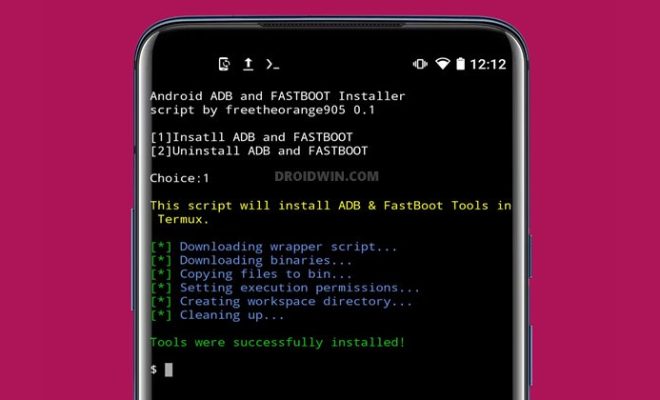
As an Android user, you may have heard of ADB and Fastboot at one point or another. ADB (Android Debug Bridge) and Fastboot are essential tools used by developers and Android enthusiasts alike. In this article, we’ll explain how to use ADB and Fastboot on Android and why you should give them a try.

What is ADB?

ADB stands for Android Debug Bridge. It is a command-line tool that can be used to communicate with your Android device from your computer. ADB allows you to access your device’s internal files, debug apps, install apps, and more.

What is Fastboot?

Fastboot is another command-line tool that is used to modify the Android file system from a computer when the device is in bootloader mode. Fastboot allows you to flash images, install system updates, and much more.

Why should you use ADB and Fastboot?

ADB and Fastboot come in handy when you want to perform certain tasks on your Android device that can’t be done through the graphical user interface. It can be particularly helpful for developers who want to test their apps on different devices or troubleshoot problems.

Here are a few of the things you can do with ADB and Fastboot:

Install apps:

With ADB, you can install apps from your computer without downloading them from the Google Play Store. This is particularly useful if you have an app that is not available in your country.

Backup and restore:

ADB can be used to backup and restore your Android device’s data. This is particularly useful if you’re switching to a new device or performing a factory reset.

Access system files:

ADB allows you to access and modify the files on your Android device’s internal storage. This is particularly useful if you want to customize your device.

Unlock bootloader:

Fastboot can be used to unlock the bootloader on your Android device. This allows you to install custom ROMs and kernels.

How to use ADB and Fastboot on Android

To use ADB and Fastboot, you’ll need to enable USB debugging on your Android device. This can be done by going to Settings > About Phone > Software Information and tapping on “Build number” seven times.
Next, go back to Settings > Developer options and enable USB debugging. You may also need to enable OEM unlocking if you want to unlock the bootloader.

On your computer, you’ll need to download and install the Android SDK platform tools. Once the tools are installed, open a command prompt or terminal window and navigate to the directory where the tools are installed.
To use ADB, connect your Android device to your computer using a USB cable. In the command prompt or terminal window, enter the following command:

adb devices

This will list all the devices that are connected to your computer. If your device is listed, you’re ready to use ADB.
To use Fastboot, you’ll need to boot your Android device into bootloader mode. This can be done by turning off your device and then pressing and holding the power and volume down buttons. Once your device is in bootloader mode, connect it to your computer using a USB cable.

In the command prompt or terminal window, enter the following command:
fastboot devices

This will list all the devices that are connected to your computer in bootloader mode.

Previous Article

IEMs vs. Earbuds: What Are IEMs? Are ...

Next Article

Best Places to Watch Cartoons Online for ...

Matthew Lynch

Related articles More from author

  • Digital & Mobile Technology

    What Are the Different iPhone Camera Filters and When Should You Use Them?

    June 21, 2023
    By Matthew Lynch
  • Digital & Mobile Technology

    Ways a Microsoft Account and a Local Account Are Different on Windows

    June 22, 2023
    By Matthew Lynch
  • Digital & Mobile Technology

    How to Stop Netflix Autoplay

    June 4, 2023
    By Matthew Lynch
  • Digital & Mobile Technology

    Best House Painting Apps of 2023

    June 8, 2023
    By Matthew Lynch
  • Digital & Mobile Technology

    How to Get a Free Trial of Photoshop

    June 4, 2023
    By Matthew Lynch
  • Digital & Mobile Technology

    Best Virtual Machine Software Programs

    June 6, 2023
    By Matthew Lynch

Search

Login & Registration

  • Register
  • Log in
  • Entries feed
  • Comments feed
  • WordPress.org

Newsletter

Signup for The Tech Edvocate Newsletter and have the latest in EdTech news and opinion delivered to your email address!

About Us

Since technology is not going anywhere and does more good than harm, adapting is the best course of action. That is where The Tech Edvocate comes in. We plan to cover the PreK-12 and Higher Education EdTech sectors and provide our readers with the latest news and opinion on the subject. From time to time, I will invite other voices to weigh in on important issues in EdTech. We hope to provide a well-rounded, multi-faceted look at the past, present, the future of EdTech in the US and internationally.

We started this journey back in June 2016, and we plan to continue it for many more years to come. I hope that you will join us in this discussion of the past, present and future of EdTech and lend your own insight to the issues that are discussed.

Newsletter

Signup for The Tech Edvocate Newsletter and have the latest in EdTech news and opinion delivered to your email address!

Contact Us

The Tech Edvocate
910 Goddin Street
Richmond, VA 23231
(601) 630-5238
[email protected]

Copyright © 2025 Matthew Lynch. All rights reserved.