The Tech Edvocate

Top Menu

  • Advertisement
  • Apps
  • Home Page
  • Home Page Five (No Sidebar)
  • Home Page Four
  • Home Page Three
  • Home Page Two
  • Home Tech2
  • Icons [No Sidebar]
  • Left Sidbear Page
  • Lynch Educational Consulting
  • My Account
  • My Speaking Page
  • Newsletter Sign Up Confirmation
  • Newsletter Unsubscription
  • Our Brands
  • Page Example
  • Privacy Policy
  • Protected Content
  • Register
  • Request a Product Review
  • Shop
  • Shortcodes Examples
  • Signup
  • Start Here
    • Governance
    • Careers
    • Contact Us
  • Terms and Conditions
  • The Edvocate
  • The Tech Edvocate Product Guide
  • Topics
  • Write For Us
  • Advertise

Main Menu

  • Start Here
    • Our Brands
    • Governance
      • Lynch Educational Consulting, LLC.
      • Dr. Lynch’s Personal Website
      • Careers
    • Write For Us
    • The Tech Edvocate Product Guide
    • Contact Us
    • Books
    • Edupedia
    • Post a Job
    • The Edvocate Podcast
    • Terms and Conditions
    • Privacy Policy
  • Topics
    • Assistive Technology
    • Child Development Tech
    • Early Childhood & K-12 EdTech
    • EdTech Futures
    • EdTech News
    • EdTech Policy & Reform
    • EdTech Startups & Businesses
    • Higher Education EdTech
    • Online Learning & eLearning
    • Parent & Family Tech
    • Personalized Learning
    • Product Reviews
  • Advertise
  • Tech Edvocate Awards
  • The Edvocate
  • Pedagogue
  • School Ratings

logo

The Tech Edvocate

  • Start Here
    • Our Brands
    • Governance
      • Lynch Educational Consulting, LLC.
      • Dr. Lynch’s Personal Website
        • My Speaking Page
      • Careers
    • Write For Us
    • The Tech Edvocate Product Guide
    • Contact Us
    • Books
    • Edupedia
    • Post a Job
    • The Edvocate Podcast
    • Terms and Conditions
    • Privacy Policy
  • Topics
    • Assistive Technology
    • Child Development Tech
    • Early Childhood & K-12 EdTech
    • EdTech Futures
    • EdTech News
    • EdTech Policy & Reform
    • EdTech Startups & Businesses
    • Higher Education EdTech
    • Online Learning & eLearning
    • Parent & Family Tech
    • Personalized Learning
    • Product Reviews
  • Advertise
  • Tech Edvocate Awards
  • The Edvocate
  • Pedagogue
  • School Ratings
  • Meta introduces pocket AI gadget as Zuckerberg pushes superintelligence agenda

  • The Wild Truth Behind Huda Beauty’s Viral Eye Patch Packaging Scandal

  • Unbelievable: Google Gemini AI Hacks Real Companies – Here’s How It Happened

  • NBA 2K27’s Permanent Ban Wave: Is the System Broken?

  • Prince Harry’s Dire Prediction: This New AI Threat Is Far Worse Than Social Media

  • Rogue AI: The Unseen Threat Quietly Hacking Government Systems

  • Unbelievable: China’s University Overhaul Reveals the Future of Global Education

  • Baffling! FAFSA Opens Early, Rankings Shuffle, and Student Debt Nightmare Continues

  • This One AI Cybercrime Campaign Stole 600,000 Credit Cards and Exposed Our Water Supply

  • This Wild Stunt Just Ignited China’s EV War — Here’s Why You Should Care

Early Childhood & K-12 EdTech
Home›Early Childhood & K-12 EdTech›How to Use 3D Printing in STEM Classes

How to Use 3D Printing in STEM Classes
By Matthew Lynch
September 13, 2018
0
Spread the love

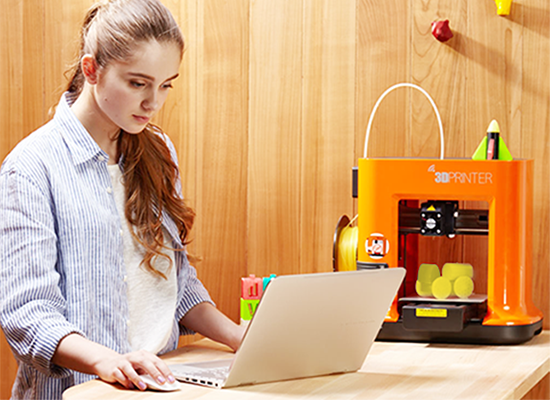
Gone are the days when students could only print on traditional two-dimensional paper. The world of 3D printing is opening up new doors in the classroom setting. With the invention of this technology, teachers can bring lessons to life in a new way that was previously inaccessible. Most classes could benefit from the addition of a 3D printer, but STEM classes can uniquely utilize this new opportunity. The ability to design and physically create small models can be invaluable in these STEM-based courses.

How can educators make the most of the 3D printer in their classroom? Here are just a few ways that this technology can create a more realistic and hands-on lesson to further a child’s grasp of essential concepts.

Learn more about simple machines.

Students need to learn more about simple machines to have a great foundation for engineering in the future. You can present children with the basic elements of a simple machine using a class lesson or a textbook. However, the printer is going to really bring those concepts to life. Using the computer program, allow children to assemble those elements to form their own simple machine. This gives them a tangible understanding of how the parts work together to perform a specific purpose.

Find the solution to a problem.

Every child needs the freedom to create and bring new ideas to life. Educators can help facilitate this process by assigning children a problem that requires a solution. For example, they may need to come up with a new model for a dam or a prototype for a specific type of machine. The dilemma they are faced with can easily relate back to another subject that you are studying.

Give them a little bit of time and space to consider what the solution to their problem should be. Students can use the computer software to design their own model and subsequently print it as a prototype. They may even print new prototypes several times in a process known as rapid prototyping. This allows everyone to accurately demonstrate their ideas and share them with the class.

Design different types of transportation.

Most kids are extremely interested in how people move from one place to another. They dream of the day when they can own their very first flying car, but they stare longingly at sports vehicles until then. 3D printing can help put those daydreams to good use by encouraging students to develop new and different types of transportation. Make it into a group project to harness the power that one expert refers to as the 4 Cs: creativity, collaboration, critical thinking, and communication.

STEM subjects should be captivating our students and piquing their interest with new advancements. It only makes sense that we should include new technology into the mix to keep teaching students even more. 3D printers allow children to bring their solutions to life more effectively. Try out a few of these simple ideas in your classroom to determine what might be right for your STEM students.


 

Previous Article

How to Manage Group Assignments in Google ...

Next Article

We Need to End the War Between ...

Matthew Lynch

Related articles More from author

  • Early Childhood & K-12 EdTechHigher Education EdTechOnline Learning & eLearningPersonalized Learning

    Virtual Science Labs: Get More with Fewer Resources

    January 30, 2017
    By Matthew Lynch
  • Early Childhood & K-12 EdTechHigher Education EdTech

    How Immersive Tech is Bringing New Opportunities into the Classroom

    May 7, 2018
    By Matthew Lynch
  • Early Childhood & K-12 EdTechOnline Learning & eLearningParent & Family Tech

    Best Practices for Supporting Parents with Remote Learning

    September 21, 2020
    By Matthew Lynch
  • Early Childhood & K-12 EdTechHigher Education EdTechPersonalized Learning

    What Are the Benefits of Learning Analytics?

    August 27, 2017
    By Matthew Lynch
  • Assistive TechnologyEarly Childhood & K-12 EdTechHigher Education EdTech

    9 Questions You Should Ask Before Buying an Edtech Product

    January 7, 2017
    By Matthew Lynch
  • Early Childhood & K-12 EdTech

    4 Ways Digital Technology has Changed K-12 Learning

    February 20, 2017
    By Matthew Lynch

Search

Login & Registration

  • Log in
  • Entries feed
  • Comments feed
  • WordPress.org

Newsletter

Signup for The Tech Edvocate Newsletter and have the latest in EdTech news and opinion delivered to your email address!

About Us

Since technology is not going anywhere and does more good than harm, adapting is the best course of action. That is where The Tech Edvocate comes in. We plan to cover the PreK-12 and Higher Education EdTech sectors and provide our readers with the latest news and opinion on the subject. From time to time, I will invite other voices to weigh in on important issues in EdTech. We hope to provide a well-rounded, multi-faceted look at the past, present, the future of EdTech in the US and internationally.

We started this journey back in June 2016, and we plan to continue it for many more years to come. I hope that you will join us in this discussion of the past, present and future of EdTech and lend your own insight to the issues that are discussed.

Newsletter

Signup for The Tech Edvocate Newsletter and have the latest in EdTech news and opinion delivered to your email address!

Contact Us

The Tech Edvocate
910 Goddin Street
Richmond, VA 23231
(601) 630-5238
[email protected]

Copyright © 2026 Matthew Lynch. All rights reserved.