How to read candlestick charts
“`html
In the world of trading, being able to read candlestick charts can set you apart from the average investor. These visuals provide a wealth of information at a glance, revealing the price action of assets over time. Whether you’re a novice looking to get started or an experienced trader seeking to refine your skills, understanding candlestick chart reading is essential.
1. The Origins of Candlestick Charts: Understanding Their Historical Context
Candlestick charts have a rich history that dates back to the 18th century in Japan. Developed by rice trader Munehisa Homma, these charts were originally used to track rice prices. Homma’s methods were so effective that they laid the groundwork for modern technical analysis. Today, these charts are widely used across various financial markets including stocks, forex, and commodities.
The design of a candlestick chart consists of individual candles representing specific time frames. Each candle displays four key pieces of information: the open, high, low, and close prices. This provides traders with a detailed view of market sentiment and price behavior, allowing them to make informed decisions.
2. Reading the Basics: Components of a Candlestick
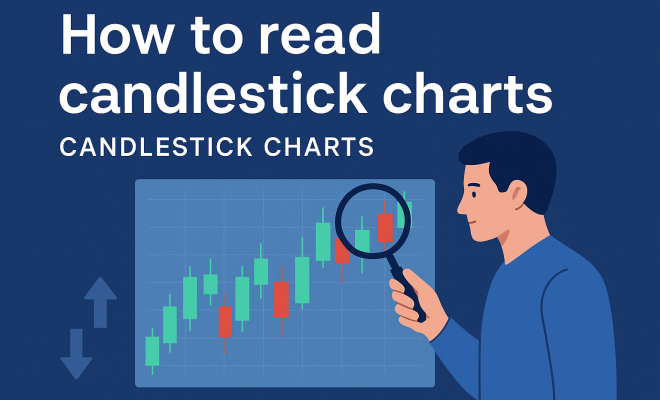
Understanding how to read a candlestick is crucial for anyone involved in candlestick chart reading. Each candle has a body and wicks (also known as shadows). The body represents the range between the open and close prices, while the wicks indicate the highest and lowest prices during the period.
A green (or white) candle shows that the closing price was higher than the opening price, indicating bullish sentiment. Conversely, a red (or black) candle signifies that the closing price was lower than the opening price, reflecting bearish sentiment. Recognizing these patterns is the first step in interpreting market trends effectively.
3. Time Frames Matter: Selecting the Right Interval
When engaging in candlestick chart reading, the time frame you choose can significantly influence your analysis. Candlestick charts can represent various intervals, from one minute to several months. Shorter time frames are suitable for day traders looking for quick profits, while longer time frames appeal to long-term investors.
For example, a 1-minute chart may show rapid price changes and is ideal for scalpers, while a daily chart smooths out volatility and provides a clearer picture of overall trends. Understanding which time frame aligns with your trading strategy is vital in making effective decisions based on candlestick patterns.
4. Recognizing Patterns: Common Candlestick Patterns You Should Know
One of the most powerful aspects of candlestick chart reading is identifying patterns formed by multiple candles. These patterns can indicate potential reversals or continuations in price movement. Some well-known patterns include:
- Doji: A doji candle forms when the open and close prices are virtually the same, suggesting market indecision.
- Hammer: A hammer candle, with a small body and long lower wick, appears at the bottom of a downtrend, signaling a potential bullish reversal.
- Engulfing Pattern: This pattern occurs when a larger candle completely engulfs the previous one, indicating a strong reversal.
Understanding these patterns allows traders to anticipate potential market movements and make strategic decisions.
5. Combining Indicators: Enhancing Your Analysis
While candlestick patterns alone can provide valuable insights, combining them with other technical indicators can enhance your trading strategy. Popular indicators include moving averages, Relative Strength Index (RSI), and Bollinger Bands. These tools can help confirm trends and signal potential entry or exit points.
For instance, if a bullish hammer pattern appears at a support level confirmed by a moving average, it may serve as a strong buy signal. The synergy between candlestick patterns and technical indicators strengthens your overall analysis and improves your likelihood of making successful trades. (See: Candlestick chart on Wikipedia.)
6. Psychology Behind Price Movements: Market Sentiment and Candlestick Charts
Understanding market psychology is critical in candlestick chart reading. Each candlestick reflects market sentiment, driven by the emotional responses of traders. Bullish candles often indicate optimism, while bearish candles suggest fear or pessimism.
Analyzing the psychology behind each candlestick can enhance your trading decisions. For example, if you notice a series of strong bullish candles followed by a doji, it might suggest that the market is losing momentum, and a reversal could be imminent. Recognizing these shifts in sentiment can provide a competitive edge in trading.
7. The Role of Volume: Analyzing Trading Volume with Candlestick Charts
Volume is another key factor to consider when reading candlestick charts. It indicates the number of shares or contracts traded during a specific period and can validate the strength of a price movement. High volume accompanying a bullish candlestick often confirms the strength of the upward trend, while low volume may suggest a lack of conviction.
For traders, observing volume alongside candlestick patterns can inform decisions. If a breakout occurs on high volume, it signals a stronger potential for continuation. Conversely, a breakout on low volume could indicate a false move, leading to potential losses. Integrating volume analysis with candlestick chart reading creates a more comprehensive trading strategy.
8. Practical Applications: How to Implement Candlestick Chart Reading in Trading
So how do you put candlestick chart reading into practice? Start by selecting a trading platform that supports candlestick charts, such as MetaTrader or TradingView. Familiarize yourself with the interface and charting tools. Set up charts for the assets you want to trade and experiment with different time frames to find what works best for you.
As you observe the charts, practice identifying common candlestick patterns. Keep a trading journal detailing your observations and outcomes from trades based on candlestick analysis. This will help reinforce your skills and improve your decision-making process over time.
9. Current Relevance: The Future of Candlestick Charts in Trading
In today’s fast-paced trading environment, the relevance of candlestick charts remains unwavering. They are widely utilized by both individual traders and institutional investors for their straightforward visual representation of price movements. As financial markets continue to evolve with the rise of algorithms and automated trading systems, the principles of candlestick chart reading remain a cornerstone of technical analysis.
Moreover, the integration of artificial intelligence and machine learning into trading strategies is enhancing the way candlestick data is analyzed. Advanced algorithms can now identify patterns faster and more accurately, providing traders with powerful tools to enhance their decision-making processes. However, the fundamental skills of candlestick chart reading will always hold value in understanding market dynamics.
10. Expert Perspectives on Candlestick Chart Reading
Many seasoned traders emphasize the importance of mastering candlestick chart reading as a foundational skill. For instance, renowned trader and author Steve Nison, who popularized candlestick charts in the Western trading community, has explained that understanding these charts not only helps traders make more informed decisions but also allows them to grasp the underlying psychology of market participants.
According to Nison, “Candlestick charting is not just about the patterns themselves but about the emotions behind the price movements.” This perspective underscores the idea that effective trading requires a blend of technical analysis and psychological insight, as traders must often counteract their own emotions when making decisions.
Additionally, many day traders incorporate candlestick analysis with real-time news and market events. For instance, if a significant economic report comes out, traders often watch how candlestick patterns react to the news. This blend of fundamental and technical analysis can yield better trading outcomes.
11. Examples of Candlestick Strategies in Real Trading
There are numerous strategies that traders can implement using candlestick chart reading. Here are a couple of examples to consider:
The Morning Star Pattern
The morning star pattern is a classic bullish reversal pattern that consists of three candles: a long bearish candle, followed by a small-bodied candle that gaps down, and a third long bullish candle that closes above the midpoint of the first candle. Traders often look for this pattern at the bottom of downtrends, indicating a potential reversal. Using this pattern, traders might enter a long position once the third candle closes, coupled with an increase in volume for confirmation. (See: Understanding candlestick charts.)
The Shooting Star
The shooting star is a bearish reversal pattern found at the top of an uptrend. It features a small body with a long upper shadow and little to no lower shadow. When this pattern forms, traders may choose to sell or short the asset, particularly if it’s accompanied by high volume and subsequent bearish movement. Recognizing such patterns can help traders capitalize on bearish price movements.
12. Advanced Candlestick Techniques
For traders seeking to elevate their skills, there are advanced techniques to incorporate into your candlestick chart reading. One such technique is the multi-timeframe analysis. This approach involves analyzing candlestick patterns across different time frames to confirm trends or potential reversals. For example, if a bullish engulfing pattern appears on both the 1-hour and daily charts, it may present a stronger case for entering a long position.
Another advanced technique is the use of fibonacci retracements along with candlestick patterns. Traders often look for candlestick patterns around key Fibonacci levels to confirm potential reversals. If a bullish pattern forms at a 61.8% retracement level, this could signify a strong buying opportunity, reinforcing the bullish sentiment indicated by the pattern.
13. Frequently Asked Questions (FAQ)
What are candlestick charts used for?
Candlestick charts are primarily used to analyze price movements in financial markets. They provide traders with insights into market sentiment, allowing them to identify potential trends, reversals, and entry or exit points.
How do you read a candlestick chart?
To read a candlestick chart, focus on the body and wicks of each candle. The body indicates the open and close prices, while the wicks indicate the high and low prices for that time period. Color also matters: green indicates bullish sentiment while red indicates bearish sentiment.
Can candlestick patterns guarantee trading success?
No trading strategy or analysis method can guarantee success. Candlestick patterns are tools that assist in decision-making. It’s important to combine them with other indicators, market analysis, and risk management strategies to enhance your chances of success.
Is candlestick chart reading suitable for beginners?
Yes, many traders begin with candlestick chart reading due to its straightforward visual representation. As long as you remain committed to learning and practicing, you can effectively use candlestick charts, regardless of your experience level.
What is the significance of volume in candlestick chart reading?
Volume is crucial because it validates the strength of price movements. High volume during a price increase indicates strong interest, while low volume may suggest a lack of conviction, making it less reliable as an indicator of trend strength.
14. Comparing Candlestick Chart Reading with Other Chart Types
While candlestick charts are powerful tools, it’s worth comparing them to other chart types like line charts and bar charts. Each has its unique strengths and weaknesses, and understanding these can enhance your overall trading strategy.
Line Charts
Line charts are the simplest form of charting, connecting closing prices over a set time frame with a continuous line. They provide a clear overview of price movements but lack the depth of information that candlestick charts provide. For example, line charts do not show the open and high prices, making it more challenging to analyze market sentiment effectively.
Bar Charts
Bar charts are more detailed than line charts but less visually intuitive than candlestick charts. Each bar shows the open, high, low, and close prices, similar to a candlestick. However, the lack of color differentiation can make it harder to quickly gauge market sentiment. Traders who prefer a more visual representation often find candlestick charts to be more user-friendly and informative. (See: New York Times on candlestick charting.)
Ultimately, the choice of chart type depends on individual trading styles. Many traders use candlestick charts as their primary analysis tool but may refer to line and bar charts for additional insights.
15. Real-World Applications of Candlestick Chart Reading
Candlestick chart reading is widely used in various financial markets. Here are a few real-world applications to consider:
Forex Trading
In the foreign exchange market, traders often rely on candlestick patterns to identify entry and exit points. For instance, a bullish engulfing pattern might signal a potential upward movement in currency pairs, prompting traders to enter a long position. The highly liquid nature of the forex market can amplify the effectiveness of these patterns, especially during major economic announcements.
Stock Trading
Investors in the stock market utilize candlestick charts to monitor price actions and trends. Patterns like the evening star—indicating a potential bearish reversal—can help traders decide when to sell their stocks or hedge against losses. The combination of candlestick readings with fundamental analysis can lead to more informed investment decisions.
Cryptocurrency Trading
As cryptocurrencies have gained popularity, candlestick chart reading has become a crucial skill for many crypto traders. Given the market’s volatility, recognizing patterns like hammers or dojis can help traders capitalize on rapid price movements. The speed at which cryptocurrency prices fluctuate makes the ability to read candlestick charts even more valuable.
16. Tips for Improving Your Candlestick Chart Reading Skills
Here are some tips for enhancing your skills in candlestick chart reading:
- Practice Regularly: The more you practice reading candlestick charts, the better you will become. Use demo accounts or paper trading to experiment without risking real money.
- Study Historical Charts: Analyzing past charts can provide insights into how certain patterns played out in different market conditions. This historical knowledge can bolster your confidence in real-time trading.
- Join Trading Communities: Engaging with other traders can expose you to different perspectives and strategies. Consider joining forums, social media groups, or local meetups to share insights and learn from others.
- Utilize Trading Software: Many platforms offer tools that can help you identify candlestick patterns automatically. Familiarize yourself with these tools to enhance your analysis speed and accuracy.
- Keep a Trading Journal: Documenting your trades and the reasoning behind each decision can provide valuable feedback on your trading strategy and candlestick reading skills. Review your journal regularly to identify strengths and areas for improvement.
17. Conclusion: Mastering Candlestick Chart Reading
Mastering candlestick chart reading is an invaluable skill for any trader. By understanding the history, components, and patterns of candlestick charts, you can gain deeper insights into market movements. Coupling candlestick analysis with other indicators, volume analysis, and market psychology allows you to develop a comprehensive trading strategy.
Whether you’re a novice or an experienced trader, the journey of mastering candlestick charts is ongoing. Keep learning, practicing, and applying your knowledge in real trading scenarios. With time and effort, you’ll be well-equipped to make informed trading decisions that can lead to success in the financial markets.
“`
Trending Now
Frequently Asked Questions
What are candlestick charts and how do they work?
Candlestick charts are visual representations of price movements over specific time frames, displaying four key data points: open, high, low, and close prices. Each candle provides insights into market sentiment, allowing traders to make informed decisions based on price action.
What do the colors of candlesticks mean?
In candlestick charts, a green (or white) candle indicates that the closing price is higher than the opening price, reflecting bullish sentiment. Conversely, a red (or black) candle signifies a closing price lower than the opening price, indicating bearish sentiment.
How do you read a candlestick chart?
To read a candlestick chart, focus on the body and wicks of each candle. The body shows the range between the open and close prices, while the wicks indicate the highest and lowest prices during that time frame. Understanding these elements helps interpret market trends.
What is the history of candlestick charts?
Candlestick charts originated in 18th century Japan, developed by rice trader Munehisa Homma. Initially used to track rice prices, these charts have evolved into a fundamental tool in modern technical analysis across various financial markets, including stocks and forex.
Why are time frames important in candlestick chart reading?
Time frames are crucial in candlestick chart reading because they determine the period each candle represents. Selecting the right interval helps traders analyze price movements effectively and make decisions based on the appropriate market dynamics for their trading strategy.
Have you experienced this yourself? We’d love to hear your story in the comments.