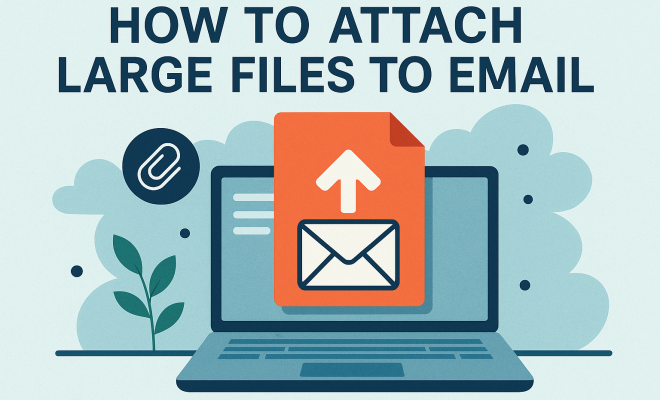
How to attach large files to email
“`html
In today’s digital world, sending files via email is a daily occurrence for many of us. However, the process can quickly become frustrating when you need to send large files that exceed the usual size limits. Understanding how to send large files via email can save you time, energy, and avoid potential setbacks in both personal and professional communication. Here, we provide seven essential tips that will help you send large files with ease.
1. Know the Size Limits of Your Email Provider
Before you even think about sending files, it’s crucial to understand the size limits imposed by your email provider. Most mainstream email services like Gmail, Yahoo, and Outlook typically have a cap on attachment sizes, usually around 25 MB. Exceeding this limit means your email won’t be sent, and you’ll have to find alternative ways to share your files.
For instance, Gmail allows attachments up to 25 MB, but if you attempt to attach a file larger than that, you’ll be prompted to upload it to Google Drive instead. This automatic transition can be a lifesaver, but it’s better to know your provider’s limits beforehand to avoid any surprises when you hit send.
2. Compress Your Files
If you’re sending large files directly through email, one of the simplest methods to fit under the size limit is compressing your files. Utilizing file compression software, such as WinRAR or 7-Zip, can significantly reduce the size of documents, images, or videos before you send them. This method is particularly effective for folders containing multiple files.
For Windows users, simply right-click the file or folder and choose “Send to” then “Compressed (zipped) folder.” This action generates a zipped folder that’s often much smaller than the original. Mac users can achieve similar results by right-clicking and selecting “Compress.” While compression won’t work wonders on all file types, it’s a straightforward first step when considering how to send large files via email.
3. Use Cloud Storage Solutions
Cloud storage services have revolutionized how we share files online, allowing you to bypass email size limits altogether. Platforms like Google Drive, Dropbox, and OneDrive enable users to upload large files and share them via downloadable links instead of attachments. This method not only handles size limitations but also simplifies file organization and sharing.
For example, if you choose Google Drive, you can upload your file and then right-click on it to get a sharable link. You can then paste this link into your email, allowing recipients to access the file without any size restrictions. This is particularly useful for professional settings where you may need to share large presentations or multimedia files.
4. Consider File Transfer Services
For those who regularly need to send large files, using specialized file transfer services can be a game-changer. Services like WeTransfer, Send Anywhere, and Hightail are designed specifically for this purpose and allow you to transfer files that are often several gigabytes in size.
Most of these services operate on a freemium model, letting you send files under a certain size for free. For instance, WeTransfer allows transfers up to 2 GB without any cost, making it a viable option for casual users. These platforms typically generate a download link, which you can include in your email for easy access. This streamlined method is particularly beneficial when sending files to multiple recipients or when the recipient doesn’t have a cloud storage account.
5. Break It Down: Send in Parts
When all else fails, the old adage “if you can’t beat them, join them” applies here. If your files are too large and you cannot compress them enough to fit the limits, consider breaking them into smaller parts. This can be done by sending multiple emails with different sections of the file. (See: Email overview on Wikipedia.)
For instance, if you’re sending a video file, you could break it down by scenes or chapters. Make sure to label each part clearly in the subject line or filename to avoid confusion. While this approach is more tedious, it can be a simple workaround for managing large files without relying on additional software or services.
6. Optimize Your File Formats
The format of your files can significantly affect their size. Some file formats are inherently larger than others. For example, images in PNG format tend to be larger than those in JPEG format. If applicable, converting your files to more size-efficient formats can make a big difference.
Consider using a PDF format for documents, which often compresses file size without sacrificing quality. Additionally, when dealing with images, tools like Adobe Photoshop or online converters can help reduce the size while maintaining clarity. This consideration of file format is essential in the broader discussion of how to send large files via email effectively.
7. Utilize Email Clients with Built-In Large File Support
Some email clients have integrated features that make sending large files easier. For example, Outlook offers a built-in OneDrive integration, allowing you to upload files directly from your email draft. This can streamline the process of sharing large documents without needing to leave the email client.
Additionally, applications like Mozilla Thunderbird can manage attachments more efficiently, sometimes automatically uploading larger files to a cloud service for you. Exploring the specific capabilities of your email client can open up new avenues for efficiently transferring large files.
8. Utilize FTP Services for Large Transfers
For organizations and individuals who frequently need to send large files, using File Transfer Protocol (FTP) services can be a viable solution. FTP allows you to transfer files directly from one computer to another over the Internet. Unlike email, FTP is designed for large file transfers, which means you can send files of any size quite easily.
FTP services such as FileZilla or CuteFTP provide user-friendly interfaces that simplify the upload and download process. Once you upload your files, you can share the FTP link with your recipient, allowing them to download the files at their convenience. This method is particularly useful for businesses that send large datasets or software files regularly.
9. Leverage Collaborative Tools
In addition to traditional methods of file sharing, many modern collaborative tools allow for easy and efficient transfer of large files. Tools like Slack, Microsoft Teams, and Asana not only facilitate team communication but also enable users to share files without worrying about size limits.
For example, in Slack, you can upload files directly into a channel or a direct message, and the platform automatically optimizes the file for sharing. Similarly, Microsoft Teams integrates with OneDrive, allowing users to share large files seamlessly within team chats. By leveraging these collaborative tools, you can enhance both communication and file-sharing processes.
10. Be Wary of Email Security Filters
As you explore different methods to send large files, it’s important to keep in mind that email security filters can block certain file types or large attachments. Many organizations have strict security protocols that may prevent large attachments from being delivered, especially if they contain executable files or specific types of compressed files. (See: CDC email communication guidelines.)
To avoid any hiccups, it’s a good idea to check with your recipient about their email security policies. You may also consider renaming your files or compressing them in a different format to bypass any restrictions. This proactive approach ensures your files will reach the intended recipient without unnecessary delays.
11. Understanding Email Client Limitations
Each email client has its unique limitations and benefits. For instance, while Gmail is great for collaboration, it may not be the best option for sending large files regularly. Conversely, Outlook’s integration with OneDrive can help overcome size limitations effectively. Familiarizing yourself with these aspects can help you choose the right email client based on your needs.
For example, if you often send large files, consider using clients that allow integrations with multiple cloud services. This feature can streamline your workflow significantly. Furthermore, explore settings that may allow adjustments for file handling as some clients offer options to change how attachments are processed.
12. Statistics on File Sending Preferences
A recent survey indicated that nearly 60% of professionals reported issues when trying to send large files via email, leading to delays in communication. This statistic underscores the importance of having alternative methods at your disposal. Interestingly, 45% of respondents preferred using cloud-based services over email for sharing large files, citing ease of use and accessibility as significant factors. Understanding these preferences can help you improve your own file-sharing strategies.
13. Professional Insights on File Sharing
Industry experts often suggest that effective communication relies heavily on efficient file sharing. According to Sarah Johnson, a digital communications strategist, “Understanding various tools and their effective use is crucial in today’s fast-paced environment. Being adaptable not only saves time but also enhances productivity.”
In line with this, she emphasizes the importance of choosing the right tool based on specific contexts. For instance, while cloud services may work for most situations, specialized file transfer tools like WeTransfer are better suited for sending media-heavy files, such as videos or high-resolution images.
14. Helpful Tips When Using Zip Files
When compressing files into zip format, there are a few best practices to keep in mind. First, avoid using passwords unless absolutely necessary, as some email clients may block password-protected zip files due to security concerns. Also, provide a brief description in your email about what the files contain, which helps recipients know what to expect before they open the zip file.
It’s also wise to use a clear naming convention when creating zip files. For example, naming your zip file “Project_X_Files.zip” is much clearer than “Stuff.zip.” This practice not only improves organization but also helps recipients find files more easily when they receive multiple attachments from you.
FAQs About Sending Large Files via Email
What is the maximum file size I can send via email?
The maximum file size varies by email provider. Most services allow attachments up to 25 MB, while some providers like Outlook may permit slightly larger files (up to 34 MB). For files exceeding these limits, consider alternative sharing methods such as cloud storage or file transfer services. (See: New York Times on email attachments.)
How can I send videos over email without losing quality?
To send videos without losing quality, consider using cloud storage solutions like Google Drive or Dropbox. By uploading your video to one of these platforms, you can share a link with your recipient, ensuring they download the original high-quality file.
Are there any risks to using file transfer services?
While reputable file transfer services are generally safe, there are inherent risks with sharing sensitive or confidential information online. Always ensure you use well-known services, check their privacy policies, and avoid sending sensitive data unless the service provides adequate encryption and security measures.
Can I send multiple large files in one email?
Sending multiple large files in one email can be tricky if they exceed the attachment size limit. If they do, consider compressing them into a single zipped folder. Alternatively, you could use a cloud service to upload the files and share the download link in your email.
How do I know if my file was successfully sent?
Most email services will notify you if your email has been sent successfully. If you are unsure, you can check your “Sent” folder. For larger files, you may also want to follow up with your recipient to ensure they received the email and can access the file.
What should I do if my email gets bounced back?
If you receive a bounce-back message indicating that your email was not delivered, first check the error message for clues. It may indicate that the file size exceeded the limit. In such cases, consider using a file transfer service or compressing the files before resending. If you suspect it’s a different issue, you might want to contact your email provider for further assistance.
Is it better to send files as attachments or links?
Sending files as links is often better, especially for large files. It not only bypasses attachment size limits but also allows recipients to access the latest version of the file easily. When files are updated in the cloud, the link always points to the most recent version, which is particularly useful for collaborative projects.
Conclusion: Mastering the Art of Sending Large Files
Understanding how to send large files via email is not just about knowing the technicalities; it’s about being creative and resourceful in your approach. Whether you choose to compress files, utilize cloud services, or break them down into smaller parts, the key is to find a solution that works best for you and your recipients. With these strategies in your toolbox, you’ll not only save time but also improve your efficiency in communicating and sharing important files.
“`
Trending Now
Frequently Asked Questions
What is the maximum file size I can attach to an email?
Most email providers have a file size limit for attachments, typically around 25 MB. For example, Gmail, Yahoo, and Outlook enforce this cap, and exceeding it will prevent your email from being sent.
How can I send large files through email?
To send large files via email, consider compressing the files using software like WinRAR or 7-Zip. This reduces the file size, allowing you to stay within your email provider's limits.
What should I do if my file exceeds the email limit?
If your file exceeds the email attachment limit, you can upload it to a cloud storage service like Google Drive or Dropbox and share the link in your email instead.
Can I compress files to send them via email?
Yes, compressing files is an effective way to reduce their size before sending them via email. You can create a zipped folder on both Windows and Mac to achieve this.
What happens if I try to send a file larger than the limit?
If you attempt to send a file larger than your email provider's limit, your email will not be sent. For instance, Gmail prompts you to upload the file to Google Drive instead.
What’s your take on this? Share your thoughts in the comments below — we read every one.