The Tech Edvocate

Top Menu

  • Advertisement
  • Apps
  • Home Page
  • Home Page Five (No Sidebar)
  • Home Page Four
  • Home Page Three
  • Home Page Two
  • Home Tech2
  • Icons [No Sidebar]
  • Left Sidbear Page
  • Lynch Educational Consulting
  • My Account
  • My Speaking Page
  • Newsletter Sign Up Confirmation
  • Newsletter Unsubscription
  • Our Brands
  • Page Example
  • Privacy Policy
  • Protected Content
  • Register
  • Request a Product Review
  • Shop
  • Shortcodes Examples
  • Signup
  • Start Here
    • Governance
    • Careers
    • Contact Us
  • Terms and Conditions
  • The Edvocate
  • The Tech Edvocate Product Guide
  • Topics
  • Write For Us
  • Advertise

Main Menu

  • Start Here
    • Our Brands
    • Governance
      • Lynch Educational Consulting, LLC.
      • Dr. Lynch’s Personal Website
      • Careers
    • Write For Us
    • The Tech Edvocate Product Guide
    • Contact Us
    • Books
    • Edupedia
    • Post a Job
    • The Edvocate Podcast
    • Terms and Conditions
    • Privacy Policy
  • Topics
    • Assistive Technology
    • Child Development Tech
    • Early Childhood & K-12 EdTech
    • EdTech Futures
    • EdTech News
    • EdTech Policy & Reform
    • EdTech Startups & Businesses
    • Higher Education EdTech
    • Online Learning & eLearning
    • Parent & Family Tech
    • Personalized Learning
    • Product Reviews
  • Advertise
  • Tech Edvocate Awards
  • The Edvocate
  • Pedagogue
  • School Ratings

logo

The Tech Edvocate

  • Start Here
    • Our Brands
    • Governance
      • Lynch Educational Consulting, LLC.
      • Dr. Lynch’s Personal Website
        • My Speaking Page
      • Careers
    • Write For Us
    • The Tech Edvocate Product Guide
    • Contact Us
    • Books
    • Edupedia
    • Post a Job
    • The Edvocate Podcast
    • Terms and Conditions
    • Privacy Policy
  • Topics
    • Assistive Technology
    • Child Development Tech
    • Early Childhood & K-12 EdTech
    • EdTech Futures
    • EdTech News
    • EdTech Policy & Reform
    • EdTech Startups & Businesses
    • Higher Education EdTech
    • Online Learning & eLearning
    • Parent & Family Tech
    • Personalized Learning
    • Product Reviews
  • Advertise
  • Tech Edvocate Awards
  • The Edvocate
  • Pedagogue
  • School Ratings
  • A Visitors Guide to Lyon, France

  • JisuLife Ultra2 Portable Fan: A Powerful Multi-Function Cooling Solution

  • A Visitors Guide to Viña del Mar, Chile

  • A Visitors Guide to Århus, Denmark

  • A Visitors Guide to Bakersfield (CA), United States

  • A Visitors Guide to Aurora (CO), United States

  • A Visitor’s Guide to Toledo (OH), United States

  • A Visitors Guide to Cincinnati (OH), United States

  • The MagicEagle Cam 5: Revolutionizing Wildlife Monitoring with Smart 4G Technology

  • A Visitors Guide to Pittsburgh (PA), United States

Digital & Mobile Technology
Home›Digital & Mobile Technology›How Secure Are Face ID and Touch ID?

How Secure Are Face ID and Touch ID?
By Matthew Lynch
May 16, 2023
0
Spread the love

As our personal and financial data continues to migrate into the digital realm, security becomes an ever more pressing concern. Two of the most popular biometric authentication methods, Touch ID and Face ID, have been the subject of intense scrutiny by security experts all over the world. In this article, we take a closer look at the security measures behind Touch ID and Face ID and examine how well they protect personal and financial data.

First introduced in 2013, Touch ID is a fingerprint authentication technology used by Apple Inc. The functionality is straightforward: users scan their fingerprints using their device’s Touch ID sensor, which produces a hash value and sends it to the device’s secure enclave, a dedicated chip that stores biometric data. The secure enclave then compares the hash value to the previously scanned fingerprints to determine if there is a match.

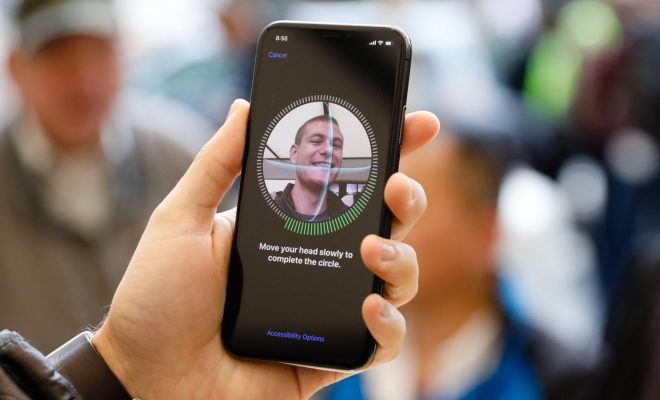
Face ID, meanwhile, made its debut in 2017 and supports newer Apple devices, including the iPhone X, XS, XR, and 11 models. Face ID, on the other hand, uses a more complex system that combines infrared and visible light scanning with advanced algorithms to recognize and authenticate a user’s face. In essence, Face ID captures the visible and infrared light reflecting off the user’s face to create a 3D image that verifies the user’s identity.

Both Touch ID and Face ID have their pros and cons, but the question remains: how secure are these biometric authentication technologies really?

There are several potential vulnerabilities that attackers could exploit when attempting to bypass a biometric authentication system like Touch ID or Face ID. In the case of Touch ID, cybercriminals could potentially access the data stored on the secure enclave, which could contain a user’s biometric data or any other sensitive information. If successful, they could use this information to unlock the device or even steal the user’s identity.

Similarly, Face ID could be vulnerable if a cybercriminal uses sophisticated methods to trick the system. For instance, they could use a high-quality photo, a 3D-printed model of the user’s face or a realistic mask to fool the sensor into granting access to the device. Additionally, environmental factors, such as poor lighting or severe weather, could hamper the effectiveness of Face ID, making it more susceptible to attack.

Despite these potential vulnerabilities, both Touch ID and Face ID are widely considered to be secure authentication methods when used correctly. This is because biometric authentication is more difficult to spoof than other methods, such as using a PIN or password. Furthermore, Apple’s implementation of these technologies includes significant security features, such as the secure enclave, which is isolated from the rest of the device’s software to prevent unauthorized access.

In conclusion, while Touch ID and Face ID are not immune to attacks, they are still considered to be more secure than traditional authentication methods like passwords. However, as technology evolves and new vulnerabilities emerge, manufacturers must continue to refine these systems to keep up with potential threats. Users must also be vigilant and take steps to protect their biometric data, such as enabling two-factor authentication, updating their software regularly, and avoiding insecure networks.


Previous Article

How Much Storage Do You Need on ...

Next Article

How to “Clean” a Flash Drive, SD ...

Matthew Lynch

Related articles More from author

  • Digital & Mobile Technology

    CSS Progress Bars You Can Use on Your Website

    June 23, 2023
    By Matthew Lynch
  • Digital & Mobile Technology

    Android Notifications Not Showing Up? Fixes You Can Try

    June 22, 2023
    By Matthew Lynch
  • Digital & Mobile Technology

    What is Raw Footage?

    May 10, 2023
    By Matthew Lynch
  • Digital & Mobile Technology

    How to Connect an Ethernet Cable to a Laptop

    June 2, 2023
    By Matthew Lynch
  • Digital & Mobile Technology

    Best Apartment Finder Websites and Apartment Search Sites

    September 8, 2023
    By Matthew Lynch
  • Digital & Mobile Technology

    The Best Phone Adapters (ATAs) of 2023

    June 9, 2023
    By Matthew Lynch

Search

Login & Registration

  • Register
  • Log in
  • Entries feed
  • Comments feed
  • WordPress.org

Newsletter

Signup for The Tech Edvocate Newsletter and have the latest in EdTech news and opinion delivered to your email address!

About Us

Since technology is not going anywhere and does more good than harm, adapting is the best course of action. That is where The Tech Edvocate comes in. We plan to cover the PreK-12 and Higher Education EdTech sectors and provide our readers with the latest news and opinion on the subject. From time to time, I will invite other voices to weigh in on important issues in EdTech. We hope to provide a well-rounded, multi-faceted look at the past, present, the future of EdTech in the US and internationally.

We started this journey back in June 2016, and we plan to continue it for many more years to come. I hope that you will join us in this discussion of the past, present and future of EdTech and lend your own insight to the issues that are discussed.

Newsletter

Signup for The Tech Edvocate Newsletter and have the latest in EdTech news and opinion delivered to your email address!

Contact Us

The Tech Edvocate
910 Goddin Street
Richmond, VA 23231
(601) 630-5238
[email protected]

Copyright © 2025 Matthew Lynch. All rights reserved.