Artemis II: NASA’s Historic 2028 Lunar Mission Takes Flight
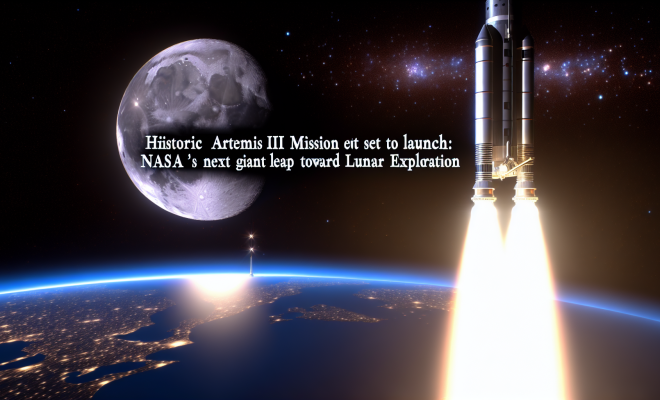
NASA is on the brink of a significant milestone in space exploration with the upcoming launch of the Artemis II mission. Scheduled for Wednesday, April 1, at 6:24 p.m. EDT, this mission will carry a diverse crew of four astronauts on a historic journey around the moon and back, marking the next step in the United States’ quest to return to lunar exploration.
The Crew of Artemis II
The Artemis II mission will be commanded by Reid Wiseman, a veteran astronaut with extensive experience in spaceflight operations. He will be joined by Victor Glover, serving as the pilot for this mission. Additionally, Christina Koch, known for her record-setting time on the International Space Station, and Jeremy Hansen, the first Canadian astronaut to participate in a lunar mission, will complete the crew. Together, these four astronauts represent a blend of expertise and diversity, underscoring NASA’s commitment to inclusive representation in space exploration.
The Mission’s Objectives
The Artemis II mission is designed as a critical step in NASA’s broader Artemis program, which aims to establish a sustainable human presence on the moon. This nine-day journey will not only test the capabilities of the spacecraft but also prepare for future lunar landings, including a planned moon landing in 2028.
During their flight, the crew will embark on a trajectory that will take them to a maximum altitude of 43,760 miles above the lunar surface. This altitude represents a new frontier for human spaceflight, as it is the highest that astronauts have traveled since the last Apollo mission in 1972.
Launch Vehicle: The Space Launch System
At the heart of this ambitious mission is the Space Launch System (SLS), touted as the most powerful operational rocket in the world. The SLS is engineered to deliver astronauts and cargo beyond low Earth orbit, paving the way for deeper space exploration. The rocket’s unparalleled thrust capabilities will be crucial in propelling the Orion spacecraft, which will carry the Artemis II crew on their lunar journey.
NASA’s team of engineers and scientists have conducted extensive testing to ensure the SLS’s performance meets the rigorous demands of space travel. The upcoming launch will be a testament to the hard work and dedication of everyone involved in the Artemis program.
Weather Forecast and Launch Preparations
As the launch date approaches, forecasters are predicting an 80% chance of acceptable weather for the launch, a promising sign for the mission’s success. Weather conditions play a critical role in the safety and effectiveness of space launches, and NASA will closely monitor the situation leading up to the event.
In preparation for the launch, extensive checks and simulations have been conducted to ensure that all systems are operational and ready for the challenges of spaceflight. This meticulous attention to detail exemplifies NASA’s commitment to safety and performance.
A Step Toward Sustained Lunar Exploration
The Artemis II mission represents a pivotal moment in NASA’s efforts to establish a sustained lunar exploration program. By successfully conducting this mission, NASA aims to gather crucial data and experience that will inform future lunar missions, including the anticipated Artemis III, which is set to land astronauts on the moon.
These efforts are part of a larger vision that includes utilizing the moon as a stepping stone for further exploration of Mars and beyond. The Artemis program envisions a future where humanity can live and work on the moon, conducting scientific research and laying the groundwork for future missions to the red planet.
Conclusion
The Artemis II mission is not just a journey around the moon; it is a testament to human ingenuity, international collaboration, and the relentless pursuit of exploration. As the launch draws near, excitement is building not only among the astronauts and NASA teams but also among space enthusiasts worldwide.
With the Artemis II mission, NASA is poised to take another giant leap for mankind, rekindling the spirit of exploration and paving the way for future generations to follow in the footsteps of those who first ventured into the cosmos.