The Tech Edvocate

Top Menu

  • Advertisement
  • Apps
  • Home Page
  • Home Page Five (No Sidebar)
  • Home Page Four
  • Home Page Three
  • Home Page Two
  • Home Tech2
  • Icons [No Sidebar]
  • Left Sidbear Page
  • Lynch Educational Consulting
  • My Account
  • My Speaking Page
  • Newsletter Sign Up Confirmation
  • Newsletter Unsubscription
  • Our Brands
  • Page Example
  • Privacy Policy
  • Protected Content
  • Register
  • Request a Product Review
  • Shop
  • Shortcodes Examples
  • Signup
  • Start Here
    • Governance
    • Careers
    • Contact Us
  • Terms and Conditions
  • The Edvocate
  • The Tech Edvocate Product Guide
  • Topics
  • Write For Us
  • Advertise

Main Menu

  • Start Here
    • Our Brands
    • Governance
      • Lynch Educational Consulting, LLC.
      • Dr. Lynch’s Personal Website
      • Careers
    • Write For Us
    • The Tech Edvocate Product Guide
    • Contact Us
    • Books
    • Edupedia
    • Post a Job
    • The Edvocate Podcast
    • Terms and Conditions
    • Privacy Policy
  • Topics
    • Assistive Technology
    • Child Development Tech
    • Early Childhood & K-12 EdTech
    • EdTech Futures
    • EdTech News
    • EdTech Policy & Reform
    • EdTech Startups & Businesses
    • Higher Education EdTech
    • Online Learning & eLearning
    • Parent & Family Tech
    • Personalized Learning
    • Product Reviews
  • Advertise
  • Tech Edvocate Awards
  • The Edvocate
  • Pedagogue
  • School Ratings

logo

The Tech Edvocate

  • Start Here
    • Our Brands
    • Governance
      • Lynch Educational Consulting, LLC.
      • Dr. Lynch’s Personal Website
        • My Speaking Page
      • Careers
    • Write For Us
    • The Tech Edvocate Product Guide
    • Contact Us
    • Books
    • Edupedia
    • Post a Job
    • The Edvocate Podcast
    • Terms and Conditions
    • Privacy Policy
  • Topics
    • Assistive Technology
    • Child Development Tech
    • Early Childhood & K-12 EdTech
    • EdTech Futures
    • EdTech News
    • EdTech Policy & Reform
    • EdTech Startups & Businesses
    • Higher Education EdTech
    • Online Learning & eLearning
    • Parent & Family Tech
    • Personalized Learning
    • Product Reviews
  • Advertise
  • Tech Edvocate Awards
  • The Edvocate
  • Pedagogue
  • School Ratings
  • Why Your Mortgage Could Be Denied by Biased AI – And What the Fed Is Doing About It

  • Unprecedented: Lawsuit Demands Total AI Shutdown Amid Rising Global Panic

  • The Astonishing Truth: Microcredentials Now Trump MBAs for Data Science Jobs

  • The Astonishing Twist: AI Cuts Your Job, Then Helps You Sue Your Boss

  • The Staggering Truth About Palo Alto’s $4.5 Billion AI Bet

  • Mind-Blowing: Satellite Metals Now Outweigh Meteoroids, Sparking Urgent Insurance Crisis

  • The Silent Threat From Above: Your Sky Is Changing, And Here’s Why

  • The AI Property Management Revolution: Visitt MCP’s Astonishing Edge

  • Why Your Home Needs These 9 Groundbreaking Battery Storage Solutions by 2027

  • Devastating Data Breach Exposes Millions: What You MUST Know Now

Uncategorized
Home›Uncategorized›Why Environmental News Verification Is Crucial Today

Why Environmental News Verification Is Crucial Today
By Matthew Lynch
May 15, 2026
0
Spread the love

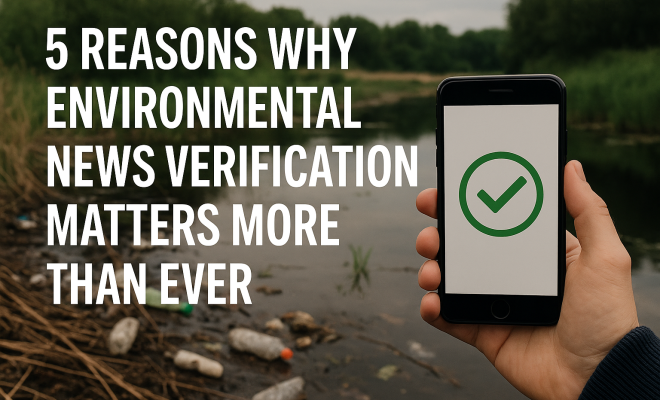
In an age where information is abundant yet often unreliable, the importance of environmental news verification has never been more pronounced. With countless articles circulating daily, identifying genuine breaking news stories can feel like searching for a needle in a haystack. This article delves into why verifying environmental news is crucial for informed decision-making and effective activism.

The Challenge of Identifying Reliable Environmental News

The digital landscape is saturated with varying sources of information, but not all are created equal. Recent observations highlight the difficulty in pinpointing high-volume, trending environmental topics, particularly when resources for real-time news tracking are limited. For example, many articles online may stem from academic journals or unrelated studies rather than urgent environmental issues.

One such instance occurred when a search for the latest environmental topics yielded results such as a journal homepage on climate issues or an academic paper on walnut pests. While these subjects have their merits, they do not necessarily reflect the pressing environmental concerns that demand immediate attention.

The Pitfalls of Misinformation

When news is not properly verified, misinformation can spread rapidly. This can lead to misguided public perception and inefficacious responses to environmental crises. For instance, social media platforms often amplify sensationalized headlines without providing the necessary context. An alarming headline can spread like wildfire, but without verification, it may contribute to confusion rather than clarity.

Moreover, misinformation can undermine public trust in legitimate sources. If audiences become accustomed to encountering false claims or exaggerated stories, they may grow skeptical of all environmental news, which can hinder essential advocacy initiatives.

Importance of Reliable Sources

For effective environmental activism and policy development, the foundation must be rooted in verified and credible information. Reliable sources of environmental news verification can include peer-reviewed journals, trusted environmental organizations, and governmental agencies, such as the National Oceanic and Atmospheric Administration (NOAA). These organizations often provide accurate data and insights that are crucial for understanding complex environmental issues.

Consider the example of NOAA’s detailed reports on marine life, such as their studies on humpback whales. These documents deliver crucial insights into species behavior, population dynamics, and the impacts of climate change on marine ecosystems. Without verification, the significance of such findings could be lost, further complicating conservation efforts.

Creating a Vetted List of High-Interest Topics

To navigate the overwhelming sea of information, stakeholders can benefit from creating a vetted shortlist of high-interest environmental topics. This approach allows for focused investigative journalism and research into pressing issues. Such a list can include:

  • Climate Change and Its Effects: Analysis of global warming trends and their implications for weather patterns.
  • Plastic Pollution: Investigating the effects of plastic waste on marine ecosystems.
  • Renewable Energy Developments: Insights into advancements in solar, wind, and other sustainable energy sources.
  • Biodiversity Loss: Understanding the factors contributing to species extinction and habitat destruction.
  • Environmental Justice: Exploring the intersection of social equity and environmental policy.

By focusing on these topics, journalists and researchers can ensure that environmental news coverage remains relevant and impactful.

How to Verify Environmental News

For individuals looking to verify environmental news, several strategies can be employed:

  • Check the Source: Always scrutinize where the information is coming from. Established news organizations and academic institutions usually have rigorous editorial processes.
  • Cross-Reference: Look for corroboration from multiple reliable sources. If a piece of information is genuine, it will likely be reported by various outlets.
  • Seek Expert Opinions: When in doubt, consult experts in the field. Their insights can clarify complex topics and debunk myths.
  • Look for Data and References: Credible articles often include citations from peer-reviewed studies, statistical data, and links to primary research.

By employing these methods, both readers and journalists can contribute to a more informed public discourse around environmental issues.

The Future of Environmental News Verification

As we move forward, the need for robust mechanisms of environmental news verification will only increase. With environmental crises looming on the horizon, accurate reporting is essential for sparking public interest and action. Media organizations, researchers, and activists must collaborate to ensure that the truth prevails amidst the noise of misinformation.

In conclusion, ensuring that environmental news is verified and credible is foundational for effective activism and informed public discourse. Only through diligent verification can we hope to educate, inspire, and mobilize society to address the pressing environmental challenges of our time.


Previous Article

Nvidia Data Breach: Partner Cyberattack Exposes Millions ...

Next Article

9 Business Intelligence Trends 2026 You Need ...

Matthew Lynch

Related articles More from author

  • Uncategorized

    OpenAI’s Astra for Law: 7 Reasons It Could Upend the Legal World

    September 25, 2026
    By Matthew Lynch
  • Uncategorized

    Why ‘G’ Exploded on Google Trends: The July 2026 Mystery

    July 1, 2026
    By Matthew Lynch
  • Uncategorized

    Developers Admit Why Their AI-Generated Cutscenes Sparked Pure Fury

    August 24, 2026
    By Matthew Lynch
  • Uncategorized

    The Untapped Goldmine: Why These Affordable Online Bachelor’s Programs Will Explode in 2026

    September 22, 2026
    By Matthew Lynch
  • Uncategorized

    Discover Apopka, Florida: The Indoor Foliage Capital

    December 7, 2024
    By Matthew Lynch
  • Uncategorized

    Best Places to Live in Woodland, California

    November 15, 2024
    By Matthew Lynch

Search

Login & Registration

  • Log in
  • Entries feed
  • Comments feed
  • WordPress.org

Newsletter

Signup for The Tech Edvocate Newsletter and have the latest in EdTech news and opinion delivered to your email address!

About Us

Since technology is not going anywhere and does more good than harm, adapting is the best course of action. That is where The Tech Edvocate comes in. We plan to cover the PreK-12 and Higher Education EdTech sectors and provide our readers with the latest news and opinion on the subject. From time to time, I will invite other voices to weigh in on important issues in EdTech. We hope to provide a well-rounded, multi-faceted look at the past, present, the future of EdTech in the US and internationally.

We started this journey back in June 2016, and we plan to continue it for many more years to come. I hope that you will join us in this discussion of the past, present and future of EdTech and lend your own insight to the issues that are discussed.

Newsletter

Signup for The Tech Edvocate Newsletter and have the latest in EdTech news and opinion delivered to your email address!

Contact Us

The Tech Edvocate
910 Goddin Street
Richmond, VA 23231
(601) 630-5238
[email protected]

Copyright © 2026 Matthew Lynch. All rights reserved.