Wildfires 2026: Thousands Flee France & Spain Blazes
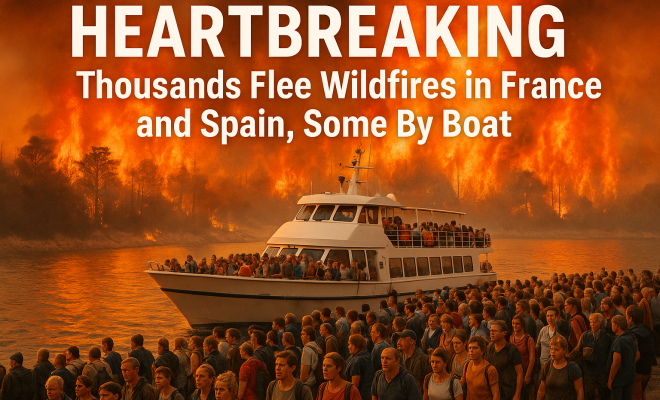
The summer of 2026 will likely be etched into the memories of thousands across southwestern France and central Spain, not for idyllic beach days or sun-drenched holidays, but for a terrifying scramble to safety. As I write this, raging wildfires in France and Spain have forced an estimated 92,000 people from their homes, turning serene landscapes into infernos and painting skies a menacing orange. The scenes unfolding, particularly along France’s picturesque Atlantic coast, are nothing short of harrowing – entire communities evacuating, some residents even making desperate escapes by boat from the popular Cap Ferret peninsula as flames advanced relentlessly.
It’s a stark reminder of our planet’s accelerating climate crisis, and how quickly extreme weather events can shatter lives and livelihoods. The sheer scale of these blazes, complicated by high winds and challenging hilly terrain, has pushed emergency services to their limits. Firefighters, dozens of whom have been injured, are battling against formidable odds, trying to contain fires that have already consumed vast tracts of land. This isn’t just about statistics; it’s about people losing everything, about homes reduced to ash, and about the profound psychological toll of such sudden displacement. Let’s delve deeper into the unfolding tragedy and what it signifies for the future.
The Unfolding Crisis in Southwestern France
The situation in southwestern France has been particularly dramatic, capturing significant attention both locally and internationally. The Cap Ferret peninsula, a narrow strip of land separating the Atlantic Ocean from the Bassin d’Arcachon, is usually a haven for tourists and a retreat for the well-heeled. Its charming villages, oyster farms, and pristine beaches typically attract visitors seeking tranquility and natural beauty. This year, however, the allure has been replaced by a landscape under siege.
As the fires intensified, residents and holidaymakers found themselves trapped, with flames rapidly approaching their properties. The images shared across social media have been truly haunting: plumes of thick, black smoke towering over the iconic lighthouse, boats packed with evacuees fleeing across the water, and the eerie glow of fires visible for miles. Near Cap Ferret, an astonishing 125 square kilometers have already been incinerated. To give you a sense of scale, that’s roughly equivalent to the entire city of Paris being consumed by fire. Further south along the coast, another 25 square kilometers have been destroyed, signaling a widespread and persistent threat.
The terrain here, with its dense pine forests and proximity to the coast, creates a volatile environment for wildfires. The dry conditions, exacerbated by prolonged heatwaves, act like a tinderbox, and even a small spark can quickly escalate into an uncontrollable inferno. Local authorities have been praised for their swift evacuation efforts, but the sheer number of people needing to leave their homes, often with just minutes to gather essential belongings, underscores the ferocity and speed of these fires.
Spain’s Struggle Against the Flames
While the dramatic boat evacuations from Cap Ferret have dominated headlines, Spain is grappling with its own devastating wildfire crisis, particularly in its central regions. The Spanish government has declared an emergency, mobilizing extensive resources to combat the blazes. Here, too, the combination of scorching temperatures, arid landscapes, and strong winds has created ideal conditions for fires to spread rapidly and unpredictably.
The challenge in Spain is often compounded by its diverse geography, which includes vast expanses of forests and scrubland in mountainous areas. These remote locations make firefighting incredibly difficult, often requiring aerial support from water-bombing planes and helicopters to reach inaccessible areas. The fires in central Spain have already forced the evacuation of thousands, adding to the total number of displaced people across the Iberian Peninsula and France. It’s a sobering reminder that the threat of wildfires in France and Spain is a shared, regional one, demanding coordinated responses and international cooperation.
The impact on rural communities in Spain is particularly acute. Many of these areas rely on agriculture, forestry, and tourism, all of which are severely disrupted by wildfires. The economic toll, beyond the immediate destruction of property, will be significant and long-lasting, affecting livelihoods and the fabric of community life for years to come. It’s not just about the loss of homes; it’s about the loss of a way of life.
The Human Cost: Evacuations and Injuries
The numbers involved in these evacuations are truly staggering. With 92,000 people forced to flee, we’re talking about the population of a medium-sized city being uprooted overnight. Imagine the chaos, the fear, the uncertainty that permeates such a mass exodus. Families separated, pets left behind in the haste, the elderly and vulnerable requiring special assistance – these are the human stories behind the statistics.
Beyond those displaced, the frontline heroes battling these blazes are paying a heavy price. Dozens of firefighters have been injured, sustaining burns, smoke inhalation, and exhaustion as they work tirelessly, often for days on end, in extremely hazardous conditions. These men and women run towards danger when everyone else is running away, putting their lives on the line to protect others’ homes and futures. Their bravery is commendable, but it also highlights the immense physical and mental toll of this ongoing crisis. We owe them a debt of gratitude, but more importantly, we need to ask what more can be done to prevent such situations from recurring.
The psychological impact on evacuees and emergency personnel cannot be overstated. Witnessing your home and community threatened or destroyed leaves deep scars. Many will suffer from trauma, anxiety, and a sense of loss that extends far beyond material possessions. Providing adequate mental health support will be as crucial as rebuilding infrastructure in the aftermath of these devastating fires. (See: Climate change and health.)
Climate Change: The Elephant in the Scorched Room
It’s impossible to discuss the escalating crisis of wildfires in France and Spain without addressing the overarching context: the climate crisis. While specific weather events can’t always be directly attributed to climate change, the scientific consensus is clear: a warming planet creates conditions that make extreme weather, including prolonged heatwaves and droughts, more frequent and more intense. And what does that mean? It means more fuel for fires, drier landscapes, and longer fire seasons.
The Mediterranean basin, which includes much of Spain and parts of France, is identified by climate scientists as a particular hotspot for climate change impacts. Projections suggest that the region will experience hotter, drier summers, making it increasingly vulnerable to wildfires. We’re not just talking about incremental changes; we’re seeing shifts that fundamentally alter the environment and increase the risk of catastrophic events. The current fires are not isolated incidents; they are part of a worrying trend observed across Southern Europe and indeed, globally.
The interconnectedness of these phenomena is undeniable. Record-breaking temperatures, which have become a recurring feature of recent summers, lead to increased evaporation, parching vegetation. This dry biomass then becomes highly flammable. When coupled with strong winds, which can fan even small embers into raging infernos and carry them over long distances, the stage is set for disaster. It’s a vicious cycle that demands urgent, global action on climate mitigation and adaptation.
The Role of Terrain and Weather Conditions
While climate change provides the macro context, the immediate dynamics of these wildfires are heavily influenced by local terrain and current weather conditions. In both France and Spain, the fires are being exacerbated by two primary factors: high winds and challenging topography. Wind acts as a fire’s accelerant and transporter. It pushes flames faster, making containment incredibly difficult, and can carry embers far ahead of the main fire front, starting new blazes (known as ‘spotting’). This makes predicting a fire’s path a nightmare for firefighters.
The hilly and sometimes mountainous terrain in affected areas also presents significant obstacles. Fires tend to move uphill much faster than downhill, creating rapid upward surges. The uneven ground and dense vegetation in these areas make it hard for ground crews to access fire lines effectively, often forcing them to rely on aerial support. It’s a dangerous dance between firefighters and nature’s raw power, where every gust of wind and every slope can turn the tide of battle.
Furthermore, the specific types of vegetation play a crucial role. Many of the forests in these regions are composed of pine and eucalyptus, species known for their flammability due to their resinous nature and the way they shed dry leaves. This combination of dry, flammable fuel, strong winds, and complex terrain creates a perfect storm for out-of-control wildfires. Understanding these local dynamics is crucial for developing effective prevention and response strategies.
Social Media and the Global Awareness
In our interconnected world, the dramatic scenes from France and Spain haven’t stayed local. Social media platforms have been flooded with images and videos from the ground: towering smoke plumes, red-orange skies, panicked evacuations, and the stark contrast of normal life being engulfed by an environmental catastrophe. This instant, visual dissemination of information has played a critical role in raising global awareness about the severity of these wildfires.
While the immediate impact is local, the shared footage acts as a powerful, visceral reminder of the climate crisis’s tangible effects. It’s one thing to read about rising temperatures; it’s quite another to see people fleeing their homes by boat, an image that resonates deeply and evokes a sense of urgency. This visibility also helps mobilize support and empathy, both from fellow citizens and international communities, for those affected and for the heroic efforts of emergency services.
However, social media also comes with its challenges, including the potential for misinformation and the emotional toll on those constantly exposed to such distressing content. Yet, its power to connect, inform, and galvanize action in real-time remains undeniable, making these distant tragedies feel much closer to home for millions around the world.
Beyond Suppression: Prevention and Adaptation
While the immediate focus is on suppressing these active wildfires in France and Spain, the larger conversation must shift towards long-term prevention and adaptation strategies. Simply reacting to fires after they start is no longer sustainable, given their increasing frequency and intensity. We need a multi-faceted approach that addresses both the causes and the consequences.
Prevention involves several key areas. First, better forest management practices are essential. This includes controlled burns to reduce fuel loads, creating firebreaks, and thinning out dense vegetation. Second, stricter regulations around human activity in dry periods are vital, as many fires are still started by accidental human ignition. Third, public awareness campaigns are crucial to educate citizens on fire risks and responsible behavior.
Adaptation, on the other hand, means learning to live with the increased risk. This includes strengthening early warning systems, improving evacuation protocols, and investing in fire-resistant infrastructure. It also involves urban planning that considers fire risk, such as maintaining defensible spaces around homes and using appropriate building materials. For example, some communities are exploring ‘fire-smart’ landscaping that uses less flammable plant species. These proactive measures, though costly, are investments that will save lives, property, and natural ecosystems in the long run.
The Economic and Ecological Fallout
The immediate devastation of homes and infrastructure is only one part of the story. The economic and ecological fallout from these extensive wildfires in France and Spain will be profound and long-lasting. Economically, the destruction of agricultural land, timber resources, and tourism infrastructure will hit local economies hard. The cost of firefighting operations alone runs into millions, not to mention the subsequent expenses for relief, recovery, and rebuilding efforts. (See: Wildfires in France and Spain.)
Ecologically, the damage is immense. Forests are vital carbon sinks, and their destruction releases vast amounts of stored carbon into the atmosphere, further exacerbating climate change – another cruel feedback loop. Wildlife habitats are obliterated, leading to significant biodiversity loss. Soil erosion becomes a major risk in burnt areas, especially with subsequent rainfall, which can cause landslides and further degrade ecosystems. The recovery of these natural landscapes can take decades, if not centuries, and some ecosystems may never fully return to their former state.
The impact on water quality is also a concern. Ash and debris can contaminate rivers and reservoirs, affecting drinking water supplies and aquatic life. It’s a complex web of interconnected consequences that extends far beyond the immediate flames, highlighting the urgency of both preventing these fires and supporting the long-term recovery of affected regions.
Looking Ahead: A New Normal?
As the fires continue to rage, the question many are asking is whether this is the ‘new normal.’ The evidence, sadly, points in that direction. The increasing frequency, intensity, and scale of wildfires across Southern Europe, and indeed globally, suggest that these events are not anomalies but rather a trend we must learn to contend with. The summer of 2026 is providing yet another harsh lesson.
This reality demands a fundamental rethinking of how we manage our landscapes, how we plan our communities, and how we address the climate crisis. It requires greater international cooperation, significant investment in research and technology for fire prevention and suppression, and a societal shift towards living more sustainably within the constraints of a warming planet. The images of people fleeing by boat from burning coastlines are not just dramatic news footage; they are urgent calls to action that we simply cannot afford to ignore.
The resilience of the communities affected by these wildfires in France and Spain will be tested in the months and years to come. Rebuilding will be a monumental task, but it also presents an opportunity to build back better, smarter, and with greater foresight. Let’s hope that the sheer scale of this summer’s devastation finally catalyzes the systemic changes needed to protect our planet and its people from future infernos.
Expert Perspectives: The Shifting Science of Fire
Leading fire ecologists and climate scientists offer a sobering view on the current wildfire crisis. Dr. Elena Rodriguez, a climatologist specializing in Mediterranean ecosystems, highlights how the “fire season” is no longer confined to summer months. “We’re seeing fire conditions emerge earlier in spring and persist well into autumn,” she explains. “The window for safe prescribed burns shrinks, and the overall risk period expands, putting immense pressure on firefighting resources for longer stretches of the year.” This extended season means firefighters are battling exhaustion even before the peak summer heat arrives.
From a forestry perspective, Professor Marc Dubois, a fire management expert at the French National Institute for Agricultural Research, points out a crucial shift in fire behavior. “These aren’t just surface fires anymore,” he observes. “With extreme drought and dense, dry fuel, we’re seeing more crown fires – where the flames consume the tree canopy. These are much faster, more intense, and virtually impossible for ground crews to tackle directly. They create their own weather systems, generating fire tornadoes and massive ember showers that spread the blaze incredibly quickly.” This change in fire dynamics makes traditional suppression methods far less effective and significantly more dangerous for personnel.
These expert insights paint a picture of an evolving threat, one that demands not just more resources, but also innovative strategies and a deeper understanding of these new, more aggressive fire behaviors. It’s a race against time to adapt to a landscape fundamentally altered by climate change.
International Cooperation: A United Front
The shared nature of the wildfire threat across Southern Europe has spurred significant international cooperation, a testament to the idea that climate challenges know no borders. When wildfires in France and Spain escalate beyond national capacities, European Union mechanisms kick in, activating the EU Civil Protection Mechanism. This means countries can request assistance from other member states, leading to the deployment of specialized firefighting aircraft, ground crews, and equipment.
For example, during severe outbreaks, you’ll often see Spanish water-bombing planes assisting in France, and vice-versa. Portugal, Italy, and Greece, all experienced in battling large-scale fires, also contribute personnel and resources when called upon. This pooled resource system is crucial for managing the sheer scale of these events. Beyond immediate response, there’s also a growing emphasis on sharing best practices in prevention, early detection technologies, and post-fire recovery strategies. Organizations like the European Forest Fire Information System (EFFIS) play a key role in monitoring conditions and forecasting risks across the continent, enabling more coordinated and proactive responses. This collaborative spirit is essential, because a fire in one country can quickly become a regional crisis.
Historical Context: Are These Fires Truly Unprecedented?
While the recent scale of wildfires in France and Spain feels unprecedented, it’s worth briefly looking at historical data. Southern Europe has always experienced wildfires, often a natural part of its ecosystem. However, statistics reveal a clear upward trend in both the number and intensity of large fires over the last few decades. The European Commission’s Joint Research Centre reports that the average annual burnt area in the Mediterranean basin has increased significantly since the 1980s. (See: Climate change and extreme weather events.)
What sets today’s fires apart isn’t just their frequency, but their extreme behavior. We’re seeing more “megafires” – blazes that exceed 1,000 hectares – and “gigafires” (over 10,000 hectares) which were once rare. These are often characterized by rapid, uncontrollable spread and immense energy release. Historical records show periods of drought and fire, but the current combination of prolonged, intense heatwaves, extreme dryness, and strong winds, all amplified by climate change, is creating conditions that are fundamentally different from past fire regimes. So, while fires aren’t new, their current destructive potential absolutely is.
The Role of Technology in Firefighting
Technology is playing an increasingly vital role in both preventing and combating wildfires. Satellite imagery and drone technology are transforming early detection and real-time monitoring. Satellites equipped with thermal cameras can identify nascent fires in remote areas before they become uncontrollable, giving firefighters a critical head start. Drones, on the other hand, provide invaluable aerial reconnaissance, mapping fire perimeters, identifying hotspots, and assessing terrain that’s too dangerous for human crews to approach. This allows incident commanders to make more informed tactical decisions.
Artificial intelligence and machine learning are also being harnessed to predict fire behavior with greater accuracy, taking into account weather patterns, fuel types, and topography. This predictive modeling helps allocate resources more effectively and plan evacuation routes. Furthermore, advances in protective gear for firefighters, including lighter, more breathable flame-resistant materials and improved communication systems, are enhancing their safety and operational effectiveness. These technological advancements, while not a silver bullet, are becoming indispensable tools in the ongoing battle against increasingly ferocious wildfires.
Frequently Asked Questions About Wildfires in France and Spain
Q1: What are the main causes of wildfires in France and Spain?
Most wildfires in these regions are started by human activity, either accidentally or intentionally. This can include discarded cigarettes, agricultural burns getting out of control, sparks from machinery, poorly managed campfires, or arson. However, natural causes like lightning strikes also contribute, especially during dry thunderstorms. Climate change then acts as an amplifier, creating the perfect conditions (heatwaves, drought, dry vegetation) for these ignitions to spread rapidly and become uncontrollable.
Q2: How do heatwaves contribute to the severity of these fires?
Heatwaves dry out vegetation, turning forests and scrubland into highly flammable fuel. The higher the temperature, the more moisture evaporates from plants and soil, making them easier to ignite and allowing fires to spread faster and burn more intensely. Prolonged heat also increases the likelihood of human-caused fires through things like electrical grid strain or even just extreme heat making people more careless.
Q3: What are firebreaks and how do they help?
Firebreaks are strategic gaps created in vegetation to stop or slow down the spread of a wildfire. They can be natural features like rivers or rock outcrops, or man-made by clearing strips of trees and undergrowth. Firefighters also create temporary firebreaks by bulldozing or hand-clearing lines. The idea is to deprive the fire of fuel, creating a barrier it cannot easily cross. They’re a key part of forest management and prevention.
Q4: What should I do if I’m caught near a wildfire in France or Spain?
The most important thing is to follow the instructions of local authorities. If an evacuation order is issued, leave immediately and follow designated routes. If you find yourself unexpectedly close to a fire, try to move to a safe, clear area (like a large field or beach), preferably uphill and against the wind. Cover your mouth and nose with a damp cloth to protect against smoke. Never try to drive through heavy smoke or flames.
Q5: How can I help communities affected by these wildfires?
Many relief organizations mobilize quickly to support affected communities. Look for reputable charities that are providing aid, shelter, and psychological support to evacuees and those who have lost homes. Donations of money are usually most effective, as they allow organizations to purchase exactly what is needed. Supporting long-term reforestation and recovery efforts is also crucial.
Trending Now
Frequently Asked Questions
Why are people fleeing wildfires in France and Spain?
People are fleeing wildfires in France and Spain due to the rapid spread of flames that have forced an estimated 92,000 individuals from their homes. The wildfires have turned serene landscapes into dangerous infernos, prompting evacuations and desperate escapes, especially from areas like the Cap Ferret peninsula.
What areas are most affected by the wildfires in 2026?
The wildfires in 2026 have primarily affected southwestern France and central Spain, with the Cap Ferret peninsula being notably impacted. This region, usually a tourist haven, has faced severe destruction as flames advance, forcing residents and holidaymakers to evacuate.
How are firefighters responding to the wildfires in France and Spain?
Firefighters are battling against formidable odds to contain the wildfires in France and Spain. The scale of the blazes, compounded by high winds and challenging terrain, has pushed emergency services to their limits, resulting in numerous injuries among the firefighting teams.
What impact do wildfires have on communities?
Wildfires have a profound impact on communities, leading to loss of homes, livelihoods, and emotional well-being. The sudden displacement caused by the fires creates significant psychological tolls on those affected, as entire communities are forced to evacuate and face the destruction of their properties.
What does the 2026 wildfire crisis signify for climate change?
The 2026 wildfire crisis highlights the accelerating climate crisis and the increasing frequency of extreme weather events. It serves as a stark reminder of how quickly such disasters can disrupt lives and the urgent need for addressing environmental challenges.
Agree or disagree? Drop a comment and tell us what you think.